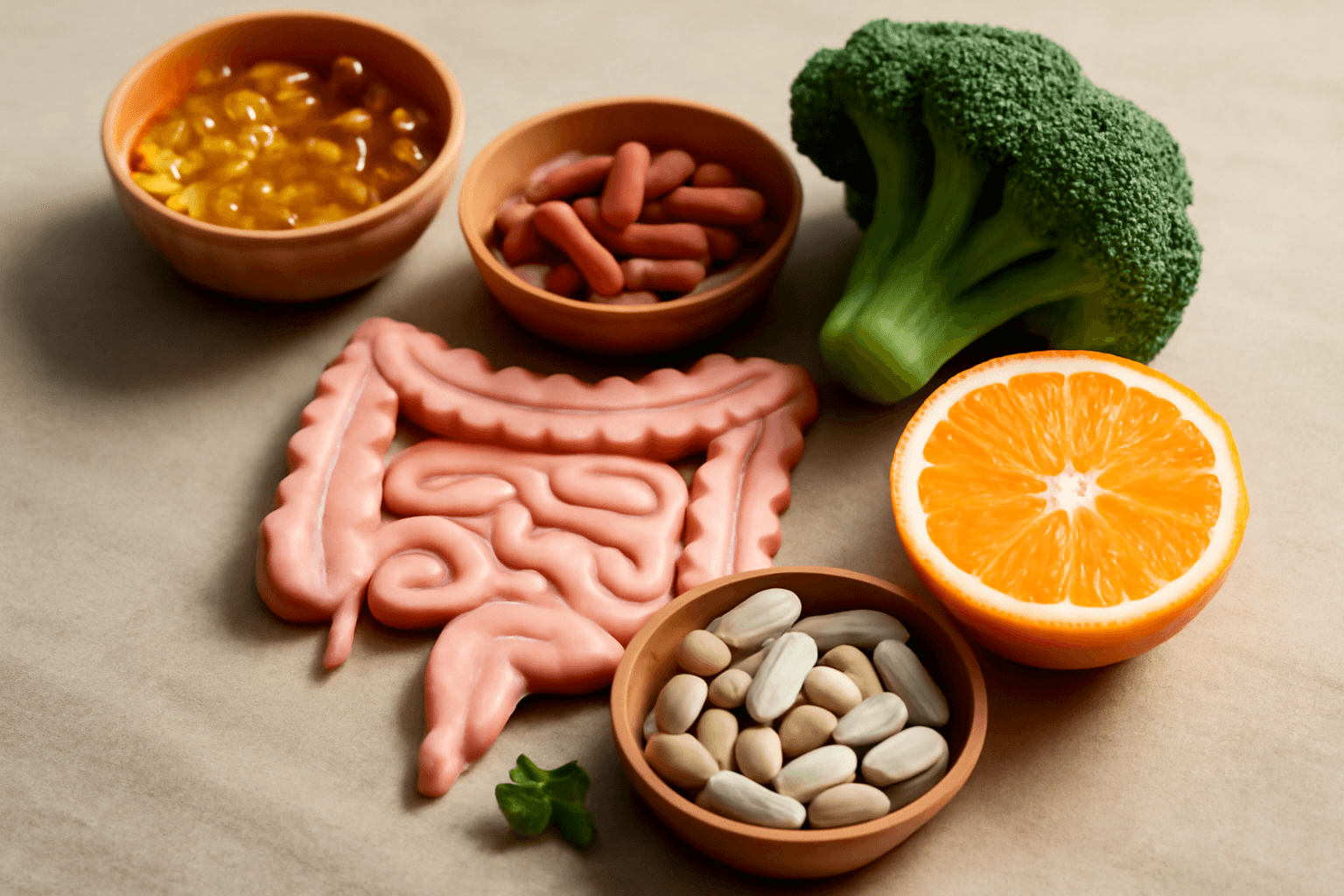
The thyroid is a small, butterfly-shaped gland that regulates the body's metabolic rate and has a significant impact on overall health and energy levels. When thyroid function doesn't work properly, various symptoms can appear, including fatigue, weight changes, and mood disorders. This post covers 10 essential things you need to know to maintain thyroid health. We will explain in detail the essential nutrients such as iodine, zinc, magnesium, vitamin B, vitamin A, vitamin C, vitamin D, and potassium, as well as how thyroid hormones work and the root causes of thyroid disease.
What is the Thyroid?
The thyroid is an endocrine gland located below the larynx in the front of the neck, consisting of two lobes and weighing approximately 20-30 grams. This small gland secretes thyroid hormones that affect almost every cell in the body, regulating metabolism, body temperature, heart rate, energy expenditure, and protein synthesis.
When thyroid-stimulating hormone (TSH) secreted from the pituitary gland in the brain sends a signal to the thyroid, the thyroid releases T3 (triiodothyronine) and T4 (thyroxine) hormones into the bloodstream. Because these hormones determine the body's metabolic rate, proper thyroid function is essential for maintaining overall health. Thyroid disease is a common condition worldwide, with a higher prevalence rate especially in women.
What Are Common Symptoms of Thyroid Dysfunction?
Thyroid dysfunction causes various symptoms depending on whether thyroid function is excessive or impaired. Some symptoms that commonly appear include fatigue, mood changes, sleep problems, weight changes, and decreased concentration.
When thyroid hormone levels are imbalanced, metabolism operates abnormally, causing problems in the energy production process. Many patients experience severe difficulties in daily life due to unexplained fatigue. Additionally, thyroid disease is closely associated with depression, anxiety, and reduced memory, and in severe cases can lead to cognitive impairment. Physical symptoms such as neck swelling, palpable masses in the neck, and voice changes may also occur, so if these symptoms persist for more than two weeks, medical professional evaluation is necessary.
What Is the Difference Between Hyperthyroidism and Hypothyroidism?
Hyperthyroidism is a condition in which the thyroid secretes excessively high amounts of hormones, causing metabolism to accelerate excessively. Patients experience weight loss, trembling, excessive sweating, tachycardia (rapid heart rate), irritability, and anxiety. The most common cause is Graves' disease (an autoimmune disorder), which accounts for approximately 80% of all hyperthyroidism cases.
Conversely, hypothyroidism is a condition in which the thyroid fails to produce sufficient hormones, resulting in slowed metabolism. Patients exhibit extreme fatigue, weight gain, increased sensitivity to cold, dry skin, hair loss, constipation, and depression. The most common cause is Hashimoto's disease (an autoimmune disorder), which accounts for approximately 90% of hypothyroidism cases.
Both conditions are diagnosed through blood tests measuring TSH, T3, and T4 levels, and each requires a different treatment approach. Hyperthyroidism requires medications that suppress hormone production or radioactive iodine therapy, while hypothyroidism's primary treatment method is medication therapy to supplement deficient hormones.
What Are the 3 Main Thyroid Hormones?
The primary hormones secreted by the thyroid are T4 (thyroxine), T3 (triiodothyronine), and calcitonin.
T4 (Thyroxine): Accounts for approximately 80% of hormones secreted by the thyroid and is relatively inactive but more stable. T4 is converted to T3 as needed, serving as the body's hormone reservoir. In blood tests, T4 levels are an important indicator for assessing overall thyroid function.
T3 (Triiodothyronine): Accounts for approximately 20% of hormones secreted by the thyroid, and some T3 also comes from conversion of T4. T3 is 4-5 times more potent than T4 and more directly regulates metabolism. The process of T4 conversion to T3 in peripheral tissues requires minerals such as selenium, zinc, and iron.
Calcitonin: Secreted by C cells in the thyroid, it regulates blood calcium levels. It is secreted when calcium is high, directing calcium storage in bones and inhibiting calcium reabsorption in the kidneys. Elevated calcitonin levels can serve as a marker for medullary thyroid cancer and are important in diagnosis.
10 Root Causes of Thyroid Disease and Dysfunction
Thyroid dysfunction results not from a single cause but from the complex interaction of various factors. The following are 10 major causes of thyroid disease:
- Iodine deficiency or excess: An essential element for thyroid hormone production
- Autoimmune diseases: Graves' disease, Hashimoto's disease, etc.
- Zinc deficiency: Inhibits T4 to T3 conversion
- Magnesium deficiency: Reduces hormone receptor function
- Vitamin B deficiency: Interferes with metabolism and hormone conversion
- Vitamin A deficiency: Reduces sensitivity of thyroid hormone receptors
- Vitamin C deficiency: Impairs antioxidant function and T4→T3 conversion
- Vitamin D deficiency: Increases autoimmune response
- Potassium imbalance: Causes metabolic and nervous system dysfunction
- Chronic stress and sleep deprivation: Elevated cortisol suppresses TSH
I. Iodine Deficiency and Goiter
Iodine is a key component of thyroid hormones, with T3 and T4 molecules containing 3 and 4 iodine atoms respectively. According to the World Health Organization (WHO), more than 200 million people suffer from goiter (thyroid enlargement) caused by iodine deficiency.
When iodine deficiency occurs, the thyroid cannot produce normal amounts of hormones and enlarges to produce more hormones. This is called goiter, and while there are no initial symptoms, as it progresses it can cause neck discomfort, difficulty swallowing, and breathing difficulties. Severe iodine deficiency in fetuses and infancy can result in cretinism (mental disorders and neurological damage).
The recommended daily iodine intake for adults is 150 micrograms (mcg), and for pregnant and breastfeeding women it is 220-290 mcg. Iodine is abundant in seafood (especially seaweed such as kelp and wakame), eggs, dairy products, and iodized salt. However, excessive iodine intake can also cause hypothyroidism or thyroiditis, so caution is needed.
Koreans typically have a low risk of iodine deficiency due to high seaweed consumption, but iodine deficiency can occur with processed food-centered diets or salt-restricted diets.
II. Zinc and Thyroid Hormone Conversion
Zinc is a key component of the enzyme (5'-deiodinase) that catalyzes the conversion of T4 to T3. Zinc deficiency impairs this conversion process, lowering T3 levels, the active hormone, and can result in hypothyroid symptoms.
According to research, approximately 40% of hypothyroid patients showed zinc deficiency, and thyroid function improved after zinc supplementation. The recommended daily intake for adult men is 11mg and for adult women is 8mg. Oysters, beef, chicken, pumpkin seeds, cashews, and black beans are good sources of zinc. Excessive zinc intake can interfere with copper absorption, so excessive supplement intake should be avoided.
III. The Role of Magnesium
Magnesium is involved in more than 300 biochemical reactions and is essential for thyroid hormone receptor function. Magnesium deficiency reduces cellular responsiveness to thyroid hormones, causing "hormone resistance."
The recommended daily intake is 400-420mg for adult men and 310-320mg for adult women. Dark leafy vegetables (spinach, kale), almonds, black beans, pumpkin seeds, and dark chocolate are rich in magnesium. Chronic stress increases magnesium depletion, so people under high stress should pay special attention to magnesium intake.
IV. The Importance of B-Complex Vitamins
B-complex vitamins (B1, B2, B3, B5, B6, B9, B12) are essential cofactors in metabolism and hormone conversion processes. In particular, vitamin B12 is important for energy production and nervous system function, and B12 deficiency causes fatigue and depression similar to hypothyroid symptoms.
Folate (B9) and B12 are involved in homocysteine metabolism, and elevated homocysteine levels are a risk factor for autoimmune thyroid disease. B vitamins are abundant in animal products (liver, oysters, eggs), whole grains, legumes, and dark leafy vegetables. Vegetarians or those with strict dietary restrictions may need B12 supplements.
V. The Immune-Regulating Function of Vitamin A
Vitamin A plays an important role in immune system regulation and adjusting the sensitivity of thyroid hormone receptors. According to animal research, vitamin A deficiency increases the risk of autoimmune thyroid disease.
The recommended daily intake for adults is 900mcg for men and 700mcg for women. Animal products such as eggs, liver, milk, and cheese contain vitamin A directly (retinol), while plants such as carrots, sweet potatoes, kale, and broccoli contain precursor forms (beta-carotene). Since vitamin A is fat-soluble, excessive intake can be toxic, so caution is needed.
VI. Vitamin C and Antioxidant Protection
Vitamin C is a potent antioxidant that promotes T4 to T3 conversion and protects thyroid tissue from free radical damage. People with autoimmune thyroid disease tend to have low vitamin C levels.
The recommended daily intake for adults is 90mg for men and 75mg for women. Oranges, kiwis, grapefruits, red bell peppers, broccoli, and kale are good sources. Smoking increases vitamin C requirements by 35mg, so smokers need higher intake.
VII. Vitamin D and Immune System Regulation
Vitamin D also acts as a hormone and is important in regulating the immune system, including T cells and B cells. According to several meta-analysis studies, a significant number of patients with autoimmune thyroid disease (Hashimoto's disease, Graves' disease) show vitamin D deficiency.
The recommended daily intake for adults is 600-800IU, and if deficiency exists, higher doses (1000-4000IU) of supplementation may be necessary. Sunlight exposure (10-30 minutes per day), fatty fish (salmon, mackerel), egg yolks, and mushrooms are good sources of vitamin D. It's a good idea to confirm deficiency through blood vitamin D level testing.
VIII. Potassium Imbalance and Metabolism
Potassium is essential for maintaining intracellular electrolyte balance and regulating metabolism. Imbalanced potassium levels affect nerve signal transmission, muscle contraction, and heart function, and indirectly affect thyroid hormone action.
The recommended daily intake for adults is approximately 3500mg. Bananas, sweet potatoes, spinach, white beans, avocados, and salmon are potassium-rich. Potassium level imbalances can cause serious heart problems, so potassium supplement intake should be undertaken under medical professional guidance.
IX. Selenium and Thyroid Peroxidase
Selenium is an essential component of thyroid glutathione peroxidase, which protects the thyroid from oxidative stress. It is also a component of deiodinase enzymes that help convert T4 to T3.
The recommended daily intake for adults is 55 micrograms (mcg). One Brazil nut contains approximately 70mcg, making it a highly efficient source. Fish, chicken, eggs, and brown rice also contain selenium. Excessive selenium intake (400mcg or more per day) can cause selenium toxicity, so caution is needed.
X. Chronic Stress and Hormone Imbalance
Chronic stress causes the adrenal glands to over-secrete cortisol, and elevated cortisol levels suppress TSH secretion from the pituitary gland, decreasing thyroid hormone production. Additionally, stress damages gut health, impairing nutrient absorption and worsening autoimmune responses.
Long-term sleep deprivation also disrupts the natural daily rhythm of cortisol and thyroid hormones. Maintaining consistent sleep schedules (7-9 hours per day), meditation, yoga, deep breathing exercises, and regular exercise are effective for stress management. In particular, resistance training (weight-lifting exercises) helps improve thyroid hormone sensitivity.
Summary
Thyroid health is not determined by a single hormone but is influenced by the complex interaction of various nutrients such as iodine, zinc, magnesium, vitamins B, A, C, D, and potassium, as well as lifestyle habits. To maintain thyroid function, remember the following key points:
- Adequate iodine intake is essential, but excessive intake should also be avoided
- T4 to T3 conversion requires zinc, selenium, and vitamin C
- Magnesium and B vitamins promote metabolism and hormone conversion
- Vitamins A and D help prevent autoimmune thyroid disease through immune system regulation
- Potassium and other electrolyte balance affect overall metabolism
- Chronic stress and sleep deprivation impair thyroid hormone action
- Monitor your thyroid status with regular blood tests (TSH, T3, T4, antibodies)
Medical Professional Consultation Required: The information in this article is for educational purposes and cannot replace medical advice. If you have thyroid symptoms or are considering supplement use, be sure to consult with an endocrinologist or your primary care physician. Especially if you have existing thyroid disease or are taking medications, nutrient supplements can interact with medications, making professional guidance essential.