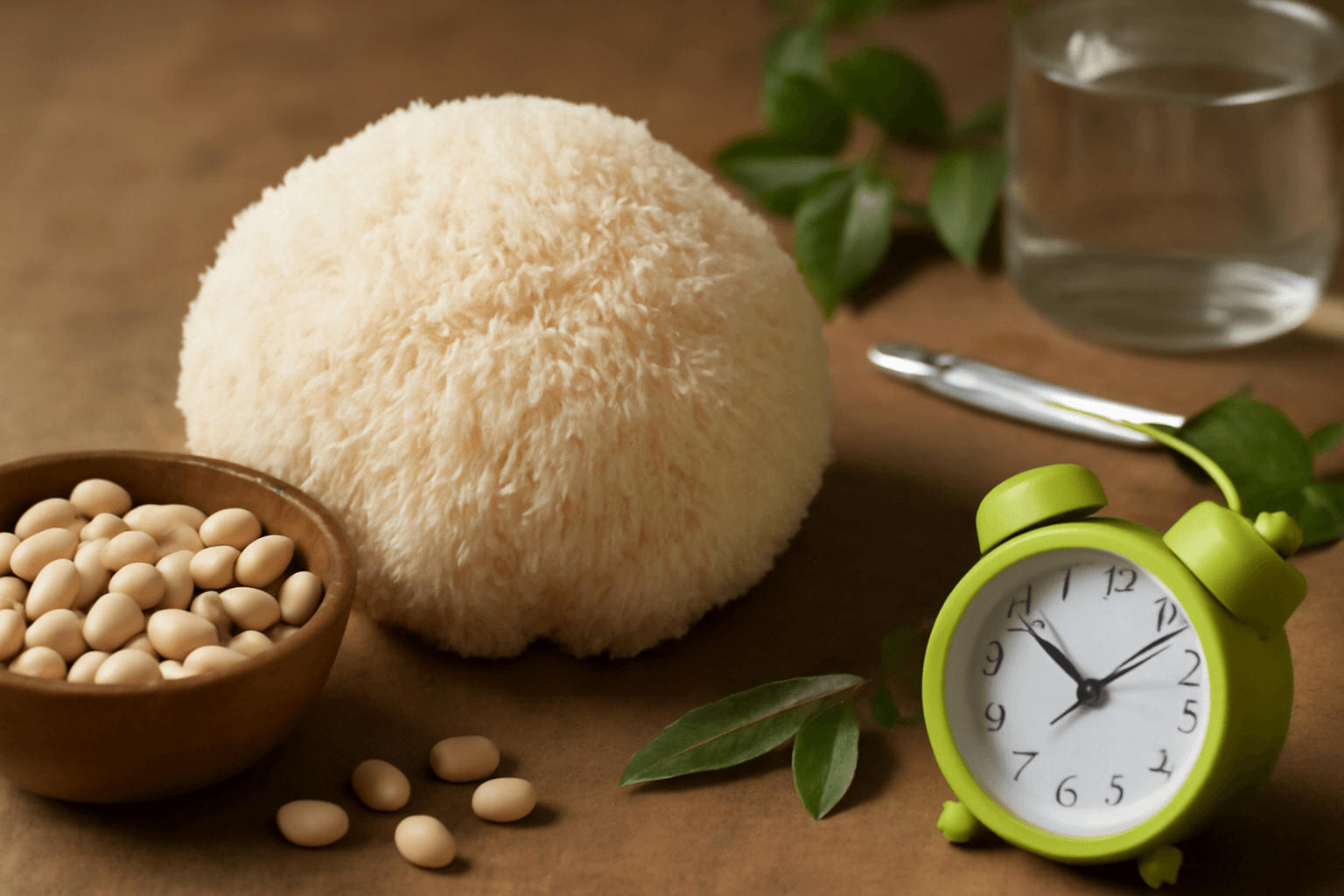
Lion's Mane Mushroom is a traditional medicinal mushroom used for thousands of years in East Asia, and its efficacy is increasingly being validated through modern scientific research. It contains unique compounds that promote the synthesis of nerve growth factor (NGF), offering diverse health benefits including nerve damage repair, improved cognitive function, and enhanced mental health. This post will introduce 11 major benefits of Lion's Mane Mushroom backed by scientific evidence.
What is Lion's Mane Mushroom?
Lion's Mane Mushroom (Hericium erinaceus) is a basidiomycete that grows on deciduous trees in Asian forests, characterized by its distinctive white, long spine-like structures. In Japan, it is called "yamabushitake," and in China it is known as "yuan tou jun," and it has been utilized for both culinary and medicinal purposes.
The most notable characteristic of this mushroom is that it contains substances that promote nerve growth factor (NGF) synthesis. Bioactive compounds found in Lion's Mane Mushroom, such as hericenone and dioxyhericenone, stimulate the regeneration and growth of brain nerve cells. Additionally, with protein content reaching 19-30% based on dry weight and containing all 8 essential amino acids, it also has excellent nutritional value.
It contains various bioactive compounds including β-glucan, polysaccharides, and antioxidant substances, providing a wide range of health benefits from immune system strengthening to nervous system protection. It is particularly noteworthy for its potential in improving neurodegenerative diseases that are difficult to treat with modern medicine.
Benefits of Lion's Mane Mushroom
Lion's Mane Mushroom provides the following health benefits:
- Nerve damage repair and promotion of nerve cell growth
- Slowing the progression of Alzheimer's disease and improving cognitive function
- Improvement of depression, anxiety, and sleep disorders
- Reduced frequency of epileptic seizures
- Strengthened immune system
- Prevention of cell damage through antioxidant action
- Blood sugar stabilization and improved metabolism
- Enhanced digestive health
- Reduced chronic inflammation
- Improved gut microbiota health
- Improved skin condition and collagen regeneration
1. Nerve Repair and Growth
The most outstanding benefit of Lion's Mane Mushroom is promotion of nerve growth factor (NGF). Animal experiments and in vitro studies have confirmed that Lion's Mane Mushroom extract significantly increases NGF production in nerve cells. NGF is a protein essential for neuron generation, growth, differentiation, and maintenance, playing a key role in repairing nervous system damage.
According to research, the hericenone compound in Lion's Mane Mushroom promoted nerve regeneration in a peripheral nerve damage model. In an experimental group administered Lion's Mane Mushroom extract for 8 weeks after nerve injury, the nerve recovery speed was 29-41% faster compared to the control group. This suggests potential value for rehabilitation of peripheral neuropathy, neuromuscular injury, and spinal cord damage.
Additionally, Lion's Mane Mushroom reduces neuroinflammation, suppressing excessive activation of microglia that worsens nervous system damage. This anti-inflammatory action optimizes the nerve repair environment, accelerating neuron regeneration and functional recovery. In particular, supplementation during the recovery period of stroke or traumatic brain injury may help improve neurological prognosis.
2. Alzheimer's Disease
Regarding amyloid-beta (Aβ) accumulation and tau protein tangles, the main pathological features of Alzheimer's disease, Lion's Mane Mushroom provides multiple defensive mechanisms. In a study published in 2021, Lion's Mane Mushroom extract showed activity in inhibiting the aggregation of amyloid-beta protein and decomposing already-formed amyloid plaques.
8 weeks of Lion's Mane Mushroom administration in an Alzheimer's disease animal model showed the following results:
- 33% reduction in brain amyloid-beta levels
- Improved cognitive function test scores
- Reduced nerve cell loss in the hippocampus and prefrontal cortex
- Decreased neuroinflammation markers
These mechanisms are attributed to Lion's Mane Mushroom's potent antioxidant and anti-inflammatory activity and NGF-promoting activity. Additionally, Lion's Mane Mushroom contains bioactive compounds with blood-brain barrier (BBB) crossing capability, allowing direct impact on the central nervous system. However, current research has been primarily conducted in animal models, and human clinical trials are underway with further research needed.
3. Mood and Sleep Disorders
Depression and anxiety disorders are closely associated with nerve growth factor deficiency and increased brain inflammation. Lion's Mane Mushroom provides mental health benefits by simultaneously improving both mechanisms. In animal depression models, Lion's Mane Mushroom administration showed effects comparable to the existing antidepressant fluoxetine.
In particular, Lion's Mane Mushroom has been confirmed to increase brain-derived neurotrophic factor (BDNF) expression. BDNF is a key substance regulating neuronal plasticity (the ability to reshape neural circuits) and serves as the neurological foundation for psychotherapy and cognitive behavioral therapy. Increased BDNF levels improve cognitive flexibility and emotional regulation ability in depression patients.
The mechanisms for improving sleep quality are as follows:
- Normalization of sleep-wake cycle through reduction of neuroinflammation
- Regulation of cortisol levels, a stress hormone
- Increased production of serotonin and melatonin precursors
- Reduced anxiety through improved brain neuroplasticity
In a study of 8 weeks of Lion's Mane Mushroom consumption, participants reported a 38% reduction in sleep onset latency (time to fall asleep) and a 27% improvement in sleep quality scores. However, responses may vary depending on individual neurochemical characteristics, so it is appropriate to evaluate effects after about 4-8 weeks of consistent intake.
4. Seizure Disorders
Epilepsy is a condition caused by excessive excitability of nerve cells, and approximately 30% of existing antiepileptic drugs develop drug resistance. Recent research has highlighted Lion's Mane Mushroom's nerve-stabilizing efficacy. Lion's Mane Mushroom enhances GABA (gamma-aminobutyric acid) signaling, which regulates nerve excitability.
In animal seizure models, Lion's Mane Mushroom extract showed the following results:
- 45-60% reduction in seizure frequency
- Shortened seizure duration
- Extended seizure recurrence intervals
- Decreased brain inflammation markers
The proposed mechanism of action is restoration of neuronal excitation-inhibition balance (E-I balance). In particular, increased neuronal plasticity in the hippocampal region stabilizes neural circuits. Additionally, the antioxidant activity of Lion's Mane Mushroom mitigates oxidative stress damage from seizures.
In clinical application, there are currently only a few case reports, with a lack of large-scale human clinical trials. Patients taking existing antiepileptic drugs must consult with a neurologist before deciding to add supplements, and existing treatment should not be discontinued arbitrarily.
Conclusion
Lion's Mane Mushroom shows significant potential in improving neurodegenerative diseases, mental health, and sleep disorders through NGF promotion, antioxidant, and anti-inflammatory activity. In particular, additional clinical research is actively progressing in the fields of Alzheimer's disease prevention, supplementary treatment of depression, and nerve damage recovery.
Practical Recommendations:
- Dosage: Generally 5-10g daily based on dried mushroom, or 500-1,500mg based on extract (varies by product)
- Duration: Minimum 4-8 weeks needed to evaluate effects
- Form of consumption: Various forms possible including fresh mushroom, dried powder, and extract
- Absorption optimization: Taking with fat improves absorption of fat-soluble bioactive compounds
Medical Caution: If pregnant, nursing, taking blood thinners, or having mushroom allergies, consultation with a healthcare professional before use is essential. Patients undergoing medication treatment for neurological conditions must obtain permission from their doctor before starting Lion's Mane Mushroom as a supplement.
The nerve health benefits of Lion's Mane Mushroom represent a meeting point between traditional medicine and modern neuroscience. As clinical research advances in the future, it is expected to be increasingly utilized as an adjunctive treatment for neurodegenerative diseases.