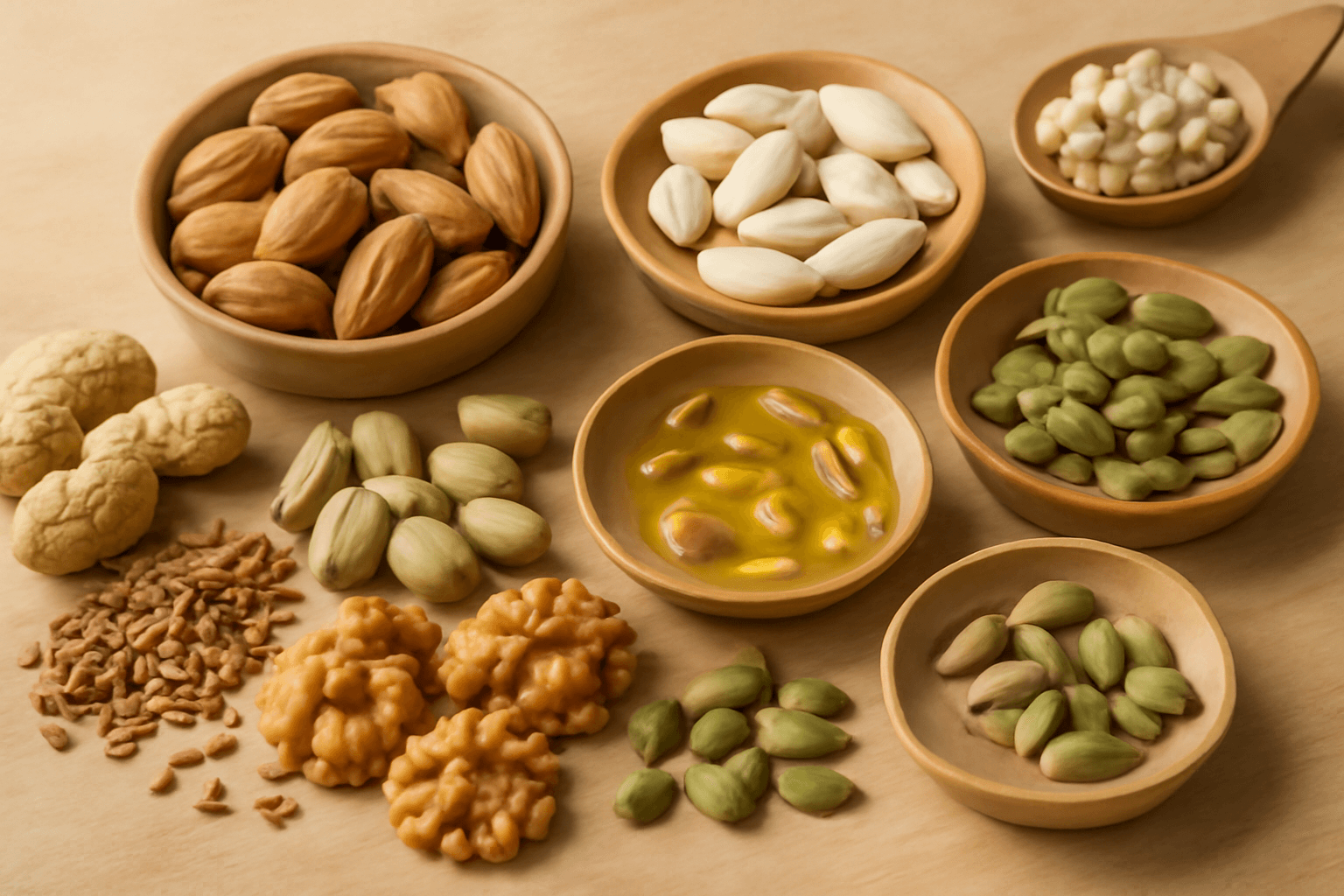
Nuts and seeds are among the most nutritious foods humans have consumed. From almonds to pumpkin seeds, they contain abundant nutrients essential for maintaining body functions, including protein, healthy fats, minerals, and vitamins. In particular, omega-3 fatty acids, magnesium, zinc, and vitamin E have direct impacts on cardiovascular health, brain function, and immune system strengthening. In this article, we'll examine in detail the characteristics and health benefits of 16 of the most popular nuts and seeds.
Health Benefits of Nuts and Seeds
Nuts and seeds serve as plant-based protein sources and are particularly important for vegetarians. Containing an average of 15-25g of protein per 100g, they are effective for muscle maintenance and repair. The fats they provide are low in saturated fats and rich in unsaturated fats, helping to reduce LDL cholesterol.
The magnesium content is also noteworthy. A handful of nuts (approximately 28g) supplies 20-30% of the daily recommended amount, and this mineral is essential for muscle relaxation, nerve function, and blood sugar regulation. Zinc plays a role in strengthening the immune system and promoting wound healing, while vitamin E, a powerful antioxidant, prevents cellular damage.
Omega-3 fatty acids are particularly abundant in flaxseeds and chia seeds, contributing to reduced inflammation and maintained brain health. Minerals like calcium and potassium support bone health and blood pressure regulation. Various B vitamins are directly involved in energy metabolism and nervous system health.
Important Note: Nut allergies can cause serious reactions. If you're consuming them for the first time or have a history of allergies, consult with a healthcare professional. Additionally, nuts are calorie-dense, so a daily recommendation of 30-50g (approximately one handful) is advised.
Popular Nuts and Seeds
Nuts and seeds consumed worldwide are cultivated in various regions and each has its own unique nutritional profile. In Western diets, almonds, cashews, and walnuts are the most widely consumed, while in Eastern diets, sesame, sunflower seeds, and pumpkin seeds are traditionally enjoyed. Recently, specialty nuts like black seeds (black cumin seeds) have also gained popularity as recognized superfoods.
These foods are consumed raw or processed into roasted, butter, or powder forms for use in various dishes. Nutritionists recommend alternating between multiple types, as this allows for balanced supply of diverse nutrients.
1. Almonds
Almonds are the most widely consumed nuts in the world, with California producing 80% of the global supply. A 28g serving (approximately 23 almonds) contains 6g of protein, 3.5g of dietary fiber, and 76mg of magnesium.
The most notable characteristic of almonds is their high vitamin E content. A handful of almonds provides 37% of the daily recommended amount, offering powerful antioxidant action that prevents cellular damage. According to research, people who consume almonds daily experienced an average 9% reduction in bad cholesterol levels.
A compound called polyphenol in almonds promotes the growth of beneficial gut bacteria, improving intestinal health. Additionally, almonds are rich in flavonoids in their skin, making it more beneficial to consume them unpeeled.
- Key Nutrients: Vitamin E, magnesium, calcium, dietary fiber
- Calories: 579kcal per 100g
- Recommended Serving: 28-30g per day (approximately 23 almonds)
2. Black Seed (Black Cumin Seed)
Black seed is a seed that has been used medicinally for thousands of years in the Middle East and South Asia. It contains high concentrations of an active compound called thymoquinone, giving it anti-inflammatory, antibacterial, and immune-boosting properties.
Recent scientific research is demonstrating the various health benefits of black seed. In one study, patients with diabetes who consumed black seed extract for 8 weeks experienced an average 8% decrease in fasting blood sugar. Another study showed that black seed oil was effective in alleviating symptoms of inflammatory conditions.
A 28g serving contains 166mg of magnesium, 4.4mg of iron, and 8.2mcg of selenium. The iron content is particularly noteworthy, exceeding that of well-known iron source spinach, which helps prevent anemia. Black seed is characterized by its bitter taste, so it's commonly consumed by soaking in water or in oil form.
- Key Nutrients: Magnesium, iron, selenium, thymoquinone
- Calories: 375kcal per 100g
- Recommended Dosage: 1-2 teaspoons per day (5-10ml oil basis)
Caution: Black seed can interfere with blood clotting, so those taking anticoagulants must consult with a doctor.
3. Brazil Nuts
Brazil nuts are nuts native to the Amazon rainforest and are among the foods with the highest selenium content. Just 2 Brazil nuts can meet an adult's daily selenium requirement (55mcg). A 28g serving contains 107mg of magnesium, 207mg of phosphorus, and 160mg of calcium.
Selenium is a mineral essential for thyroid hormone synthesis and antioxidant defense. According to research, a selenium-rich diet reduces thyroid autoantibody levels in thyroid disease. Additionally, selenium in Brazil nuts is involved in improving sperm health and is gaining attention in male infertility treatment research.
Brazil nuts' fat composition consists mainly of monounsaturated fats (oleic acid 52%) and polyunsaturated fats, which are favorable for heart health. However, since selenium can show toxicity when overconsumed, a limited intake of 2-3 nuts per day is recommended.
- Key Nutrients: Selenium (very high), magnesium, phosphorus, calcium
- Calories: 656kcal per 100g
- Recommended Serving: 2-3 nuts per day (excessive consumption prohibited)
4. Cashews
Cashews are cultivated in subtropical regions and are popular nuts known for their soft texture and rich flavor. Unlike other nuts, they have relatively low saturated fat (2.2g per 28g) and are rich in monounsaturated fats. A 28g serving contains 5g of protein, 82mg of magnesium, and 622mcg of copper.
The copper content in cashews is particularly noteworthy. This mineral enhances iron absorption, supports nervous system function, and is essential for collagen formation. Additionally, carotenoids called lutein and zeaxanthin found in cashews protect eye health and reduce the risk of age-related macular degeneration.
Cashews contain tyrosine, which is a precursor to the neurotransmitters dopamine and norepinephrine. This contributes to mood improvement, enhanced focus, and stress reduction. Cashew butter can boost nutrition when used in smoothies or sauces.
- Key Nutrients: Copper, magnesium, tyrosine, lutein
- Calories: 553kcal per 100g
- Recommended Serving: 28-50g per day
Summary
Nuts and seeds are among the best foods for providing healthy nutrients in a modern diet. Almonds' vitamin E, black seed's anti-inflammatory compounds, Brazil nuts' selenium, and cashews' copper each support different functions in the body.
Key Takeaways:
- Nuts and seeds are excellent plant-based sources of protein, healthy fats, and minerals.
- Consume a variety of types to obtain a broad nutritional profile.
- The daily recommended amount is 28-50g (approximately one handful), and excessive consumption should be avoided.
- If you have a nut allergy or are taking medications, consult with a healthcare professional.
- Raw, unroasted nuts have the highest nutritional value.
- For long-term storage, refrigerate or freeze to prevent rancidity.
Regular consumption of nuts and seeds provides multifaceted health benefits including cardiovascular health, brain function, immune system strengthening, and blood sugar regulation. Consider your individual health status and dietary restrictions, choose nuts that suit you, and incorporate them as part of a balanced diet.