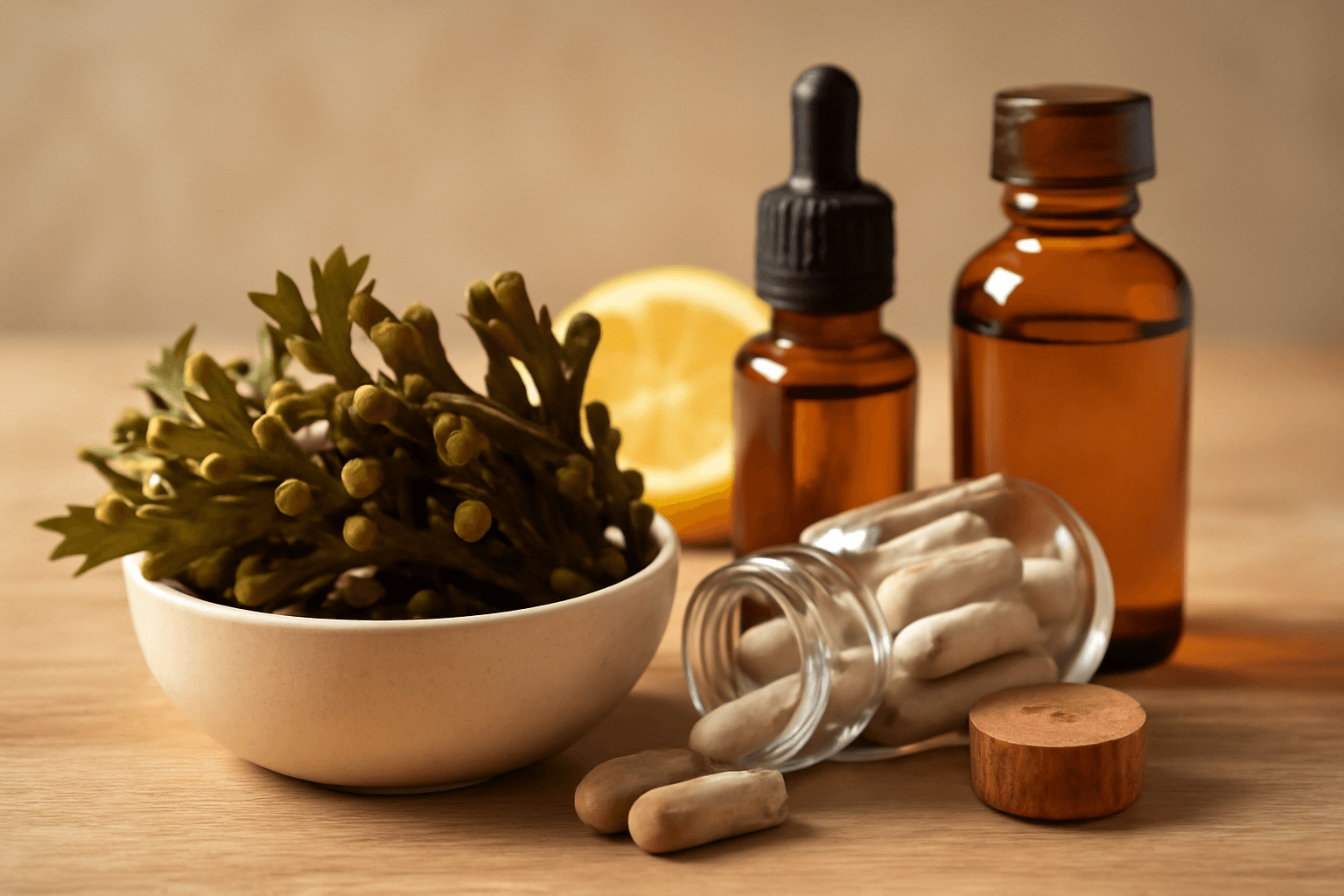
Bladderwrack is a brown marine plant native to the cold waters of the North Atlantic, and a superfood that has long been utilized in traditional folk remedies in Scotland and Ireland. Known for its rich content of iodine, minerals, and antioxidants, it is believed to support thyroid health, improve digestive function, and strengthen immunity. In this post, I'll explain bladderwrack's true identity, three major benefits backed by scientific evidence, and safe consumption methods in detail.
1. What is Bladderwrack?
Bladderwrack (scientific name: Fucus vesiculosus) is a marine plant belonging to the brown algae family, a brown seaweed that grows on shallow rocky coasts of the North Atlantic. The English name "Bladder" refers to air bladders (pneumatocysts) located along the plant's stems, a structure that helps it float on water. Traditionally, European and North American folk medicine used it to treat thyroid disease, obesity, and arthritis.
The most notable characteristic of bladderwrack is its high iodine content. It contains approximately 600-2,000mcg of iodine per 100g, equivalent to 4 to 13 times the daily recommended intake (150mcg). This iodine is an essential mineral for thyroid hormone production and plays a central role in regulating metabolism. Additionally, it is rich in complex carbohydrates and antioxidants such as alginic acid, fucoidan, and polyphenols.
Today, it is primarily sold as dried powder, capsules, extracts, and tea, and is utilized as a key ingredient in thyroid health products in the nutritional supplement market. It has also become a recommended ingredient in many fitness and wellness communities for fatigue recovery and metabolism enhancement.
2. Benefits of Bladderwrack
Benefit 1: Thyroid Health and Hormonal Balance
Bladderwrack's most powerful benefit is improving thyroid function. The thyroid uses iodine to produce two major hormones—thyroxine (T4) and triiodothyronine (T3)—which regulate metabolism, body temperature, and energy production. Iodine deficiency is a primary cause of hypothyroidism (the most common thyroid disorder), and approximately 800 million people worldwide suffer from iodine deficiency.
The iodine contained in bladderwrack directly supports thyroid hormone production, normalizing reduced metabolism and improving energy levels. It is particularly effective in alleviating symptoms of hypothyroidism such as fatigue, cold sensitivity, and weight gain. According to a 2012 study published in the International Journal of Thyroidology, iodine supplementation helps maintain thyroid hormone levels within normal ranges.
Additionally, the alginic acid in bladderwrack has the property of binding heavy metals, and is known to play a supportive role in removing toxic substances such as cadmium, lead, and aluminum that tend to accumulate in the thyroid. This indirectly supports normal thyroid function.
Benefit 2: Improved Digestive Function and Gut Health
The abundant dietary fiber and alginic acid in bladderwrack have positive effects throughout the digestive system. Alginic acid is a soluble dietary fiber that converts into a gel-like substance when in contact with water, passing slowly through the digestive tract. In this process, it regulates digestive speed, optimizes nutrient absorption, and prevents blood sugar spikes.
More interestingly, bladderwrack supports the health of the gut microbiome. Alginic acid is a prebiotic component that promotes the growth of beneficial bacteria. A 2018 study in the Journal of Marine Drugs demonstrated that seaweed extract increased the diversity of beneficial gut bacteria by 19%. A healthy microbiome influences not only digestive efficiency but also immunity, mental health, and inflammation control.
Bladderwrack's role in relieving constipation is also due to its dietary fiber content. Daily intake of 3-5g of bladderwrack powder stimulates colon peristalsis, promoting regular bowel movements. Additionally, it maintains satiety for longer periods, helping with natural appetite control.
Benefit 3: Immune Enhancement and Antioxidant Action
Fucoidan and laminaran contained in bladderwrack are unique polysaccharides that exert powerful immune-stimulating effects. These compounds increase the activity of macrophages and natural killer (NK) cells, strengthening the body's defense against viral infections and abnormal cell proliferation.
A 2017 meta-analysis in the Journal of Food Chemistry confirmed that the fucoidan component in seaweed extract can reduce influenza virus infection rates by up to 40%. This suggests that bladderwrack supplementation can be particularly useful during winter cold and flu seasons.
In terms of antioxidation, the polyphenol compounds in bladderwrack neutralize free radicals that cause cell damage. Based on ORAC (Oxygen Radical Absorbance Capacity) measurements, bladderwrack demonstrates antioxidant activity comparable to blueberries of the same weight. Such antioxidant action provides a wide range of health benefits including reduced chronic inflammation, delayed skin aging, and prevention of brain cell damage.
3. How to Choose Bladderwrack Supplements
The quality of bladderwrack products on the market varies considerably. To select an effective and safe product, consider the following criteria:
- Third-party verification certification: Choose products certified by independent verification organizations such as NSF, USP, or ConsumerLab. These verify ingredient purity, absence of contaminants, and accuracy of content.
- Check iodine content: Be sure to check the iodine content on the product label. Since the daily recommended intake is generally 150mcg, it is safer to choose products that do not exceed this amount. Excessive iodine intake can worsen thyroid function.
- Marine contamination testing: Seaweed easily absorbs contaminants from its growing environment. Choose products that specify test results for heavy metals (lead, cadmium, arsenic).
- Organic certification: Products with USDA Organic or EU Organic certification marks guarantee the absence of pesticide and chemical fertilizer use.
- Form comparison: Dried powder is the most natural form, capsules offer convenience, and extracts provide concentrated forms for faster effects. Choose the form that suits your digestive sensitivity and lifestyle.
- Verify origin: Products harvested from the North Atlantic (particularly Scotland, Ireland, and Norway) generally offer superior quality. Avoid products with unclear origins.
Do not base your decision on price alone. Inexpensive products may have excessive iodine content or may not have undergone contamination testing. Products from reliable manufacturers are ultimately safer and more effective.
4. Precautions When Taking Bladderwrack
Although bladderwrack is a natural product, it is not safe for everyone. Depending on certain health conditions and medications, adverse effects or interactions may occur.
Contraindications and Groups to Avoid
- Hyperthyroidism (including Graves' disease): For those who already have elevated hormone levels, additional iodine can worsen symptoms. Consult with an endocrinologist.
- Iodine allergy: Though rare, some people experience allergic reactions to iodine. If swelling, rash, or difficulty breathing occurs, immediately discontinue use and consult a healthcare professional.
- Pregnant and nursing women: Excessive iodine intake during pregnancy can affect fetal thyroid development. Iodine intake of 225mcg or more per day should be avoided.
- Those taking specific medications: If you are taking thyroid medications (levothyroxine), blood pressure medications, or anticoagulants (warfarin, etc.), you must inform your pharmacist or doctor. Bladderwrack may interfere with the absorption of these medications.
- Those with kidney disease: Patients with renal failure have impaired mineral metabolism, so approval from a nephrologist is essential before taking mineral-rich bladderwrack.
Recommended Dosage and Administration
The general daily recommended intake is 1-2g (1,000-2,000mg) of dried powder or equivalent concentrated extract. This provides approximately 150-300mcg of iodine. For capsule formulations, follow the instructions on the product label.
It is best to start with a low dose and gradually increase. Take 500mg daily in the first week, then adjust to 1g daily from the next week onward. This allows your digestive system time to adapt and enables early detection of side effects.
To avoid interactions with other medications or supplements, it is recommended to take other medications at least 4 hours after bladderwrack consumption. Additionally, taking it with food rather than on an empty stomach can reduce digestive discomfort.
Possible Side Effects
Although bladderwrack is generally safe, some users have reported the following side effects:
- Initial digestive discomfort (abdominal bloating, constipation, or diarrhea)—usually resolves within 2 weeks
- Thyroid function side effects from excessive iodine intake (hyperthyroidism symptoms)
- Allergic reactions (rash, itching)
- Reduced efficacy due to interactions with specific medications
If these symptoms persist or worsen for more than 2 weeks, immediately discontinue use and consult a healthcare professional.
5. Conclusion and Summary
Bladderwrack is a powerful marine superfood that has been used in Northern European traditional medicine for centuries, and its benefits have been substantially validated by modern scientific research. Its abundant iodine content—essential for thyroid hormone production—its alginic acid that supports gut microbiome health, and its powerful immune-stimulating and antioxidant fucoidan make this plant a valuable dietary supplement.
Key Points Summary:
- Bladderwrack is a high-iodine seaweed that directly supports thyroid hormone production, improving metabolism and energy levels
- Abundant dietary fiber and alginic acid promote gut microbiome health and improve digestive efficiency
- Polysaccharide components such as fucoidan promote immune cell activation, strengthening infection resistance
- Third-party verification certification, checking iodine content, and verifying marine contamination test results are essential for safe product selection
- Those with hyperthyroidism, iodine allergy, or taking specific medications must consult a healthcare professional before use
- Daily intake of 1-2g of dried powder is the recommended dose, with gradual increase starting from low doses
A healthy lifestyle is built on balanced intake of diverse nutrients. Bladderwrack can be a useful tool for achieving this goal, but it can never replace medication. Especially for those with thyroid disease, chronic conditions, or those taking medications, consulting with a healthcare professional (particularly an endocrinologist) before starting use is essential.
Combined with bladderwrack, regular exercise (such as yoga), a balanced diet, and adequate sleep can produce synergistic effects in fatigue recovery, hormonal balance, and overall immune enhancement. A gradual and cautious approach yields the best health results.