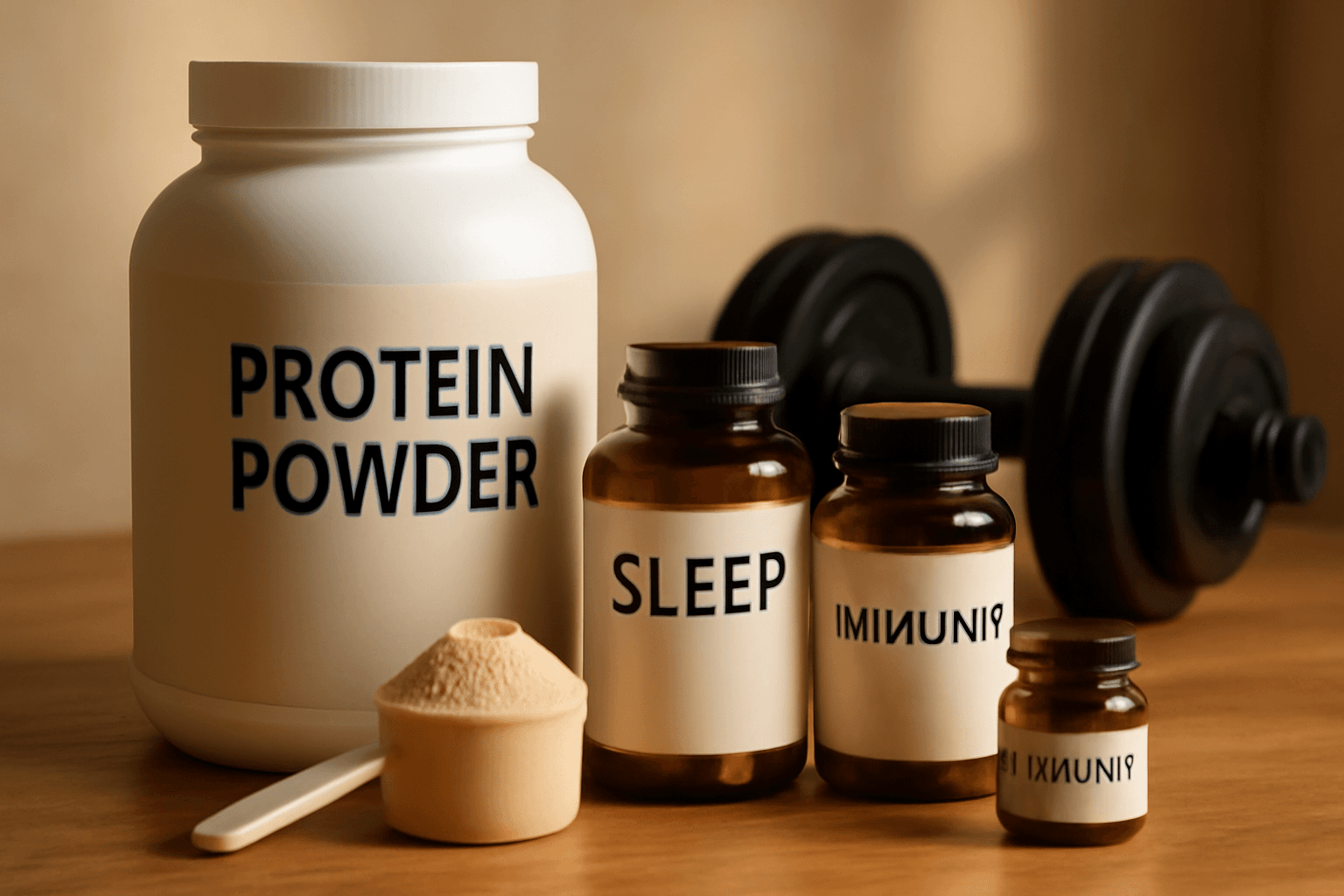
To maximize the effects of weight training, proper nutrition is just as important as consistent exercise. We'll introduce the types of supplements needed for muscle growth, energy replenishment, and enhanced recovery, along with effective ways to take them. Learn how scientifically proven supplements like protein powder, creatine, and magnesium can boost your training results.
Protein Powder: The Foundation of Muscle Growth
Protein is a structural component of muscle tissue and is essential for repairing muscle fibers damaged after weight training. Research shows that consuming 1.6–2.2g of protein per kilogram of body weight is effective for muscle growth. For example, a 70kg adult male would need 112–154g of protein daily.
Protein powder helps you easily achieve this daily target. Whey protein is optimal for muscle recovery immediately after exercise due to its fast absorption rate, while casein protein has a slow absorption rate and supplies amino acids for extended periods when consumed before bed. Plant-based proteins (pea and soy protein) are excellent choices for vegans or those with dairy intolerance.
- Whey protein: 25–30g recommended within 30 minutes post-workout
- Absorption speed: Whey in 1–2 hours, casein in 6–8 hours
- Biological value: Whey (104), casein (80), egg (100)
- Selection tip: Choose products low in artificial flavors and sugar
When selecting protein powder, it's important to check the serving size (25–30g) and the amounts of carbohydrates and fats contained. High-quality products typically include BCAAs (branched-chain amino acids), which further promote muscle protein synthesis.
Creatine: A Powerful Energy Source
Creatine promotes ATP resynthesis in muscle cells, quickly replenishing energy during high-intensity exercise. The International Society of Sports Nutrition (ISSN) rates creatine monohydrate as one of the most effective supplements for improving weight training performance. According to research, creatine supplementation can increase strength by 5–15% and improve muscle mass by 1–2kg.
Creatine's mechanism of action is simple but effective. It increases the concentration of phosphocreatine in muscles, helping to rapidly regenerate ATP during high-intensity exercise. This allows you to perform more repetitions and lift heavier weights. Additionally, creatine promotes muscle protein synthesis, accelerating muscle growth.
- Loading protocol: 20g daily for 5–7 days (5g × 4 times), then maintain 3–5g daily
- Without loading: Consistent daily intake of 3–5g also shows effects after 3–4 weeks
- Effect onset: Results visible after 2–4 weeks of continuous use
- Water intake: Drink plenty of water (3–4L daily recommended)
Creatine is very safe, and over 20 years of research has shown no side effects from long-term use in healthy adults. However, if you have kidney disease, consult a healthcare professional before taking it.
Magnesium: The Key to Recovery and Sleep
Magnesium is involved in over 300 biochemical reactions and plays a particularly important role in muscle relaxation and nervous system stability. If magnesium is deficient during the recovery process of damaged muscles after weight training, muscle cramps and delayed recovery occur. The average magnesium intake of Korean adults is only 60–80% of the recommended amount, meaning many people are magnesium deficient.
Improving sleep quality is another major benefit of magnesium. Magnesium calms the nervous system and promotes melatonin production, inducing deep sleep. Since over 70% of muscle growth occurs during sleep, increasing sleep quality through magnesium supplementation significantly enhances training results. Research shows that taking magnesium 1–2 hours before bed increases sleep duration by an average of 17 minutes and increases deep sleep time by 26%.
- Recommended intake: Adult men 420mg, women 320mg daily
- Form characteristics: Malate (energy production), glycinate (high absorption), threonate (brain health)
- Timing: Take 1–2 hours before bed
- Food sources: Pumpkin seeds (156mg/28g), spinach (157mg/100g), almonds (76mg/28g)
Excessive intake may cause abdominal discomfort or diarrhea, so it's safe not to exceed 400mg daily. If you have kidney disease, you must consult a healthcare professional.
Other Supplements: Additional Performance Enhancement
Beyond the three mentioned, there are other supplements that boost weight training performance. Vitamin D is essential for strength gains and bone health. People with low vitamin D levels have 20% lower strength on average, and adequate vitamin D supplementation improves testosterone levels by 25%. About 80% of Koreans are vitamin D deficient due to insufficient sunlight in winter.
Beta-alanine delays muscle acidification, allowing more repetitions during high-intensity exercise. After 6 weeks of continuous intake, strength improves by 2.5% and muscle fatigue decreases. However, initial use may cause a "tingles" sensation (prickling in the face and arms), which disappears after 2 weeks.
Antioxidants (vitamins C and E, polyphenols) reduce oxidative stress from exercise. However, excessive antioxidant intake can suppress muscle growth signals, so natural dietary sources are recommended. Berries, dark leafy greens, and green tea are good sources.
- Vitamin D: 1,000–4,000 IU daily (3,000–4,000 IU in winter)
- Beta-alanine: 3–5g daily (requires 3–6 weeks of continuous use)
- Omega-3: 1,000–2,000mg daily (reduces inflammation, promotes recovery)
- Endurance/recovery: Betaine (2.5g daily), carnosine (1–2g daily)
When taking multiple supplements simultaneously, check for interactions. For example, excessive iron intake can interfere with vitamin E absorption, so professional consultation is necessary.
Tips for Weight Training Beginners
Before choosing supplements, master the basics. No matter how good a supplement is, it cannot compensate for poor training and inadequate nutrition. Beginners should first try to achieve daily calorie and protein goals (1.6g per kg of body weight) through regular food. If this isn't achieved, supplements will have limited effectiveness.
For the first 2–3 months, focus on training and diet without supplements. During this period, observe your body's changes to identify which areas are lacking. For example, if recovery is slow, prioritize magnesium and protein; if energy is lacking, consider creatine.
The order of supplement use also matters. Start with the most essential. The first choice is protein powder (only if food intake is insufficient), the second is creatine, and the third is magnesium. Consider the rest after establishing the basics.
- Initial investment order: Basic nutrition → Protein powder → Creatine → Magnesium
- Consistency: Sustained use for at least 4 weeks is necessary to see results
- Choose quality brands: Prioritize third-party tested products (NSF, USP certified)
- Monitor individual response: Since individual responses vary, try for 2+ weeks before deciding
Supplements are not "miracle pills." They add only the final 5–10% of results on top of a solid foundation of thorough training plans, consistent nutrition, and adequate sleep. Without a strong foundation, even the most expensive supplements are ineffective.
Summary: The Key to Choosing Weight Training Supplements
The three essential supplements serve these roles: protein powder provides the structural foundation for muscle growth, creatine supplies energy during exercise, and magnesium supports recovery and sleep quality. These three have the most solid scientific evidence and proven safety.
Personalization is important. If you feel fatigued despite getting enough sleep, prioritize protein and energy (creatine); if sleep is insufficient, consider magnesium; if strength gains plateau, prioritize creatine. Even the best supplement has limited effectiveness if it doesn't match your individual situation.
Follow safety principles. Before taking any supplement, check current medications and consult a healthcare professional if you have special health conditions (kidney disease, high blood pressure, diabetes, etc.). When starting a supplement, use it consistently for at least 2–4 weeks before assessing effectiveness, and don't start too many supplements simultaneously.
Tracking and measuring results are essential. Record body changes (weight, body fat percentage, strength numbers), training performance (weight lifted, repetitions), and recovery status (muscle soreness, sleep quality) before and after starting supplements. Without objective data, you cannot determine actual effectiveness.
- Protein powder: Use as part of daily protein goal (25–30g per serving)
- Creatine: Take 3–5g daily consistently (check results after 2–4 weeks)
- Magnesium: 350–400mg before bed to improve sleep and recovery
- Other supplements: Consider additionally after establishing the essential three
- Medical consultation: Consult a professional if you have underlying conditions or medications
In weight training, supplements are a tool, not the key to success. Only when consistent training, adequate basic nutrition, and quality sleep form the foundation can supplements play their proper role. Complete these basics and strategically choose scientifically proven supplements, and your weight training results will definitely reach the next level.