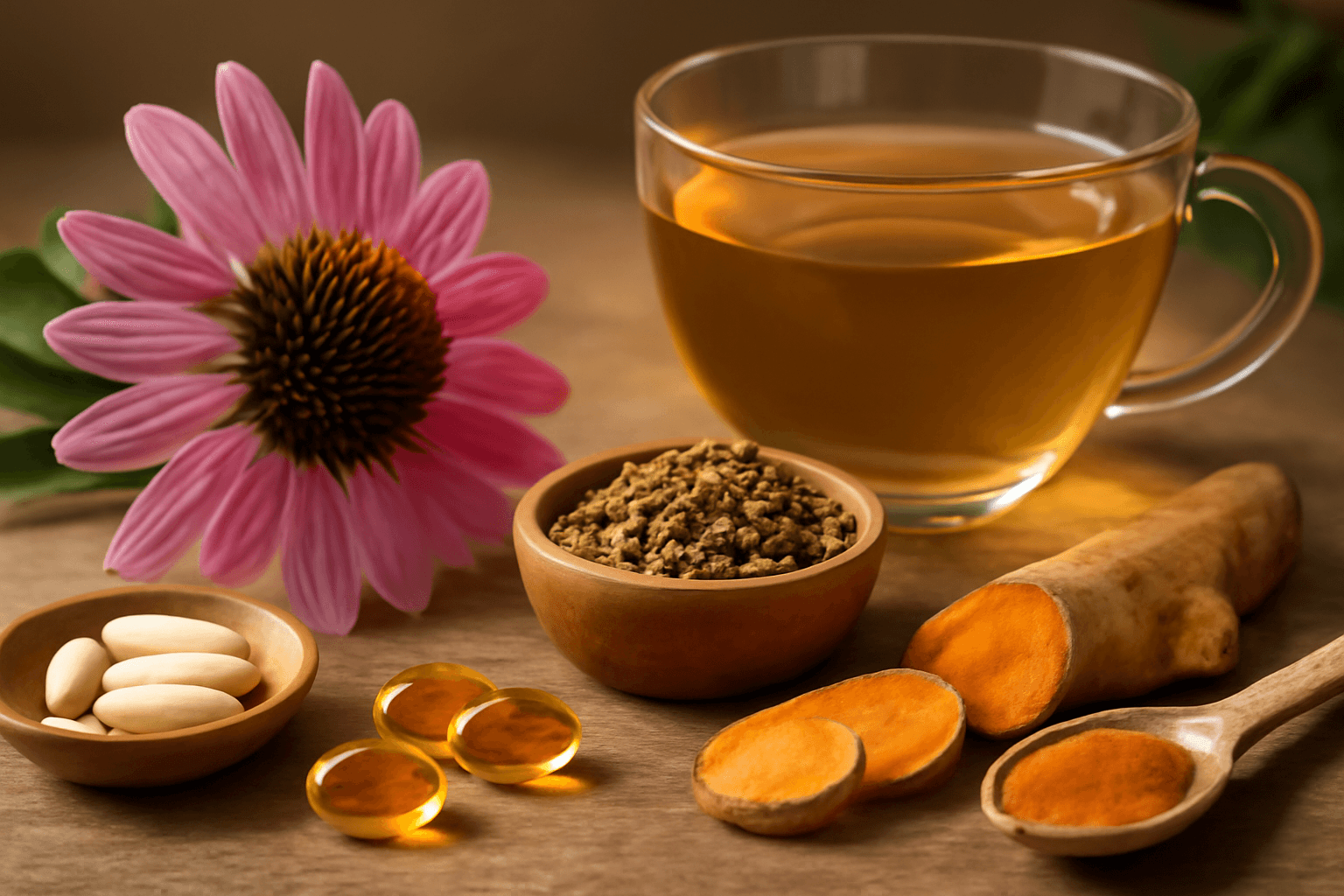
Echinacea is a plant native to North America that has gained worldwide attention for its immune-boosting and antioxidant properties. It offers five key benefits, particularly in cold prevention, stress relief, and improved heart health, and is even more effective when taken alongside other health foods like turmeric, omega-3, and green tea. This post will explain echinacea's scientific evidence, safe consumption methods, and how to make tea directly from the plant.
What is Echinacea?
Echinacea is a North American native plant belonging to the Asteraceae family with purple or pink flowers. Native Americans traditionally used it to treat infections and immune disorders, and it is now sold as a medicine or health supplement in over 40 countries worldwide. Echinacea's medicinal properties primarily come from active compounds found in the roots, stems, and flowers, which include polysaccharides, alkamides, and phenolic acids.
Echinacea purpurea and Echinacea angustifolia are the two varieties most extensively validated in clinical research. The U.S. FDA classifies echinacea as a dietary supplement rather than a medicine, while several European countries officially recognize it as an adjunct treatment for colds. Echinacea can be consumed in various forms including tea, capsules, tinctures, powders, and extracts.
Benefits and Nutritional Value
1. Enhanced Immunity
The most well-known benefit of echinacea is strengthening the immune system. According to German research, echinacea increases white blood cell activity by 30-40%, particularly enhancing the activity of macrophages (immune cells that eliminate infected cells). The polysaccharide compounds in echinacea promote the production of interferon and TNF-alpha (tumor necrosis factor) in the body, increasing resistance to viral infections.
It is also effective in shortening the duration of colds and flu. In an American clinical trial, participants taking echinacea experienced cold symptoms improve 1-4 days faster than the control group, with lower recurrence rates. However, it is more effective when taken at the first sign of symptoms rather than after a cold has fully developed.
2. Antioxidant Action and Stress Relief
Echinacea possesses antioxidant capabilities as powerful as turmeric or green tea. The phenolic acids, flavonoids, and alkamides in echinacea eliminate reactive oxygen species (ROS) and prevent cellular damage. In an antioxidant assessment conducted by a Korean research institution, echinacea was shown to eliminate 68% of DPPH free radicals, a level comparable to regular green tea's antioxidant capacity.
Increased cortisol levels from chronic stress are a major cause of immune decline. The alkamides in echinacea directly affect the central nervous system to regulate stress hormones and alleviate anxiety. In a study of office workers in stressful environments, those who consumed echinacea extract for 8 weeks showed a 23% decrease in stress scores compared to the control group, with improved sleep quality.
3. Reduced Inflammation and Accelerated Wound Healing
Echinacea's anti-inflammatory compounds are as effective as curcumin, turmeric's active ingredient. Echinacoside and caffeic acid in echinacea inhibit the secretion of TNF-α and IL-6 (inflammatory cytokines), alleviating symptoms of chronic inflammatory diseases. In a clinical trial with rheumatoid arthritis patients, echinacea extract reduced C-reactive protein (CRP), an inflammation marker, by 18% in 13 weeks.
Echinacea also accelerates wound healing speed. In damaged skin areas, echinacea promotes collagen synthesis and stimulates fibroblast proliferation. When echinacea cream was applied to patients with varicose veins or diabetic ulcers, wound size decreased 35% faster after 4 weeks compared to standard antibiotic cream.
4. Improved Heart Health
Echinacea demonstrates synergistic effects when taken alongside cardiovascular health foods like omega-3 and lutein. Echinacea's antioxidant compounds prevent the oxidation of LDL cholesterol, a primary cause of atherosclerosis. It improves endothelial cell function, helping to improve blood flow and stabilize blood pressure.
In a 12-week study with hypertensive patients, those taking 600mg of echinacea extract daily experienced an average decrease in systolic blood pressure of 8mmHg. Additionally, echinacea inhibits platelet aggregation to prevent blood clots and improves blood vessel elasticity, reducing the risk of stroke and myocardial infarction. It is particularly worth taking consistently as a preventive measure during middle age and beyond when cardiovascular disease risk increases.
5. Respiratory Health and Skin Improvement
Echinacea is effective in alleviating upper respiratory infections and respiratory inflammatory conditions such as bronchitis, sore throat, and asthma. It promotes mucus secretion in respiratory epithelial cells and improves ciliary movement, strengthening the ability to eliminate pathogens. In a clinical trial with chronic bronchitis patients, the echinacea group showed a 31% improvement in breathing difficulty compared to the non-treatment group.
Its vitamin A and zinc content promotes skin regeneration and its antimicrobial properties inhibit acne-causing bacteria. Bacterial proliferation decreased by 72% in skin samples treated with echinacea extract, and participants with acne symptoms who consumed echinacea for 8 weeks experienced a 26% reduction in skin inflammation and improved sebum secretion.
When Not to Take Echinacea
While echinacea is generally safe, caution is necessary in certain situations. Those taking immune-suppressing medications (chemotherapy drugs, steroids, transplant rejection medications) should consult a doctor beforehand, as echinacea may enhance immune activity and interfere with medication effectiveness.
Patients with autoimmune diseases (lupus, rheumatoid arthritis, multiple sclerosis) should avoid echinacea, as it may overactivate the immune system and worsen the condition. Particularly for systemic sclerosis patients, the disease progression rate may accelerate, so it must be avoided entirely.
People with allergies to Asteraceae plants (dahlias, chamomile, chrysanthemums) may experience cross-allergic reactions. Pregnant and nursing women are advised to avoid use as safety for the fetus and infant has not been sufficiently established. Children under 12 also have a higher risk of adverse effects and should start with low doses under adult supervision.
Additionally, echinacea may interact with certain medications. If taking hepatic metabolism drugs (cytochrome P450 enzyme inhibitors) like ketoconazole or itraconazole, blood drug concentrations may increase, raising the risk of adverse effects. If you have a chronic condition or regularly take prescription medications, consult a doctor or pharmacist before deciding to take echinacea.
How to Take Echinacea
The most effective consumption method varies depending on the form and purpose. To prevent illness and boost immunity, start taking 300-600mg of echinacea extract daily 2-3 weeks before cold and flu season begins. Using a cyclical consumption method—taking it continuously for 8-12 weeks followed by a 2-4 week break before resuming—prevents drug tolerance.
At the first sign of cold symptoms, high-dose short-term use is most effective. As soon as you feel the first symptoms of a cold, take 300mg of echinacea extract every 2-3 hours, then continue with 300mg daily for 7-10 days once symptoms improve. Effectiveness is limited if taken after the cold virus has already proliferated substantially, so the first 48 hours are most critical.
Capsule or tablet forms offer standardized dosing for convenient consumption, with a daily dose of 300-600mg (based on polysaccharide content) divided into 1-3 doses. Liquid tincture extracts have the advantage of rapid absorption and are taken by adding 20-30 drops to water or warm beverages. Powder form can be mixed into yogurt or smoothies to improve taste.
To increase echinacea's bioavailability, it is recommended to take it with turmeric (curcumin) or black pepper (piperine). Piperine enhances the absorption rate of echinacea's active compounds by up to 20%. Additionally, taking it with omega-3 foods (salmon, flaxseeds) amplifies the anti-inflammatory effect. Mixing echinacea extract into green tea can also provide antioxidant synergy.
How to Make Echinacea Tea
Making tea from dried echinacea flowers and roots is a useful method when fresh echinacea is difficult to find. First, prepare organic dried echinacea (flowers or roots), 1-2 teaspoons (approximately 2-4g). Bring 240ml (about 8 ounces) of water to a boil, then reduce the heat and add the dried echinacea.
Steep on low heat for 10-15 minutes. Using gentle heat rather than a boil minimizes the loss of active compounds. After the time has elapsed, use cotton cheesecloth or a tea strainer to remove the solids. It is best to drink while warm, and honey or lemon can be added if desired. While the tea is best consumed warm, it can also be cooled, refrigerated, and enjoyed as a cold tea.
A mixed tea recipe combining echinacea with other health ingredients is also recommended. Prepare 1.5 teaspoons of echinacea, 0.5 teaspoon of turmeric powder, 3-4 slices of fresh ginger, 1-2 black peppercorns, and 1 tablespoon of honey. Bring 250ml of water to a boil and steep echinacea, ginger, and black pepper for 12 minutes, then stir in the turmeric powder with a spoon. Cool to lukewarm and add honey to create a healing beverage with maximized antioxidant and anti-inflammatory effects.
There is also a method for making long-storage echinacea tea bags. Prepare 10 cotton tea bags or small muslin pouches and fill each with 2g dried echinacea, 1g dried rosehip, and 0.5g dried usnea. Tie the openings with twine and store in an airtight container for up to 3 months to maintain freshness. Simply remove one bag when needed, steep in 200ml of warm water for 10-12 minutes, and enjoy.
How to Harvest Echinacea and Make Tea
Growing echinacea yourself and harvesting it fresh guarantees the most potent benefits. Echinacea is a perennial plant that can be easily grown in balcony pots or gardens. Plant seeds or seedlings in spring (April-May). It prefers locations with good sunlight (at least 6 hours daily) and well-draining soil.
The blooming period of echinacea (July-September) is the ideal harvest time. The most potent point for active compounds is when the center disk (the cone-like center portion) turns dark brown while the petals are still fresh. At this point, cut the entire flower just above the roots with scissors. Multiple harvests are possible from one plant, so harvesting from already-bloomed flowers encourages more blooms to develop.
Echinacea root harvesting occurs in fall (September-October). Roots from plants that have grown for 2-3 years have the highest potency. Carefully dig up the entire plant, remove soil, and rinse with water. Cut the roots to 4-5cm lengths and spread on a colander to dry. Since root harvesting is more difficult than flower harvesting, some people harvest by completely uprooting the plant in the final fall.
The drying method for echinacea determines the tea's effectiveness. Air-dry the harvested flowers and roots for 5-7 days in a warm environment of 40-50°C. Avoid direct sunlight and choose a well-ventilated dark location (attic, indoors away from windows). If using a food dehydrator, dry at 40°C for 5-6 hours, but avoid excessive temperatures that destroy active compounds.
Determine drying completion by checking if the flowers and roots break apart when crushed by hand. If moisture remains, mold may develop, so ensure thorough drying. After drying, store in a glass container in a cool, dark place away from sunlight. When properly stored, effectiveness is maintained for up to one year, though active compounds gradually diminish after the second year. Repeat annual harvesting and drying to consistently enjoy the highest quality echinacea tea.
Summary: Essential Information About Echinacea
Echinacea is an antioxidant plant with the following five key benefits:
- Enhanced Immunity: Increases white blood cell activity by 30-40% and shortens cold symptoms by 1-4 days
- Antioxidant and Stress Relief: Antioxidant capacity comparable to turmeric and green tea with stress hormone regulation
- Reduced Inflammation: 18% decrease in chronic inflammation markers (CRP), 35% faster wound healing
- Heart Health: 8mmHg blood pressure decrease, prevents LDL oxidation, inhibits blood clot formation
- Respiratory and Skin Improvement: 31% improvement in bronchial symptoms, 26% reduction in acne
Effective dosing methods vary depending on form and purpose:
- Prevention: Start 2-3 weeks before cold season with 300-600mg daily, take for 8-12 weeks followed by a break
- Acute Symptoms: High-dose consumption within the first 48 hours is most effective
- Improved Absorption: Synergistic effects when taken with turmeric, black pepper, and omega-3
Those who should avoid taking echinacea include autoimmune disease patients, those taking immune-suppressing medications, those with Asteraceae allergies, and pregnant or nursing women. Always consult a doctor or pharmacist before use.
Making tea from freshly grown echinacea provides the highest potency, with optimal harvest times being July-September for flowers and September-October for roots. Drying slowly at 40-50°C and storing in a dark place maintains freshness for one year. Using echinacea alongside other antioxidant foods like turmeric, ginger, and green tea enables improved immune systems and antioxidant defense for overall health transformation.