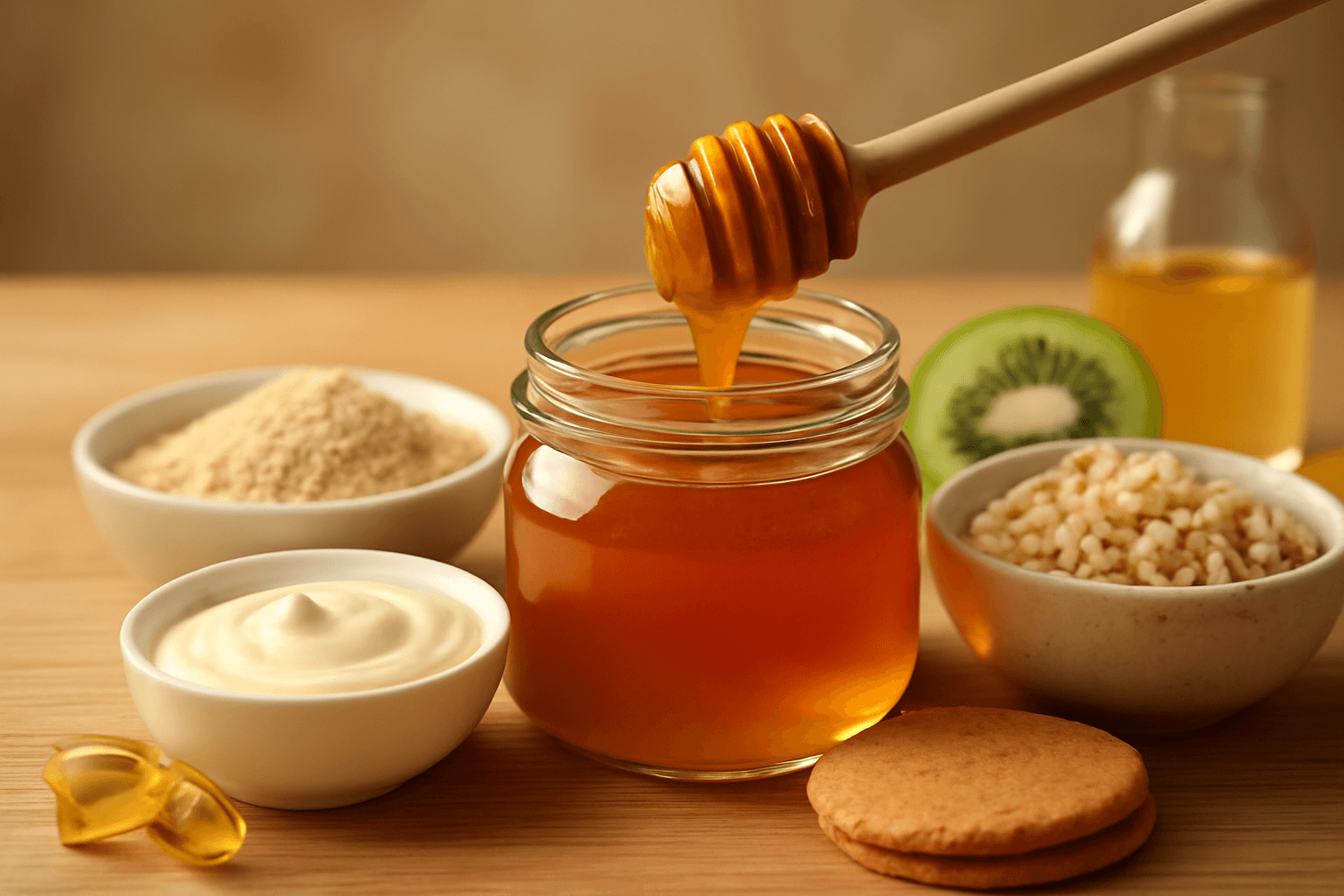
Manuka honey is a special honey produced exclusively from manuka trees native to New Zealand, boasting antibacterial properties and nutritional value incomparable to regular honey. The higher the UMF (Unique Manuka Factor) rating, the more it's recognized for medical use, providing various health benefits including improved digestive function, accelerated wound healing, enhanced skin health, and soothed sore throat. This post will detail five key benefits of manuka honey and the proper ways to use it.
What is Manuka Honey?
Manuka honey is a special honey harvested exclusively from the manuka tree (Leptospermum scoparium) native to the northern regions of New Zealand. The biggest difference from regular honey lies in the content of methylglyoxal (MGO), an antibacterial compound. While regular honey contains only about 2.0-0.5mg/kg, manuka honey contains an average of 600-1000mg/kg or more. This high MGO content is the key to manuka honey's outstanding antibacterial and anti-inflammatory effects.
The UMF (Unique Manuka Factor) rating is the standard for determining manuka honey quality. The higher the UMF rating, the stronger the antibacterial power. UMF 10 or above is classified as a health supplement, while UMF 15 or above is classified for medical use. New Zealand health authorities recognize manuka honey with UMF 10+ or higher as a functional health food, and it's actually used in medical settings for wound treatment.
Manuka honey's nutritional composition goes beyond simple sugars. It contains enzymes such as glucose oxidase and catalase, along with dozens of polyphenol compounds that provide powerful antioxidant effects. It also contains minerals including B vitamins, calcium, magnesium, and zinc, which help enhance overall immune function.
1. Enhanced Digestive Function
Manuka honey shows excellent effects in maintaining a healthy intestinal microbial ecosystem. The oligosaccharides and polyphenols abundantly present in manuka honey act as prebiotics, promoting the growth of beneficial bacteria like lactic acid bacteria. According to research, the group that consumed manuka honey showed significantly increased numbers of bifidobacterium and lactobacillus in their intestines compared to the group that consumed regular honey.
Manuka honey provides practical improvement for people experiencing abdominal bloating or discomfort due to indigestion. This is because MGO, the antibacterial component of manuka honey, helps suppress Helicobacter pylori, a harmful bacterium in the digestive system. A study published in an international journal in 2015 reported that manuka honey with UMF 20+ or higher showed antibacterial effects against Helicobacter pylori.
The proper way to consume manuka honey for improved digestive function is to dissolve 1-2 tablespoons (approximately 15-30g) in warm water and drink it 30 minutes before meals. High-temperature heating can damage enzymes and antibacterial components, so it's important to use lukewarm water at 40 degrees or below. You should consume it consistently for at least 4 weeks to feel changes in intestinal microbial balance.
2. Wound Healing
One of manuka honey's most powerful benefits is accelerating wound healing. In fact, many medical institutions in New Zealand and other countries use manuka honey-based dressings (such as Medihoney) to treat burns, trauma, bedsores, and diabetic foot ulcers. Several mechanisms explain why manuka honey is effective for wound healing.
First, the high osmotic pressure of manuka honey absorbs moisture from the wound area, suppressing infection. Second, the MGO component directly suppresses pathogenic bacteria such as staphylococci and streptococci that inhabit wounds. Third, gluconic acid found in honey maintains an acidic environment that prevents bacterial proliferation. The 2016 Cochrane Review concluded that medical honey dressings, including manuka honey, showed faster healing rates compared to conventional wound care methods.
When using manuka honey on skin wounds or boils, you should select medical-grade products with UMF 15 or higher. Apply directly to the cleaned wound at a thickness of about 1-2mm, or wrap it in gauze as a bandage. Replace it 1-2 times daily, and if there are large wounds or signs of infection, you must seek guidance from a medical professional.
3. Skin Improvement
Manuka honey's antibacterial and anti-inflammatory properties are excellent for improving skin conditions like acne. It has powerful antibacterial action against Propionibacterium acnes, one of the main causes of acne. A study published in a dermatology journal in 2015 reported that the acne patient group treated with manuka honey showed comparable or even better improvement than the group using conventional acne medications, with fewer side effects.
Beyond acne, manuka honey's effectiveness extends to general skin health maintenance. The antioxidant components found in honey (polyphenols, flavonoids, etc.) neutralize free radicals that promote skin aging, while its moisturizing effects improve skin elasticity. Additionally, the gluconic acid component acts as a natural exfoliant, promoting dead skin removal and assisting skin regeneration.
Long-term consumption (oral intake) of manuka honey is also effective for skin improvement. The antioxidant components in honey work comprehensively in the body to reduce skin inflammation and enhance immune function. Unlike conventional skincare products, this provides fundamental skin improvement from within. If you have sensitive skin or allergies, it's recommended to perform a patch test with a small amount first before use.
Manuka Honey Face Mask Pack
One way to experience manuka honey's benefits intensively is to use it as a face mask pack 1-2 times per week. It's a simple yet effective method that can simultaneously leverage manuka honey's moisturizing effects and antibacterial properties.
Basic Manuka Honey Pack:
- Spread 1 tablespoon (approximately 15g) of manuka honey evenly across a clean face.
- Wait 15-20 minutes until it dries, then gently wash with lukewarm water.
- Pat dry with a towel and finish with essence or essential oil.
Enhanced Moisturizing Mask Pack:
- Mix 1 tablespoon manuka honey + 1 tablespoon Greek yogurt + 3-4 drops of olive oil.
- Spread the mixture evenly across your face and wait 15-20 minutes.
- Cleanse with lukewarm water and gently pat to absorb.
- This pack is especially effective for dry skin or severe winter skin dryness.
Acne-Soothing Mask Pack:
- Mix 1 tablespoon manuka honey + 1/4 tablespoon cinnamon powder + 2 drops of rosehip essential oil.
- Wait 15-20 minutes (for oily skin) or 20-30 minutes (for dry skin) depending on your skin type.
- Rinse with lukewarm water and finish with vitamin C toner.
- The antibacterial properties of cinnamon and manuka honey's benefits work synergistically to soothe acne.
When using face mask packs, always use them on a clean face, and when using for the first time, test first on the neck or inner arm to check for allergic reactions. Be careful to keep the manuka honey away from the eye area, and if your skin is excessively dry, it's good to add extra oil to the mixture.
4. Sore Throat and Cough Relief
Sore throats and coughs from colds or laryngitis can be naturally relieved with manuka honey. Manuka honey's anti-inflammatory components reduce pain caused by inflammation, while its high viscosity coats the throat, protecting irritated mucous membranes. A 2021 study published in a respiratory medicine journal reported that patients with upper respiratory infections who consumed manuka honey experienced symptom relief comparable to or better than those using common cough medications.
Manuka honey is effective for cough relief for several reasons. First, honey's own viscosity physically soothes the nerves that trigger coughing. Second, manuka honey's antibacterial components suppress viruses or bacteria that cause upper respiratory infections. Third, its anti-inflammatory components reduce inflammation in the throat area that causes coughing. These multi-layered actions work synergistically to relieve coughs.
There are various ways to use manuka honey for sore throat and cough relief. The simplest method is to slowly swallow 1 tablespoon to coat the throat. For more effectiveness, mix 1 tablespoon of manuka honey and 1/2 tablespoon of fresh lemon juice in a cup of warm water (about 150ml) and drink it. Lemon's vitamin C helps strengthen immunity, and its tartness promotes saliva secretion to keep the throat moist. Drinking it 3-4 times daily, especially before bed, can reduce nighttime coughing and sleep disruption.
Adding ginger further enhances the effect. Drinking ginger tea with 1 tablespoon of manuka honey combines ginger's warming properties with manuka honey's anti-inflammatory effects for even faster symptom relief. However, honey should never be given to infants under one year old due to the risk of botulism.
Summary
Manuka honey is not merely a sweetener but a functional food that provides real health benefits. First, it acts as a prebiotic component, proliferating beneficial intestinal bacteria and improving digestive function. Second, with its high MGO antibacterial content, it accelerates wound healing and is recognized in medical settings. Third, it effectively improves skin acne and inflammation while preventing skin aging through antioxidant action. Fourth, it naturally relieves sore throats and coughs, helping manage cold symptoms.
To maximize manuka honey's benefits, it's crucial to select products with UMF 10 or higher and avoid high-temperature processing to preserve nutrients. When purchasing, always verify authentic New Zealand certification and buy from reliable retailers. The recommended daily intake is 15-30g (approximately 1-2 tablespoons), and exceeding this can cause side effects from excessive sugar consumption.
Manuka honey is a supplementary health management tool, and for serious infections, wounds, or skin conditions, you must consult with a medical professional before use. Particularly, diabetic patients should be cautious about blood sugar management due to the high sugar content, and those with allergies should test with a small amount beforehand. With proper use, manuka honey will be an excellent natural supplement to support your healthy lifestyle.