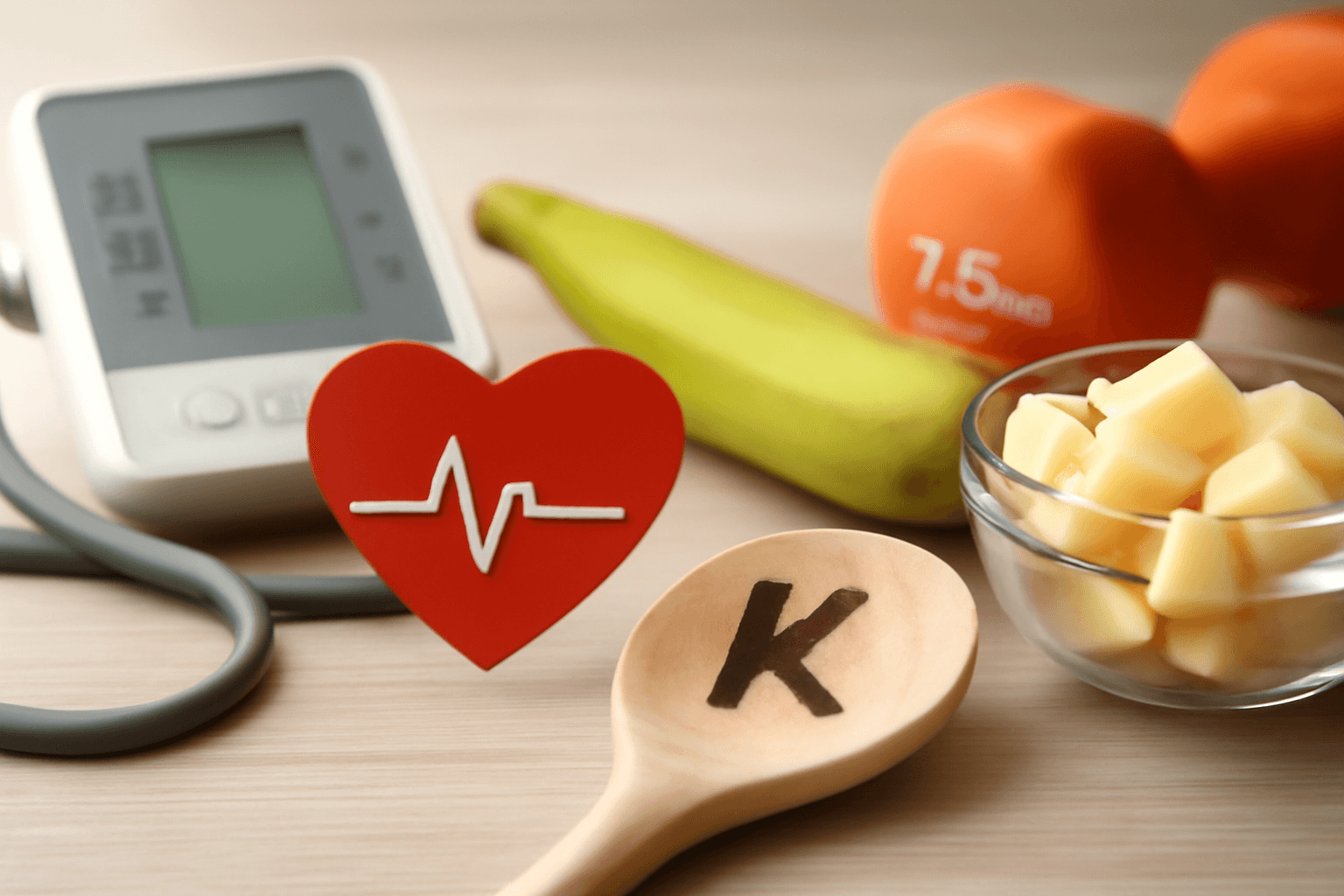
Potassium is an essential mineral for maintaining normal body function. It regulates blood pressure, produces energy, and controls muscle contractions among various physiological processes. Failing to meet daily recommended amounts can lead to symptoms such as fatigue, muscle cramps, and irregular heartbeats. This guide explains potassium's role, deficiency symptoms, sodium balance, and its importance in blood pressure management in detail.
What is Potassium?
Potassium is an essential mineral found in the highest concentration within intracellular fluid in the body. The total potassium content in the human body is approximately 140g, almost all of which is stored within cells. Potassium is classified as an electrolyte and works alongside sodium and chloride to maintain the osmotic pressure of body fluids.
The recommended daily potassium intake for Korean adults is 3,500mg. However, actual intake averages around 2,500mg, meaning most Koreans are potassium deficient. Since the body cannot produce potassium on its own, it must be obtained through food or supplements.
Foods rich in potassium include bananas, avocados, spinach, sweet potatoes, nuts, legumes, and fish. Obtaining potassium naturally through these foods is the most effective and safe approach.
What Does Potassium Do?
The primary role of potassium is maintaining cellular membrane potential. By creating a concentration difference of potassium and sodium between inside and outside the cell, it enables nerve signal transmission and muscle contraction. Without this process, heartbeats, breathing, and muscle movement would be impossible.
Energy production is another important function of potassium. It is essential for ATP (adenosine triphosphate) synthesis, which is the energy source for all cellular activities. Potassium deficiency reduces cellular energy production and can lead to chronic fatigue.
Potassium also participates in blood sugar regulation. It supports the function of pancreatic beta cells, promoting insulin secretion and enhancing glucose uptake by cells. Some studies show that adequate potassium intake can reduce the risk of type 2 diabetes by 20-30%.
Aerobic exercise performance is closely related to potassium. If potassium loss in muscles during exercise is not replenished, muscle weakness and delayed recovery occur. Therefore, athletes and those who exercise regularly need particularly adequate potassium intake.
What is the Sodium-Potassium Pump?
The sodium-potassium pump (Na+/K+-ATPase) is a protein machine present in all cell membranes. Using ATP energy inside the cell, it pumps 3 sodium ions out of the cell while simultaneously absorbing 2 potassium ions into the cell.
This process goes beyond simple nutrient transport and is essential for creating cellular membrane potential. The cell interior becomes negatively charged while the exterior becomes positively charged. This electrical difference enables nerve signaling, muscle contraction, and hormone secretion.
The sodium-potassium pump consumes approximately 20-40% of the body's total ATP energy. Therefore, for this pump to operate efficiently, both adequate potassium and appropriate sodium levels are necessary. Deficiency in either one impairs cellular function.
For people with high blood pressure or kidney disease, sodium-potassium pump function may be compromised. This can lead to elevated blood pressure, edema, and heart rhythm abnormalities. Those with such conditions must regulate sodium and potassium intake under medical supervision.
What Symptoms Appear When Potassium is Deficient?
Potassium deficiency (hypokalemia) refers to blood potassium levels of 3.5mEq/L or below. Initial symptoms may be subtle but can develop into serious health problems as they progress.
Neuromuscular symptoms are the most common. Muscle weakness, cramps, and tingling sensations occur, particularly in the legs and arms. Muscles may not recover properly after exercise, and chronic fatigue may persist. Some patients experience severe muscle strength loss that interferes with daily activities.
Cardiac symptoms are more serious. Irregular heartbeats (arrhythmias), heart palpitations, and chest pain may occur. Severe hypokalemia can trigger life-threatening arrhythmias such as ventricular fibrillation, requiring immediate emergency room visit if chest symptoms develop.
Gastrointestinal symptoms include abdominal bloating, constipation, and nausea. Since potassium regulates contractions of digestive muscles, deficiency reduces gastrointestinal motility, causing these symptoms.
Elevated blood pressure, excessive thirst, frequent urination, muscle rigidity, mood changes, and decreased concentration can also be signs of potassium deficiency. If these symptoms persist, seek medical evaluation and blood potassium testing.
Why is the Potassium-Sodium Intake Ratio Important?
Much of modern health problems stem from an imbalance between excessive sodium intake and insufficient potassium intake. The WHO recommends an ideal potassium-to-sodium ratio of approximately 3:1, but the average Korean intake ratio is about 1:2, with excess sodium.
Blood pressure control is the most important reason. Sodium raises the osmotic pressure of extracellular fluid, increasing plasma volume and elevating blood pressure. Conversely, potassium promotes blood vessel dilation and facilitates sodium excretion, lowering blood pressure. One study showed that increasing potassium intake by 1,640mg resulted in an average systolic blood pressure reduction of 3.5mmHg.
An appropriate potassium-sodium ratio is also essential for kidney health protection. Excessive sodium intake burdens the kidneys, interfering with potassium reabsorption, creating a vicious cycle of greater potassium loss. Adequate potassium allows the kidneys to excrete sodium more efficiently.
Bone health is also affected. Excessive sodium and insufficient potassium cause acid-base imbalance, prompting the body to extract calcium from bones to compensate. This results in decreased bone density and increased osteoporosis risk.
To improve the potassium-sodium ratio in daily life, reduce processed and restaurant food intake while consuming more fresh vegetables, fruits, and fish. Particularly for hypertensive patients requiring sodium restriction, simultaneously increasing potassium intake is much more effective than simply reducing salt.
How Does Potassium Help Regulate Blood Pressure to Healthy Levels?
Potassium's blood pressure-lowering mechanism is multifaceted. First, it works through improving vascular endothelial function. Potassium increases nitric oxide production in the blood vessel lining, promoting vasodilation. This reduces vascular resistance, improves blood flow, and consequently lowers blood pressure.
Promoting sodium excretion is another important mechanism. When potassium is adequate, the kidneys' ability to filter and excrete sodium improves. Additionally, potassium inhibits the renin-angiotensin-aldosterone system (RAAS), reducing hormonal signals that raise blood pressure.
According to meta-analysis results, for every 2,340mg increase in potassium intake, systolic blood pressure decreases by 7.16mmHg and diastolic blood pressure by 3.89mmHg. This is comparable to the effects of some blood pressure medications. The blood pressure-lowering effect is particularly pronounced in people with hypertension.
Decreased sympathetic nervous system activity is also observed. Chronic potassium deficiency activates the sympathetic nervous system, raising blood pressure and heart rate. Conversely, adequate potassium balances the autonomic nervous system, lowering resting blood pressure.
Potassium's blood pressure improvement effects provide additional benefits even for those taking blood pressure medications. Research shows that adequate potassium intake achieves superior blood pressure control compared to medication alone. However, for those with kidney failure or diabetes, blood potassium levels can become dangerously high. Potassium intake must be managed under physician guidance.
Conclusion and Summary
Potassium is far more than a simple mineral—it is an essential electrolyte for sustaining life. Here are the key points of this guide:
- Potassium's roles: It handles various physiological functions including cellular membrane potential formation, nerve signal transmission, muscle contraction, energy production, blood sugar regulation, and exercise performance enhancement.
- Sodium-potassium pump: A mechanism maintaining basic cellular function in all cells, consuming 20-40% of the body's ATP energy.
- Deficiency symptoms: Various symptoms can appear including muscle cramps, fatigue, arrhythmias, and elevated blood pressure.
- Potassium-sodium ratio: The ideal ratio is 3:1, but the Korean average is 1:2 with excess sodium.
- Blood pressure management: Potassium effectively lowers blood pressure through blood vessel dilation, promoting sodium excretion, and stabilizing the nervous system.
Action plan: To meet the daily recommended amount of 3,500mg, regularly consume bananas, avocados, spinach, sweet potatoes, nuts, and fish. Simultaneously, it is important to limit sodium intake by reducing processed and restaurant foods.
Medical professional consultation: If you have kidney failure, diabetes, heart disease, or are taking blood pressure medication, consult with your doctor or nutritionist before establishing a potassium intake plan. Self-administered potassium supplements can cause hyperkalemia (excessive blood potassium).
Potassium is playing an important role in your body right now, at every moment. Adequate potassium intake is the most fundamental yet powerful method for maintaining healthy blood pressure, stable energy levels, and strong muscles. Starting today, consciously include potassium-rich foods in your diet.