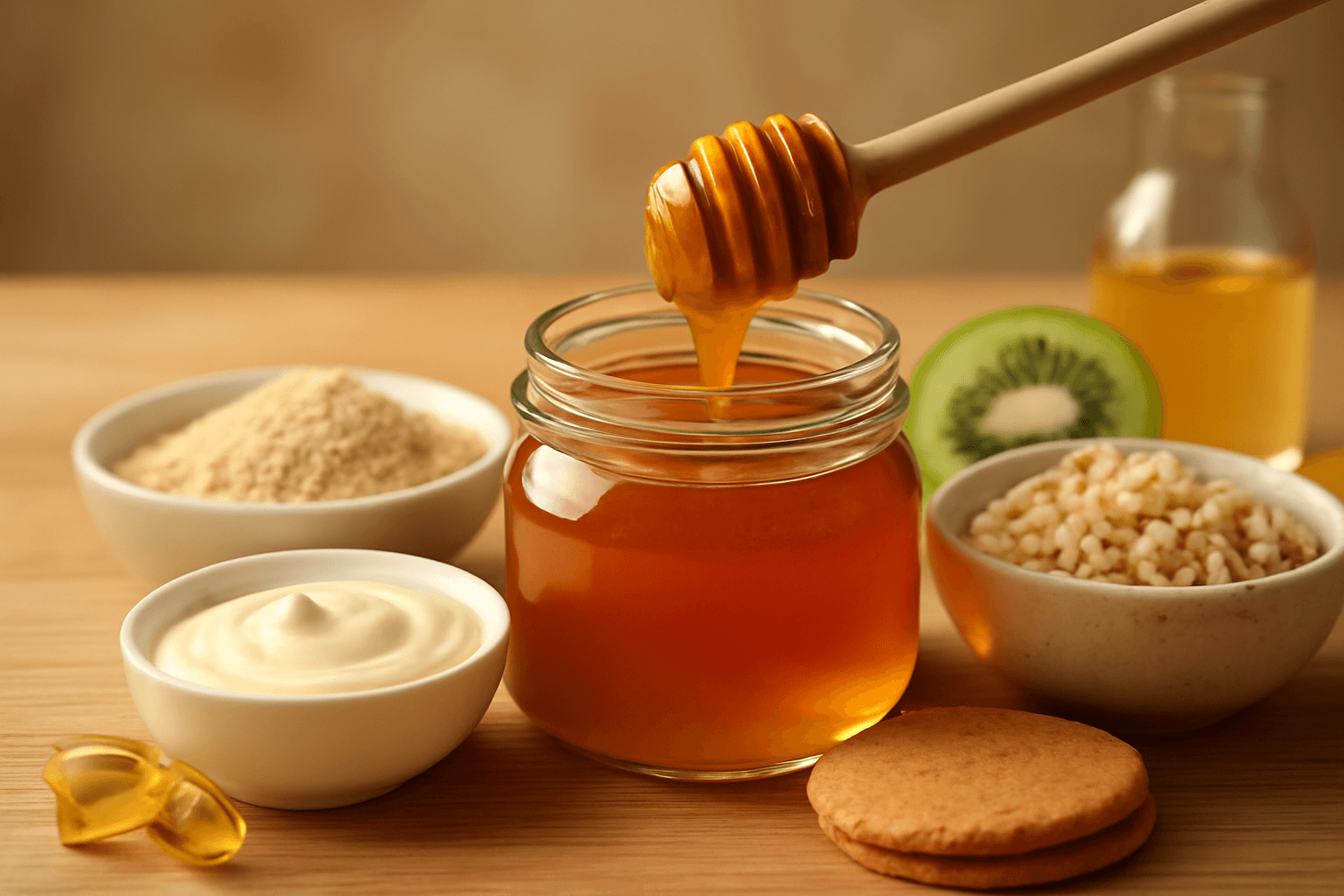
Manuka honey is a special honey harvested exclusively from manuka trees in New Zealand. Unlike regular honey, it has gained worldwide attention from health experts for its unique antibacterial properties and exceptional nutritional value. In this article, we'll take a detailed look at what makes manuka honey special and explore six ways it benefits our bodies.
1. It has benefits you won't find in other honeys
The most unique characteristic of manuka honey is a substance called methylglyoxal (MGO). This compound is present in manuka honey at concentrations over 100 times higher than in regular honey. MGO has powerful antibacterial properties and is particularly effective against Helicobacter pylori bacteria that causes gastroenteritis and bacteria that causes inflammation.
Additionally, manuka honey contains a component called lectin that helps suppress Propionibacterium acnes, the bacteria responsible for acne. According to research from Waikato University in New Zealand, skincare using manuka honey showed more effective results than regular antibiotics. This means manuka honey goes beyond being a simple sweetener—it's a food with medicinal properties.
- Methylglyoxal (MGO): Over 100 times higher concentration than regular honey
- Lectin component: Suppresses acne-causing bacteria
- Antibacterial power: Effective against Helicobacter pylori and various pathogenic bacteria
2. It supports digestive and immune system health
Manuka honey contains prebiotic components that lay the foundation for gut health. Prebiotics serve as food for beneficial bacteria in our bodies, known as probiotics, helping maintain a healthy microbial ecosystem in the intestines. This improves digestive function and enhances nutrient absorption.
Improved digestive health directly leads to enhanced immune function. This is because 70% of the immune system is concentrated in the intestines. Manuka honey's antibacterial properties suppress harmful bacteria while simultaneously promoting beneficial bacteria—a dual action mechanism. When a healthy intestinal environment is created this way, immune cells have the proper foundation to function effectively.
Additionally, antioxidants found in manuka honey prevent damage to immune cells and regulate inflammatory responses. Antioxidant compounds like flavonoids and polyphenols neutralize free radicals, reducing oxidative stress in the body. This can be particularly helpful during seasonal transitions or when immunity tends to decline.
Medical note: Manuka honey is a supplemental food, not a disease treatment. If you have digestive or immune-related conditions, consult a healthcare professional.
3. Honey bees can only harvest honey from manuka flowers during a limited season
One reason manuka honey is so precious is its extremely limited harvesting window. New Zealand's manuka trees bloom for only two to four weeks each year. Bees must harvest all the honey during this short period, making production naturally limited in quantity.
These constraints greatly increase manuka honey's rarity and value. Because environmental factors like climate change, seasonal rainfall, and temperature fluctuations affect bee foraging activity each year, production quantities vary significantly from year to year. Some years yield less than half of the anticipated harvest.
Furthermore, manuka trees are native only to specific regions in New Zealand, and when transplanted to other environments, they don't produce honey of the same quality. This makes manuka honey one of "the world's rarest honeys." As demand continues to increase while supply remains limited, finding quality manuka honey is becoming increasingly difficult.
- Bloom period: Extremely limited window of 2-4 weeks per year
- Climate dependency: Annual production fluctuates by 50-100% or more
- Regional specificity: Native only to specific areas in New Zealand
- Supply shortage: Continued decline in supply relative to increasing demand
4. It's the most researched honey in the world
The benefits of manuka honey are based on scientific evidence rather than mere hearsay. Hundreds of research papers have been published in international academic journals, with active clinical trials ongoing at universities and research institutions in New Zealand, Australia, the UK, the US, and other countries.
Research in the field of wound healing shows that manuka honey has the potential to replace conventional antibiotics. According to research by Bismos Medical, wounds treated with manuka honey regenerated faster than those treated with standard antibiotics. Notably, its effectiveness against antibiotic-resistant bacteria (MRSA) has received significant attention.
Research on digestive disorders is also active. Researchers at Waikato University in New Zealand have reported that manuka honey may help relieve symptoms in patients with inflammatory bowel diseases like ulcerative colitis and Crohn's disease. Research has also shown that the natural sugars in manuka honey may promote the production of melatonin, a hormone that induces improved sleep.
There are also notable studies in the women's health field. Clinical research findings have reported that manuka honey's anti-inflammatory properties may help alleviate premenstrual syndrome (PMS) and menstrual pain. This suggests that manuka honey can have positive effects not only on immune enhancement but across various health domains.
- Published papers: Over 500 research papers published in medical journals worldwide
- Wound healing: Effective against antibiotic-resistant bacteria including MRSA
- Digestive health: Improvement in inflammatory bowel diseases like ulcerative colitis and Crohn's disease
- Sleep: Promotes melatonin production to improve sleep quality
- Women's health: Helps relieve PMS and menstrual pain
5. The UMF™ certification mark is proof of quality for premium manuka honey
UMF (Unique Manuka Factor) is an international standard indicator that measures the antibacterial potency of manuka honey. It's a certification system exclusively managed in New Zealand, helping consumers identify genuine high-quality manuka honey. The higher the UMF rating, the superior the antibacterial activity.
UMF grades are classified as follows:
- UMF 5-9: Low grade (insufficient as a health food)
- UMF 10-15: Standard grade (suitable for general health maintenance)
- UMF 16-20: High grade (expect noticeable health benefits)
- UMF 25 or higher: Premium grade (used for medicinal purposes)
For those purchasing manuka honey for health benefits, it's generally recommended to choose UMF 15 or higher. Products with UMF 25 or above are sometimes used for wound healing or managing specific conditions. However, products without a UMF label or with unclear labeling are likely either not genuine manuka honey or products without guaranteed quality.
The New Zealand government strictly manages national manuka honey standards. Genuine manuka honey must be produced only in New Zealand and must be certified by the Manuka Honey Association of New Zealand (MHANZ). Because of manuka honey's high price, counterfeit products are common, so when purchasing, it's important to always check the UMF™ label and certification number.
Shopping tip: Check that there's a certification number next to the UMF™ logo. You can verify the certification number on the official Manuka Honey Association website.
6. Its taste, texture, and color differ from regular honey
The most noticeable difference people experience when tasting manuka honey for the first time is its distinctive flavor. While regular honey has a simple sweetness, manuka honey has multiple layers of taste. It's characterized by a deep flavor with hints of chocolate, butterscotch, and herbal notes.
Color is another striking difference. While regular honey is bright golden or transparent amber, manuka honey appears dark brown to nearly black. Higher UMF-graded manuka honey tends to be darker in color. This visually indicates that it contains more MGO and antioxidants.
Texture is also characteristic. Manuka honey has higher viscosity and a creamier consistency than regular honey. When you scoop it with a spoon, it flows down more slowly. This is due to manuka honey's glucose content and crystallization properties. It naturally crystallizes over time, which is a sign of superior quality.
When consuming manuka honey, it's important not to heat it. Heating honey can destroy beneficial compounds. If adding it to warm beverages, it's best to let the drink cool to a drinkable temperature first before adding the honey. Direct consumption with a spoon or mixing it into yogurt or salad dressing are also effective methods.
- Taste: Deep, complex flavor with hints of chocolate, butterscotch, and herbal notes
- Color: Dark brown to nearly black color
- Texture: High-viscosity, creamy texture
- Crystallization: Natural crystallization is evidence of superior quality
- Consumption method: Consume directly without heating or mix into warm water
Summary: Key points about manuka honey
Manuka honey is far more than a simple sweetener—it's a special food with medicinal properties. With its unique antibacterial compound methylglyoxal (MGO), it provides health benefits incomparable to regular honey. It offers a variety of health advantages including digestive health, immune system enhancement, acne relief, improved sleep, and relief from menstrual symptoms, with its benefits proven by hundreds of scientific studies worldwide.
Because manuka honey is harvested only during an extremely limited 2-4 week period each year in New Zealand, its supply is very restricted. As demand increases, counterfeit products have become common, so when purchasing, always check for the UMF™ certification mark and certification number. For general health maintenance purposes, it's best to choose UMF 15 or higher.
Manuka honey's distinctive dark color, creamy texture, and complex flavor are signs of quality. To achieve maximum health benefits, it's best to consume it directly or mixed into warm water without heating. However, since manuka honey is a supplement and not a replacement for disease treatment, always consult a healthcare professional if you have health concerns.