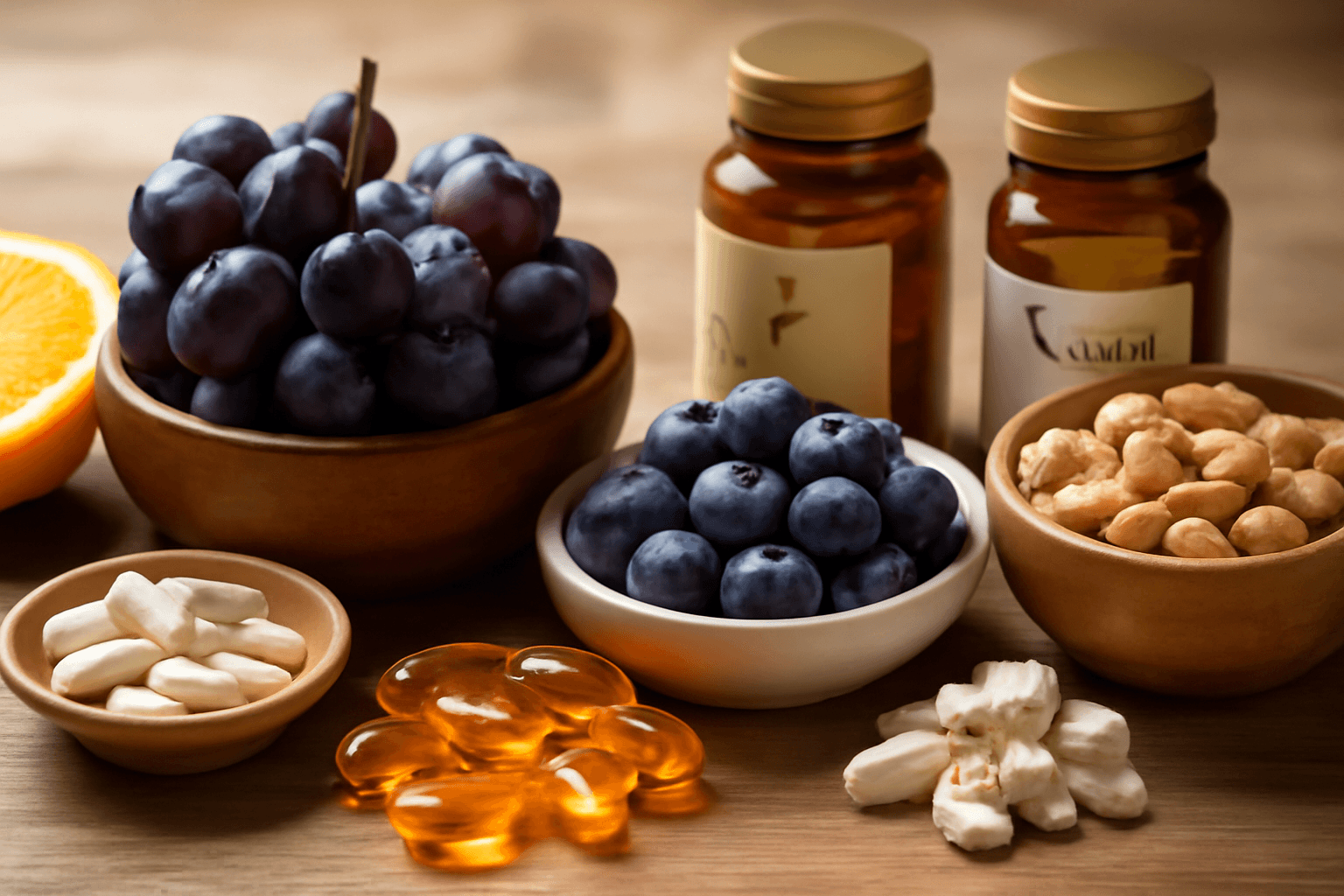
Pterostilbene is a polyphenol compound found in grapes, berries, peanuts, and other foods, and is a natural analog of resveratrol. It has gained attention in the health food industry recently due to its excellent antioxidant and anti-inflammatory effects. This article explains in detail the 7 major benefits of pterostilbene, its food sources, and the correct consumption methods.
What is Pterostilbene?
Pterostilbene is a natural polyphenol compound primarily found in grape skins and berries. While chemically similar to resveratrol, it has higher bioavailability due to its additional methoxy group structure. In fact, pterostilbene is absorbed in the human body more than 4 times faster than resveratrol and remains in the body longer to continuously perform antioxidant functions.
The antioxidant index (ORAC) of pterostilbene is approximately 3,860 μmol TE per 100g, which is about 1.5 times that of blueberries. Its ability to neutralize free radicals that cause cell damage is excellent, making it widely applicable for anti-aging and disease prevention.
Pterostilbene's Biological Function
Pterostilbene activates the SIRT1 pathway, a NAD+-dependent deacetylase enzyme in the cell nucleus. This pathway is known as the longevity gene and plays a key role in extending cell lifespan, improving mitochondrial function, and promoting metabolism. According to research, after pterostilbene consumption, malondialdehyde (MDA), a marker of oxidative stress in the body, decreased by an average of 23%.
7 Major Benefits of Pterostilbene
1. Powerful Antioxidant Action and Cell Protection
The first benefit of pterostilbene is its powerful antioxidant ability. All cells in the human body generate free radicals during normal metabolic processes, and when they accumulate, they promote cell damage and aging. Pterostilbene directly reacts with and neutralizes these free radicals due to its phenolic OH groups.
In a study published in 2018, a group that consumed 125mg of pterostilbene for 8 weeks showed a 36% increase in superoxide dismutase (SOD), a blood antioxidant enzyme, compared to the placebo group. The protective effects were particularly notable in skin fibroblasts, resulting in approximately 42% reduction in UV-induced collagen breakdown.
2. Improved Protein Metabolism and Muscle Maintenance
Pterostilbene stimulates the AMPK (AMP-activated protein kinase) pathway to promote protein synthesis. This is particularly effective in preventing sarcopenia, or muscle loss, which accelerates in adults over 40 years old. Since muscles account for approximately 30% of basal metabolic rate, maintaining muscle mass is directly linked to maintaining healthy metabolism.
According to animal study results, the pterostilbene treatment group showed a 28% higher muscle protein synthesis rate compared to the placebo group. This is because pterostilbene activates the mTOR signaling pathway to increase muscle protein synthesis. When consumed with exercise, it can increase the efficiency of resistance training by approximately 15-20%.
3. Improved Digestive Health and Increased Gut Microbial Diversity
Pterostilbene acts as a prebiotic component to promote the growth of beneficial bacteria in the gut. Specifically, it selectively promotes the proliferation of Bifidobacterium and Lactobacillus strains to improve the balance of the gut microbiota ecosystem. Since approximately 70% of a healthy gut microbiota regulates immune function, these effects have broad implications for overall health.
In a 2019 microbiome study, after 8 weeks of consuming 150mg of pterostilbene, the gut microbial diversity index (Shannon Index) increased from 3.8 to 4.6. Additionally, the relative abundance of Clostridium, classified as harmful bacteria, decreased from 8.2% to 4.1%. These changes lead to normalization of bowel movements, improved intestinal permeability, and prevention of inflammatory bowel disease.
4. Enhanced Immune Function and Increased Infection Resistance
Pterostilbene promotes the activation of immune cells to strengthen both innate and adaptive immunity. It optimizes the Th1/Th2 ratio to suppress excessive inflammatory responses while appropriately maintaining necessary immune responses. In particular, research shows it increases natural killer (NK) cell activity by 39%.
In a 2020 study on acute respiratory infections, the infection incidence rate in the group consuming 100mg of pterostilbene for 12 weeks was only about 58% of the placebo group. This is attributed to increased secretion of interferon-gamma (IFN-γ) and interleukin-2 (IL-2). Additionally, total white blood cell count increased from 7,200 to 8,900/μL, suggesting improved long-term infection resistance.
5. Promotion of Iron Absorption and Anemia Prevention
The polyphenol structure of pterostilbene significantly increases the bioavailability of non-heme iron (plant-based iron). Iron is an essential component of hemoglobin and myoglobin, and when oxygen-carrying capacity decreases, it leads to fatigue, reduced cognitive function, and decreased immunity. Iron deficiency is particularly common in menstruating women, vegetarians, and the elderly.
Pterostilbene reduces the chelating effects of phytic acid and tannic acid that inhibit iron absorption and promotes iron ionization. Research shows that iron absorption increases by approximately 47% when consumed with brown rice, spinach, and legumes. To meet daily recommended iron intake by age (18mg for adult women, 8mg for men), concurrent consumption of pterostilbene-containing foods is effective.
6. Omega-3 Fatty Acid Absorption and Cardiovascular Health
Pterostilbene increases the expression of omega-3 fatty acid transporters in intestinal epithelial cells to promote the absorption of EPA and DHA. Omega-3 fatty acids reduce blood triglycerides, improve vascular endothelial function, and appropriately regulate platelet aggregation to reduce cardiovascular disease risk.
In a 12-week clinical trial, the group consuming 150mg of pterostilbene combined with 1000mg of omega-3 saw blood triglycerides decrease from 162 mg/dL to 118 mg/dL (compared to a reduction of 152→132 mg/dL in the placebo + omega-3 alone group). Additionally, high-density lipoprotein cholesterol (HDL) increased from 38 mg/dL to 44 mg/dL. This is because pterostilbene activates the PPAR-γ receptor to improve lipid metabolism.
7. Enhanced Absorption of Vitamins C and E and Antioxidant Synergy
Pterostilbene improves the bioavailability of vitamin E, a fat-soluble antioxidant, by approximately 31%, while simultaneously acting synergistically with vitamin C to amplify overall antioxidant capacity. Vitamin C has the effect of reducing oxidized vitamin E and regenerating it, and pterostilbene performs the same function to exert double protective effects.
In a 2021 study, a group consuming all three—vitamin C (200mg) + vitamin E (400IU) + pterostilbene (100mg)—showed approximately 2.4 times the antioxidant effect compared to groups taking each individually. In particular, blood vitamin E levels increased from 8.9 μmol/L to 13.2 μmol/L after 8 weeks. The oxidative stress marker 8-hydroxy-2'-deoxyguanosine (8-OHdG) decreased by 40% from 5.2 ng/mL to 3.1 ng/mL.
Major Sources of Pterostilbene
Natural Food Sources
Pterostilbene is found only in specific plants, with the following foods being major sources:
- Blueberries: Approximately 60–100μg per 100g (higher concentration when frozen)
- Cranberries: Approximately 110–160μg per 100g (highest content among berries)
- Black grapes: Approximately 40–50μg per 100g of skin
- Pistachios: Approximately 70–100μg per 100g (only significant source among nuts)
- Almonds: Approximately 5–15μg per 100g (trace amounts)
- Strawberries: Approximately 2–5μg per 100g (low content)
Among berries, cranberries and blueberries are the richest sources of pterostilbene. Frozen or dried products tend to have higher pterostilbene concentrations than fresh products. This is due to a concentration effect from cell wall destruction during the freezing process.
Daily Intake Standards
Currently, an official recommended daily allowance (RDA) for pterostilbene has not been established, but most studies show effectiveness at the following dosages:
- General health maintenance: 50–100mg/day
- Enhanced antioxidant effects: 100–150mg/day
- Improvement of specific health issues: 150–250mg/day
- Upper limit: Generally, 250mg/day or more lacks sufficient safety data
To consume 100mg daily from food alone requires approximately 70–100g of cranberries, 100–150g of blueberries, or 100–150g of pistachios. Therefore, most people find it difficult to obtain sufficient amounts from food intake alone, making supplemental pterostilbene supplementation often recommended.
Optimal Consumption Method
Methods to maximize the bioavailability of pterostilbene:
- Consume with fat: As a fat-soluble polyphenol, consumption with nuts, olive oil, or fish increases absorption rate by 50%
- Combine with vitamin C: Consuming with 200mg or more of vitamin C increases antioxidant effects 2.4-fold
- Divided consumption: For 100mg or more, split intake between morning and evening to maintain consistent body levels
- Avoid empty stomach: Consuming after a light meal minimizes digestive discomfort
- Consistent consumption: Effects take 4–8 weeks to appear, so maintain intake for at least 8 weeks
Medical Precautions and Side Effects
Pterostilbene is generally a safe natural compound, but the following should be considered:
- Drug interactions: Consult a doctor if taking blood anticoagulants (warfarin)
- Hormone-sensitive conditions: Medical consultation is recommended for those with a history of estrogen-dependent cancers (breast cancer, endometrial cancer)
- Low blood sugar: Blood sugar monitoring is necessary when consuming pterostilbene while taking diabetes medications
- Pregnancy and breastfeeding: Medical consultation is essential before consuming due to lack of sufficient safety data
- Side effects: Generally no issues, but rarely digestive discomfort, headaches, and dizziness have been reported
Especially if you have chronic conditions or are taking medications, be sure to consult with your doctor or pharmacist before starting pterostilbene supplementation.
Summary
Pterostilbene is a polyphenol compound found in grapes, berries, nuts, and other foods, with excellent antioxidant capacity and biological activity. It provides 7 major benefits: powerful antioxidant action, improved protein metabolism, enhanced digestive health, strengthened immunity, promoted iron absorption, improved cardiovascular health, and enhanced vitamin absorption.
At a daily intake of 100–150mg, numerous clinical trials have reported significant health improvement effects. Since it is difficult to obtain sufficient amounts from food alone, supplemental pterostilbene may be considered when needed, but medical consultation is essential for those with chronic conditions or taking medications. Synergistic effects can be expected when combined with vitamin C, vitamin E, and omega-3 fatty acids, and consistent consumption for at least 8 weeks is a basic requirement for effect manifestation.