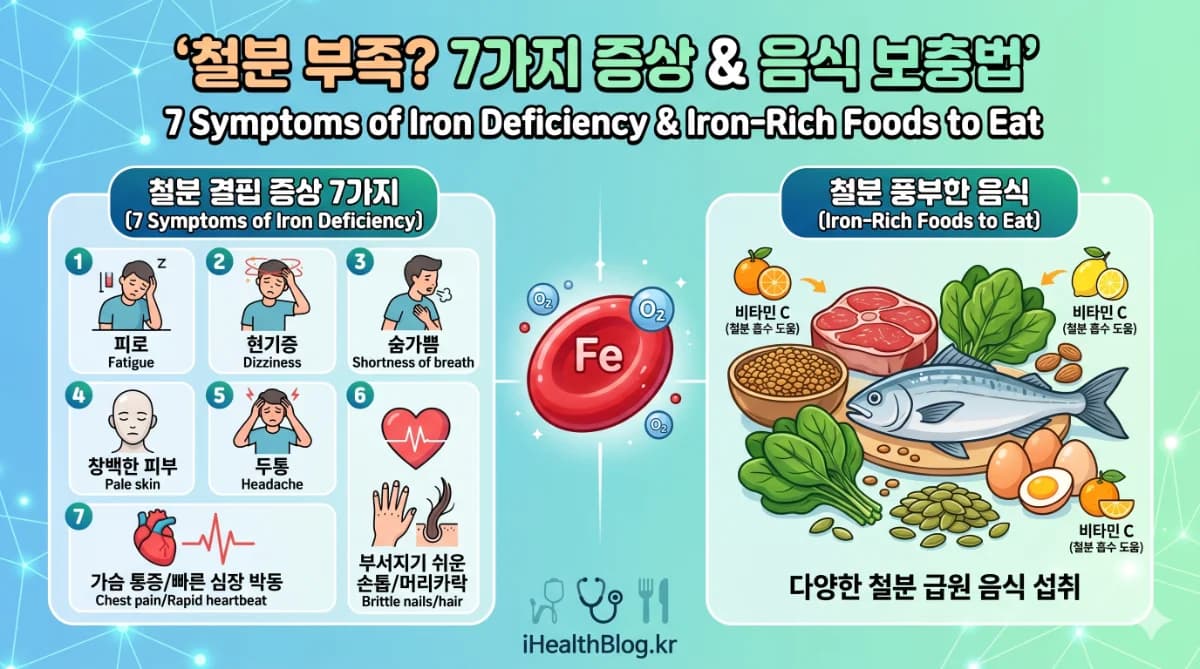
What is Iron Deficiency? Why is it Important?
Iron is an essential mineral for our bodies to transport oxygen. It is necessary for the production of hemoglobin in red blood cells, and a deficiency can lead to anemia. According to data from the Korea Disease Control and Prevention Agency, about 8-10% of adults in South Korea experience anemia due to iron deficiency, with over 15% of women of childbearing age affected.
While iron deficiency is not an immediate disease, if left untreated, it can significantly diminish the quality of daily life. The Korean Medical Association recommends a daily iron intake of 8mg for adult men and 18mg for premenopausal women. After menopause, the required amount becomes the same for both women and men.
7 Key Symptoms of Iron Deficiency
1. Extreme Fatigue and Weakness
The most common symptom of iron deficiency is persistent fatigue. This occurs because the ability to transport oxygen decreases, leading to insufficient oxygen supply to muscles and the brain. Even after adequate sleep, one may still feel tired, and everyday activities can feel exhausting. This symptom is particularly pronounced when climbing stairs or walking quickly.
2. Pale Skin and Mucous Membranes
When hemoglobin levels drop, the skin, lips, and conjunctiva of the eyes can become pale. If you look at the inside of your eyelids in the mirror and see a color close to white rather than light pink, you may suspect iron deficiency. This is especially noticeable when blood hemoglobin levels fall below 10g/dL.
3. Shortness of Breath and Chest Tightness
If you experience shortness of breath with minimal exertion, it may indicate iron deficiency. As the ability to transport oxygen decreases, the body compensates by breathing faster to obtain the same amount of oxygen. If this symptom persists, it can put strain on the heart, so caution is advised.
4. Headaches and Dizziness
A lack of oxygen supply to the brain can frequently cause headaches and dizziness. This may feel more severe when standing up or being active. Some patients describe this symptom as a feeling of "tightness around the head."
5. Cold Sensitivity and Numbness in Hands and Feet
When iron is deficient, the body prioritizes sending blood to essential areas like the brain and heart to maintain body temperature. As a result, you may experience cold and numb hands and feet. This can worsen in winter, so extra caution is needed.
6. Decreased Concentration and Memory Loss
A lack of oxygen to the brain can lead to impaired cognitive function. You may find it hard to concentrate while working or studying, and forgetfulness may become more pronounced. For students or workers, this can lead to a sharp decline in performance.
7. Unusual Changes in Appetite (Pica)
Some individuals with iron deficiency experience an urge to eat non-food items like dirt, ice, or paper. This is referred to as 'Pica.' The exact cause is not fully understood, but it is known to be closely related to iron deficiency.
Causes and At-Risk Groups for Iron Deficiency
Iron deficiency can occur for various reasons:
- Heavy Menstruation: Women of childbearing age, especially those with heavy menstrual flow
- Insufficient Intake: Vegetarians who do not consume meat
- Absorption Disorders: Gastrointestinal diseases such as celiac disease or Crohn's disease
- Chronic Diseases: Kidney disease, cancer
- Pregnancy and Lactation: Increased daily iron requirement of 27mg
- Long-term Medication Use: Certain medications can interfere with iron absorption
How to Supplement Iron Through Food
Animal-Based Iron (Heme Iron) - More Efficient Absorption
'Heme iron' found in animal products has a very high absorption rate of 15-35%. Recommended foods include:
- Beef Liver: Approximately 5-8mg of iron per 100g (Price: about 8,000-12,000 won/100g)
- Oysters: Approximately 5-8mg of iron per 100g
- Red Meat: Approximately 2-3mg of iron per 100g
- Pork: Approximately 1-1.5mg of iron per 100g
- Salmon: Approximately 0.8mg of iron per 100g
- Eggs: Approximately 1.2mg of iron per egg (concentrated in the yolk)
Liver is the easiest source of iron for Koreans to access. Consuming beef or pork liver 2-3 times a week can be quite beneficial.
Plant-Based Iron (Non-Heme Iron) - Improving Absorption Rates
The absorption rate of iron from plant-based foods is 2-10%, which is lower than that from animal sources. However, you can increase absorption with the following methods:
- Consume with Vitamin C: Increases iron absorption by 3-4 times
- Consume with Acidic Foods: Such as vinegar or lemon
- Separate Timing from Tea or Coffee: Avoiding tannins that hinder iron absorption
Recommended plant-based iron foods include:
- Spinach: Approximately 2.7mg of iron per 100g (note that oxalates can hinder absorption)
- Lentils: Approximately 3.3mg of iron per 100g
- Black Beans: Approximately 3.7mg of iron per 100g
- Tofu: Approximately 1.6mg of iron per 100g
- Black Rice: Approximately 1.5mg of iron per 100g
- Red Beans: Approximately 2.4mg of iron per 100g
Example of a Practical Meal Plan
Breakfast: Egg omelet (2 eggs) + Orange juice (to enhance iron absorption)
Lunch: Grilled beef liver (100g) + Leafy greens + Rice
Dinner: Seasoned grilled pork + Black bean rice + Tomato salad
Snack: Raisins (approximately 2.6mg per 100g) or almonds (approximately 3.7mg per 100g)
Foods and Medications That Hinder Iron Absorption
The absorption rate of iron can vary significantly depending on the combination with other foods, even if the same amount of iron is consumed.
Combinations to Avoid:
- Caffeine within 2 hours of iron intake: Coffee, green tea, chocolate (tannins)
- Simultaneous intake with calcium supplements: Competing for absorption
- With dairy products: Calcium in milk and yogurt can interfere
- Grains high in bran: Phytic acid can hinder absorption
Drug Interactions: Antacids, certain antibiotics, and thyroid hormones can interfere with iron absorption. If you are taking these medications, consult your doctor or pharmacist to adjust the timing of your doses.
Considerations for Medical Check-ups and Supplements
If the above symptoms persist for more than 2 weeks, seek medical evaluation. A blood test (serum iron, ferritin, TIBC, etc.) can provide an accurate diagnosis.
If dietary measures alone are insufficient, iron supplements can be taken under a doctor's prescription. Over-the-counter iron supplements typically range from about 8,000 to 25,000 won, while prescription medications may be covered by health insurance.
Precautions When Taking Supplements:
- Taking on an empty stomach can enhance absorption but may cause gastrointestinal discomfort
- Take with vitamin C-containing beverages (like orange juice)
- Dark-colored stools are a normal side effect
- Excessive intake can cause long-term damage, so follow your doctor's instructions
Conclusion
Iron deficiency is a common health issue among modern individuals, but understanding the causes and addressing them appropriately can lead to significant improvement. If you experience any of the 7 symptoms: extreme fatigue, paleness, shortness of breath, headaches, cold sensitivity, decreased concentration, or Pica, seek medical evaluation first.
The most effective method is to consume iron-rich animal products, especially beef liver, 2-3 times a week. Vegetarians should pair plant-based foods like lentils, black beans, and black rice with vitamin C-rich foods to enhance absorption.
Avoid caffeine and dairy around meal times as they hinder iron absorption, and if symptoms are severe or do not improve after 2 weeks, be sure to undergo a thorough examination at a specialized medical facility. With the right dietary habits and medical support, iron deficiency can be completely overcome.