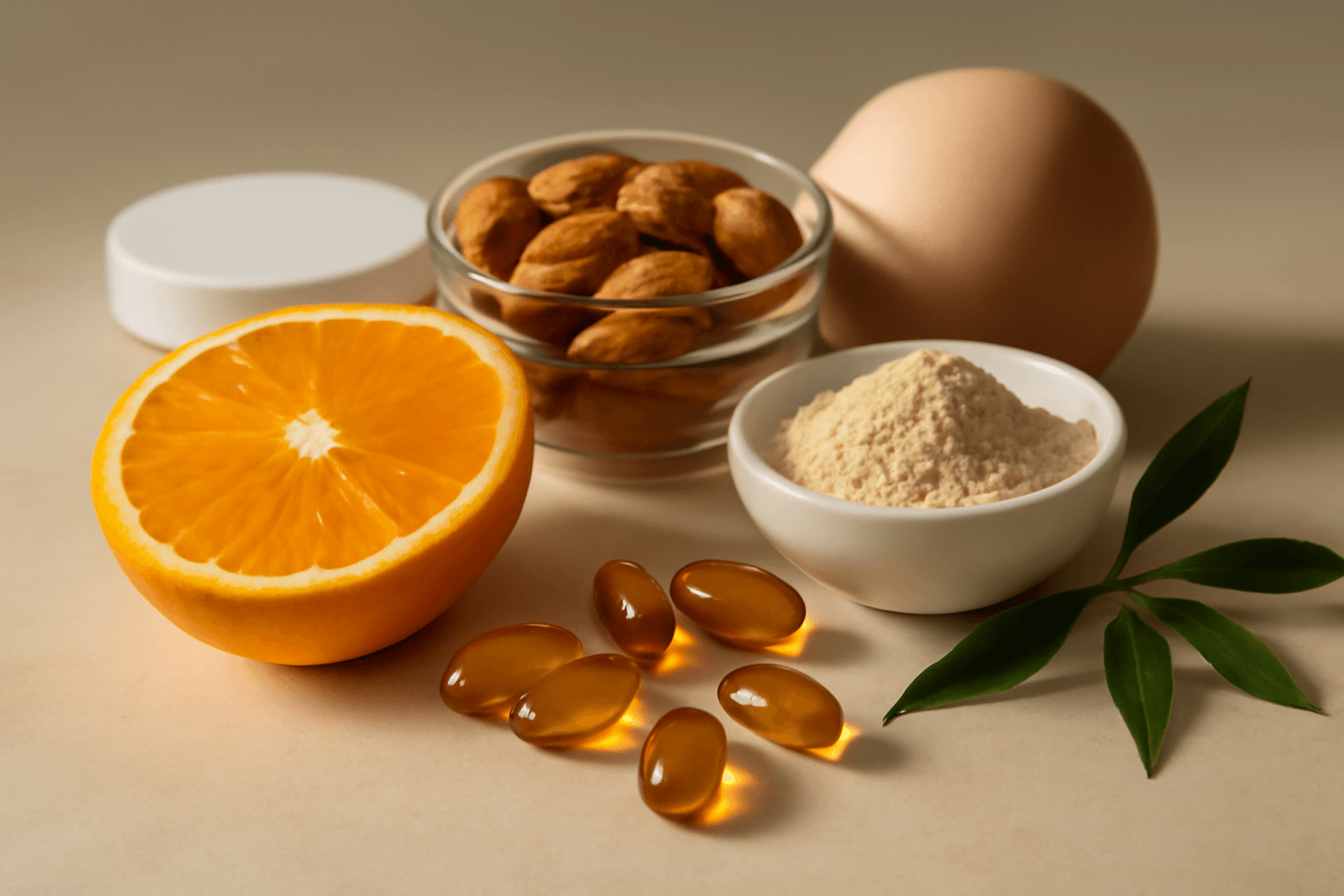
Modern people are exposed daily to various environmental pollutants including fine dust, car exhaust, and industrial contaminants. These pollution particles accumulate on the skin's surface, generating free radicals and damaging the skin barrier, leading to premature aging, inflammation, and reduced elasticity. Fortunately, certain nutrients can effectively protect skin from these environmental stressors. Antioxidants, essential minerals, and anti-inflammatory substances strengthen the skin's natural defense mechanisms and help repair damaged cells. In this article, we'll examine in detail 8 key ingredients that protect skin from pollution and their respective mechanisms of action.
Outstanding Skincare Ingredients for Protecting Skin from Pollution
1. Vitamin C (Ascorbic Acid)
Vitamin C is the first line of defense for skin against environmental pollution. When exposed to pollution particles, the skin experiences a surge in free radicals, which vitamin C neutralizes as a powerful antioxidant. According to research, people who used vitamin C serum daily saw an average 27% increase in skin brightness after 8 weeks, and a 11% reduction in wrinkle depth.
Vitamin C also promotes collagen synthesis. Collagen, a structural protein in the skin, maintains skin elasticity and firmness, but oxidative stress from pollution accelerates collagen breakdown. Vitamin C stabilizes collagen and promotes new collagen production, maintaining the skin's structural integrity.
For practical application, choose products with vitamin C concentrations in the 15-20% range and use at pH 3.5 or lower for optimal effectiveness. Applying vitamin C serum right after toner following your morning cleanse provides lasting pollution protection throughout the day.
2. Vitamin A (Retinol)
Vitamin A maximizes the skin's regeneration capacity. It accelerates the process of efficiently replacing skin cells damaged by pollution. According to research in the Journal of the American Academy of Dermatology, skin treated with 0.025% retinol for 12 weeks showed a skin cell turnover rate of 21 days, compared to the normal 28 days for untreated skin.
Another important role of vitamin A is strengthening the skin barrier. Pollution particles penetrate the lipid barrier on the skin's surface and cause damage, but vitamin A enhances this barrier by increasing ceramide production. This prevents moisture loss and blocks pollutant penetration.
When using vitamin A, start with a low concentration. For sensitive skin, starting at 0.025% and gradually increasing every two weeks is recommended. SPF protection is essential.
3. Zinc
Zinc is an essential mineral that regulates inflammatory responses in the skin. Skin exposed to pollution shows increased levels of cytokines, inflammatory mediators, which zinc suppresses. According to research in the Journal of Clinical Dermatology, patients with skin inflammation who took zinc supplements for 8 weeks experienced an average 34% reduction in inflammation scores.
Zinc also has antibacterial properties that inhibit bacterial growth accumulated on the skin from pollution exposure. Pollution particles absorb pathogenic bacteria and transfer them to the skin, and zinc's antibacterial action prevents these secondary infections. Additionally, zinc is a key component of superoxide dismutase (SOD), an antioxidant defense enzyme in skin cells.
Zinc is very safe until dangerous toxicity levels appear. However, the daily upper limit for adults is set at 40mg, so caution is needed when choosing supplements. It's advisable to determine the appropriate dosage after consulting with a dermatologist.
4. Vitamin E (Tocopherol)
Vitamin E is a fat-soluble antioxidant that protects the lipid components of skin cell membranes. Free radicals from pollution specifically oxidize lipids in skin cell membranes, and vitamin E directly prevents this lipid peroxidation. According to research in the International Journal of Molecular Sciences, products containing vitamin E showed an average 22% reduction in malondialdehyde (MDA), a lipid peroxidation marker, after 4 weeks.
The combination of vitamins C and E is particularly powerful. These two ingredients interact to enhance each other's antioxidant abilities. Vitamin C reduces oxidized vitamin E, allowing it to be recycled, and in this process, both ingredients' antioxidant benefits are maximized. Therefore, choosing products containing both vitamins C and E provides greater pollution defense effects.
The recommended daily intake of vitamin E for adults is 15mg, and excessive intake can increase bleeding risk, so avoid exceeding the upper limit of 1000mg.
5. Glutathione
Glutathione is the body's most powerful antioxidant. It directly neutralizes free radicals within cells and protects other antioxidants from damage. Chronic pollution exposure causes glutathione levels to gradually decline, accumulating oxidative stress in the skin. According to research in the Journal of Cosmetic Dermatology, glutathione supplementation for 4 weeks increased antioxidant capacity by an average of 31%.
Glutathione also inhibits melanin production, preventing pollution-induced hyperpigmentation. Inflammation from pollution particles stimulates melanocytes, causing uneven skin tone, but glutathione blocks this mechanism.
The main limitation is the low bioavailability of oral glutathione supplements. Since glutathione can be broken down during digestion, liposomal formulations or products containing N-acetylcysteine (NAC), a glutathione precursor, are more effective.
6. Polyphenols (Antioxidant Compounds)
Polyphenols are a collective term for powerful antioxidant compounds found in plants, including green tea extract, grape seed extract, and resveratrol. With chemically diverse structures, they can simultaneously neutralize various forms of free radicals. According to environmental toxicology research, skin that used cream containing green tea polyphenols for 8 weeks in pollution-exposed areas showed an average 26% reduction in oxidative stress markers.
In particular, epigallocatechin gallate (EGCG), the main polyphenol in green tea, excels at suppressing pollution-induced inflammation. EGCG blocks the NF-κB signaling pathway, directly inhibiting inflammatory mediator production. It also regulates immune responses to fine dust-induced skin irritation, reducing skin sensitivity.
The effectiveness of polyphenol-containing products depends heavily on concentration and extraction method. It's important to choose products containing standardized extracts, typically green tea polyphenols at 5-10% concentration for clinical effects.
7. Collagen
Collagen comprises 70% of the skin's dermal layer as a structural protein. Free radicals from pollution directly damage collagen molecules and increase the activity of matrix metalloproteinases (MMP), collagen-degrading enzymes. As a result, skin loses elasticity and wrinkles deepen. According to clinical intervention research, skin that consumed hydrolyzed collagen peptides for 12 weeks showed an 8% increase in collagen density.
For improved collagen bioavailability, hydrolyzed form with a molecular weight of 2,000-3,000 daltons is most effective. Peptides of this size remain sufficiently small during digestion while maintaining recognizable signals in the body after absorption. Additionally, taking collagen with vitamin C enhances collagen synthesis, so concurrent intake is recommended.
Marine collagen and bovine collagen differ in amino acid composition, and selection should be based on individual preference and digestive sensitivity. Some people may experience digestive discomfort from collagen supplements, so starting with a low dose and gradually increasing is recommended.
8. Niacinamide (Vitamin B3)
Niacinamide rapidly repairs skin barrier damage caused by pollution. This ingredient promotes ceramide and cholesterol synthesis, strengthening intercellular lipids. In pollution-damaged skin, these intercellular lipids decrease by over 30%, and niacinamide restores them quickly. According to dermatological research, products containing 5% niacinamide showed an average 28% improvement in skin barrier function after 4 weeks of use.
Another advantage of niacinamide is sebum regulation. Pollution particles mix with the skin's sebum layer and alter its composition, clogging pores. Niacinamide normalizes sebum secretion and exerts anti-inflammatory effects, alleviating pore clogging from pollution.
Niacinamide has a broad pH range, providing excellent compatibility with other ingredients. It can be used with most active ingredients including vitamin C, hyaluronic acid, and azelaic acid. Generally, 4-5% concentration is safe and effective, and sensitive skin typically tolerates it well.
Summary
Protecting skin from pollution is not merely a cosmetic concern but an essential task for long-term skin health maintenance. Eight ingredients—the dual antioxidant layer of vitamins C and E, zinc's anti-inflammatory action, vitamin A's regeneration promotion, glutathione and polyphenols' multilayered oxidative stress defense, and collagen and niacinamide's structural strengthening—protect skin from pollution through different mechanisms.
The most effective approach is strategically combining these ingredients:
- Morning routine: Vitamin C serum → Niacinamide cream → SPF 30+ sunscreen
- Evening routine: Vitamin A (retinol) → Polyphenol-containing essence → Night cream
- 1-2 times per week: Glutathione or antioxidant-enhanced masks
- Oral supplements: Hydrolyzed collagen 10g + Vitamin C 500-1000mg combination
When medical professional consultation is needed: For sensitive skin, existing skin conditions (acne, rosacea, eczema), pregnancy, or nursing, consult a dermatologist before selecting ingredients. For powerful ingredients like vitamin A, obtaining precise dosage guidelines tailored to individual skin condition is important.
If you live in an urban area with high pollution exposure, we strongly recommend establishing a skincare routine that includes at least 3-4 of these 8 ingredients. Through consistent and systematic care, you can strengthen your skin's natural defense mechanisms and maintain healthy, elastic skin despite modern environmental stress.