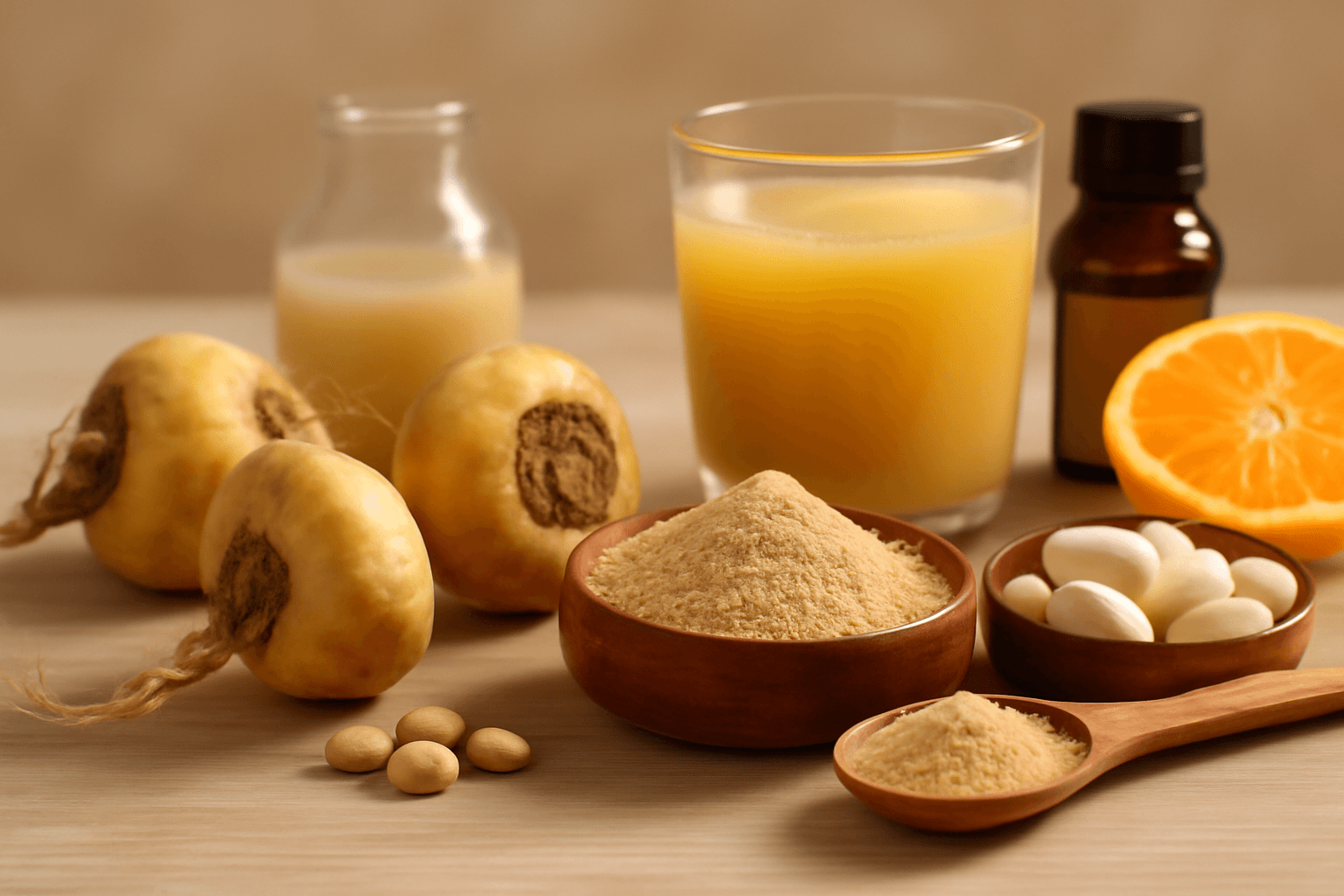
Maca root is a cruciferous plant native to the Peruvian Andes and a superfood that has been utilized in traditional medicine for thousands of years. Rich in protein, iron, zinc, and B vitamins, it offers numerous health benefits including increased energy, enhanced immunity, and improved sexual function. This article provides evidence-based information on the actual benefits of maca root, proper consumption methods, and scientific research supporting its effectiveness.
What is Maca Root?
Maca root is the dried root of a cruciferous plant known scientifically as Lepidium meyenii. While it belongs to the same family as vegetables like radishes and broccoli, its nutritional density is significantly higher, earning it the nickname "Peru's ginseng." Maca root contains approximately 10g of protein per 100g, 2mg of iron, and various minerals and vitamins.
The most notable characteristics of maca are its bioactive compounds including alkaloids, glucosinolates, and macamides. These compounds regulate hormonal balance, synthesize neurotransmitters, and provide antioxidant effects. In particular, macamides are unique fatty acids found only in maca, playing a direct role in energy metabolism and sexual function improvement.
Maca root comes in various colors—white, black, pink, and yellow—each with slightly different nutritional profiles. Black maca is rich in iron and zinc, making it effective for fatigue recovery and immune enhancement, while red maca contains more antioxidants, offering better protection against chronic diseases.
Origin
Maca grows naturally only in the high-altitude regions of Peru's Andes (2,500-4,300m above sea level). To survive in this extreme environment—with frigid temperatures, intense UV radiation, and poor soil—maca has accumulated unique nutrients and bioactive compounds. Indigenous peoples have used maca as food and medicine for thousands of years, and 16th-century Spanish conquistadors also documented its vitality-enhancing properties.
Today, over 90% of maca is cultivated in Peru, with the Junín region being the primary production area. The Peruvian government manages maca as a strategic export product and adheres strictly to international organic certification standards. Peruvian maca is generally considered more nutritious than maca cultivated elsewhere due to the soil's mineral content and the highland region's abundant sunshine.
While maca is now also cultivated in Bolivia, China, and the United States, only Peruvian maca from its native region is considered authentic "Andes maca." When purchasing, check the country of origin and choose organically certified products when possible as your first step in ensuring quality.
Consumption Methods
The recommended daily intake of maca is 1.5-3g. In powder form, mix it with water or beverages and consume once or twice daily, while capsules should be taken according to the product's dosage instructions. If you're taking maca for the first time, start with about 1g and gradually increase the amount over two weeks.
Consistent consumption is important to maximize maca's benefits. According to research, maca's sexual function improvement effects appear after 8 or more weeks of continuous use, while energy-boosting effects can be felt within about 4 weeks. Taking maca with food enhances digestion and absorption, making it most effective to consume with breakfast or lunch.
Maca powder can be added to smoothies, yogurt, oatmeal, coffee, and many other foods. Since maca is heat-stable, it can also be mixed into warm beverages. However, avoid excessive consumption; intake exceeding 10g daily can cause digestive discomfort, headaches, and sleep disturbances.
Cautions: Those with thyroid conditions, pregnant women, nursing mothers, and patients taking blood-thinning medications must consult a healthcare professional before consuming maca. Maca contains compounds that inhibit blood clotting and may interact with anticoagulants.
1. Enhanced Libido
Maca's most widely recognized benefit is increased libido. In a 2009 study at a Peruvian medical university, 50 healthy adult men were given maca powder (1.5-3g daily) for 8 weeks, resulting in an average 42% improvement in sexual desire satisfaction compared to the control group. The control group taking a placebo showed virtually no change during the same period.
The mechanism of maca's libido-enhancing effect involves several pathways. First, macamides and alkaloids stimulate the central nervous system to increase sexual desire. Second, maca promotes the secretion of neurotransmitters dopamine and serotonin, which are responsible for sexual satisfaction and pleasure. Third, maca's high zinc content is essential for sperm production and sexual function improvement.
Interestingly, maca's libido-enhancing effects occur regardless of gender. In a 2010 study, 20 women experiencing decreased libido were given 3g of maca for 8 weeks, and 8 women (40%) reported improved sexual desire, with particularly effective results for those experiencing antidepressant-induced sexual dysfunction.
2. Improved Fertility
Maca is known to enhance reproductive capacity in both men and women. In men, a 2016 study by a Spanish medical research team on 60 men with semen quality issues found that the maca-consuming group (1.75g daily for 12 weeks) showed a 23% increase in sperm concentration and a 17% improvement in sperm motility compared to the control group.
Maca improves male fertility through several mechanisms. Maca promotes the secretion of gonadal hormones responsible for sperm production in the testes. Additionally, maca's antioxidant compounds prevent sperm DNA damage, and its high arginine content (an amino acid) improves blood flow and increases blood supply to the reproductive organs.
In women, maca normalizes ovulation cycles and improves hormonal balance. Multiple studies report that maca consumption improves menstrual irregularity and increases progesterone secretion, enhancing implantation success rates. Women experiencing hormonal imbalance from perimenopausal symptoms can also benefit from improved hormonal stability through maca consumption.
To achieve maca's fertility-improving effects, at least 3 months of consistent consumption is necessary. Couples undergoing infertility treatment should inform their healthcare providers of their maca consumption plans and verify any drug interactions.
3. Improved Erectile Dysfunction
Maca has shown significant effectiveness in treating erectile dysfunction (ED). In a 2009 study published in an international sexual medicine journal, 50 men with ED were given maca powder (2.4g daily) for 12 weeks, achieving erectile improvements comparable to prescription medications like Cialis (tadalafil).
Maca's ED improvement mechanism works through several pathways. First, maca's high L-arginine content (an amino acid) promotes nitric oxide (NO) synthesis in vascular endothelial cells, relaxing blood vessels. This increases blood flow to the penis, facilitating erection. Second, maca contains compounds that act as smooth muscle relaxants, directly improving erectile function. Third, maca reduces cortisol, the stress hormone, alleviating psychological erectile dysfunction.
What's particularly interesting is that maca shows effectiveness regardless of the cause of erectile dysfunction. It improves ED from reduced vascular function, diabetes-related ED, and even antidepressant-induced ED. In a 2010 study, 20 men with antidepressant-induced erectile dysfunction who consumed 2.4g of maca for 12 weeks experienced significant erectile function improvement in 65% of cases.
While maca works more slowly than medications like Viagra (sildenafil), it can provide more fundamental therapeutic effects through long-term hormonal balance improvement. It's particularly useful as a safe alternative for patients who cannot take vasodilators due to hypertension or heart disease.
Note: Sudden onset of erectile dysfunction may signal serious health issues such as diabetes, hypertension, or heart disease. Always consult a healthcare professional for diagnosis before using maca. Additionally, if you're taking nitrate-based cardiac medications, consult your doctor before consuming maca.
Energy Boost and Fatigue Recovery
Maca was used in ancient Incan civilization to enhance the stamina of warriors and athletes. Modern research supports this tradition. In a 2009 study published in the Sports Nutrition journal, 24 competitive cyclists who consumed maca powder (4g daily) for 2 weeks showed an average 24% improvement in cycling performance compared to the placebo group.
Maca's energy-boosting effects result from the synergistic action of multiple nutrients. Maca contains 14g of carbohydrates per 100g, along with 15mg of iron, magnesium, and B vitamins, serving as essential cofactors in energy production. Particularly, maca's high iron content enhances blood's oxygen-carrying capacity, promoting cellular energy (ATP) production.
Maca also functions as an adaptogen, normalizing the body's stress response. Excessive cortisol secretion from stress causes fatigue and lethargy, but maca stabilizes the hypothalamic-pituitary-adrenal (HPA) axis, preventing this. This results in sustained energy and mental focus.
Taking 1.5-3g of maca daily for 4 weeks can reduce everyday fatigue, and afternoon energy crashes from low blood sugar are alleviated. It's particularly effective for general fatigue without chronic fatigue syndrome or thyroid dysfunction.
Immune Enhancement and Antioxidant Protection
Maca is a powerful immune-supporting food due to its abundant antioxidant content. Maca contains various antioxidant compounds including flavonoids, polyphenols, and glucosinolates. Black maca's antioxidant activity (ORAC) is an impressive 34,000 units per 100g, more than 7 times higher than blueberries (4,600 units).
Maca's antioxidant action reduces oxidative stress in the body. Oxidative stress occurs when free radicals damage cells, a major cause of inflammation, premature aging, and chronic diseases like cancer and cardiovascular disease. Maca's antioxidant compounds neutralize free radicals, preventing cellular damage.
Maca also promotes white blood cell production and increases NK (natural killer) cell activity, directly enhancing immune function. In a 2015 animal study, mice receiving maca extract showed better resistance to infection, with significantly elevated immune-related cytokine levels. Similar effects are anticipated in humans.
Maca is particularly helpful for winter cold and flu prevention. Regular maca consumption starting in September reduces winter infection rates. Additionally, maca is rich in anti-inflammatory compounds, helping alleviate symptoms of chronic inflammatory diseases such as arthritis and inflammatory bowel disease.
Stress Reduction and Mental Health
Maca functions as an adaptogen that regulates neurological stress responses. In a 2015 study from a Peruvian university on 29 adults with work-related anxiety, consumption of 3g of maca for 12 weeks resulted in a 28.5% reduction in anxiety scores and a 35% improvement in deep sleep quality.
Maca alleviates stress through hormonal mechanisms. Maca regulates the brain's neuroendocrine system, preventing excessive secretion of stress hormones like cortisol and adrenaline. Simultaneously, maca promotes serotonin (mood-stabilizing hormone) and endorphin (happiness hormone) production. These neurochemical changes induce subjective stress reduction within 2-4 weeks.
Maca's sleep improvement effect is particularly important for stress relief. Chronic stress worsens sleep quality, and insufficient sleep increases stress vulnerability, creating a vicious cycle. Maca breaks this cycle, improving both stress and sleep issues simultaneously. Avoid consuming maca after 7 p.m. (due to its energy-boosting effect); morning or lunch consumption is better for sleep health.
Blood Sugar Management and Metabolic Health
Maca has blood sugar-stabilizing properties that help prevent and manage diabetes. In a 2018 Japanese medical study, 46 prediabetic patients who consumed 3g of maca powder for 12 weeks showed an average 8.5% decrease in fasting blood glucose and a 12.3% improvement in HOMA-IR index, which indicates insulin resistance.
Maca's blood sugar control effects come from its combination of fiber (approximately 1.5g per 10g of maca), protein, and low glycemic index (GI). Maca has a very low glycemic index (approximately 45), avoiding rapid blood sugar spikes. Additionally, maca contains compounds that inhibit alpha-glucosidase enzyme activity, slowing carbohydrate digestion and making blood sugar absorption more gradual.
Maca's high chromium content (a mineral) is also important. Chromium improves insulin signaling, allowing cells to utilize glucose more efficiently. This leads to improved insulin resistance and reduced long-term diabetes risk.
Summary
Key Benefits of Maca Root Summary:
- Enhanced Libido: 42% improvement in sexual desire satisfaction with 1.5-3g daily intake for 8+ weeks
- Improved Fertility: 23% increase in male sperm concentration, normalized female ovulation cycles
- Erectile Dysfunction Improvement: Prescription medication-level effects after 12 weeks of maca consumption
- Energy Boost: High iron and B vitamins reduce fatigue within 4 weeks
- Immune Enhancement: Antioxidant activity 7 times higher than blueberries, promotes white blood cell production
- Stress Reduction: 28.5% reduction in anxiety scores through cortisol regulation
- Blood Sugar Stabilization: 8.5% decrease in fasting blood glucose, improved insulin resistance
Optimal Consumption Method: Mix 1.5-3g of Peruvian organic certified maca powder with breakfast or lunch, mixed with water, smoothies, or yogurt. Allow 4 weeks (for energy) to 8 weeks (for sexual function) to notice effects. Start with 1g when beginning consumption and gradually increase.
Medical Consultation Essential For: Those with thyroid disease, pregnant women, nursing mothers, those taking anticoagulants/nitrates/antidepressants, and those undergoing medical treatment for erectile dysfunction or infertility should consult a healthcare professional before consuming maca.
Maca root is an effective natural nutritional supplement supported by thousands of years of traditional use and modern scientific research. However, since maca is a supplement rather than medication, it cannot replace existing medical treatment. Maximum health benefits are achieved when maca is used as a supplement alongside a healthy diet and improved lifestyle habits, not as a replacement for conventional medical care.