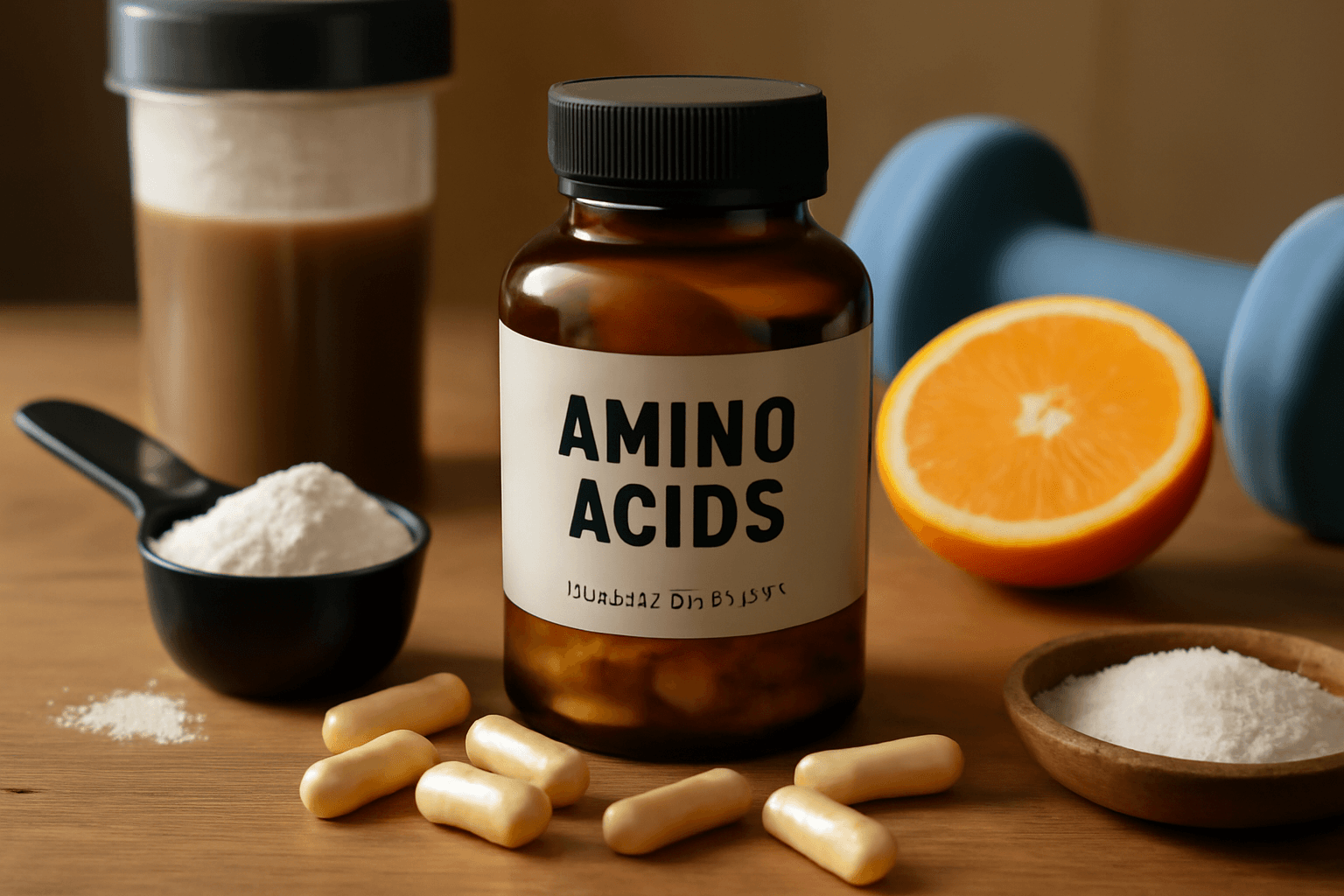
Amino acids are the basic building blocks of protein and are involved in nearly every physiological function in the body, including muscle growth, energy production, and hormone regulation. For athletes and people who exercise regularly, amino acid supplementation plays an important role in improving athletic performance, promoting fatigue recovery, and minimizing muscle damage. This article will explain in detail the differences between essential amino acids and branched-chain amino acids (BCAAs), their effectiveness during exercise, and the correct methods of consumption.
What Are Essential Amino Acids?
Essential Amino Acids (EAA) are nine amino acids that the human body cannot synthesize independently and must be obtained through food or supplements. These are Leucine, Isoleucine, Valine, Lysine, Methionine, Phenylalanine, Threonine, Tryptophan, and Histidine.
The role of essential amino acids is very broad. First, they directly promote muscle protein synthesis, and in particular, leucine plays a key role in inducing muscle growth by activating the mTOR signaling pathway. According to a 2019 study by the International Society of Sports Nutrition, a group that consumed 20-40g of essential amino acids after exercise showed approximately 122% increase in muscle protein synthesis compared to the placebo group.
Essential amino acids are also involved in neurotransmitter synthesis. For example, tryptophan is a precursor to serotonin production and contributes to improved mood and better sleep quality, while phenylalanine promotes the production of dopamine and norepinephrine, which increase focus and motivation. This helps reduce mental fatigue during exercise.
The recommended daily intake of essential amino acids is approximately 10-12mg per kilogram of body weight. For a 70kg adult, 700-840mg should be consumed per day, and those who exercise regularly may need 20-30% more than this amount.
What Are Branched-Chain Amino Acids?
Branched-Chain Amino Acids (BCAA) refer to three of the nine essential amino acids: leucine, isoleucine, and valine. They are named this way because their molecular structure forms a branch-like chain, and unlike other amino acids, they are not metabolized in the liver but are directly broken down in the muscles to be used as energy.
The most significant characteristic of BCAA is its fast absorption rate. While regular protein takes 2-3 hours to be absorbed through the digestion process, BCAA in powder form can be absorbed into the bloodstream in approximately 30 minutes or less, making immediate energy supply possible. This is very useful when you need to quickly suppress muscle protein breakdown during or immediately after exercise.
The ratio of BCAA is important. The most effective ratio is known to be leucine:isoleucine:valine = 2:1:1 or 3:1:1. The reason leucine takes a higher ratio is because it is the most powerful in activating the mTOR signaling pathway. Low-quality BCAA products may have incorrect ratios or unnecessary ingredients added, so checking the ingredient label is essential when selecting a product.
BCAA is particularly effective in repairing muscle damage after strength training. According to a 2017 meta-analysis by the American College of Sports Medicine, the BCAA supplementation group reduced delayed-onset muscle soreness (DOMS) by approximately 22% compared to the placebo group, and the speed of strength recovery was about 20% faster.
The Effects of Amino Acids on Exercise
Promoting Muscle Growth
The most direct benefit of amino acid supplementation is the promotion of Muscle Protein Synthesis (MPS). Strength training damages muscles, and muscles grow during the process of repairing this damage. Essential amino acids, particularly leucine, are essential in this process. In a 2018 study published in the British Journal of Sports Medicine, the group that consumed amino acids after exercise increased muscle mass by 2.3kg more than the placebo group after 12 weeks.
Accelerating Fatigue Recovery
Amino acids contribute to the removal of lactic acid and fatigue substances that accumulate in muscles during exercise. BCAA is particularly effective at reducing central fatigue caused by exercise. The blood ratio of tryptophan and BCAA affects central fatigue, and regulating this ratio through BCAA supplementation suppresses serotonin synthesis in the brain, thereby reducing perceived fatigue. In a 2020 study, marathon runners who consumed BCAA experienced a 31% reduction in their subjective fatigue index.
Blood Sugar Stabilization
Amino acids play an important role in blood sugar control. In particular, leucine and isoleucine stimulate insulin secretion to promote glucose absorption and prevent blood sugar drop during prolonged exercise. When carbohydrates and amino acids are consumed together during prolonged exercise requiring sustained energy supply, blood sugar stability improves by 43%. This is effective in improving exercise endurance and preventing performance degradation due to hypoglycemia.
Hormone Regulation
Amino acids are the basic substances for the synthesis of several hormones. Leucine promotes growth hormone (GH) secretion, and methionine is necessary for creatine and carnitine synthesis. Amino acid consumption after exercise improves testosterone metabolism and lowers cortisol (stress hormone) levels, promoting strength gains and recovery. According to a 2019 study, the testosterone/cortisol ratio in the amino acid supplementation group was approximately 35% higher than in the placebo group.
Improving Digestion and Nutrient Absorption
Glutamine (a conditionally essential amino acid) is a major energy source for intestinal epithelial cells, maintains gut health, and increases nutrient absorption rates. When glutamine levels decrease after prolonged exercise, intestinal permeability increases, which can lead to food intolerance. Supplementing this maintains digestive system health and improves overall nutrient absorption.
Energy Production
BCAA is broken down directly in muscles during exercise to be used for ATP (energy molecule) production. During low to moderate intensity exercise in a state of carbohydrate depletion, BCAA can become a major energy source. This is particularly important in endurance sports such as long-distance running or marathons.
Methods of Consuming EAAs and BCAAs
Optimal Timing for Consumption
Within 30 minutes to 2 hours after exercise is the optimal time to consume amino acids. This period is called the "Anabolic Window," when muscles are most actively engaged in protein synthesis. Consuming 20-40g of essential amino acids immediately after exercise can increase muscle protein synthesis by up to 50%.
Consumption shortly before exercise (30-60 minutes prior) is also effective. Pre-consumption keeps blood amino acid concentrations elevated during exercise, minimizing muscle damage during strength training. Pre-consumption is particularly essential if exercising on an empty stomach.
Consumption during exercise (especially during exercise lasting more than 2 hours) is also recommended. Consuming 5-10g of BCAA during endurance exercise lasting 2-3 hours or longer can reduce central nervous system fatigue and maintain exercise capacity.
Daily Intake Amount
The recommended daily amount of essential amino acids is 10-12mg per kilogram of body weight. However, for people who exercise regularly with strength training, consuming 15-25mg per kilogram of body weight—or 1.0-1.75g for a 70kg adult—maximizes muscle growth.
For BCAA, consuming 5-10g per dose after exercise is effective. Advanced athletes who exercise 3 times a day can consume a total of 15-30g divided into multiple doses. Excessive consumption (50g or more daily) can increase kidney burden and should be avoided.
Product Selection Criteria
A checklist for selecting high-quality amino acid supplements:
- Check ingredient content: For BCAA products, verify that leucine:isoleucine:valine is in a 2:1:1 or 3:1:1 ratio. For essential amino acid products, verify that all 9 components are included.
- Third-party certification: Products verified by third-party organizations such as NSF, Informed Choice, or USP guarantee purity and safety.
- Minimize additives: Choose products with minimal unnecessary sugar, artificial flavoring, xylitol, and other additives.
- Check solubility: Verify that the product dissolves cleanly without clumping when mixed.
- Taste and texture: Confirm that the product has a flavor that can be consistently consumed.
Possibility of Food Substitutes
Adequate amino acids can be consumed through food without supplements. Egg whites (3.6g of essential amino acids per egg), chicken breast (9g per 100g), Greek yogurt (3.5g per 100g), and salmon (8.5g per 100g) are all rich sources. However, supplements are more convenient immediately after exercise when rapid absorption is needed.
Consumption Methods and Combinations
BCAA is typically mixed with water or sports drinks, and consuming it together with carbohydrates improves absorption speed and insulin response, enhancing effectiveness. For example, a combination of 5g BCAA + 30g glucose + 400ml water is an optimal post-strength training recovery drink.
Essential amino acid powder tends to taste better than BCAA products but may have lower solubility, so it is better to mix it with juice rather than water or to shake and drink it.
The Importance of Consulting Medical Professionals
Amino acid supplements are generally safe, but caution is necessary for certain health conditions. If you have chronic kidney disease, liver disease, or phenylketonuria (PKU), you should consult a doctor before supplementing. Additionally, if you are taking blood pressure medications, anticoagulants, or other medications, you should check for possible interactions with amino acid supplements. Pregnant and nursing women should also seek advice from medical professionals before consumption.
Summary
Key Points:
- The nine essential amino acids are not synthesized in the human body, so external consumption is essential.
- BCAA (leucine, isoleucine, valine) directly serve as energy sources during exercise and minimize muscle damage.
- Consuming 20-40g of essential amino acids within 30 minutes to 2 hours after exercise maximizes muscle growth.
- Consuming 15-25mg of essential amino acids per kilogram of body weight daily (based on exercisers) is effective for muscle development.
- The optimal ratio for BCAA products is leucine:isoleucine:valine at 2:1:1 or 3:1:1.
- Adequate amino acid intake is possible through food, but fast-absorbing supplements have advantages immediately after exercise.
- If you have kidney disease or are taking certain medications, you must consult with a medical professional before consuming supplements.
When consumed correctly, amino acid supplements are a powerful tool for improving athletic performance, rapid recovery, and sustained muscle growth. By establishing a customized consumption plan considering individual exercise goals, dietary habits, and health status, and seeking advice from sports nutritionists or medical professionals when necessary, you can achieve maximum results.


