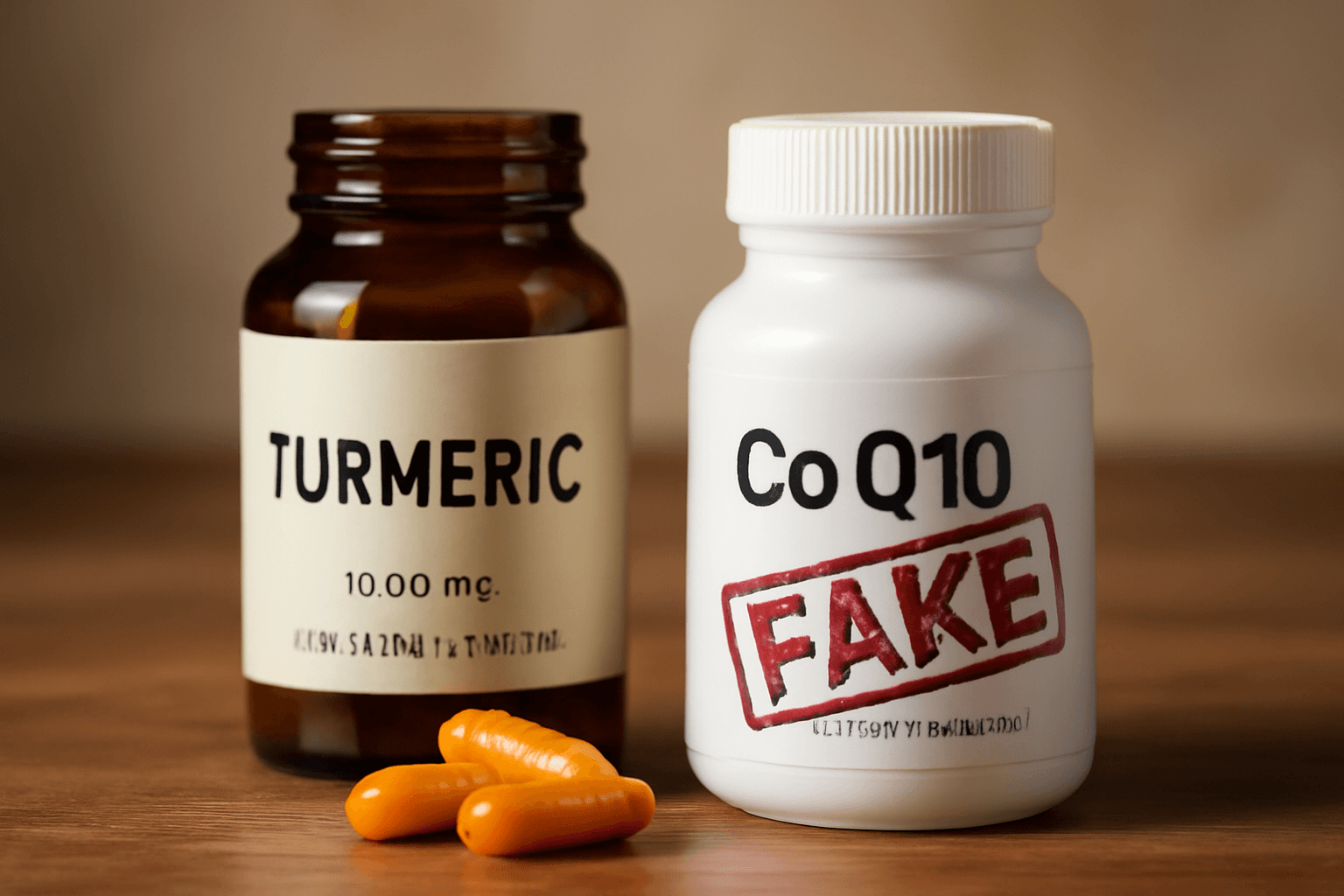
Counterfeit supplements are a serious threat to modern health. According to a 2023 survey by the International Consumer Commission (ICC), approximately 10-15% of the global supplement market consists of counterfeit or mislabeled products. Popular supplements like turmeric and Coenzyme Q10 (CoQ10) are particularly common targets for counterfeiting. This is because the ingredients listed on labels may not match what's actually in the product, or harmful substances may be mixed in. This article details the dangers of counterfeit supplements, the importance of verified retailers, and smart shopping methods.
The Dangers of Counterfeit Supplements
Counterfeit supplements go beyond simply being ineffective—they can cause serious health damage. According to a 2022 FDA report, approximately 20% of the counterfeit supplements tested contained prescription drug ingredients without authorization. For example, some counterfeit turmeric products contained steroids, and fake CoQ10 products had detectable heavy metals.
Taking these contaminated products can cause unpredictable side effects including liver toxicity, kidney damage, allergic reactions, and drug interactions. The risk increases significantly for people with existing health conditions or those taking other medications. Some cases have even been reported requiring hospitalization.
Additionally, counterfeit supplements contain little to no active ingredients, making it impossible to achieve the expected health benefits. This creates a vicious cycle where patients rely solely on supplements and delay necessary medical treatment. Therefore, verifying authenticity when purchasing supplements is not optional—it's essential.
Why You Should Buy from Verified Retailers
Trustworthy retailers go through multiple stages of quality control procedures. Verified retailers thoroughly verify supplier identities, conduct ingredient testing upon product receipt, and strictly adhere to warehouse management standards. These procedures fundamentally prevent counterfeit products from entering the market.
When you buy from verified retailers, you're guaranteed clear responsibility and refund procedures in case of problems. If issues are discovered with a product, you can immediately request a refund or exchange. Large online pharmacies, official importers, and official retailers of GMP (Good Manufacturing Practice) certified brands provide these protections.
Additionally, trustworthy retailers disclose third-party testing results. Certifications from organizations like NSF International, USP (United States Pharmacopeia), and ConsumerLab are evidence that the product has been independently verified to match its label claims and be free from contaminants. This transparency provides consumers with peace of mind.
Label Claims vs. Actual Supplement Contents
The most common problem with counterfeit supplements is the mismatch between labels and actual contents. In a 2023 Oxford Academic study, approximately 35% of turmeric products tested contained 50% or less of the turmeric amount listed on the label. Some were filled with flour or other plant powders instead of turmeric.
The situation is more serious with CoQ10. There are two forms: ubiquinone and ubiquinol. Counterfeit products often label cheaper ubiquinone while charging ubiquinol prices. Additionally, products with actual contents only 10-30% of label claims have been detected.
Without reliable label information, you can't properly adjust dosages. For example, if a product labeled 100mg actually contains only 20mg, you won't achieve desired therapeutic effects and may experience side effects from taking extra doses to compensate. This is why choosing third-party verified products is crucial.
How to Identify Counterfeit Supplements
The first red flag for counterfeit supplements is price. Products significantly cheaper than the market average should be questioned. For example, if brand CoQ10 200mg with 90 capsules typically costs 25,000-35,000 won but is being sold for 5,000 won, it's likely counterfeit. However, track pricing trends over time to distinguish between sales and genuinely suspicious prices.
Packaging and label quality are also important indicators. Counterfeit products have poor print quality, spelling errors, and faded colors. Authentic products maintain clear and consistent printing, clearly listed ingredients, and correct Korean and English text. Also verify that batch numbers, expiration dates, and manufacturer information are clearly displayed.
The presence of third-party verification marks is the most reliable indicator. Check for certification marks from NSF, USP, ConsumerLab, or Natural Products Association (NPA). These organizations independently verify product purity, efficacy, and absence of contaminants. You can even verify authenticity by entering the certification number on their official websites.
The retailer is also an important clue. Buying from official retailers, major pharmacy chains, and reputable online stores significantly reduces the risk of counterfeits. On the other hand, avoid purchasing from small individual sellers or suspicious overseas websites.
4 Tips for Smarter Supplement Shopping
1. Check Official Websites and Authorized Retailers
Before purchasing, visit the manufacturer's official website. It will list authorized retailers and provide product authentication methods. Many brands only offer return guarantees for purchases made through official channels. For turmeric products, verify the origin (Indian vs. domestic) and whether the active ingredient curcumin is standardized to 95%.
2. Verify Third-Party Certification
Check for NSF, USP, or ConsumerLab marks on the label, then verify that the product has actually been certified by visiting each organization's website. ConsumerLab publicly discloses recently tested products in their 'Product Review' section. When buying CoQ10, selecting products with the "USP Verified Mark" guarantees that actual contents fall within 90-110% of label claims.
3. Compare Ingredient Lists and Content
Compare multiple product labels side by side. If turmeric 500mg and 1000mg products are sold at the same price, the 500mg product warrants suspicion. Also note that "turmeric extract" and "turmeric powder" are different. Extracts have concentrated active ingredients, so the same dose yields greater effects. Also check ingredient origins. Turmeric originates from India, while CoQ10 is produced through yeast or biotechnology.
4. Keep Records of Purchase and Usage
Keep your receipts, shipping confirmation, and product photos. These are needed for refund claims if problems arise. Also maintain records of the products you've taken, dosages, duration, and any symptoms or changes you've experienced—this is useful when consulting healthcare professionals. Supplements should be stored in cool, dark places, and recheck expiration dates after opening. Some counterfeit products may already be oxidized, so check for any smell or color changes after opening.
iHerb: The Safest Supplement Retailer
iHerb is a major online supplement retailer serving over 180 countries worldwide, known for strict quality control. All products undergo ingredient testing upon receipt, and warehouse operations follow FDA standards. Additionally, iHerb actively carries third-party verified products and displays NSF, USP, and ConsumerLab certification information on each product page.
When searching for turmeric on iHerb, you'll find products marked 'Curcumin 95% Standardized,' all meeting manufacturer-disclosed standards. For CoQ10 products, ubiquinone and ubiquinol are clearly distinguished, allowing consumers to accurately select their preferred form.
iHerb's particular advantage is its clear return policy. If problems are found with products, returns and refunds are possible even after opening (within specified periods). All transactions are recorded, and Korean language customer service is available for prompt response to issues. Products purchased through iHerb undergo inspection by Korean customs, providing additional safety verification.
However, since it's personal importation, shipping times are longer (2-4 weeks), and certain ingredients (like those containing prescription components) may have import restrictions. Besides iHerb, official importers or large pharmacy online shopping malls are also safe alternatives.
The Importance of Healthcare Professional Consultation
Supplements are not medications and cannot replace disease treatment. Always consult with a doctor or pharmacist before starting a new supplement. This is especially important if you have existing health conditions or are taking other medications. Turmeric (curcumin) inhibits blood clotting and may interact with anticoagulants (warfarin, aspirin). CoQ10 can affect the efficacy of antidiabetic and blood pressure medications.
If you experience side effects from supplements or unexpected symptoms, immediately stop taking them and seek medical attention. In particular, poisoning from counterfeit supplements or drug interactions can become emergencies.
Summary
Counterfeit supplements pose a serious health threat. Fake products are likely to contain different ingredients than labeled, contain harmful substances, or lack effective amounts of active ingredients.
Key checklist for supplement purchases:
- Verify retailer: Buy from official retailers, major pharmacies, and trustworthy online stores
- Third-party verification: Confirm NSF, USP, or ConsumerLab certification marks and reverify on their websites
- Price comparison: Avoid products with significantly different prices than market average
- Review labels: Verify ingredients, amounts, origin, batch numbers, and expiration dates
- Check packaging quality: Confirm print quality, spelling, and color clarity
- Consult healthcare professionals: Always consult with doctors and pharmacists before use
Turmeric and CoQ10 are excellent health supplements, but counterfeit products negate all these benefits. By choosing third-party verified products from verified retailers like iHerb, you can ensure both safety and efficacy. Your health is a precious asset that shouldn't be compromised. Don't lose your health trying to save a few thousand won.