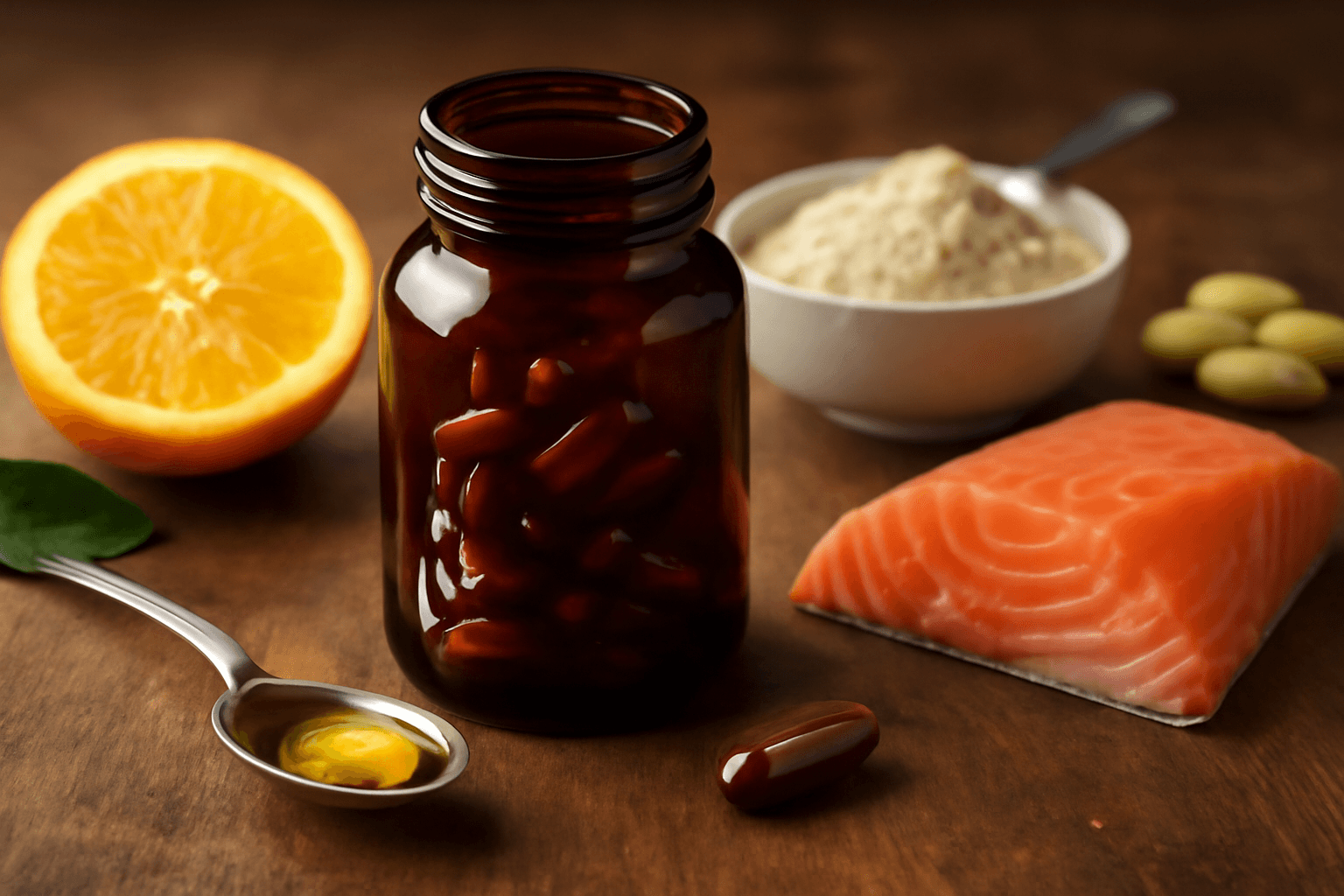
Coenzyme Q10 (CoQ10) is an essential compound responsible for energy generation in the mitochondria of our body's cells. It is particularly abundant in organs that require high energy, such as the heart, brain, and liver. In this article, we'll take a detailed look at the various health benefits of CoQ10, effective methods of consumption, and safe ways to take it.
Sources
CoQ10 is naturally produced in the body, but production decreases with age. Particularly after the 30s, there is a tendency for it to decrease by approximately 3-4% each year. Therefore, it's important to supplement it through external food intake.
List of foods rich in CoQ10:
- Meat: Beef heart (approximately 11mg per 100g), beef liver (3.1mg)
- Fish: Salmon (4.3mg), sardines (5.2mg), trout (1.5mg) - especially effective for heart health when combined with omega-3
- Nuts: Peanuts (2.7mg), sesame (2.3mg)
- Plant-based foods: Cruciferous vegetables such as broccoli, spinach, and cauliflower
- Other: Olive oil, eggs, cheese
If it's difficult to get enough daily recommended amounts from food alone, you can supplement with health supplements (in the form of ubiquinol or ubiquinone). The ubiquinol form is in reduced form and has higher bioavailability.
Improved Heart Function
The most notable effect of CoQ10 is the improvement of heart function. Since the heart is the organ that consumes the most energy among all body organs, CoQ10 deficiency can directly lead to decreased heart function.
According to a study published in the European Heart Journal in 2018, when 300mg of CoQ10 daily was administered to heart failure patients for 12 weeks, improvements in heart contractility and increased exercise capacity were observed. Additionally, in a large-scale clinical trial in Japan in 2014, when 420 chronic heart failure patients were given CoQ10 supplementation, hospitalization rates due to heart failure decreased by 26%.
Mechanisms by which CoQ10 improves heart health:
- Strengthens heart pump function by promoting ATP generation in cardiac myocytes
- Prevents cardiac muscle damage caused by free radicals through antioxidant action
- Inhibits progression of cardiomyopathy by reducing inflammatory response
- Improves blood flow by enhancing vascular endothelial cell function
Especially for patients taking cholesterol-lowering medications (statins), CoQ10 levels can be reduced, so supplementation is more strongly recommended.
Blood Pressure Reduction
High blood pressure is a major risk factor for cardiovascular disease, and CoQ10 plays an effective role in blood pressure regulation. According to a meta-analysis from the American Journal of Hypertension in 2016, subjects who took CoQ10 for 8 weeks or more showed an average decrease in blood pressure of 5.4 mmHg in systolic pressure and 2.9 mmHg in diastolic pressure.
The blood pressure-lowering effect of CoQ10 works through several pathways. First, it promotes relaxation of vascular smooth muscle, reducing vascular resistance. Second, it increases the production of nitric oxide (NO), improving vascular function. Third, it regulates sympathetic nerve activity, inhibiting blood pressure elevation.
Particularly noteworthy is that the effects of CoQ10 are cumulative. Blood pressure improvement effects appear after at least 4 weeks of continuous use, and maximum effects are reached with 8-12 weeks of use. People with high blood pressure can consider CoQ10 supplementation along with diet, exercise, and stress management.
Enhanced Immunity
CoQ10 serves as a powerful antioxidant that supports the immune system. Oxidative stress caused by free radicals can impair the function of immune cells, and CoQ10 effectively neutralizes this.
According to a 2011 study, CoQ10 promotes the activation of lymphocytes (especially T cells and B cells) and enhances the function of natural killer cells (NK cells). It also strengthens the phagocytic action of macrophages, increasing the efficiency of bacterial and viral elimination.
The relationship between CoQ10 and immune function:
- Promotes energy generation, supplying activation energy to immune cells
- Prevents immune cell damage through antioxidant action
- Maintains immune balance by regulating the production of inflammatory cytokines
- Supports the maintenance of healthy gut microbiota
CoQ10 supplementation is particularly helpful for elderly individuals and those with chronic diseases because it can partially restore immune function impaired by age and stress. When CoQ10 supplementation is combined with regular aerobic exercise, the immune-improving effects are enhanced.
Recommended Intake
The optimal intake of CoQ10 varies depending on an individual's health status, age, and presence of disease. General guidelines are as follows.
Recommended intake by purpose:
- General health maintenance: 30-100mg daily
- Heart failure management: 100-300mg daily (under medical supervision)
- Blood pressure control: 100-200mg daily (sustained for 4-12 weeks)
- Antioxidant and energy improvement: 60-150mg daily
- Statin users: 100-200mg daily (to supplement deficiency caused by cholesterol medication)
Since CoQ10 is a fat-soluble substance, taking it with fatty foods improves bioavailability by 30-40%. It is recommended to take it during breakfast or lunch. Divided doses of two or more times do not help improve bioavailability, so single daily intake is more efficient.
High-dose supplementation (300mg or more daily) must go through consultation with a healthcare professional, and especially if taking anticoagulants (warfarin), diabetes medications, or blood pressure medications, a review of drug interactions is essential.
Safety
CoQ10 is generally recognized as a safe supplement. Over 20 years of clinical research have reported no serious adverse effects, and even high doses up to 1,200mg daily have been confirmed to be safe.
Common side effects (rare):
- Digestive disturbances: nausea, abdominal discomfort, diarrhea
- Skin reactions: rash, itching
- Neurological symptoms: headache, dizziness
- Insomnia (if taken late in the evening)
Side effects are usually mild and can be resolved by adjusting intake or taking it with meals. However, there are cases requiring caution.
Cases where doctor consultation is essential before CoQ10 supplementation:
- Currently taking anticoagulants such as warfarin or aspirin (CoQ10 may reduce blood clotting ability)
- Currently taking insulin or diabetes medications (enhanced blood sugar-lowering effects)
- Currently taking blood pressure medications (blood pressure may drop excessively)
- Undergoing cancer chemotherapy (potential interference with medication effects)
- Pregnant or breastfeeding
Additionally, the quality of CoQ10 products varies significantly between manufacturers. It is safe to choose products from reputable manufacturers and, when possible, purchase products that have undergone third-party testing (USP, NSF certification).
Summary
Key health benefits of CoQ10:
- Heart function: Improves exercise capacity in heart failure patients and reduces hospitalization rates by 26%
- Blood pressure control: Average reduction of 5.4 mmHg in systolic pressure when taken for 8-12 weeks
- Immune enhancement: Improves immune function through activation of T cells, B cells, and NK cells
- Antioxidant action: Prevents cell damage and reduces stress by eliminating free radicals
- Energy generation: Promotes overall vitality by enhancing ATP synthesis in mitochondria
CoQ10 is particularly useful as a supplement for adults over 30, people at risk for cardiovascular disease, and patients taking statin-class medications. Natural intake through food should be prioritized, but if insufficient, consider taking a daily supplement of 100-200mg.
Important Note: This information is for educational purposes only and cannot replace medical diagnosis or treatment. Especially for those with existing conditions or taking medications, be sure to consult with a healthcare professional before starting CoQ10 supplementation.