Curcumin is a natural compound found in turmeric, a powerful antioxidant that has been used in traditional medicine for thousands of years. Recent scientific research has demonstrated that curcumin can delay cellular aging, suppress chronic inflammation, and enhance the body's antioxidant defense system. In this post, we'll take a detailed look at how curcumin works in the body to exert anti-aging effects, and how it impacts immunity, joint health, and stress management.
What is Curcumin?
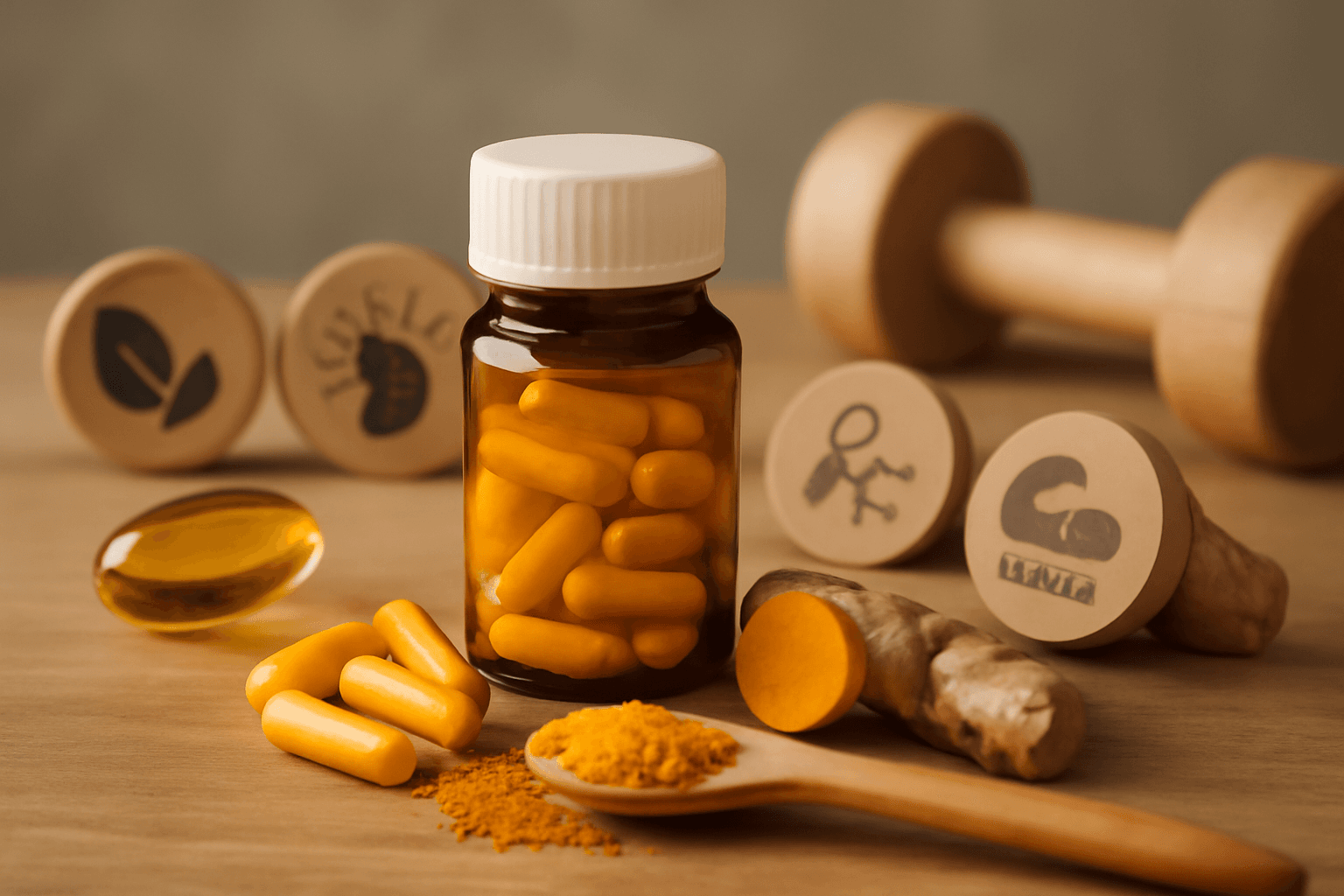
Curcumin is an active compound extracted from the roots of turmeric (a ginger family plant). It's the primary polyphenol compound that gives turmeric its yellow color, comprising approximately 3-5% of turmeric's composition. In Southeast Asia and India, it has been used as a curry spice for thousands of years, and in Ayurveda and traditional Chinese medicine, it has been utilized as a treatment for inflammatory diseases.
Curcumin's bioavailability (absorption rate in the body) is naturally quite low, but when consumed together with piperine, the primary active component of black pepper, absorption can increase by up to 2000%. Modern supplement manufacturers account for this by adding piperine or developing products processed into fat-soluble forms to maximize absorption efficiency in the body. Additionally, since curcumin is fat-soluble, absorption rates increase when taken with meals containing fat.
Anti-Aging Benefits of Curcumin
Aging progresses at the cellular level through DNA damage, mitochondrial dysfunction, and accumulation of free radicals. Curcumin acts on these aging mechanisms through multiple pathways. First, through its powerful antioxidant action, it neutralizes free radicals and delays damage to telomeres (the chromosome end regions that determine how many times cells can divide).
A research team from Osaka University in Japan conducted a study on 176 adults over 60 years old, administering curcumin supplements for 8 weeks. They reported that skin elasticity increased by an average of 13% and the number of wrinkles decreased by 18%. Additionally, endothelial function in blood vessels improved, leading to smoother blood circulation and greater nutrient and oxygen delivery to the skin and organs. Curcumin is also effective at promoting protein synthesis to prevent muscle loss and improve energy metabolism.
Powerful Antioxidant
Curcumin's antioxidant power is rated as equal to or superior to several nutrients including vitamin C, vitamin E, and beta-carotene. Free radicals (ROS, Reactive Oxygen Species) naturally occur during normal bodily processes such as energy production and immune responses, but when produced excessively due to stress, UV exposure, or polluted environments, they damage cells.
Curcumin's Antioxidant Mechanisms:
- Direct Neutralization: Provides electrons to free radicals, halting oxidative reactions.
- Enzyme Activation: Increases expression of endogenous antioxidant enzymes such as superoxide dismutase (SOD), catalase, and glutathione peroxidase. These enzymes are naturally produced in the body and are the most efficient antioxidants.
- Metal Chelation: Binds transition metal ions like iron and copper, inhibiting free radical generation.
In animal studies, the oxidative stress marker (MDA, malondialdehyde) in the curcumin-treated group decreased by 35-45% compared to the control group. This directly translates to preventing cell membrane damage and protecting mitochondrial function to maintain energy production capacity.
Preventing Aging by Regulating NF-κB
NF-κB (Nuclear Factor-kappa B) is a key regulator of aging and chronic diseases. This protein complex activates in response to stress, infection, and inflammatory signals, and when activated, it induces secretion of inflammatory cytokines (IL-6, TNF-α, IL-1β). Chronic NF-κB activation is known as "inflammaging," a phenomenon where baseline inflammation levels increase with age.
Curcumin is one of the most effective natural compounds for inhibiting NF-κB activation. Specifically, it blocks IκB kinase (IKK), preventing NF-κB from translocating to the cell nucleus. In research from MD Anderson Cancer Center in the United States, curcumin dose-dependently inhibited NF-κB activity, reducing TNF-induced inflammatory responses by over 70%.
These NF-κB inhibition effects provide the following health benefits:
- Improved immunity through reduced chronic inflammation
- Normalized stress hormone (cortisol) levels
- Reduced risk of neurodegenerative diseases such as Alzheimer's disease and Parkinson's disease
- Enhanced cardiovascular health through improved endothelial function
Helping Suppress Inflammation
Acute inflammation is the body's protective response to infection or injury, but chronic inflammation is a major factor that accelerates aging. Modern lifestyles characterized by overeating, stress, insufficient sleep, and lack of exercise place people in a state of chronic inflammation, leading to degeneration of joints, blood vessels, and nervous tissue.
Curcumin's anti-inflammatory mechanism is highly multifaceted:
- Cytokine Suppression: Reduces production of inflammatory cytokines such as IL-6, TNF-α, and IL-1β. In a Korean clinical trial, rheumatoid arthritis patients who received 500mg of curcumin for 8 weeks showed a 42% decrease in the inflammatory marker hs-CRP.
- COX-2 Inhibition: Curcumin inhibits cyclooxygenase-2 (COX-2) similarly to nonsteroidal anti-inflammatory drugs (NSAIDs), reducing prostaglandin production. However, unlike NSAIDs, it has virtually no side effects.
- Microglia Activation Inhibition: Suppresses excessive activation of microglia, the immune cells in the brain, alleviating neuroinflammation.
Interestingly, while curcumin exerts anti-inflammatory effects, it maintains normal immune responses. This prevents the side effect of increased infection risk from excessive immune suppression. In fact, multiple studies have shown that curcumin promotes activation of T cells and B cells, enhancing specific immune responses.
Joint Health
Degenerative changes in joints are visible signs of aging. Breakdown of the cartilage matrix, accumulation of inflammatory cytokines, and decreased protein synthesis work together to cause osteoarthritis. Curcumin acts on all these mechanisms to protect joint health.
Curcumin's Cartilage Protection Mechanisms:
- MMPs Inhibition: Matrix Metalloproteinases (MMPs) are enzymes that break down cartilage proteins. Curcumin inhibits the activity of MMP-2 and MMP-9, delaying cartilage degradation.
- ADAMTS Inhibition: Also inhibits activity of ADAMTS enzymes that break down aggrecan and collagen.
- Chondrocyte Protection: Prevents apoptosis (cell death) of chondrocytes, the cells that make up cartilage.
A clinical trial conducted at Kasetsart University in Thailand is particularly noteworthy. The study divided 367 osteoarthritis patients into two groups, administering one group 1500mg of curcumin and the other 1200mg of the standard anti-inflammatory drug ibuprofen for 8 weeks. Results showed that the curcumin group demonstrated equal or superior effects to the ibuprofen group in pain reduction and joint function improvement, with significantly lower side effect rates.
Curcumin also promotes protein synthesis, helping maintain muscle strength. Stronger surrounding muscles reduce the load on joints, providing dual joint protection effects. It accelerates muscle damage recovery after exercise and improves energy metabolism, enhancing overall physical function.
Summary
Curcumin goes beyond being a simple supplement—it's a key component of a comprehensive anti-aging strategy. Through powerful antioxidant action, it prevents cellular damage; by regulating the NF-κB pathway, it suppresses chronic inflammation; it protects joint health and enhances immune function.
Key Points for Curcumin Intake:
- Recommended Daily Dosage: 500-2000mg (consultation with a healthcare professional required)
- Absorption Optimization: Choose products containing piperine or take with black pepper
- Fat-Soluble Compound: Consume with meals containing fat
- Consistency: Effects can be observed only after at least 8 weeks of consistent intake
However, curcumin may interact with anticoagulants (warfarin), diabetes medications, and some cancer treatments, so if you're currently taking any medications, consult with your doctor. Pregnant and breastfeeding women also need prior consultation. Curcumin alone is insufficient; true anti-aging requires comprehensive lifestyle improvements including regular exercise, adequate sleep, stress management, and consumption of foods rich in antioxidant vitamins.