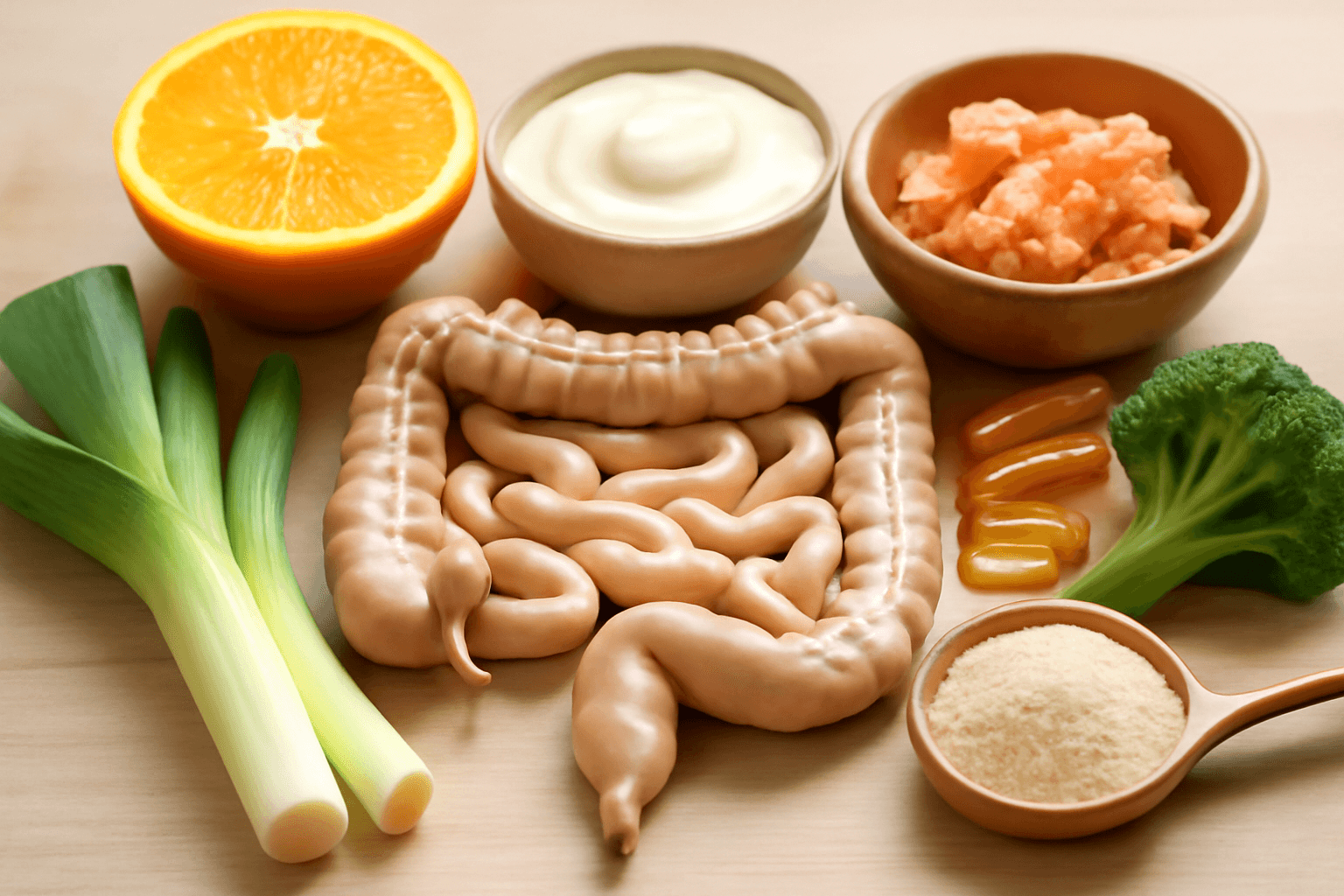
The gut is far more than a simple digestive organ—it's a key system that determines your overall health. When your gut microbiome is healthy, your immune system strengthens, stress resilience improves, and chronic inflammation decreases. This article explores various dietary strategies to restore and maintain gut health. We'll examine science-based practical approaches, from probiotic foods to low-FODMAP diets and the autoimmune paleo protocol.
Warning Signs of Gut Health Decline
When your gut health deteriorates, your body sends signals throughout. Chronic bloating, irregular bowel movements, and alternating diarrhea and constipation are typical symptoms of microbial imbalance. When intestinal permeability increases—a condition known as Leaky Gut—undigested food particles and bacteria enter the bloodstream, triggering systemic inflammation.
This chronic inflammation can lead to skin problems, joint pain, persistent fatigue, and difficulty concentrating. Interestingly, the gut-brain axis—a neural pathway—means that gut health directly affects mental health. Research shows that people with low probiotic levels are more likely to experience anxiety and depression. Additionally, compromised gut health increases vulnerability to infections, since 70% of your immune system is located in your gut.
- Key symptoms of Leaky Gut: Chronic bloating, increased food sensitivities, unexplained fatigue
- Inflammation signals: Joint pain, skin inflammation, digestive discomfort
- Immune signals: Frequent colds, extended recovery periods
Dietary Approaches to Improve Gut Problems
The first step in restoring gut health is eliminating foods that damage the intestinal barrier and adding healing foods. Highly processed foods, refined sugar, and excessive saturated fat feed harmful bacteria and worsen microbial imbalance.
Conversely, probiotic foods directly supply beneficial bacteria to your gut. Fermented vegetables (kimchi, sauerkraut), unsweetened yogurt, tempeh, kombucha, and miso are excellent probiotic sources. Simultaneously, you need prebiotics (food for existing beneficial bacteria). Inulin found abundantly in garlic, onions, asparagus, bananas, and oats promotes the growth of beneficial bacteria.
Antioxidant foods suppress inflammation and protect your intestinal barrier. Berries (blueberries, blackberries) are high in anthocyanins, while leafy greens are rich in polyphenols like luteolin and quercetin. Omega-3 fatty acids (salmon, mackerel, flaxseed) directly reduce inflammation in intestinal epithelial cells.
Core principles of a gut-healing diet: Remove 90% of processed foods → Consume probiotic foods once daily → Include 5-7 colors of antioxidant vegetables → Drink adequate water (2-3 liters daily)
Dairy-Free Eating
Many people don't realize that conventional dairy can harm gut health. The pasteurization process removes beneficial microbes, and high lysine content interferes with arginine absorption, hindering intestinal cell repair. Casein protein, in particular, can trigger inflammatory responses in sensitive individuals.
There are plenty of dairy-free probiotic sources. Fermented foods like kimchi, unsalted miso soup, and kombucha provide sufficient probiotics. Instead of dairy, choose plant-based yogurt (coconut milk-based with added probiotics), or consume bone broth daily—collagen and glutamine promote intestinal barrier repair.
Concerns about calcium intake are unnecessary. Plant-based sources like kale, broccoli, and sesame provide calcium with bioavailability equal to or greater than dairy. Consuming magnesium (from leafy greens and pumpkin seeds) together enhances calcium absorption.
- Dairy-free probiotic alternatives: Sauerkraut (1/4 cup daily), kombucha (150ml, 3-4 times weekly), miso (1 tablespoon per meal)
- Calcium-rich foods: 1 cup kale (approximately 90mg calcium), 2 tablespoons sesame (approximately 150mg calcium)
- Gut-healing broth: Simmer bone broth for 4 hours to maximize collagen extraction
Low-FODMAP Diet
FODMAPs (Fermentable Oligosaccharides, Disaccharides, Monosaccharides, And Polyols) are short-chain carbohydrates not properly absorbed in the small intestine. Clinical results show that approximately 75% of IBS patients experience over 70% symptom improvement on a low-FODMAP diet.
High-FODMAP foods to avoid: Apples, pears, mangoes, onions, garlic, wheat, rye, milk, ice cream, and high-fat meats. When these foods ferment in the small intestine, they trigger gas, bloating, and diarrhea.
Focus on low-FODMAP foods: Underripe bananas, strawberries, grapes, oranges, carrots, eggplant, corn, potatoes, white rice, oats (1/2 cup per serving), eggs, chicken, salmon, olive oil, soy milk (limited), and nuts (in moderation). FODMAP content depends not only on food type but also on portion size, making personalized adjustments essential.
The low-FODMAP diet is a short-term symptom management tool, not a long-term solution. Under professional guidance, restrict foods for 2-6 weeks, then slowly reintroduce them to identify your personal triggers. Indiscriminate restriction can cause nutritional imbalance and psychological stress.
Low-FODMAP diet in three steps: (1) Strict elimination for 2 weeks (2) Add one food group weekly (3) Build a sustainable diet based on your tolerance level
Whole30 Diet
Whole30 is an elimination protocol that removes specific food groups for 30 days. It eliminates grains, dairy, legumes, refined sugar, and alcohol while emphasizing whole foods, protein, healthy fats, and vegetables. Over 70% of participants experience improved digestion, increased energy, and clearer skin.
Whole30's strength lies in its systematicity. Clear rules make it easy to follow, and the specific 30-day timeframe maintains psychological motivation. It's particularly effective for those whose gut health problems lack a clear cause. By carefully observing body responses when reintroducing foods, you can identify your personal dietary triggers.
Whole30 diet basics:
- Protein: Eggs, meat (grass-fed), fish, seafood (at least a fist-sized portion per meal)
- Healthy fats: Olive oil, coconut oil, butter, nuts (thumb-sized portion per meal)
- Vegetables: Leafy greens, cruciferous vegetables (broccoli, cabbage), root vegetables (one to two fist-sized portions per meal)
- Fruit: Berries, mandarins, kiwis (1-2 servings daily, avoid overconsumption)
It's important to understand that Whole30 is not a permanent diet but a diagnostic tool. After 30 days, systematically reintroduce foods while recording how each food group affects you. For example, if bloating returns within 3-5 days after adding gluten-containing grains, you can conclude you have gluten sensitivity.
Autoimmune Paleo Diet
The Autoimmune Protocol (AIP) is a diet developed to manage autoimmune conditions like rheumatoid arthritis, Crohn's disease, and ulcerative colitis. It eliminates all foods that worsen leaky gut and focuses on intestinal barrier repair. Research shows that approximately 60% of Crohn's disease patients reach clinical remission on an AIP diet.
AIP elimination foods: Grains, legumes, dairy, eggs, nuts, seeds (sunflower seeds, sesame), nightshade vegetables (tomatoes, eggplant, peppers, chili peppers), caffeine, alcohol, refined sugar, and seed oils (canola, sunflower). Alkaloids found in nightshade vegetables particularly increase intestinal permeability.
Key AIP foods:
- Protein: Grass-fed beef, lamb, fish (omega-3 rich), seafood, bone broth
- Fats: Ghee, olive oil, coconut oil, fish oil
- Vegetables: Broccoli, kale, spinach, carrots, squash, Brussels sprouts
- Fruit: Berries (blueberries, blackberries)
- Herbs and spices: Ginger, turmeric (high curcumin), cinnamon
The greatest advantage of AIP is that vitamin C and antioxidants (curcumin from turmeric) directly contribute to intestinal barrier repair. Curcumin in turmeric directly suppresses inflammatory cytokines like TNF-alpha and IL-6. Glutamine in bone broth is a primary energy source for intestinal epithelial cells, making a daily intake of 300-500ml recommended.
AIP begins with 4-6 weeks of strict elimination, then slowly reintroduces one food group per week. For example, week one adds eggs, week two adds nuts, continuing while observing three-week response periods. This process is essential for identifying your precise dietary triggers.
Core nutrients in the Autoimmune Paleo diet: Intestinal barrier repair (glutamine, collagen), inflammation suppression (omega-3, turmeric), gut microbiota recovery (fermented foods, prebiotics)
Summary: Action Strategies for Gut Health
Restoring gut health occurs through consistent dietary improvement. A systematic approach in 4-6 week intervals is more effective than sudden changes:
- Phase 1 (1-2 weeks): Remove 80% of highly processed foods, increase water intake (2-3 liters daily)
- Phase 2 (2-4 weeks): Add probiotic foods daily (fermented vegetables, kombucha), include 5-7 colors of antioxidant vegetables
- Phase 3 (4-6 weeks): Identify personal triggers; consider low-FODMAP or AIP diets if needed
Consult a healthcare professional before making any dietary changes. This is especially important if you have autoimmune disease, chronic digestive issues, or are pregnant or breastfeeding—you must work with medical professionals and registered dietitians. If symptoms haven't improved 2-3 weeks after diet changes, consult a gastroenterologist.
Most importantly, focus on sustainability. Maintaining 80% adherence to a good diet consistently is more effective for gut health recovery than pursuing perfection. Listen to your gut's signals and make adjustments slowly at a pace you can sustain.