Hair is more than just a factor that determines appearance—it's an important indicator of your body's health status. Hair thinning and loss can stem from various causes including nutritional deficiencies, stress, and hormonal changes. If you want long, healthy hair, you need to supply the specific nutrients your hair requires, promote blood circulation to the scalp, and develop lifestyle habits that manage stress. This article provides scientifically-backed information ranging from essential nutrients for hair growth to practical lifestyle changes.
Essential Nutrients for Healthy Hair
Hair's primary component is a protein called keratin, which determines hair's strength and elasticity. For healthy hair growth, balance among various micronutrients is important, not just protein alone. Iron, in particular, enhances oxygen transport capacity in red blood cells and facilitates nutrient supply to hair follicles; deficiency can accelerate hair loss.
Iron is essential for hemoglobin synthesis, and women require extra attention due to losses from menstruation. Heme iron foods like spinach, oysters, and red meat have absorption rates 2-3 times higher than non-heme iron (plant-based foods). Zinc is directly involved in protein synthesis and cell division; deficiency extends the telogen phase of hair, increasing hair loss. The daily recommended amount is 11mg for adult men and 8mg for women.
Omega-3 fatty acids reduce scalp inflammation and improve blood flow to hair follicles. Research shows that a group consuming omega-3 for 12 weeks experienced 1.3 times thicker hair compared to the control group. Vitamin A regulates sebum production to maintain scalp health, Vitamin C is essential for collagen synthesis and enhances iron absorption by over 50%. B vitamins, especially biotin and B12, directly contribute to hair protein synthesis.
- Iron: Women 18mg, men 8mg (8mg for postmenopausal women)
- Zinc: Men 11mg, women 8mg
- Protein: 0.8–1g per kg of body weight
- Biotin: 30mcg daily
- Omega-3: 1,000–2,000mg daily
Key Supplements for Hair Growth
When a nutritious diet alone is insufficient, specific supplements may help. However, excessive intake can cause side effects, so professional consultation is essential. Before choosing supplements, it's important to determine your current deficiency status through blood tests.
Biotin is essential for keratin structure formation. Research shows that taking 2.5mg (2,500mcg) for 16 weeks increased hair strength by 25%. It's particularly effective for hair loss patients with polycystic ovary syndrome (PCOS). However, excessive consumption can cause skin troubles or digestive discomfort.
Iron supplements are necessary if you have iron-deficiency anemia. Iron supplements can cause black stools, constipation, and abdominal discomfort, but taking them with vitamin C can increase absorption. Excessive doses can cause organ damage, so they should be taken under medical supervision.
Zinc supplements should be 15–30mg daily; since they interfere with copper absorption, copper levels should be monitored during long-term use. Folate (B9) and B12 promote cell division, and B12 supplementation is especially necessary for those following plant-based diets due to common deficiencies. Collagen peptides serve as an amino acid source; 10g daily intake has been reported to improve hair thickness.
Note: Supplements are not medications. If you have existing conditions or are taking other medications, consult a healthcare professional before use.
Hair Growth-Promoting Foods
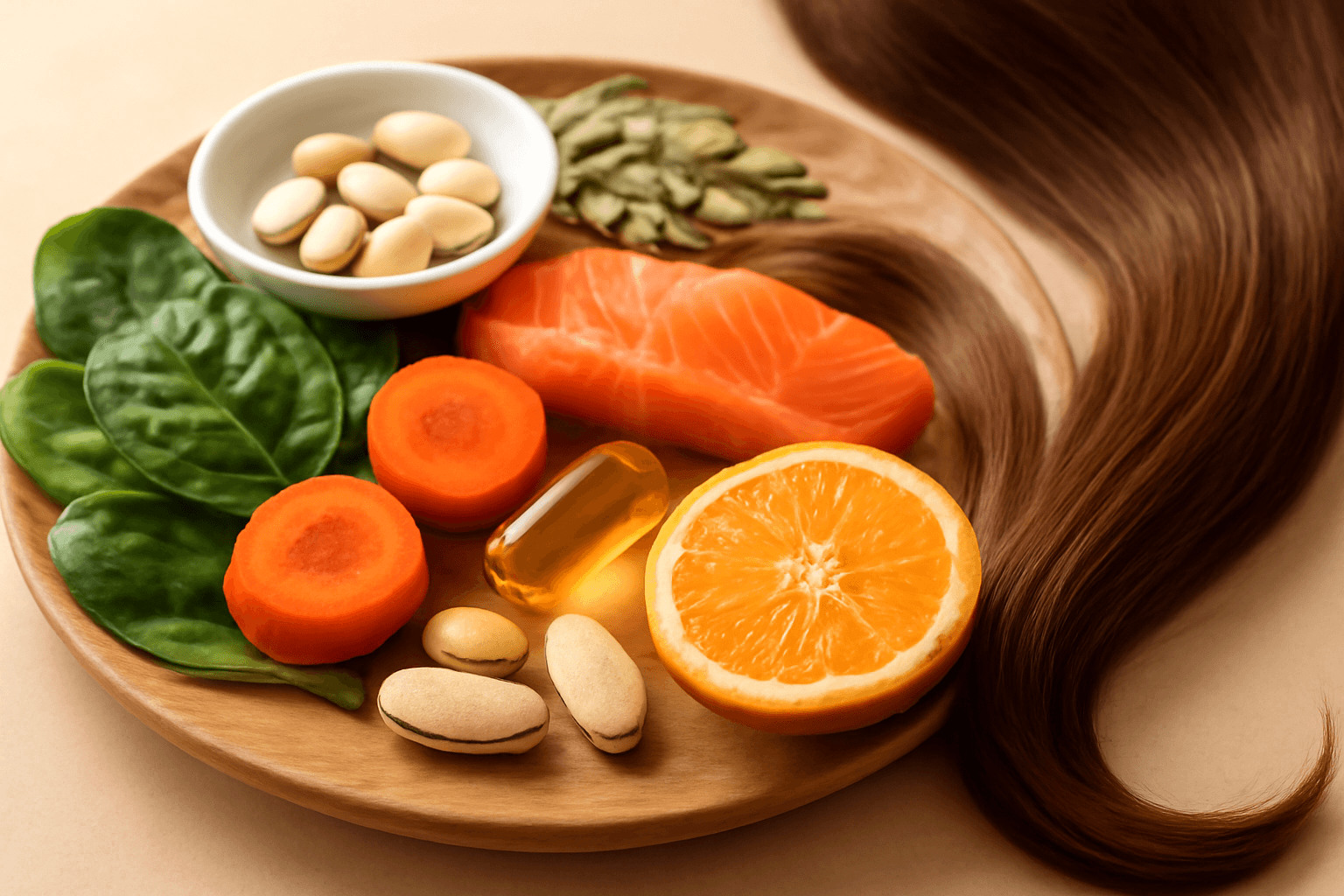
Nutrients from food have higher absorption efficiency and fewer side effects than supplements. Combining various food groups creates synergistic effects. Colorful foods, in particular, contain abundant antioxidants.
Eggs are complete protein foods providing biotin, selenium, and zinc simultaneously. Egg yolks are rich in choline, supporting both brain and hair growth. Oysters have very high zinc content, providing approximately 5.3mg of zinc per 100g, promoting hair follicle cell regeneration.
Fatty fish (salmon, mackerel, sardines) are the best sources of omega-3 fatty acids. 100g of salmon contains about 2,300mg of omega-3; consuming it 2-3 times weekly can reduce scalp inflammation. Nuts and seeds (almonds, walnuts, flaxseeds) provide vitamin E and selenium, reducing oxidative stress in hair follicles through antioxidant action.
Leafy vegetables (spinach, kale, broccoli) are excellent sources of iron, calcium, and magnesium. One cup of spinach (30g) provides about 5% of daily iron requirements. Orange vegetables like sweet potatoes and carrots are rich in beta-carotene (a vitamin A precursor), regulating sebum production on the scalp. Greek yogurt is a probiotic food containing protein, vitamin B5, and selenium; it improves overall nutrient absorption by enhancing gut health.
Lentils and legumes provide an excellent combination of plant-based protein, iron, and zinc. One cup of cooked lentils (198g) provides 18g of protein and 6.6mg of iron. Berries (blueberries, strawberries) contain high levels of antioxidants like anthocyanins, maintaining microvessel health around hair follicles.
Healthy Hair Habits
Daily habits are as important as diet. Hair growth is influenced by multiple body systems including androgen hormones, stress hormones, and thyroid hormones, requiring an integrated approach.
Stress management is essential for hair health. Chronic stress elevates cortisol levels, converting hair follicles to the telogen (resting) phase, causing hair loss 3-6 months later. Activities like meditation, yoga, and walking practiced 3-4 times weekly for at least 30 minutes can lower cortisol levels by 30%. Adequate sleep (7-9 hours nightly) also promotes growth hormone secretion, accelerating hair regeneration.
Scalp care is equally critical. Gentle massage 2-3 times weekly for 2-5 minutes increases scalp blood flow by 5-10%. Massage in circular motions with fingertips, avoiding strong pressure. Hot water removes natural scalp oils, so lukewarm water (95-100°F) is recommended.
Improve hair brushing habits. Vigorous brushing when wet damages hair, so pat dry with a towel first, then slowly brush with a wide-tooth comb. Finishing with a hair dryer on cool setting helps organize the cuticle layer.
Hormonal health cannot be overlooked. Hypothyroidism and polycystic ovary syndrome are major causes of hair loss. It's good to have thyroid tests (TSH, Free T4) and hormone panels every six months. Women should consult healthcare providers about increased hair loss during perimenopause or when using hormonal contraceptives.
Medication review is also necessary. Some blood pressure medications, antidepressants, and anticoagulants can cause hair loss. If hair loss began after starting medication, consult your prescribing physician about alternative options.
Minimizing chemical treatments is a direct way to reduce hair damage. Perms, coloring, and straightening treatments damage hair structure and cause protein loss. Use protein packs before and after treatments and maintain at least 8-week intervals.
Summary: Key Points for Healthy Hair
Long, healthy hair doesn't develop overnight. Hair growth cycles average 3-7 years, and noticeable improvement requires a minimum of 3 months. Practice the following key strategies comprehensively:
- Nutritional basics: Daily adequate intake of protein, iron, zinc, biotin, and omega-3
- Blood tests: Check iron, vitamin B12, and thyroid hormone levels, then supplement accordingly
- Stress management: Maintain hormone balance through 3-4 weekly workouts and adequate sleep
- Scalp care: Gentle shampooing, regular massage, avoiding hot water
- Professional consultation: Consult a dermatologist or nutritionist if no improvement after 3 months
If you're experiencing hair loss or hair problems, don't view it as merely a cosmetic issue—recognize it as a signal from your body. Hair loss is the external manifestation of imbalanced nutrition, chronic stress, hormonal imbalance, or underlying conditions. The foods and habits presented in this article will contribute to overall health improvement, not just hair health. The key to success is understanding your personal health status and underlying causes, then creating an individualized plan.
Healthcare Professional Consultation: If you experience sudden hair loss, patchy hair loss, scalp itching, or inflammation, visit a dermatologist. This information is for educational purposes and cannot replace medical diagnosis or treatment.