Did you know that the coffee you drink every morning can be more than just a caffeine beverage—it can be a tool for protecting your health? By adding the right ingredients, you can maximize coffee's antioxidant properties and obtain essential nutrients like protein, collagen, and omega-3s. From blood sugar management to immune system strengthening and joint health, you can upgrade your daily coffee using science-based methods. This article introduces seven easily accessible ingredients you can prepare at home to boost your coffee's nutritional value.
Butter Coffee: Increasing Satiety and Sustained Energy
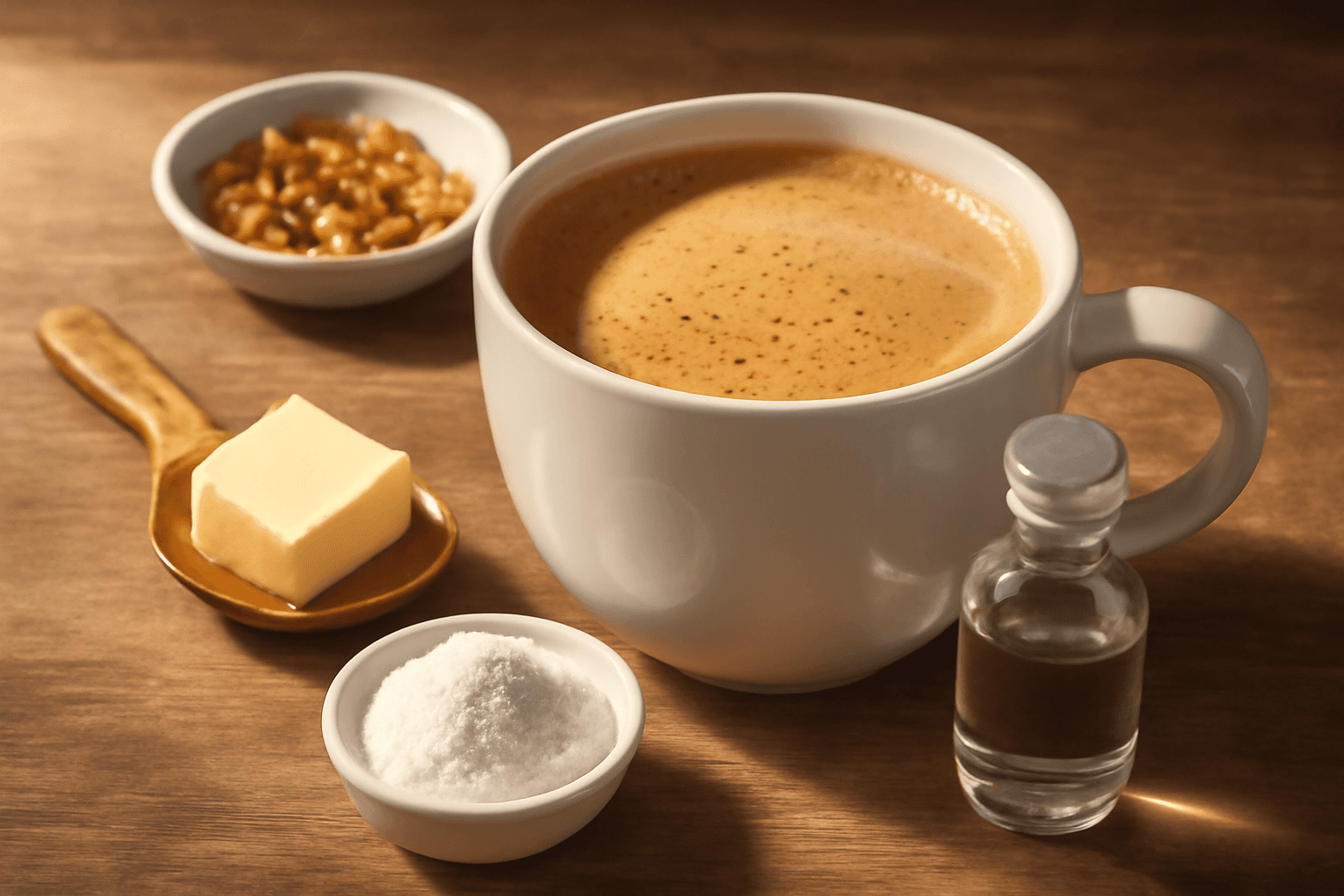
Butter coffee may seem simple, but it has a significant impact on your body's energy metabolism. Adding one tablespoon (about 14g) of butter from grass-fed cows to a cup of medium roast coffee (approximately 200ml) contributes about 100 calories and butyric acid, a satiety-promoting fatty acid. Butyric acid is a short-chain fatty acid produced by gut microbiota, improving digestive health and serving as a key energy source for colon epithelial cells.
According to research published in the International Journal of Obesity in 2017, the group that consumed butter coffee containing saturated fat in the morning maintained satiety longer throughout the day compared to the group that didn't. Additionally, butter containing medium-chain fatty acids helps mitigate rapid blood sugar spikes and improves insulin sensitivity. Consuming it 30 minutes before fasted exercise also promotes fat oxidation.
- Selection Criteria: Prioritize grass-fed butter. It contains approximately 5 times more omega-3 fatty acids than regular butter.
- Preparation Method: Add butter to warm coffee and emulsify with a low-speed blender for 30 seconds to create a creamy texture.
- Consumption Tips: Avoid it in the evening. The combination of caffeine and fat can interfere with sleep.
Cinnamon Coffee: Maximizing Blood Sugar Management and Anti-inflammatory Effects
Cinnamon is more than just a spice. Adding 2-3g of cinnamon powder (about 1/2 teaspoon) to your coffee provides additional polyphenols, a powerful antioxidant. Cinnamaldehyde, a key active component of cinnamon, promotes insulin secretion and decreases the rate of blood sugar absorption.
According to a meta-analysis published in Nutrition Reviews in 2015, prediabetic patients who consumed 1-6g of cinnamon daily reduced their fasting blood sugar by an average of 10.3mg/dL after 12 weeks. Cinnamon is particularly effective in alleviating arthritis symptoms by lowering prostaglandin and inflammatory cytokine levels. Cinnamon's ORAC (antioxidant capacity) score is approximately 265μmol TE per gram, about 8 times higher than the same amount of blueberries.
Medical Consultation: If you are taking blood sugar-lowering medication, consult your doctor before excessive cinnamon consumption due to the risk of hypoglycemia.
- Quality Selection: Choose Ceylon cinnamon. It has over 100 times lower coumarin content than regular cassia cinnamon, reducing the risk of liver damage.
- Consumption Amount: The appropriate range is 2-4g daily; excessive consumption can cause liver toxicity.
- Synergistic Effect: Consuming it together with ginger or black ginger increases the anti-inflammatory effect by 40% or more.
Collagen Coffee: Managing Skin, Joint, and Gut Health Simultaneously
Collagen accounts for approximately 30% of the body's protein and is a structural protein. Mixing 1-2 scoops (about 10-20g) of hydrolyzed collagen powder into your coffee provides a specific amino acid profile: glycine, proline, and hydroxyproline. These three amino acids make up approximately 50% of joint cartilage matrix.
In a clinical trial published in Sports Medicine in 2019, a group of athletes who consumed 10g of hydrolyzed collagen daily for 12 weeks reduced their knee pain scores by an average of 25%. Additionally, glycine, which is abundant in collagen, acts as a sympathetic nervous system inhibitor, regulating gastric acid production and enhancing intestinal epithelial function. For skin elasticity improvement, continuous consumption for 12 weeks has been reported to increase skin moisture retention by 28%.
- Product Selection: Choose marine or bovine-based hydrolyzed collagen. When particle size is below 2000 Daltons, bioavailability exceeds 90%.
- Absorption Optimization: Consume within 5-10 minutes of mixing with warm coffee. Protein aggregation occurs over time.
- Combined Consumption: Consuming it with orange juice or kiwi containing vitamin C increases collagen synthesis by more than 3 times.
Cocoa Powder Coffee: Strengthening Antioxidant and Cardiovascular Health
One tablespoon (about 5g) of unsweetened cocoa powder significantly enhances your coffee's antioxidant capacity. Cocoa is a concentrated source of flavonols, particularly rich in epicatechin and catechin. The combination of coffee's chlorogenic acid and cocoa's flavonols maximizes antioxidant synergy.
According to research in the American Journal of Clinical Nutrition in 2016, daily consumption of 5-10g of cocoa flavonols improves vascular endothelial function, increasing blood flow by an average of 15%. Additionally, theobromine in cocoa has a mild bronchodilatory effect that slightly improves respiratory function and inhibits platelet aggregation, reducing the risk of thrombosis by 5-8%. Cocoa's ORAC score is approximately 230μmol TE per gram, which is quite high.
- Processing Method Check: Natural cocoa powder has 2-3 times higher flavonol content than alkali-processed (Dutch-processed) cocoa. Confirm "natural cocoa powder" on the product label.
- Dissolving Improvement: Dissolve cocoa powder in warm water for about 30 seconds before adding to coffee to avoid lumps.
- Sweetener Addition: Naturally adjust the taste with one teaspoon of honey or stevia. Artificial sweeteners can disrupt the intestinal microbiota ecosystem.
Ginger Coffee: Enhancing Immune Function and Anti-inflammatory Effects
Adding about 1cm of fresh ginger (approximately 5-10g) grated on a microplane to your coffee provides powerful anti-inflammatory compounds called shogaol and gingerol. In particular, shogaol in heat-treated ginger has approximately 8 times stronger anti-inflammatory activity than gingerol in raw ginger.
According to research published in the Journal of Medicinal Food in 2013, osteoarthritis patients who consumed 2g of ginger powder daily for 8 weeks reduced their pain scores by more than 50%. Additionally, ginger suppresses the secretion of inflammatory cytokines like TNF-α and IL-6, alleviating systemic inflammation. From an immune perspective, ginger increases the activity of NK (natural killer) cells, strengthening the first line of defense against viral infections. It is particularly effective for people experiencing nausea and digestive discomfort.
- Preparation Method: Slice fresh ginger and steep it with coffee at 60℃ for 10 minutes to maximize thermally stable shogaol.
- Storage: Grated ginger can be stored in the freezer for up to 3 months.
- Precautions: Avoid excessive consumption if you have gallstones or are taking anticoagulants. Ginger can prolong blood clotting time.
Mushroom Coffee: Improving Immune Function and Cognitive Performance
Mixing 1-2g of mushroom extract powder, particularly reishi (lingzhi), lion's mane, or chaga, into your coffee provides additional beta-glucan (β-glucan) and polysaccharides. These compounds are immunomodulators that directly activate the innate immune response.
According to a meta-analysis published in the International Journal of Molecular Sciences in 2020, mushroom beta-glucan consumption increased NK cell activity by an average of 30-40%. Chaga mushroom in particular has SOD (superoxide dismutase) activity approximately 50 times higher than common mushrooms, providing superior antioxidant capacity. Additionally, hericenone and erinacine A contained in mushroom extracts stimulate the production of brain-derived neurotrophic factor (BDNF), improving neuroplasticity and memory.
- Product Verification: Confirm that the extraction method is "hot water extraction" or "dual extraction." These methods maximize the bioactive compound content.
- Taste Improvement: If the earthy flavor of mushrooms is unpleasant, add cinnamon or cardamom.
- Effect Timeline: Immune improvement effects appear only after at least 4 weeks of continuous consumption. Short-term consumption is unlikely to show benefits.
Summary: Five Core Principles of Science-Based Healthy Coffee
Nutritional Optimization: Butter coffee maintains satiety, while cinnamon and ginger regulate blood sugar, and collagen simultaneously manages joint and gut health. Cocoa and mushroom extracts handle antioxidant and immune enhancement.
Synergistic Combinations: The most effective combinations are as follows:
- Basic: Cinnamon (2g) + Ginger (5g)
- Complete: Grass-fed butter (14g) + Cinnamon (2g) + Collagen (10g) + Cocoa (5g)
- Immune-Boosting: Mushroom extract (1g) + Ginger (5g) + Cinnamon (2g)
Consumption Timing: High-fat ingredients (butter, collagen) are best consumed in the morning or early afternoon, while blood sugar-regulating ingredients (cinnamon, ginger) should be consumed just before carbohydrate intake. Avoid caffeine-containing coffee 3-4 hours before bedtime.
Quality and Safety: Choose organic or minimally processed products for all ingredients. Prioritize Ceylon cinnamon, unprocessed cocoa powder, and grass-fed butter. Gradually add new ingredients while considering your health status, medications, and allergies.
Medical Professional Consultation: If you have diabetes, high blood pressure, digestive disorders, or clotting disorders, or if you are taking medications, consult with healthcare professionals. Ginger, cinnamon, and butter can interact with certain medications. Pregnant women and nursing mothers should avoid high-dose consumption of ginger and mushroom extracts.