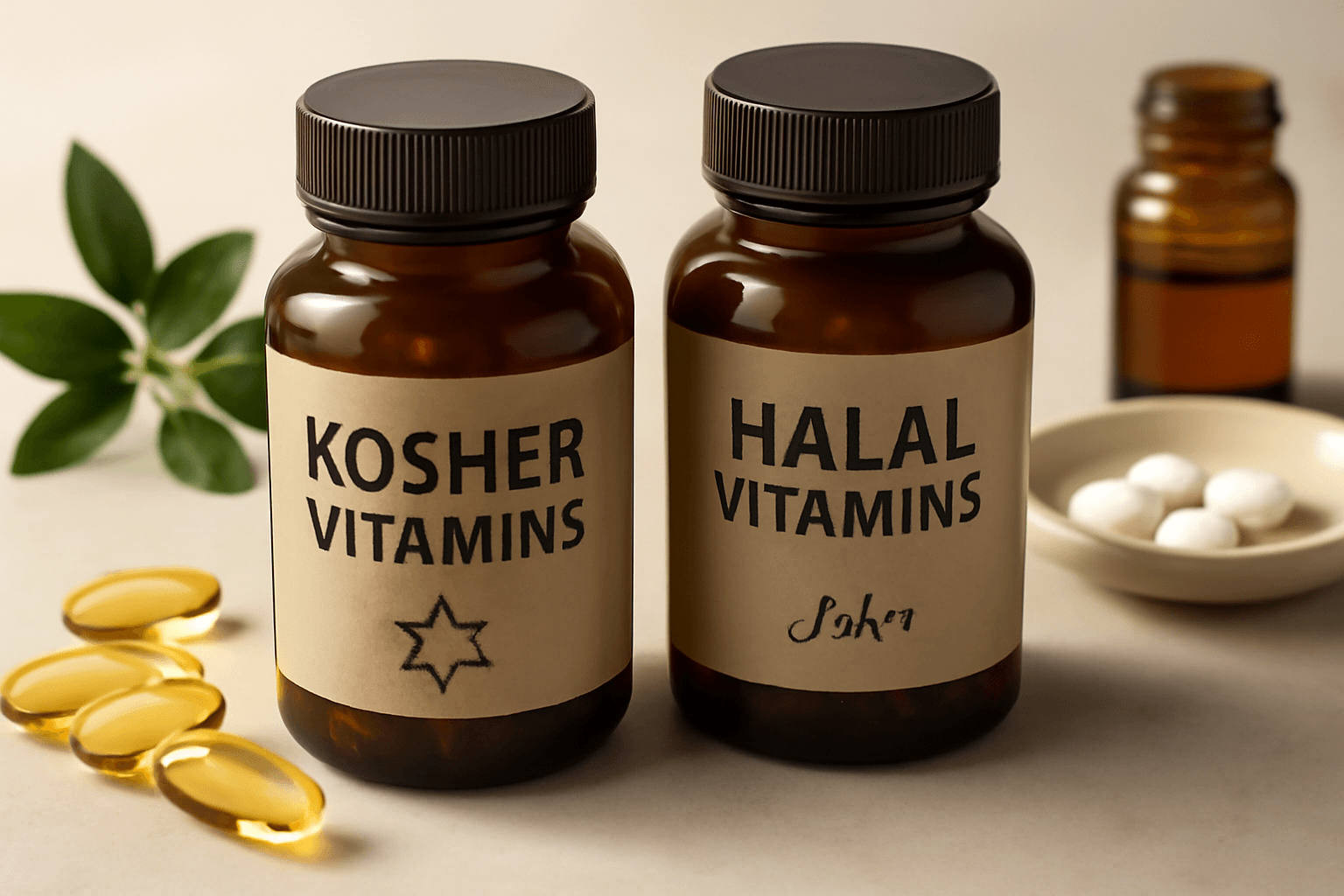
More and more people are making vitamin choices based on their religious beliefs and ethical values. Kosher and Halal certified vitamins are building consumer trust through transparent ingredient disclosure and strict quality control that goes beyond simple religious compliance. When selecting essential nutrients like Omega-3 and Vitamin D, understanding the sources of ingredients like gelatin, alcohol, and glycerin, as well as certification standards, can help you find wellness products that align with your values. This guide clearly explains the standards for Kosher and Halal vitamins and provides a checklist to review during actual purchases.
Defining Kosher and Halal
Kosher refers to foods permitted according to Jewish dietary laws (Kashrut), and these standards also apply to vitamins and supplements. To receive Kosher certification, the entire manufacturing process must comply with Jewish law, with particular attention to the source and handling of animal-derived ingredients. The Orthodox Union (OU), a Kosher certification body in the United States, certifies over 800,000 products annually, with the supplement category growing rapidly.
Halal refers to foods and products permitted under Islamic law (Sharia). Halal certification standards center on compliance with religious slaughter practices, prohibition of pork-derived ingredients, and exclusion of alcohol. The Halal product market is growing at an annual rate of 6-8% globally, with particularly high demand in the vitamins and nutritional supplements category. Interestingly, both Kosher and Halal standards apply very strict criteria to manufacturing facility cleanliness, ingredient traceability, and cross-contamination prevention.
Both standards appeal to consumers beyond religious belief, including those with high health consciousness. This is because transparent ingredient disclosure and regular inspections by third-party oversight bodies take place. Therefore, Kosher and Halal certified vitamins are becoming a practical choice not just for religious reasons, but for consumers who prioritize quality and reliability.
Gelatin
Gelatin is the most common material in vitamin capsules, a collagen protein extracted from animal bones, tendons, and skin. Approximately 90% of gelatin used in standard vitamin capsules comes from pigs and cattle. To receive Halal certification, the gelatin source must come from animals slaughtered according to Islamic law, and pork-derived gelatin is absolutely prohibited. For Kosher certification, not only the gelatin source but also the chemicals used in the extraction process must be verified.
Due to these stringent standards, many manufacturers are switching to plant-based alternatives. Carrageenan extracted from seaweed and pectin from fruits are representative plant-based capsule materials. As of 2023, the plant-based capsule market is worth approximately $2.3 billion and is growing at a rate of over 8% annually. Plant-based capsules are easier to approve for both Kosher and Halal and are also suitable for vegetarian and vegan consumers.
Special care is needed when selecting Omega-3 products. Fish oil-based Omega-3 must have both the extraction process and storage methods verified to receive Halal certification. Some manufacturers use plant-based Omega-3 extracted from marine microalgae, which meets Halal, Kosher, and vegan standards. To accurately verify capsule materials, you must review the ingredient list on the product label and official documents from the certification body.
Alcohol-Containing Ingredients
Some liquid formulations of vitamin supplements, particularly Vitamin D and Vitamin B12, contain ethanol as a preservative. Under Halal certification standards, alcohol is absolutely prohibited, and even trace amounts make Halal approval impossible. Kosher standards also restrict alcohol additives, though some Jewish interpretations permit very low concentrations (0.5% or less) of alcohol.
The pharmaceutical industry uses alcohol for three main reasons. First, it serves as a powerful preservative to prevent bacterial and fungal growth. Second, it increases the solubility of fat-soluble vitamins (A, D, E, K). Third, it maintains the stability of vitamin compounds. However, effective preservation methods without alcohol are being developed. For example, nitrogen flushing technology and glycerol-based preservatives enable complete alcohol elimination.
When selecting Vitamin D, pay attention to liquid formulations. Standard oil-based Vitamin D liquids often contain ethanol, but Halal and Kosher certified products dissolve the vitamin using only plant-based oils such as MCT oil or olive oil. You can verify this by looking for "Alcohol-Free" labeling on the product or by requesting ingredient verification documents from the certification body. Especially when selecting children's vitamins, you must verify whether alcohol is present.
Glycerin
Glycerin (or glycerol) is used in many vitamin products as a lubricant, sweetener, and humectant. The source of glycerin determines Kosher and Halal certification eligibility. Vegetable glycerin is extracted from palm oil, coconut oil, or soybean oil and generally meets most Halal and Kosher standards. Animal-derived glycerin, on the other hand, comes from animal fats and requires verification of how the source animals were slaughtered.
Environmental concerns arise with palm oil-based glycerin use. Palm oil cultivation is a major cause of tropical forest destruction in Southeast Asia, with approximately 3.7 million hectares of forest lost annually. Therefore, choosing products using sustainable palm oil (RSPO certified) or coconut-based glycerin is an ethical wellness choice that considers the environment. Among Kosher and Halal certified products, an increasing number of brands additionally meet these sustainability standards.
For Vitamin D and Omega-3 liquids, glycerin content is an important quality indicator. When glycerin is properly added, it can regulate product viscosity to optimize absorption rate. However, excessive glycerin (20% or more) can cause digestive discomfort, so it's good to check the percentage of glycerin in the ingredient list. By contacting the manufacturer's website or customer support team about the exact source of glycerin, you can verify whether it's animal or plant-derived and which plant it comes from.
Kosher and Halal Certification
There are approximately 300 Kosher certification bodies worldwide, but trustworthy organizations are limited. Orthodox Union (OU), OK Kosher, Star-K, and Kof-K are major recognized bodies in the United States and Canada. These organizations conduct on-site inspections of manufacturing facilities at least 2-4 times annually and require re-verification whenever ingredients change. Kosher certification costs range from $500-2,000 per product annually, which is an indicator of a company's transparency and quality commitment.
Halal certification has a more complex landscape. Each Islamic country has a national body that sets Halal standards, and internationally recognized standards are set by bodies such as the Korean Muslim Federation, Malaysia's JAKIM, Indonesia's MUI, and Singapore's MUIS. Halal certification in the United States and Europe is handled by IFANCA (Islamic Food and Nutrition Council of America) and HALAL CERTIFICATION SERVICES, among others. The Halal certification process is generally more stringent than Kosher, and complete supply chain traceability is essential.
There are important points to note when verifying certification marks. Even if a certification mark appears on the product package, it's a good idea to verify it on the certification body's official website. Many certification bodies provide online databases where you can search for certification status by product name and manufacturer. For example, OU certification can be searched at "ou.org/find-kosher" and IFANCA Halal certification at "ifanca.org." You should also check the serial number or renewal date of the certification mark to confirm that it's currently valid. Avoid products displaying invalid or expired certifications.
Summary
Essential checklist for choosing Kosher and Halal vitamins:
- Verify capsule material: Check the gelatin source (animal slaughter method) or whether plant-based capsules are used. When possible, choosing seaweed or fruit-based plant capsules meets more standards.
- Check for alcohol content: Especially for liquid form Vitamin D and Omega-3, look for "Alcohol-Free" labeling on the product, and contact the manufacturer for verification if necessary.
- Verify glycerin source: Choosing products using plant-based glycerin (especially RSPO-certified palm oil or coconut-based) allows you to consider environmental ethics as well.
- Verify certification body: Always verify the product's certification mark on the official website of the issuing body. Prioritize products certified by highly trusted bodies such as Orthodox Union, OK Kosher, JAKIM, and IFANCA.
- Professional consultation: If you have specific health conditions or are taking medications, consulting with a healthcare professional before purchasing any form of vitamin product is essential.
Kosher and Halal certified vitamins not only satisfy religious standards but also ensure overall product quality through strict ingredient disclosure and third-party oversight. When selecting essential nutrients like Omega-3 and Vitamin D, considering these standards allows you to uphold both your beliefs and health values. However, the suitability of any vitamin product varies depending on individual health status, existing medications, and allergies, so it's always recommended to consult with a healthcare professional before making your choice.