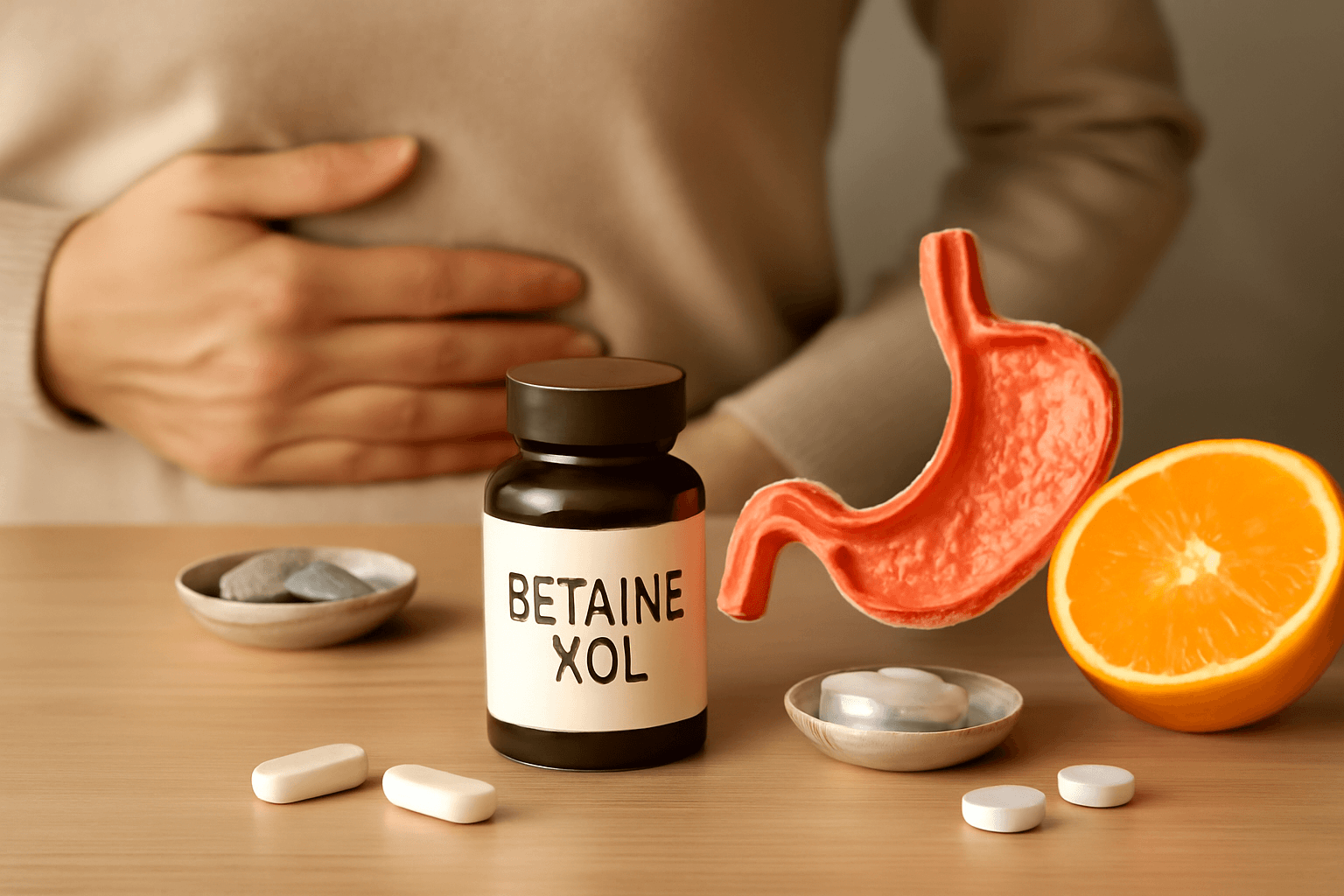
Many modern people experience bloating, abdominal distension, and digestive discomfort after eating. These digestive issues may not simply stem from overeating but from insufficient stomach acid. Betaine HCL helps normalize digestive function by supplementing hydrochloric acid (HCl), the main component of stomach acid, supporting protein breakdown, mineral absorption, and food poisoning prevention. Particularly for those over 40 or taking acid-suppressing medications, the absorption of essential nutrients such as iron, zinc, and calcium may be compromised, making the role of Betaine HCL even more important. This article explains in detail what Betaine HCL is, how it works, and how to use it safely.
What is Betaine?
Betaine is a natural compound synthesized in the body from the amino acid glycine or obtained through food. It is abundant in foods such as beets, spinach, and whole grains, and its primary function is to act as a methyl donor to support cellular metabolism.
Betaine lowers homocysteine levels, maintains liver health, and supports muscle synthesis. Among athletes, it is sometimes taken as a supplement to enhance athletic performance. However, from a digestive health perspective, betaine's role is more directly expressed in the form known as Betaine HCL.
- A compound naturally synthesized in the body
- Produced from glycine and methionine
- Supports cellular health through methyl donation
- Improves homocysteine levels
What is Betaine HCL?
Betaine HCL is a refined supplement formed by combining betaine with hydrochloric acid (HCl). It works by supplying the hydrochloric acid naturally secreted in the stomach from an external source to enhance digestive function. Unlike general betaine supplements, Betaine HCL immediately creates an acidic stomach environment.
One 500mg capsule of Betaine HCL supplies approximately 150-200mg of hydrochloric acid. In the supplement industry, Betaine HCL is recognized as the most efficient choice among products that improve protein digestion. It plays a particularly important role in promoting the absorption of minerals and vitamins such as zinc, iron, calcium, magnesium, and vitamin B12.
If hydrochloric acid fails to properly break down food, the food that passes into the intestines is not sufficiently processed, leading to reduced nutrient absorption.
Important Functions of Hydrochloric Acid in the Stomach
Hydrochloric acid (HCl) is a substance secreted by the parietal cells of the stomach and plays various important roles in the food digestion process. First, it is responsible for protein denaturation. Hydrochloric acid lowers the pH to 1.5-3.5 levels, unfolding protein in food and converting it into a structure that is easier for the digestive enzyme pepsin to break down.
The second function is promoting mineral absorption. Minerals such as calcium, magnesium, iron, and zinc must be ionized in an acidic environment to be absorbed in the small intestine. When hydrochloric acid is insufficient, these minerals are not adequately ionized and are excreted directly in stool. This is the primary cause of mineral deficiency resulting from insufficient hydrochloric acid.
The third function is antibacterial action. A strong acidic environment eliminates harmful bacteria, parasites, and fungi contained in food, preventing food poisoning. The weaker the hydrochloric acid, the higher the risk of infection.
Fourth, hydrochloric acid helps with vitamin B12 absorption. B12 exists bound to protein in food, and hydrochloric acid and pepsin must separate it for it to become absorbable. Insufficient hydrochloric acid can lead to pernicious anemia.
- Protein breakdown and digestive promotion
- Ionization and absorption of minerals such as calcium, iron, magnesium, and zinc
- Elimination of pathogens and parasites
- Separation and absorption of vitamin B12
- Stimulation of gastric motility (peristalsis)
- Stimulation of bile and pancreatic enzyme secretion
How to Determine if Hydrochloric Acid Secretion is Adequate
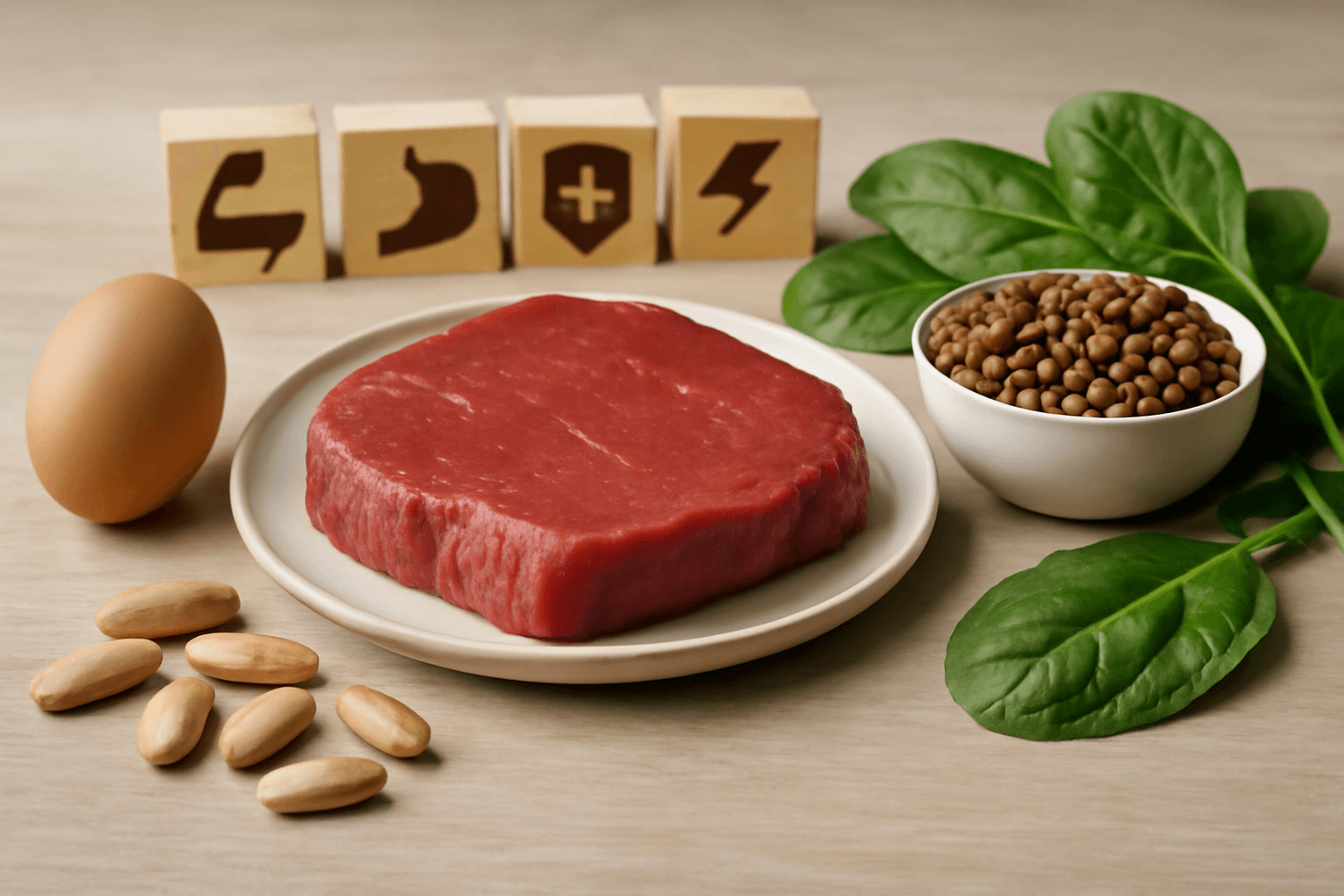
Several clinical signs can be checked to determine whether there is insufficient hydrochloric acid. The most common symptoms are post-meal abdominal bloating, belching, gas, and undigested food particles appearing in stool. Particularly if symptoms worsen after eating protein-rich foods such as meat or eggs, hydrochloric acid deficiency should be suspected.
Nutritional deficiency symptoms are also important indicators. Iron deficiency anemia (fatigue, pallor), brittle nails, hair loss, and skin psoriasis suggest insufficient absorption of iron, zinc, and vitamin B12. Additionally, those over 40 years old experience a gradual decrease in hydrochloric acid secretion with advancing age, requiring special attention in this age group.
Users of certain medications are also at high risk. Regular use of acid-suppressing medications (PPIs), H2 blockers, and antacids suppresses hydrochloric acid secretion, leading to chronic hydrochloric acid deficiency. Some patients with autoimmune diseases (lupus, rheumatoid arthritis) also show a tendency toward reduced hydrochloric acid secretion.
For accurate diagnosis, consulting with a healthcare professional is safest. Some functional medicine clinics perform gastric acid tests.
How to Supplement with Betaine HCL
Betaine HCL is mostly sold in capsule or tablet form, with a typical dose of 500mg per capsule. The correct way to take it is with meals alongside protein-rich foods. Since hydrochloric acid is needed to help break down protein, taking it without protein will have limited effectiveness.
The initial dose is typically one capsule (500mg) per meal. After 1-2 weeks, observe tolerance symptoms and increase to two capsules (1000mg) per meal if needed. The maximum recommended dose varies by manufacturer, but generally does not exceed 3-4 capsules per meal.
The period to evaluate effectiveness is at least 2-4 weeks. Some people feel a reduction in abdominal bloating within the first week, but longer-term effects such as improved nutrient absorption require more time. If hydrochloric acid secretion recovers, the dose can be gradually reduced, though some may require permanent supplementation.
- Timing of use: During meals, with protein foods
- Initial dose: One capsule of 500mg per meal
- Dosage adjustment: Add one capsule at a time after 1-2 weeks based on symptoms
- Maximum dose: Follow manufacturer guidelines (typically 3-4 capsules)
- Evaluation period: At least 2-4 weeks
- Discontinuation: Gradual reduction recommended
Quality verification is important when selecting a supplement. Reliable brands receive third-party testing certification and guarantee freedom from impurities and contaminants. Additionally, choosing a complex digestive enzyme product (containing pepsin and digestive enzymes) rather than Betaine HCL as a single ingredient may be even more effective.
Safety and Side Effects
Betaine HCL is generally considered a safe supplement, with serious adverse effects reported rarely. However, discomfort may occur if taken incorrectly.
The most common side effect is heartburn and acid reflux. This occurs particularly in people with stomach ulcers or gastritis. Taking it on an empty stomach or in excess can irritate the stomach lining. In such cases, discontinue use and consult a healthcare professional.
Contraindications also exist. Patients diagnosed with active stomach ulcers, severe gastritis, or autoimmune gastritis should avoid Betaine HCL. In these conditions, the stomach lining is already damaged, and an additional acidic environment could cause deterioration.
Drug interactions must also be considered. Calcium channel blockers, iron supplements, and thyroid medications (levothyroxine) may have their absorption affected in an acidic environment, so taking them at separate times or consulting a healthcare professional is necessary.
Extensive research on use during pregnancy and breastfeeding is lacking, so the decision to use it during these periods should be made under healthcare professional guidance. The same applies to children, where professional guidance is essential.
- Common side effects: Heartburn, acid reflux
- Contraindications: Active stomach ulcers, severe gastritis, autoimmune gastritis
- Drug interactions: Calcium channel blockers, iron supplements, thyroid medications
- Special populations: Pregnant women, nursing mothers, and children require professional consultation
Summary
Betaine HCL is an effective tool for supplementing hydrochloric acid deficiency resulting from modern diets, stress, and age-related decline. It provides comprehensive digestive health improvement through promoting protein breakdown, enhancing the absorption of minerals such as iron, zinc, calcium, and magnesium, and improving vitamin B12 absorption.
It is particularly useful for those over 40, users of acid-suppressing medications, and people with digestive symptoms, with rapid improvements expected in abdominal bloating, indigestion, and nutritional deficiency symptoms. However, it should be taken with protein during meals, dosage adjusted gradually, and continued for at least 2-4 weeks or longer.
While safety is high, it should be avoided by those with stomach ulcers or gastritis, and due to possible drug interactions, it is safest to consult with a healthcare professional before use. Additionally, supplements are not a complete solution to fundamental health issues, so improvements in lifestyle habits such as regular eating patterns, stress management, and adequate sleep should be implemented together.