Reasons for Darkening Skin Tone: Major Causes of Hyperpigmentation
Recently, an increasing number of people are feeling that their skin tone has darkened. According to statistics from the Health Insurance Review and Assessment Service, the average annual number of patients receiving treatment for skin diseases related to hyperpigmentation has increased by 8% over the past five years. Hyperpigmentation is an important signal indicating skin health, going beyond just a cosmetic issue. Accurately identifying the causes of skin darkening is essential for finding effective solutions.
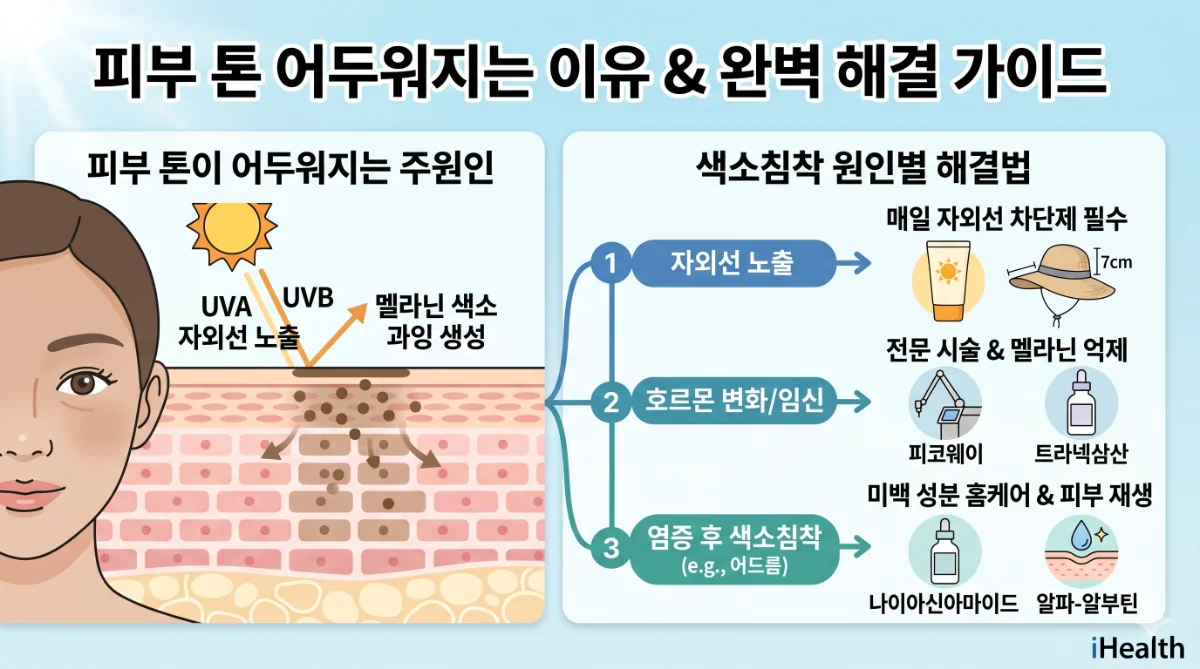
Changes in skin tone occur due to abnormalities in the production and distribution of melanin pigment. The melanin present in our skin protects it from ultraviolet rays, but when produced excessively or distributed unevenly, hyperpigmentation occurs.
UV Exposure: The Biggest Cause of Hyperpigmentation
UV exposure is the most direct cause of darkening skin tone. UVA and UVB rays stimulate the melanocytes in the epidermis, promoting melanin production. According to dermatological research, the amount of melanin produced in skin exposed to UV rays can increase by up to three times compared to unexposed areas.
Characteristics of UV-Induced Hyperpigmentation:
- Hyperpigmentation primarily on exposed areas such as the face, neck, and backs of hands
- Worsening during the summer months (May to September) when sunlight is strong
- Symptoms become pronounced 6 months to 1 year after exposure
- Can occur even with everyday UV exposure
A 2023 study by the dermatology research team at Seoul National University found that the progression of hyperpigmentation in the group that used sunscreen daily was 65% lower than in the group that did not use it. This highlights the importance of sun protection.
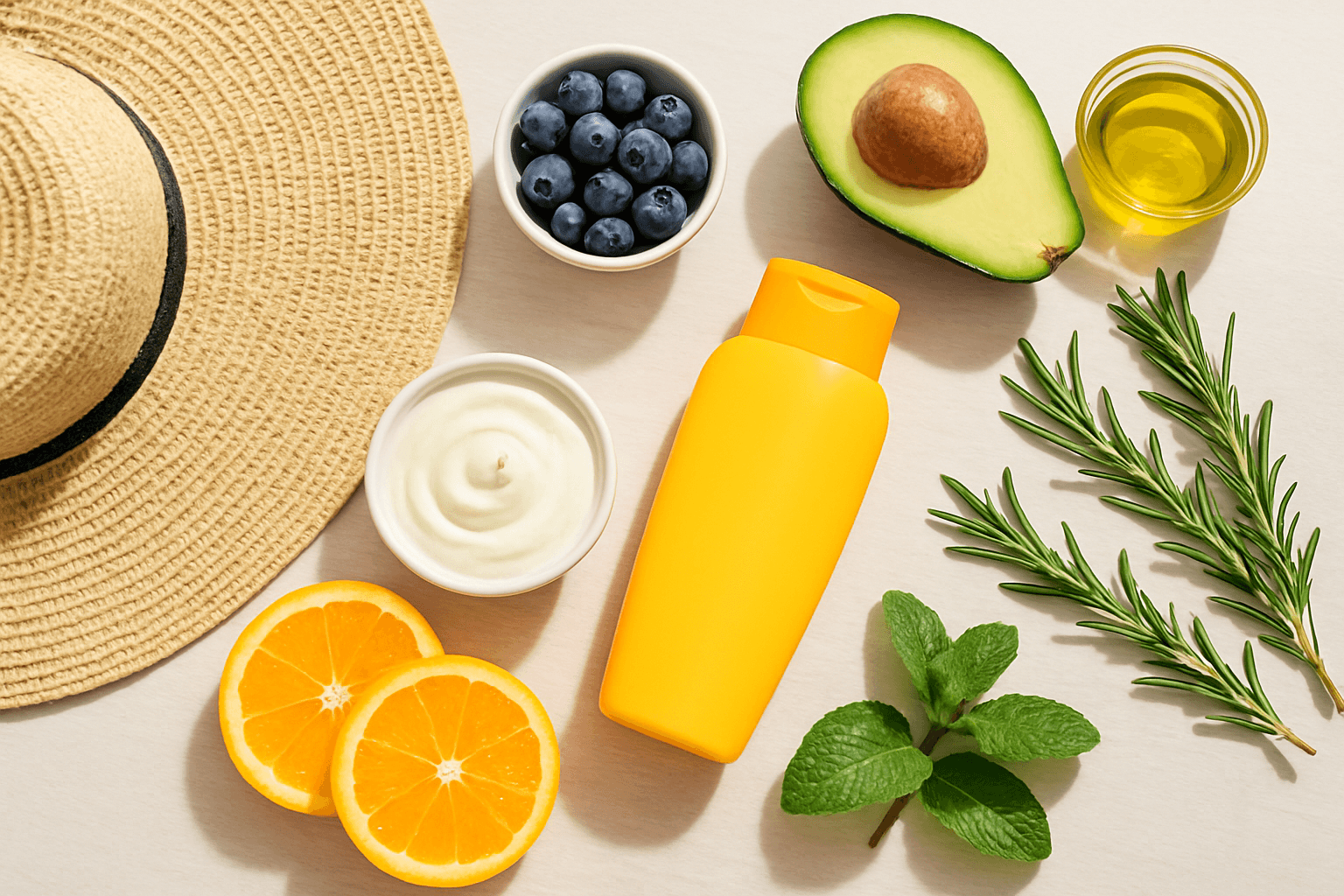
Prevention Tips: Use a sunscreen with at least SPF 30 and PA+++ from 8 AM to 4 PM (when UV rays are strongest), reapplying every 2 hours. It’s best to apply it 15 minutes before going outside for optimal effectiveness.
Hormonal Changes and Melasma
For women, hormonal changes are a major cause of hyperpigmentation. In particular, 'melasma' that occurs during pregnancy affects 15-40% of all pregnant women. This is due to increased levels of estrogen and progesterone during pregnancy, which stimulate melanocyte activity.
Characteristics of Hormonal-Related Hyperpigmentation:
- Symmetrically appears on the cheeks, bridge of the nose, and forehead
- Forms clear brown spots with defined borders
- Most common in women in their 30s and 40s
- May worsen with the use of birth control pills
It is estimated that about 450,000 Korean women visit dermatology clinics annually for hormone-related hyperpigmentation. Melasma often naturally resolves within 1-2 years after childbirth in about 75% of cases, but approximately 25% may not completely disappear.
Post-Inflammatory Hyperpigmentation
Post-inflammatory hyperpigmentation refers to the darkening of skin in areas that have healed from conditions like acne, dermatitis, or burns. This occurs because inflammatory mediators (cytokines) released during the inflammatory process stimulate melanocytes.
Characteristics of Post-Inflammatory Hyperpigmentation:
- Brown discoloration in areas affected by acne or dermatitis
- More pronounced in individuals with darker skin tones
- Gradual improvement over 3 months to 2 years
- Recovery speed varies by area
According to clinical data from domestic dermatology clinics, post-inflammatory hyperpigmentation occurs 3-4 times more frequently in Asians than in Westerners after acne treatment. This is due to a higher melanin content in Asian skin.
Methods for Removing Hyperpigmentation: Medical Techniques and Lifestyle Habits
Laser Treatments
The most commonly used method for treating hyperpigmentation is laser treatment. The main lasers used in Korea are as follows:
- PicoWay: A picosecond laser that finely destroys pigment particles. Approximately 150,000 to 300,000 KRW per session.
- Spectra XT: A Q-switched Nd:YAG laser effective for deep pigment removal. Approximately 100,000 to 250,000 KRW per session.
- Toning: A low-power laser used in multiple repeated treatments. Monthly sessions for 4 weeks over 3-6 months, totaling approximately 500,000 to 1,200,000 KRW.
According to the Korean Dermatological Association's 2022 survey on laser treatments, 82% of patients seeking treatment for hyperpigmentation chose laser procedures. The average recovery period is 1-2 weeks, and sun protection is crucial for the week following the treatment.
Chemical Peels
This method involves applying chemical substances such as glycolic acid, salicylic acid, or lactic acid to remove the epidermal layer. It is effective when hyperpigmentation is only in the upper layers of the epidermis.
- Superficial Peel: Glycolic acid concentration of 20-30%, every 1-2 weeks, approximately 80,000 to 150,000 KRW per session.
- Medium Peel: High concentrations of salicylic acid or lactic acid, every month, approximately 150,000 to 300,000 KRW per session.
Chemical peels typically cause the skin to peel for about 3-7 days post-treatment, which can be inconvenient for those who frequently go out for work.
Tranexamic Acid
This ingredient has recently gained attention as a whitening agent approved by the Ministry of Food and Drug Safety. It works by inhibiting melanin production and is used in both clinical treatments and home care products.
- High-concentration introduction using iontophoresis (approximately 200,000 to 350,000 KRW per session)
- Essence/cream containing tranexamic acid (hospital-exclusive products approximately 80,000 to 150,000 KRW)
Vitamin C Infusion
High-concentration vitamin C inhibits melanin production through its strong antioxidant properties. The absorption rate of high-concentration products introduced in clinics is about 5 times higher than that of regular cosmetics.
- Iontophoresis treatment: approximately 150,000 to 250,000 KRW per session, 1-2 times a week for 4 weeks
- Microneedling combined: approximately 300,000 to 500,000 KRW per session
Self-Care: Home Care Products and Lifestyle Habits
Four Essential Whitening Ingredients
Here are some Ministry of Food and Drug Safety certified ingredients that can be used to improve hyperpigmentation.
- Alpha-Arbutin: Blocks melanin production by inhibiting tyrosinase. Products containing it range from approximately 30,000 to 80,000 KRW.
- Kojic Acid: A naturally derived ingredient with minimal side effects. Products containing it range from approximately 25,000 to 70,000 KRW.
- Niacinamide: Vitamin B3 that improves the skin barrier and inhibits melanin production. Products containing it range from approximately 35,000 to 100,000 KRW.
- Licorice Extract: Contains glabridin for anti-inflammatory and whitening effects. Products containing it range from approximately 30,000 to 90,000 KRW.
In a 2023 experiment by the Korea Consumer Agency comparing the whitening effects of cosmetics, these four ingredients showed an average skin tone improvement of 1.5 to 2 shades after 4 weeks of use. However, individual differences are significant, so consistent use for at least 8 weeks is necessary to see results.
Daily UV Protection Habits
More than 50% of hyperpigmentation improvement depends on UV protection. Here are effective UV protection methods.
- Go out before 8 AM and after 4 PM: Utilize the time when UV rays are weakest
- Correct use of sunscreen: - Use 1/4 teaspoon (about 0.5ml) on the face and 1/4 teaspoon on the neck - Apply 15 minutes before going outside to allow it to fully absorb into the skin - Reapply every 2 hours after sweating or getting wet - Even for indoor work, UV rays can penetrate windows, so apply daily
- Use additional protective items: - Umbrellas or hats (with a brim width of 7cm or more) - UV-blocking clothing (UPF 50+, approximately 40,000 to 100,000 KRW) - Sunglasses (UV 400 protection, approximately 50,000 to 150,000 KRW)
Improving Dietary Habits
Foods and habits that support skin health internally are also important.
- Consume antioxidant-rich foods: Berries, green tea, tomatoes, carrots, etc., at least 3-4 times a week
- Stay hydrated: Drink more than 2 liters of water daily (promotes skin metabolism)
- Sleep: Get enough sleep (more than 7 hours) during the skin regeneration period from 10 PM to 2 AM
- Manage stress: Chronic stress increases skin inflammation, worsening hyperpigmentation. Exercise at least 3 times a week is recommended
- Quit smoking: Smoking worsens skin blood flow, reducing hyperpigmentation recovery speed by 40%
Behaviors to Avoid
It is essential to avoid behaviors that worsen hyperpigmentation.
- Avoid touching or rubbing hyperpigmented areas (can cause inflammation due to irritation)
- Avoid indiscriminate home peels or massages (can actually increase inflammation)
- Avoid mixing strong irritant products (e.g., Vitamin C + Retinol)
- Avoid unapproved products or folk remedies
- Avoid treatments when skin condition is poor
Expected Duration for Hyperpigmentation Improvement: Setting Realistic Expectations
Improving hyperpigmentation is unlikely to yield quick results. The normal turnover of epidermal cells is about 28 days, so a minimum of 4 weeks should be considered.
Expected Improvement Duration by Cause:
- UV-induced hyperpigmentation: 6-12 months (with consistent sun protection)
- Melasma: 6-24 months after childbirth (75% natural recovery rate)
- Post-inflammatory hyperpigmentation: 3-12 months (varies by area and skin tone)
- Laser treatment results: Final results visible 1-3 months later (improvement rate of 70-90%)
According to clinical data from the Korean Dermatological Association, the improvement rate (more than 50% reduction in pigmentation) for patients who combined laser treatments with home care was 86%, higher than the 64% for those who only received laser treatments.
Things to Check During Dermatology Consultation
To ensure effective treatment, be sure to check the following during your dermatology consultation.
- Inform about all cosmetics and medications you are currently using
- Describe any events or changes that occurred before the hyperpigmentation appeared (pregnancy, birth control pill use, specific product use, etc.)
- Provide a history of past skin conditions (acne, atopic dermatitis, etc.)
- Check if there are family members with severe hyperpigmentation (genetic factors)
- Take photos of your current skin condition for comparison over time
- Inquire in detail about post-treatment care methods
Tip: The treatment methods and price ranges may differ between university hospital dermatology departments and general dermatology clinics, so it is recommended to consult 2-3 places before making a decision. Treatments for hyperpigmentation are considered cosmetic purposes under the National Health Insurance, so all costs are out-of-pocket.
Conclusion
Hyperpigmentation that leads to darkening skin tone arises from various causes, including UV exposure, hormonal changes, and inflammation. Accurately identifying the causes is the first step toward effective solutions.
Treatment methods should include professional procedures such as laser treatments, chemical peels, and high-concentration whitening introductions, along with home care products and lifestyle habit improvements. In particular, daily UV protection is crucial, accounting for more than 50% of hyperpigmentation improvement.
Improving hyperpigmentation does not happen overnight, so it is realistic to plan for consistent efforts over at least 3-6 months. By consulting with a dermatologist to develop a customized treatment plan that suits your skin type and the causes of hyperpigmentation, you can expect faster and more effective improvement. Starting today, using scientifically proven whitening ingredient products along with sun protection and improving lifestyle habits can certainly lead to a brighter and more even skin tone.