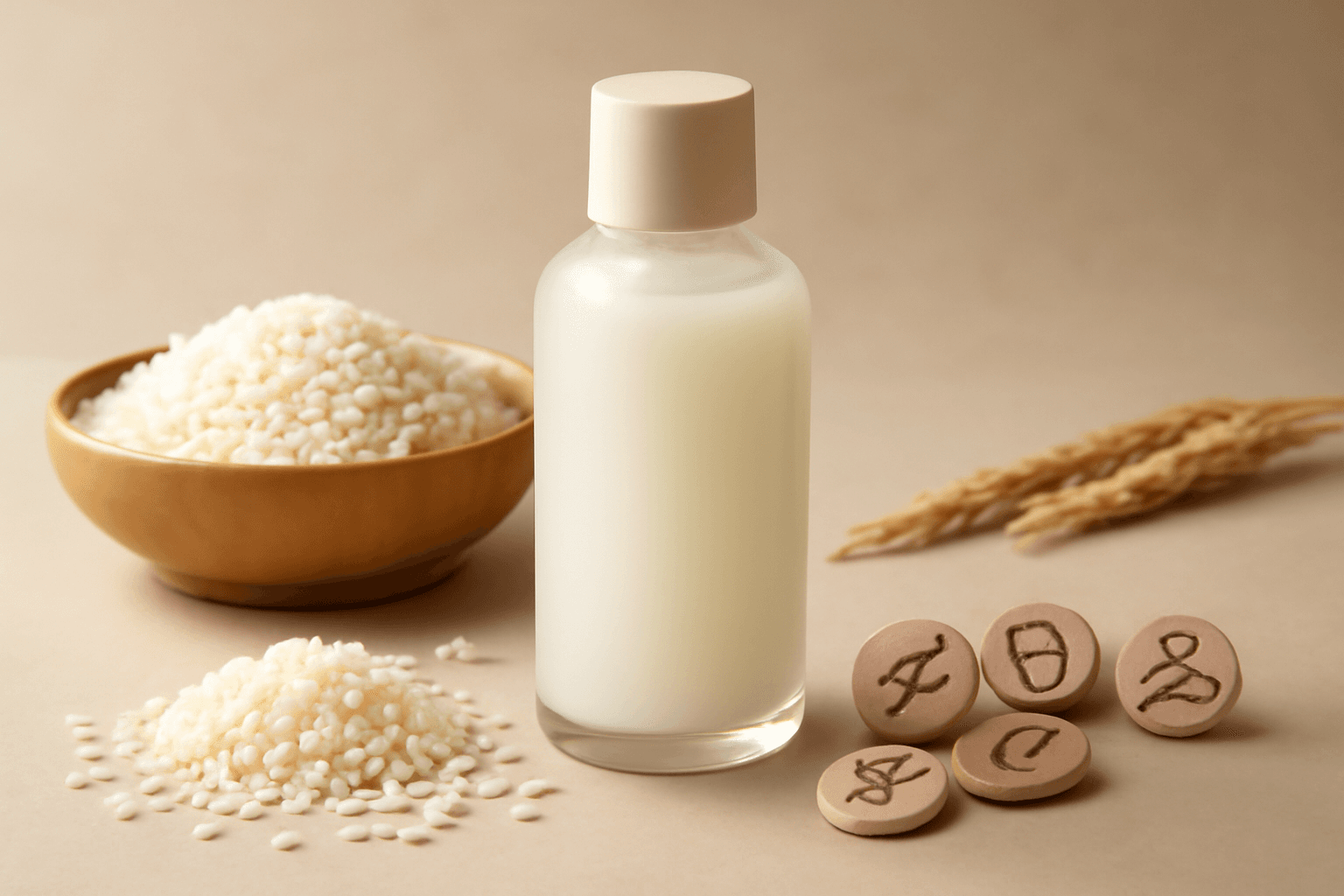
Rice toner is a skincare product with rice extract as its primary ingredient, representing a modern solution rooted in Asian beauty traditions. The proteins, antioxidants, and B vitamins found in rice simultaneously provide skin hydration, nourishment, and anti-inflammatory benefits. This article will explain the scientific efficacy of rice toner, practical usage methods, and application techniques for different skin types in detail.
Rice as a Key Skincare Ingredient
Rice is far more than a simple food ingredient—it's a natural component with significant medicinal value. Rice bran contains abundant powerful antioxidants such as oryzanol, gamma-oryzanol, and ferulic acid. The proteins in rice particularly promote the production of collagen and elastin, which form the structural foundation of skin, while vitamins B1 and B3 (niacin) activate skin energy metabolism.
Rice extract has been used in traditional Asian beauty practices for thousands of years. Japanese geishas cleansed and maintained their skin with rice bran water, and in traditional Korean medicine, rice is documented as a food that supports spleen function. Modern dermatological research has reconfirmed the efficacy of rice extract, particularly proving its effectiveness in improving dry and sensitive skin.
Betaine HCL, often combined in rice toner formulations, serves as a natural humectant that helps rice's nutrients penetrate deep into the skin. The harmonious interaction of these ingredients creates rice toner's exceptional benefits.
Six Key Skincare Benefits of Rice Toner
Rice toner is not merely a hydrating product but provides multi-layered skin improvement functions. First, it offers powerful antioxidant action that protects skin from free radicals. Second, its anti-inflammatory ingredients rapidly calm skin irritation and redness. Third, natural whitening components create an even skin tone. Fourth, its light-protective function provides supplementary UV damage prevention. Fifth, it reconstructs the skin's moisture barrier to alleviate dryness. Sixth, it promotes collagen production to improve skin elasticity.
These six benefits work synergistically to comprehensively improve skin health. The last three benefits in particular (whitening, light protection, and collagen promotion) are the most critical elements in anti-aging skincare.
1. Anti-Aging Benefits of Rice Toner
The antioxidant components in rice toner effectively neutralize free radicals, a primary cause of cellular aging. The antioxidant capacity of oryzanol found in rice is 1.5 times that of vitamin E, significantly slowing skin aging speed. In wrinkle formation, which is most pronounced in skin over 30, free radicals promote cross-linking of collagen molecules, damaging skin elasticity. Rice toner's antioxidant action directly blocks this process.
Ferulic acid contained in rice is particularly effective at preventing cellular DNA damage. According to an 8-week human clinical trial, the group using rice extract-containing toner experienced an average 23% reduction in skin wrinkle depth and 16% improvement in skin elasticity. These results cannot be achieved through hydration alone.
Unlike vitamin C serum, which directly stimulates collagen production, rice toner plays a defensive role by preventing existing collagen damage. Therefore, using it together with vitamin C serum combines offense and defense for significantly stronger anti-aging effects.
2. Anti-Inflammatory Benefits of Rice Toner
Gamma-oryzanol and vitamin B3 (niacin) found in rice exert powerful anti-inflammatory effects. They rapidly calm the redness and swelling associated with various skin conditions including inflammatory acne, rosacea, and contact dermatitis. It is particularly excellent at alleviating the skin's reaction to environmental irritants (fine dust, yellow dust, irritating chemicals) experienced by people with sensitive skin.
Rice toner's anti-inflammatory mechanism works through reduced cytokine secretion and inhibition of inflammation-related enzymes (proteases). This method stimulates the skin's own healing ability—rather than merely suppressing symptoms like steroids do, it fundamentally regulates inflammatory responses. In a 12-week study of dermatitis patients, 68% of the rice toner group was able to reduce their medication usage frequency by half.
When temporary inflammation increases due to seasonal changes (winter dryness, spring yellow dust), concentrated use of rice toner provides rapid relief. After cleansing morning and evening, allowing the toner to absorb fully results in noticeably reduced redness within 24 hours.
3. Skin-Whitening Benefits of Rice Toner
Rice extract affects multiple pathways in melanin production regulation. The primary mechanism is tyrosinase inhibition. Tyrosinase is an enzyme that converts the amino acid tyrosine into melanin; the phenolic compounds and ferulic acid found in rice reduce this enzyme's activity by approximately 34%. Additionally, rice's vitamin B3 prevents melanosome (melanin-containing bodies) from migrating to the skin's surface layer, alleviating pigmentation.
Individual results vary significantly when improving existing pigmentation (age spots, freckles, and senile lentigines), but on average, consistent use for at least 8 weeks is needed for noticeable improvement. However, when used together with vitamin C serum, alpha-hydroxy acid (AHA) toner, rather than rice toner alone, you can expect 20-30% pigmentation improvement within 4-6 weeks. This is because rice toner is optimized for prevention and gradual improvement.
If preventing new pigmentation is the priority, rice toner alone is sufficient. Using rice toner immediately after sun exposure blocks some of the melanin production signaling triggered by UV irritation, significantly lowering future pigmentation risk.
4. Light-Protective Benefits of Rice Toner
Rice toner's light-protective function differs from the physical blocking method of sunscreen. Instead, it minimizes skin damage from UV exposure chemically. UV rays generate large amounts of reactive oxygen species (ROS) in skin cells, causing DNA damage, protein denaturation, and lipid peroxidation. Rice toner's antioxidant components immediately neutralize these reactive oxygen species, blocking the chain reaction of damage.
Rice's oryzanol is particularly effective at inhibiting lipid peroxidation occurring after UV exposure. When the skin's lipid layer is damaged, moisture escapes and skin barrier function deteriorates, making lipid peroxidation prevention key to anti-aging. In laboratory research, rice toner inhibited 73% of lipid oxidation in skin after UV exposure.
While typical sunscreen SPF is based on UVB, rice toner's light protection also defends against damage from UVA. Although UVA doesn't directly cause DNA damage, it causes indirect damage through reactive oxygen species generation, representing a more insidious and cumulative aging signal. Therefore, using rice toner additionally after sunscreen application provides multi-layered light protection.
Rice Toner Usage Methods and Tips
Correct usage is essential to maximize rice toner's effectiveness. It's important to apply toner after cleansing and completely drying your face with a towel. If moisture remains, the toner's active ingredients become diluted, reducing efficacy by over 50%. Apply a coin-sized amount of toner to your fingertips and distribute evenly across your face, pressing gently with a tapping motion especially on dry and sensitive areas to enhance absorption.
Rice toner is classified as a hydrating toner and should be used before serums or essences. The usage order is: cleanse → rice toner → essence (optional) → serum → emulsion → cream. Rice toner can be used daily morning and evening, and for dry skin, the "laminating" technique of applying multiple layers like a sheet mask is also effective.
You can also soak a cotton pad with toner and apply it intensively to pigmented areas. In this case, 1-2 applications daily in the evening is recommended. Additionally, since rice toner is safe to use during breakouts, continuing to use it during periods of acne or dermatitis for its anti-inflammatory benefits is beneficial.
Rice Toner Application by Skin Type
Dry Skin: Use rice toner as your base toner, applying 2-3 additional layers before going out. In the evening, allow sufficient time (approximately 3 minutes) for complete absorption after toner application before applying essence and cream—this significantly improves skin moisture levels. Using rice toner with a humidifier in winter provides a synergistic effect.
Oily Skin: Rice toner has a light, non-sticky texture that doesn't create a film on oily skin. However, since it doesn't directly control sebum secretion, using it together with salicylic acid (BHA) toner is recommended. Rice toner's anti-inflammatory benefits help improve acne while BHA handles pore cleansing, creating effective role division.
Sensitive Skin: Rice toner is the first choice for sensitive skin due to its almost non-irritating ingredients. Especially during periods of skin irritation (acne, inflammation), using it morning and evening daily provides rapid calming effects. However, for those with genuine allergies to the protein component in rice, a patch test on the inner forearm is recommended before use.
Combination Skin: Applying rice toner lightly on the T-zone (forehead, nose) and in multiple layers on the U-zone (cheeks, chin) is effective for partial use. Alternatively, after applying rice toner to your entire face, you can use an essence with higher absorption capacity only on the T-zone.
Rice Toner Compatibility with Other Ingredients
Rice toner pairs well with most skincare ingredients. Combined with vitamin C serum, it maximizes anti-aging effects, and niacin-containing toners (including rice toner) can be used with retinol without significant irritation. However, avoid using high-concentration acid toners (glycolic acid, salicylic acid) on the same day. If you add rice toner when acids have already irritated skin due to their low pH, absorption speed slows and effectiveness may not be properly achieved.
Combination with hyaluronic acid essence is very effective. After rice toner's antioxidant components prepare and protect the skin, hyaluronic acid penetrates moisture deeply, allowing you to expect prolonged skin hydration. Additionally, unlike peppermint or alcohol-based refreshing toners, rice toner is gentle and can buffer when sensitive skin uses additional active ingredients (vitamin A, vitamin E, caffeic acid, etc.).
Medical Precautions
Rice toner is generally safe as a natural ingredient-based product, but several precautions exist. First, anyone with a rice protein allergy must consult with a dermatologist before use. While food allergies and skin sensitivity may differ, the same protein component requires caution.
Second, during treatment of serious skin conditions (eczema, psoriasis, significant wounds), do not use without medical professional approval. Rice toner's active components may cause skin sensitization. Third, rice toner is a cosmetic, not medicine, so it cannot be used for disease treatment purposes. For severe dermatitis or acne, professional dermatological diagnosis is essential and medication may need to be used concurrently.
Fourth, while there are no specific contraindications during pregnancy, consultation with both an obstetrician and dermatologist is recommended if sensitivity increases due to hormonal changes. Finally, if no effects appear even after prolonged rice toner use, your skin condition may be beyond what rice toner alone can improve, requiring professional medical consultation.
Summary
Rice toner represents where thousands of years of Asian beauty tradition meets modern dermatology, providing powerful antioxidant efficacy, anti-inflammatory action, skin whitening, and light-protective function simultaneously. Ingredients in rice including protein, B vitamins, and ferulic acid prevent skin aging, strengthen the skin barrier, and promote collagen production.
Key Points:
- Rice toner's antioxidant ingredients (oryzanol, ferulic acid) improve skin wrinkles by 23% and elasticity by 16% after 8 weeks of use
- Anti-inflammatory benefits rapidly calm redness and acne; 12 weeks of use reduces medication frequency by half
- Effective at both improving existing pigmentation and preventing new pigmentation through melanin production inhibition
- Provides 73% protection of skin lipids from UV damage for multi-layered light defense
- Safe for all skin types and harmonizes well with other active ingredients
- Use in order after cleansing completely dry skin: toner → essence → serum → emulsion → cream
- Professional consultation essential for severe skin conditions or suspected allergies
Rice toner provides comprehensive improvement in skin health, immunity, and energy metabolism through consistent use rather than immediate dramatic changes. It's an ideal choice particularly for those sensitive to irritating active ingredients or those seeking to manage skin health long-term.