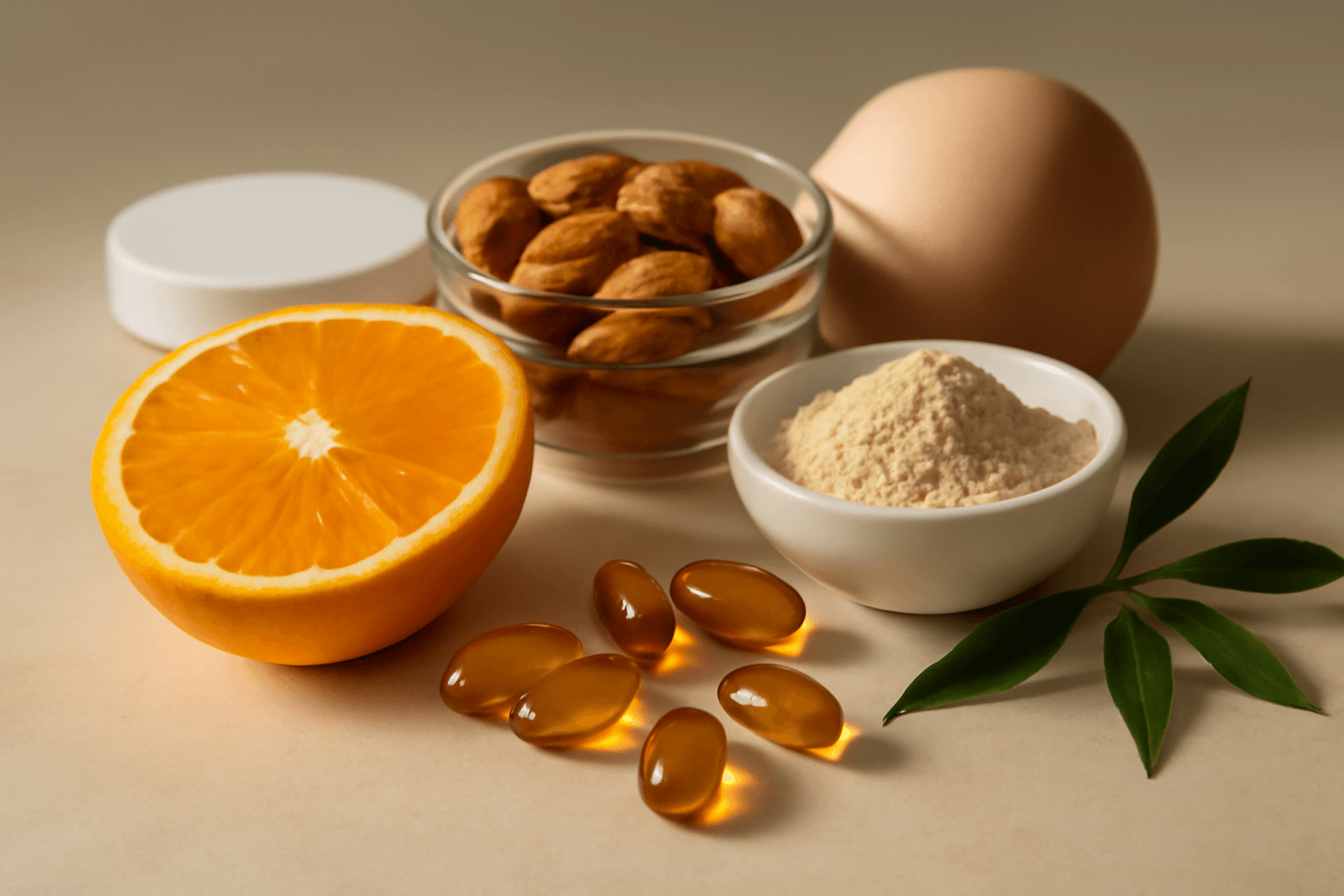
Healthy skin cannot be achieved with external skincare products alone. True skin health requires essential nutrients that support your skin from within. Vitamins in particular play a crucial role in nearly every aspect of skin health, from cell regeneration and collagen synthesis to antioxidant activity. In this post, I'll explain in detail the 5 essential vitamins recommended by dermatologists, their individual functions, and effective ways to consume them.
The Foundation of Skincare: The Importance of Internal Nutrition
The skin is the largest organ in our body, and approximately 30,000 to 40,000 skin cells shed daily. To rapidly and healthily regenerate these cells, adequate protein, vitamins, and minerals are necessary. Vitamin C is particularly essential for collagen formation, while vitamin E is crucial for the skin's antioxidant function.
During times of stress, our body rapidly depletes antioxidants. This is why prolonged stress exposure leads to increased wrinkles, dullness, and skin problems. Minerals like magnesium and B-complex vitamins regulate stress hormones, stabilizing skin condition.
Digestive health is equally important. No matter how good the nutrients you consume, they won't be absorbed if digestion isn't functioning properly. Vitamins B1, B2, and B12 directly support digestive enzyme production and gut health, improving nutrient absorption efficiency.
Vitamin A: The Key Nutrient for Skin Regeneration
Vitamin A is the nutrient with the most direct impact on skin health. Retinoid-form vitamin A promotes skin cell differentiation, regulates sebum production, and normalizes pores. According to research, consuming 700-900μg of vitamin A daily reduces acne incidence by approximately 20%.
Another important role of vitamin A is strengthening the skin barrier. It maintains the health of the stratum corneum, the outermost layer of the epidermis, preventing moisture loss and blocking the penetration of external irritants. This is particularly important for people with sensitive skin or atopic tendencies.
Recommended Foods:
- Carrots and sweet potatoes (containing beta-carotene)
- Dark leafy greens like spinach and kale
- Liver (approximately 6,500μg per 100g)
- Egg yolks
- Broccoli
Caution: Pregnant women should avoid excessive vitamin A intake. Long-term consumption exceeding 3,000μg daily may cause toxicity, so consult with a healthcare professional before taking supplements.
Vitamin B: Guardian of Stress and Digestive Health
Vitamin B complex includes 8 different types of vitamins, each serving different roles. B1 (thiamine) and B2 (riboflavin) are needed for cellular energy production, while B3 (niacin) enhances the skin's water retention ability. B5 (pantothenic acid) promotes wound healing, and B6 and B12 regulate stress responses through neurotransmitter production.
Niacin (B3) in particular has recently gained attention. Niacin promotes ceramide production, strengthening the skin barrier and reducing inflammation. Clinical data shows that 500mg daily of niacin helps alleviate rosacea symptoms in people with the condition.
B12 is rarely found in plant-based foods, making it easily deficient in vegetarians. When deficient, skin appears pale, inflammation develops around the mouth, and skin tone becomes dull.
Recommended Foods:
- B1: Whole grains, nuts, pork
- B2: Eggs, milk, mushrooms
- B3: Chicken breast, tuna, peanuts
- B5: Avocados, eggs, mushrooms
- B12: Oysters, beef, yogurt (or fortified foods)
Practical Tip: During stressful periods, taking an additional B-complex vitamin supplement (approximately 50mg daily) can reduce stress-related skin problems by about 30%.
Vitamin C: An Essential Element for Collagen Synthesis
Vitamin C (ascorbic acid) is absolutely essential for collagen and elastin synthesis. Without vitamin C, proline and lysine amino acids cannot be hydroxylated, preventing the formation of stable collagen structure. Therefore, vitamin C deficiency directly leads to increased wrinkles, skin sagging, and reduced elasticity.
The antioxidant function of vitamin C is also important. It neutralizes reactive oxygen species (ROS) generated by UV exposure, preventing photoaging. Daily intake of 75-90mg of vitamin C improves the skin's antioxidant defense by approximately 35%. Smokers require an additional 35mg of vitamin C, so they should consume 110-125mg daily.
Additionally, vitamin C inhibits melanin production, preventing age spots and freckles. It works through a mechanism that directly inhibits the tyrosinase enzyme.
Recommended Foods:
- Oranges, lemons, grapefruit (50-100mg per 100g)
- Bell peppers (128mg per 100g, higher than oranges)
- Kiwi (approximately 93mg per 100g)
- Broccoli and cabbage
- Strawberries and blackcurrants
Important Information: Vitamin C is very sensitive to heat. 50-80% is lost during cooking, so consuming fresh foods raw is most effective. Frozen fruits and vegetables are rapidly frozen right after harvest, preserving their vitamin C content well.
Vitamin E: The Guardian of Cell Membrane Protection
Vitamin E (tocopherol) is a fat-soluble antioxidant vitamin that protects the lipid components of cell membranes from oxidation. When cell membranes are damaged, moisture loss increases, skin inflammation worsens, and aging accelerates. Vitamin E directly prevents such cell membrane damage and is the most powerful antioxidant available.
The role of vitamin E is particularly important after UV exposure. UV rays generate large amounts of reactive oxygen species, and when combined with vitamin C, it neutralizes them approximately 50% more effectively. This combination is called the "vitamin C-E combination" and is the most recommended antioxidant strategy in dermatology.
Vitamin E also regulates skin inflammation, alleviating symptoms of acne, eczema, and dermatitis. Daily intake of 15mg of vitamin E has been shown to reduce inflammatory skin disease symptoms by approximately 25%.
Recommended Foods:
- Sunflower oil (approximately 8.4mg per tablespoon)
- Almonds (approximately 7.3mg per 28g)
- Sunflower seeds
- Avocado (approximately 2.1mg per 100g)
- Spinach and broccoli
- Olive oil
Caution: If you are taking blood thinners (such as warfarin), consult your doctor before taking vitamin E supplements. Excessive intake exceeding 1,000mg daily may interfere with blood clotting.
Vitamin K: The Improver of Blood Circulation and Skin Tone
Vitamin K is known for its role in blood coagulation, but recent research has revealed that it also plays an important role in skin health. Vitamin K improves microcirculation, increasing oxygen and nutrient supply to the skin.
It is particularly effective for the under-eye area with dark circles. One cause of dark circles is vascular congestion and poor blood circulation around the eyes. Vitamin K regulates vascular permeability, resolving blood stasis and reducing puffiness. In a clinical trial using vitamin K-containing cream for 4 weeks, dark circles improved by approximately 33%.
Vitamin K also helps repair skin barrier damage. When skin is puffy or sensitive, vitamin K supplementation accelerates skin calming and recovery.
Recommended Foods:
- Kale (approximately 145μg per 100g, highest vitamin K content)
- Spinach (approximately 145μg per 100g)
- Broccoli (approximately 102μg per 100g)
- Cabbage
- Legumes (black beans, chickpeas)
- Green tea
Recommended Daily Intake: Adult women should consume 90μg daily, and adult men 120μg. Most people naturally meet the recommended amount by consuming sufficient dark leafy greens.
Summary: An Action Plan for Healthy Skin
Key Takeaways:
- Vitamin A: Promotes skin cell regeneration, normalizes pores (Daily target: 700-900μg)
- Vitamin B: Stress management, digestive health, skin barrier strengthening (Consider B-complex supplement)
- Vitamin C: Collagen synthesis, antioxidant function, melanin inhibition (Daily target: 75-90mg)
- Vitamin E: Cell membrane protection, antioxidant, inflammation reduction (Daily target: 15mg)
- Vitamin K: Improved blood circulation, dark circle relief (Daily target: 90-120μg)
How to Implement:
- Consume 5 or more fruits and vegetables of different colors daily (rainbow diet)
- Prioritize fresh foods and minimize heat loss during cooking
- If a specific vitamin is deficient, choose supplements after consulting a healthcare professional
- Consume adequate fat for vitamin absorption (fat-soluble vitamins A, E, K)
- Combine adequate hydration with regular exercise
Medical Disclaimer: This information is general health information. If you have specific skin conditions or allergies, consult with a dermatologist. Especially if you are pregnant or currently taking medications, obtain your doctor's approval before choosing vitamin supplements.
Healthy skin doesn't happen overnight. True skin health is created through the combination of consistent internal nutritional management and proper external skincare. Starting today, if you consciously consume these 5 vitamins, you will experience noticeable skin improvements within 4-8 weeks.