Monk fruit is a natural fruit native to Southeast Asia and a revolutionary sweetener that is 150–200 times sweeter than sugar yet contains virtually no calories. With a glycemic index (GI) close to zero and rich in antioxidants, it is an ideal alternative sweetener for people with diabetes, those seeking weight management, and anyone pursuing a healthy lifestyle. This article explores the remarkable health benefits of monk fruit along with practical recipes you can apply to your daily life.
What is Monk Fruit?
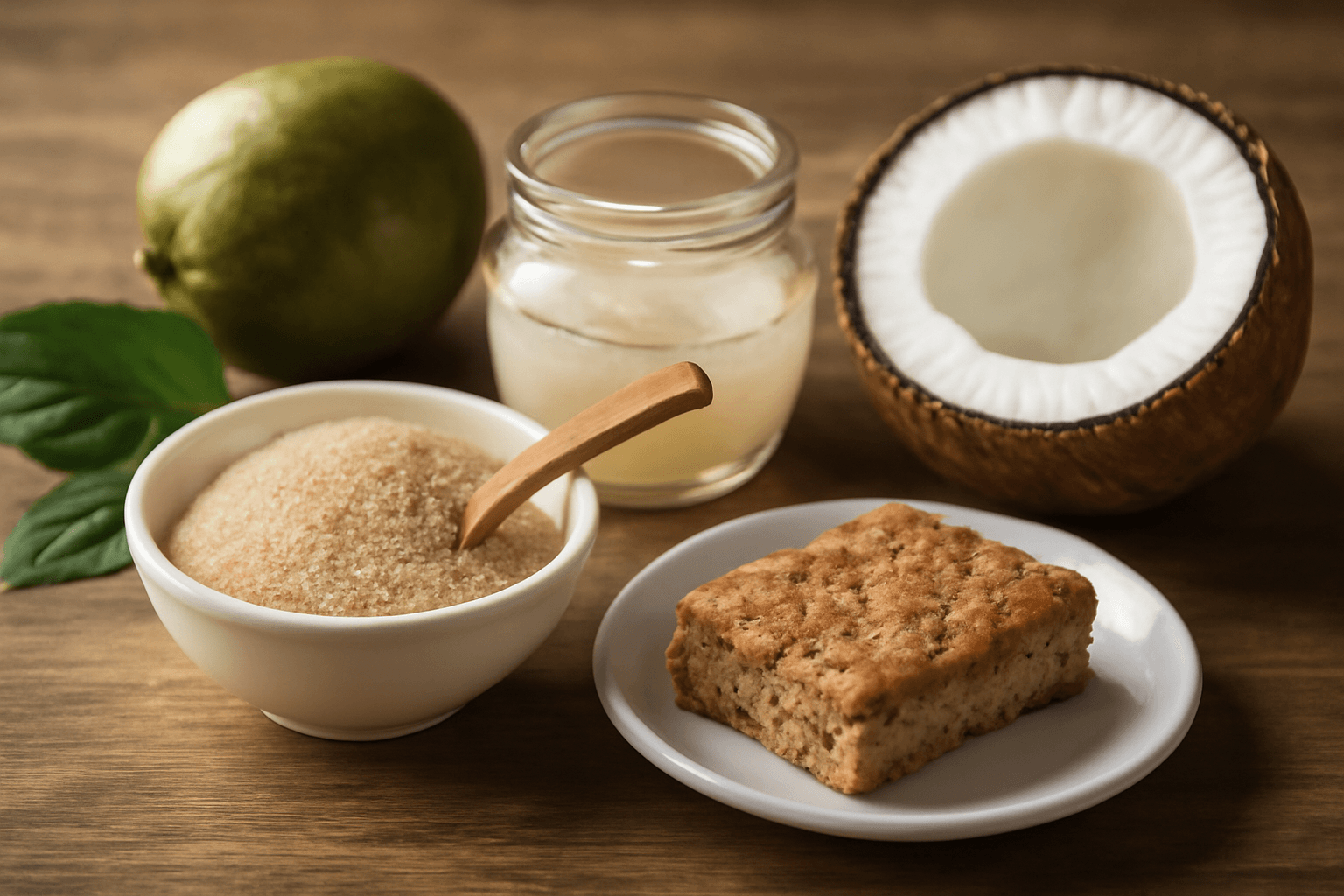
Monk fruit (Siraitia grosvenorii by scientific name) is a small, round green fruit native to the Guangxi Zhuang Autonomous Region of China. The name "monk" comes from historical records indicating that Buddhist monks cultivated and processed this fruit around the 13th century. Today, it is primarily produced on a large scale in China and Thailand.
Fresh monk fruit is about the size of a fist with a round shape and brown outer skin. The flesh is primarily removed during processing, leaving only the sweetening compounds extracted from the seeds and skin. Because it delivers a powerful sweetness with nearly zero calories, it has become popular among those managing diabetes, losing weight, and controlling blood sugar. It has been approved as a safe additive by the U.S. FDA and the European Food Safety Authority (EFSA).
How Does Monk Fruit Produce Such Sweetness?
The powerful sweetness of monk fruit comes from a special compound called mogrosides. Mogrosides are non-caloric glycosides that stimulate taste receptors on the tongue but are not absorbed during digestion, so they do not affect blood sugar. In particular, mogrosdie V is reported to be up to 300 times sweeter than sugar.
Interestingly, monk fruit's sweetness is a plant survival strategy. Through evolution, the fruit accumulated powerful sweet compounds to attract birds and disperse seeds. This mogrosdie compound also has antioxidant and anti-inflammatory properties, giving it value beyond being a simple sweetener as a functional food ingredient.
How is Monk Fruit Sweetener Made?
The manufacturing process for commercial monk fruit sweetener is quite complex. First, ripe monk fruits are harvested and the skin and flesh are removed. The remaining seeds and skin are then soaked in water and pressed to extract the raw juice. The extracted liquid undergoes multiple stages of filtration and purification to remove impurities and compounds that cause bitterness.
After purification is complete, the concentrate is converted into powder form through spray drying or freeze-drying methods. The final product consists of high-purity mogrosdie crystals. Many commercial products add antioxidants and fillers (such as inulin and erythritol) to improve storage stability and usability. When purchasing, it is advisable to check the ingredient list and select products with minimal additives.
What Are the Health Benefits of Monk Fruit Sweetener?
Blood Sugar Control: Monk fruit has a glycemic index (GI) close to zero and does not raise blood sugar. A 2013 study in China had a group of type 2 diabetes patients consume monk fruit, and results showed significant differences in blood sugar levels compared to a regular sugar consumption group.
Antioxidant Action: The mogrosides and flavonoids found in monk fruit act as powerful antioxidants. They neutralize free radicals that cause cell damage and help prevent chronic diseases. Its antioxidant capacity is particularly rated at a level similar to blueberries.
Zero Calories: One teaspoon of regular sugar (about 4g) contains approximately 16 calories, but monk fruit sweetener provides nearly zero calories for the same level of sweetness. Therefore, it is highly effective for weight management and dieting.
Anti-inflammatory Effects: According to animal studies, mogrosides have been shown to reduce inflammatory markers (IL-6, TNF-α). This could have a positive impact on preventing inflammatory diseases such as arthritis and metabolic syndrome.
Minimal Insulin Response: Since blood sugar does not rise, insulin secretion is also minimized. This helps prevent the long-term development of insulin resistance and maintain stable energy levels.
Medical Professional Recommendation: If you are taking diabetes medication, it is important to consult with your doctor before switching to monk fruit. Abrupt changes in blood sugar management methods may require medication dosage adjustments.
How Do You Use Monk Fruit Sweetener in Cooking?
Because monk fruit sweetener is 150–200 times stronger than sugar, careful attention to the amount used is necessary. A general conversion ratio is to use about 1/4 to 1/3 cup of monk fruit sweetener where 1 cup of sugar is needed. However, the concentration varies by product, so be sure to check the conversion ratio specified on the package.
Using in Beverages: The simplest use is to add it directly to coffee, tea, or smoothies. Liquid monk fruit sweetener blends well in hot beverages, and powdered form dissolves quickly in cold drinks.
Baking and Cooking: When using in baking, you must consider the various roles sugar plays (maintaining moisture, browning, creating texture). Because of this, using pure monk fruit alone may make it difficult to create flour-free cakes or cookies. Mixing with other low-calorie sweeteners such as erythritol or allulose produces better texture.
Cooking Tips: Mogrosides are stable at high temperatures (boiling, baking), so they can be used in sauces, stews, and jam making. Some users report that even very small amounts of monk fruit feel excessively sweet. In such cases, mixing with other sweeteners or further reducing the amount is recommended.
Flour-Free Raspberry Chocolate Monk Fruit Cake Recipe
Ingredients:
- 6 eggs
- 150g unsalted butter (room temperature)
- 60g pure cocoa powder
- 1/4 cup monk fruit sweetener (or 1/2 cup mixed 1:1 with erythritol)
- 150g fresh raspberries (or frozen raspberries)
- 30ml unsalted coconut oil
- 1 teaspoon vanilla extract
- 1 teaspoon baking powder
- 1/4 teaspoon salt
Instructions:
Step 1 - Preparation: Preheat the oven to 170°C (340°F), butter an 8-inch (20cm) round cake pan, and line with parchment paper. Warm the coconut oil slightly to room temperature until softened.
Step 2 - Mix Wet Ingredients: Mix softened butter and coconut oil and whisk for 2 minutes until foamy. Slowly add the monk fruit sweetener (or mixed sweetener) while continuing to whisk, incorporating plenty of air. Add eggs one at a time while stirring, and finish with vanilla extract. This step is important, as the thoroughly whipped mixture determines the cake's texture.
Step 3 - Mix Dry Ingredients: In a separate bowl, mix cocoa powder, baking powder, and salt. Slowly add this to the wet mixture while stirring gently. Be careful not to overmix.
Step 4 - Add Raspberries: If using fresh raspberries, lightly coat them with cornstarch to prevent them from sinking to the middle of the cake. Frozen raspberries should be used without thawing. Gently fold the raspberries into the batter.
Step 5 - Bake: Pour the batter into the prepared pan and smooth the surface evenly. Bake at 170°C for 32–38 minutes. Insert a toothpick in the center; when there is almost no batter clinging to it, the cake is done. Cool completely before slicing.
Nutrition Information (per serving, based on 8 servings): Approximately 180–200 calories, 4g protein, 14g fat, less than 2g net carbs, rich in antioxidants. This recipe is also suitable for those following a ketogenic (low-carb) diet.
Variation Ideas: You can use blueberries or blackberries instead of raspberries, or add 30g of nut flour (almonds, walnuts) for a deeper flavor and texture. Finishing with chocolate sauce or unsweetened whipped cream on top also works wonderfully.
Summary
Monk fruit is increasingly recognized not simply as an artificial sweetener but as a functional food ingredient extracted from a natural fruit. With a glycemic index close to zero, powerful antioxidant action, and negligibly low calories, it is an ideal choice for modern people who need diabetes management, weight loss, and stable energy levels.
When cooking, you can achieve optimal texture by mixing with other low-calorie sweeteners (erythritol, allulose), and it particularly excels in additive-free baking and healthy dessert making. The provided raspberry chocolate cake recipe exemplifies maximizing monk fruit's excellent qualities while not compromising on taste and texture.
However, if you are currently taking medication or have metabolic-related conditions, consulting with a healthcare professional before introducing new sweeteners is important for health and safety. When used correctly, monk fruit can become a powerful tool for maintaining healthy eating habits in the future.