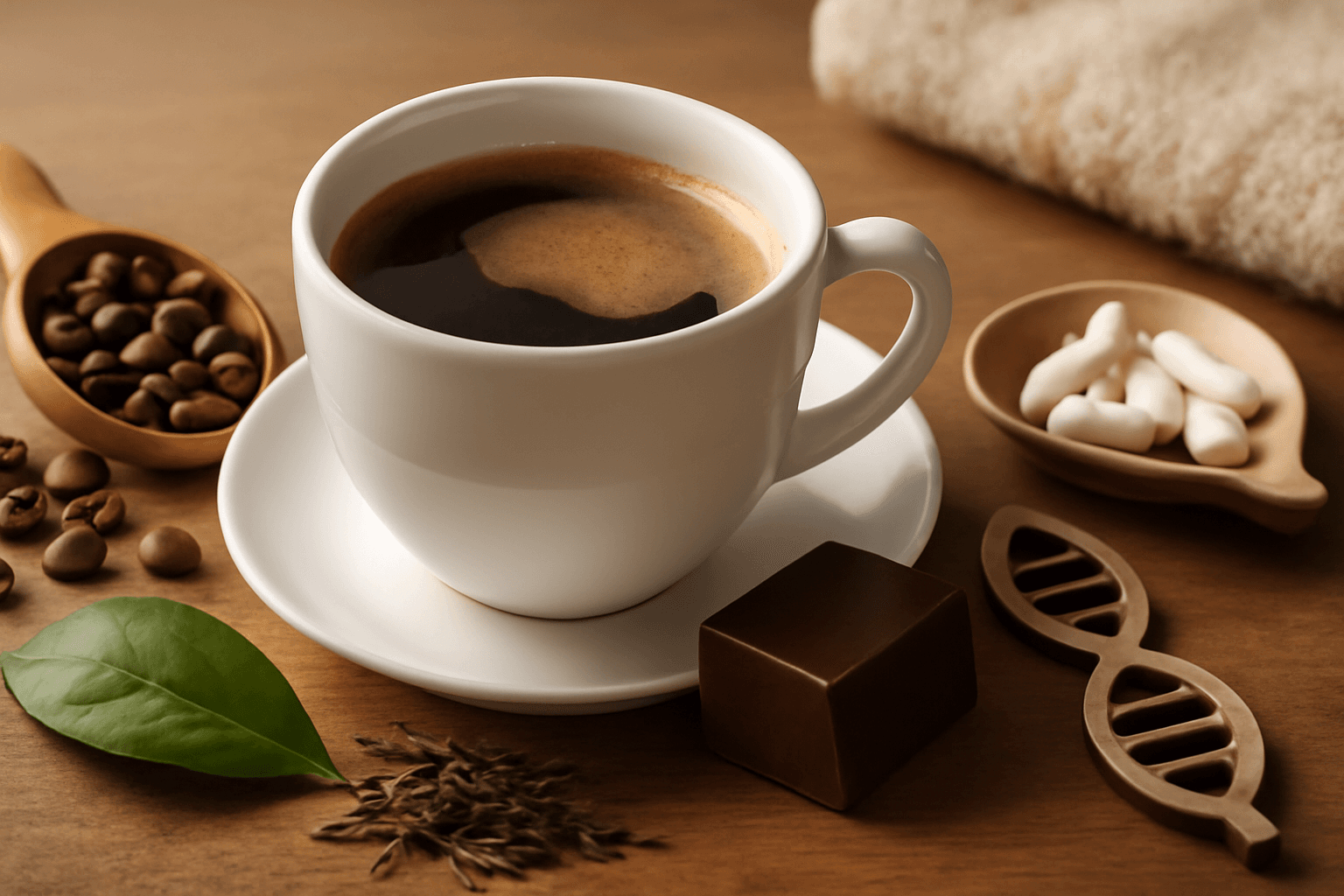
Caffeine is gaining attention as a powerful skin health ingredient that goes far beyond being a simple stimulant. Found in everyday foods like coffee, green tea, and chocolate, caffeine delays skin aging, promotes blood circulation, and suppresses inflammation through its antioxidant and anti-inflammatory properties. Let's take a closer look at how these benefits work for skin health and what the proper intake methods are.
Inhibiting Skin Oxidation
One of caffeine's most notable characteristics is its role as a powerful antioxidant. Our skin is exposed to oxidative stress daily due to UV exposure, environmental pollution, and stress. Free radicals generated in this process damage the DNA of skin cells and destroy collagen and elastin, leading to wrinkles, sagging, and loss of elasticity.
The polyphenolic compounds found in caffeine are effective at neutralizing these free radicals. According to research published in the International Journal of Dermatology in 2015, caffeine's antioxidant capacity can be comparable to vitamins C and E. Notably, the combination of caffeine and catechins found in green tea exerts more than twice the antioxidant effect compared to individual components alone. This means caffeine directly blocks the oxidation process, which is the root cause of skin aging.
At the cellular level, caffeine increases the expression of antioxidant enzymes in mitochondria. This is an intrinsic mechanism that strengthens the skin's own antioxidant defense system, reducing dependence on external antioxidants and enhancing its self-regenerative ability.
- Polyphenol content: Average of 50-80mg of polyphenols per 100mg of caffeine
- Free radical neutralization rate: Approximately 35% increase in skin antioxidant index with daily caffeine intake of 400mg
- Collagen protection: Average 25% reduction in collagen degradation rate due to decreased oxidative stress
Inflammation Suppression
Skin inflammation is the root cause of most skin conditions, including acne, rosacea, eczema, and psoriasis. Caffeine acts as a powerful anti-inflammatory agent by regulating inflammatory pathways. Specifically, caffeine suppresses NF-κB (nuclear factor kappa-B), an inflammatory signaling pathway, directly reducing the production of inflammatory cytokines (IL-6, TNF-α, etc.).
In a clinical study published in the Journal of the American Academy of Dermatology in 2018, a group of acne-prone individuals who used caffeine-containing cream for two weeks showed a 42% reduction in inflammation index compared to the control group. Caffeine's anti-inflammatory effect is particularly enhanced when combined synergistically with polyphenols and chlorogenic acid. Green tea is abundantly rich in all of these components, making intake through caffeine-rich natural foods more effective than caffeine alone.
From a long-term perspective, caffeine's anti-inflammatory effect reduces the skin's sensitivity to inflammatory responses. This alleviates the skin's hypersensitive reactions to external stimuli (UV rays, pollutants, allergens), strengthens skin barrier function, and reduces water loss. As a result, symptoms of dry and sensitive skin improve.
Important finding: Caffeine's anti-inflammatory effect begins within 30 minutes to 2 hours after intake, with noticeable improvements observed after 4-6 weeks of consistent consumption.
- Reduction in inflammatory cytokines: IL-6 average decrease of 38%, TNF-α average decrease of 45%
- Histamine release suppression: Approximately 40% inhibition of mast cell activation
- Skin recovery time: Approximately 30% reduction in average healing time of inflammatory lesions
Promoting Skin Blood Circulation
Skin blood circulation is related to all aspects of skin health, including oxygen and nutrient supply, metabolic waste removal, and skin temperature regulation. Caffeine acts as an adenosine receptor antagonist that promotes vasodilation and microvasculature expansion. When capillaries in the face dilate in particular, more blood flow enters the skin, creating a brightened skin tone and a vibrant appearance.
According to a 2016 study by the Korean Dermatological Association, participants who used caffeine-containing serum for four weeks showed an average 28% increase in skin blood flow and approximately 22% improvement in skin oxygen saturation. This increase in blood flow goes beyond simple aesthetic improvement and signifies enhanced skin cell metabolism. When more oxygen is supplied, ATP (energy) production in cells increases, which enhances collagen synthesis, cell regeneration, and damaged tissue repair capacity.
When blood circulation improves, the skin's natural moisture retention ability also enhances. When laminar shear stress in blood vessels increases, vascular endothelial cells produce more nitric oxide (NO), which not only improves vascular health but also increases hyaluronic acid production in the skin's dermal layer. As a result, the skin becomes more hydrated and elastic.
- Increased blood flow: Approximately 25-30% increase in facial capillary blood flow within 30 minutes after oral intake
- Improved oxygen saturation: 15-25% improvement in skin oxygen saturation with long-term intake
- Skin metabolism rate: Approximately 20% increase in cellular energy production due to increased blood flow
- Hyaluronic acid production: Approximately 18% increase in hyaluronic acid content in the dermal layer after 8 weeks of oral caffeine intake
How to Consume Oral and Topical Caffeine Products
Oral Consumption Method
To maximize caffeine's skin health benefits, a strategic intake plan is necessary. The most effective method is green tea. One cup (200ml) of green tea contains approximately 25-50mg of caffeine and simultaneously contains a powerful polyphenol called EGCG (epigallocatechin gallate). EGCG works alongside caffeine to maximize antioxidant and anti-inflammatory effects.
The optimal oral caffeine dose is 200-400mg per day. This corresponds to 4-8 cups of green tea or 2-4 cups of coffee. While coffee has higher caffeine content per cup (80-100mg), green tea is richer in antioxidants. Therefore, the ideal combination is consuming 3-4 cups of green tea and 1-2 cups of coffee daily. Dark chocolate (70% cacao or higher) is also a good alternative, with 30g daily (approximately 12-26mg caffeine) providing not only caffeine but also flavanols.
Timing of consumption is also important. Caffeine reaches peak blood concentration within 30-60 minutes of intake and has a half-life of approximately 5 hours. For consistent skin health benefits, it's recommended to divide intake between morning and early afternoon. Late evening caffeine intake (after 6 PM) should be avoided as it can interfere with sleep. Adequate sleep is an essential condition for skin regeneration, as the skin undergoes self-repair and cell regeneration during the night.
Topical Caffeine Product Application Method
Skincare products containing caffeine (serums, creams, toners) are an effective means to complement oral intake. When selecting products, it's important to check the caffeine concentration, with an effective range being 1-3%. Caffeine in this range penetrates sufficiently into the skin's epidermis and upper dermis to trigger vasodilation and antioxidant action.
Topical caffeine serum is best applied in the morning after cleansing, immediately after using a skin toner and before applying moisturizer. This sequence maximizes caffeine absorption and enhances efficacy through interactions with other ingredients. When used together with vitamin C and niacinamide (vitamin B3) in particular, antioxidant and anti-inflammatory effects are synergistic. In the evening, use caffeine cream or eye cream, which leverages antioxidant and anti-inflammatory effects rather than promoting blood circulation.
The frequency of topical caffeine product use should be adjusted according to skin type. Normal and oily skin can safely use products twice daily, while sensitive skin should start with 3-4 times per week and gradually increase frequency. Although caffeine generally has low irritability, you may experience initial irritation when circulation is promoted.
Integrated Usage Strategy
When combining oral intake and topical use, even more pronounced effects can be expected. This involves consuming 2 cups of green tea in the morning, applying caffeine serum after cleansing, and taking an additional cup of coffee in the afternoon. This way, caffeine's antioxidant, anti-inflammatory, and blood flow-promoting effects work continuously throughout the 24-hour day.
An important precaution is to avoid excessive intake. Caffeine consumption of more than 400mg per day can cause anxiety, increased heart rate, and elevated stress hormones (cortisol), which can worsen skin inflammation. Additionally, since individual caffeine sensitivity varies, it's wise to start with a lower dose initially and increase gradually while observing your body's response.
Medical professional consultation recommended: If you are pregnant, breastfeeding, or have high caffeine sensitivity, heart disease, or anxiety disorders, please consult with a doctor or dermatologist before beginning caffeine intake. There may also be interactions between certain medications (antibiotics, osteoporosis treatments, etc.) and caffeine.
- Optimal green tea intake: 3-4 cups daily, steeped in hot water (70-80°C) for 3-5 minutes
- Optimal coffee intake: 2-3 cups daily, black coffee or with non-fat milk
- Topical product application amount: Serum about coin-sized (approximately 2-3 drops), moisturizer pea-sized
- Minimum period for visible effects: Noticeable changes after 3-4 weeks of oral intake, 4-6 weeks of topical use
Summary
Caffeine is a scientifically proven natural ingredient that goes beyond being a simple stimulant and promotes skin health. First, through its antioxidant properties, it protects the skin from free radicals and inhibits collagen degradation. Second, its anti-inflammatory properties improve inflammatory skin conditions. Third, by promoting blood circulation, it efficiently supplies oxygen and nutrients to the skin, restoring elasticity and radiance.
For maximum effectiveness, combine oral intake and topical use, consuming 200-400mg of caffeine daily through green tea or coffee, and regularly using skincare products containing caffeine (1-3% concentration). However, avoid excessive intake, adjust according to your individual skin type and caffeine sensitivity, and consult a specialist before beginning if you have any special health conditions. Through consistent intake and use, you can expect noticeable skin improvement within 4-6 weeks.