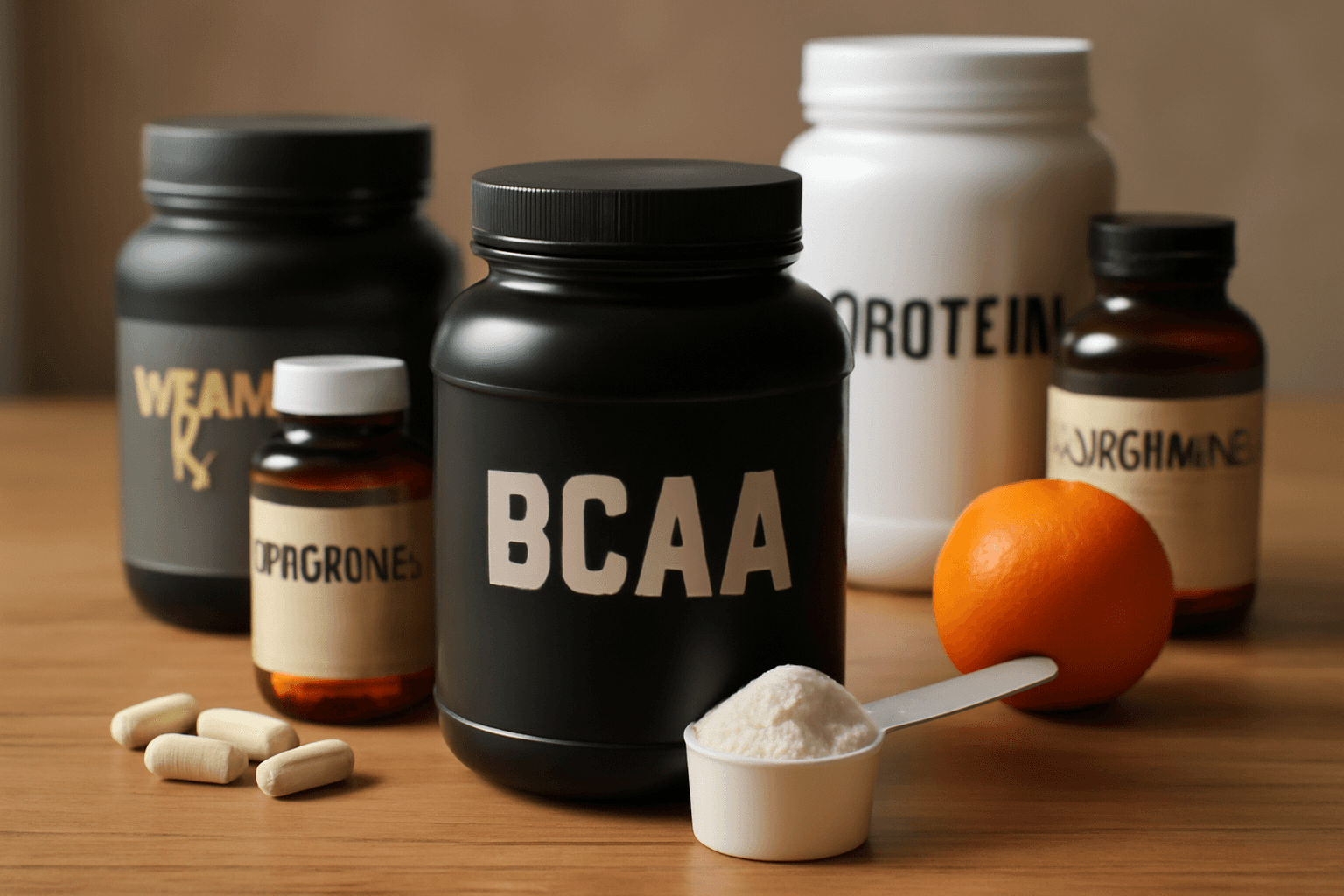
Muscle soreness is a common experience after exercise, but proper nutritional management can significantly shorten recovery time. Branched-Chain Amino Acids (BCAA) are essential nutrients that help prevent muscle loss, promote muscle recovery, and enhance athletic performance. This article introduces how to effectively manage post-exercise muscle soreness through understanding BCAA's mechanisms of action, scientific evidence, and selection criteria.
What Are Branched-Chain Amino Acids?
Branched-Chain Amino Acids (BCAA) consist of three essential amino acids: Leucine, Isoleucine, and Valine. They account for approximately 35% of the 20 amino acids that make up proteins and cannot be produced by the body, so they must be obtained through food or supplements.
The most distinctive feature of BCAA is that they are metabolized directly in muscle tissue. While other amino acids are processed by the liver first, BCAA is immediately utilized as an energy source in muscle tissue or used for protein synthesis. In particular, Leucine activates the mTOR pathway and is the most potent signaling molecule that directly triggers muscle protein synthesis.
100g of chicken contains approximately 7g of protein, of which BCAA accounts for about 1.5g. They are abundantly found in animal protein foods such as eggs, milk, tuna, beef, and cheese. Plant-based foods like lentils, chickpeas, and tofu contain relatively high amounts of BCAA, but in lower proportions compared to animal sources.
Benefits of Branched-Chain Amino Acid Supplements
The first benefit of BCAA supplements is preventing muscle loss. During low-energy states or dieting, muscles are broken down and used for energy, but consuming sufficient BCAA inhibits this process. One study found that the BCAA supplementation group preserved three times more muscle mass compared to the placebo group during calorie-restricted diets.
The second benefit is energy generation. BCAA becomes an important energy source when glycogen is depleted in muscles. During prolonged or aerobic exercise, BCAA supplementation delays muscle fatigue and improves endurance. It also reduces serotonin depletion supplied to the brain during exercise, decreasing mental fatigue.
The third benefit is promoting protein synthesis. BCAA, especially Leucine, activates signaling pathways that trigger muscle protein synthesis. Research shows that BCAA supplementation after exercise increases muscle protein synthesis by 22% compared to placebo. However, the effect is maximized when consumed with complete protein (containing all essential amino acids).
The fourth benefit is supporting immune function. After high-intensity exercise, immunity temporarily decreases, and Glutamine among BCAAs is used as a major fuel for immune cells. Research shows that BCAA supplementation reduces the incidence of upper respiratory infections caused by exercise by 50%.
Why Muscle Soreness Occurs After Exercise
Post-exercise muscle soreness is divided into two types. The first is acute muscle soreness, which occurs during or within 30 minutes after exercise. This is caused by lactate accumulation and increased hydrogen ions within muscles, lowering pH. However, modern exercise physiology interprets lactate itself as not the direct cause of pain, but rather due to increased nervous system sensitivity.
The second is Delayed Onset Muscle Soreness (DOMS), which peaks 24-72 hours after exercise. DOMS results from microscopic damage to muscle fibers and connective tissue, as well as inflammatory responses. It appears particularly severe after exercise of intensities the body has not previously experienced or after eccentric exercise.
Understanding the mechanism of muscle soreness clarifies the role of BCAA. After muscle fiber damage, the body promotes protein breakdown to remove damaged areas while simultaneously synthesizing new protein to build stronger muscles. When sufficient BCAA is available during this process, muscle protein synthesis is promoted and breakdown is minimized, accelerating overall recovery speed.
The inflammatory response from muscle damage is also important. Among BCAA, Leucine and Isoleucine have anti-inflammatory effects and regulate immune response after exercise to suppress excessive inflammation. While appropriate levels of inflammation are necessary as adaptation signals, excessive inflammation delays recovery and worsens pain.
Muscle Soreness Relief Benefits
The BCAA supplement mechanism for relieving muscle soreness operates through multiple pathways. The first is minimizing muscle damage. Taking BCAA before and after exercise inhibits muscle protein breakdown (MPB). In particular, Leucine transmits signals that suppress the ubiquitin-proteasome pathway that induces muscle breakdown. This reduces the original scale of damage that should occur, consequently mitigating pain.
The second is accelerating recovery speed. When muscle protein synthesis increases, damaged fibers can be repaired more quickly. In a 12-week concurrent training study, the BCAA supplementation group's muscle soreness recovery period was shortened by an average of 40% compared to the placebo group. Faster recovery reduces constraints on daily activities and facilitates subsequent exercise recovery.
The third is inflammation regulation. Microscopic damage from exercise inevitably triggers inflammatory responses. BCAA, particularly Isoleucine, inhibits the NF-κB pathway to reduce inflammatory cytokine release. It also increases antioxidant enzyme activity (SOD, glutathione peroxidase) to mitigate exercise-induced oxidative stress.
Timing of BCAA intake is also important. Taking it 30-60 minutes before exercise prevents muscle loss during exercise, and taking it immediately after exercise maximizes the anabolic window for protein synthesis. The daily recommended amount is 0.03-0.06g per kilogram of body weight, so for a 70kg adult, it's 2.1-4.2g. For high-intensity exercise or elderly individuals, consuming amounts closer to the upper limit is effective.
What to Know When Choosing Branched-Chain Amino Acid Supplements
The first criterion for selecting BCAA supplements is the ratio of Leucine:Isoleucine:Valine. The most effective ratio is 2:1:1. Since Leucine is the most potent signaling molecule for triggering protein synthesis, products with higher Leucine content have superior effects. Choose products containing 2-3g of Leucine per daily dose.
The second is checking additional ingredients. If Creatine Monohydrate is included, the effects on strength and muscle mass gains increase. Vitamin C provides antioxidant effects to mitigate post-exercise inflammation and supports collagen synthesis. Magnesium prevents muscle cramps and helps nerve stabilization. Conversely, avoid products with excessive sugar or artificial sweeteners.
The third is absorption rate and purity. Free Form Amino Acids are absorbed 40% faster than peptide-bonded forms. Choose products labeled "Free Form BCAA" on the label. Products with third-party verification marks (NSF, USP, Informed Sport, etc.) guarantee quality and purity.
The fourth considers individual exercise goals and diet. If you're on a low-carbohydrate diet or are vegetarian, BCAA supplementation is particularly useful. However, if you consume sufficient complete protein (eggs, dairy, meat), BCAA alone has limitations, so it's better to combine with comprehensive protein supplements. If you focus on strength training, choose products with Creatine; if you do more endurance exercise, select pure BCAA products.
The fifth is value for money. BCAA prices vary significantly between products. Calculate and compare the price relative to BCAA content per serving. Generally, reasonably priced products in the 50,000 won per month range have proven clinical efficacy. Excessively expensive products are not always more effective.
Precautions and Medical Consultation
BCAA supplements are generally safe, but there are several precautions. If you have kidney or liver disease, consult a doctor. BCAA is mainly excreted through the kidneys, so there is a risk of accumulation in states of reduced kidney function. Additionally, patients with Phenylketonuria (PKU) should also avoid BCAA supplements.
Medical consultation is also necessary if you have blood sugar control issues. BCAA can stimulate insulin secretion and may cause hypoglycemia. If you're taking diabetes medication, consult healthcare professionals. For pregnant and nursing women, insufficient clinical data is available, so consume only under doctor's guidance.
Some BCAA supplements may interact with specific medications. In particular, if you're taking antibiotics, blood anticoagulants, or anticonvulsants, inform your pharmacist or doctor. Additionally, BCAA alone is insufficient, so consume supplements alongside a balanced overall diet for effectiveness. Remember that supplements complement rather than replace food.
Summary
BCAA is a nutrient that effectively relieves post-exercise muscle soreness by preventing muscle loss, promoting muscle protein synthesis, and regulating inflammation. In particular, consuming products containing Leucine in a 2:1:1 ratio before and after exercise can shorten the recovery period by 40%.
Key points for effective BCAA selection are as follows:
- Choose products with a 2:1:1 Leucine:Isoleucine:Valine ratio
- Ensure absorption speed with Free Form amino acids
- Check supplementary ingredients such as Creatine and Vitamin C
- Verify third-party verification marks (NSF, USP)
- Consider individual exercise goals and current dietary situation
- Combine with complete protein foods
However, if you have kidney disease, liver disease, or blood sugar control issues, consult healthcare professionals. BCAA is a supplement, not a medication, so it achieves maximum effectiveness when combined with healthy lifestyle habits, adequate sleep, a balanced diet, and a systematic exercise program. Muscle soreness relief is not achieved through a single strategy but through harmonious management of multiple factors.