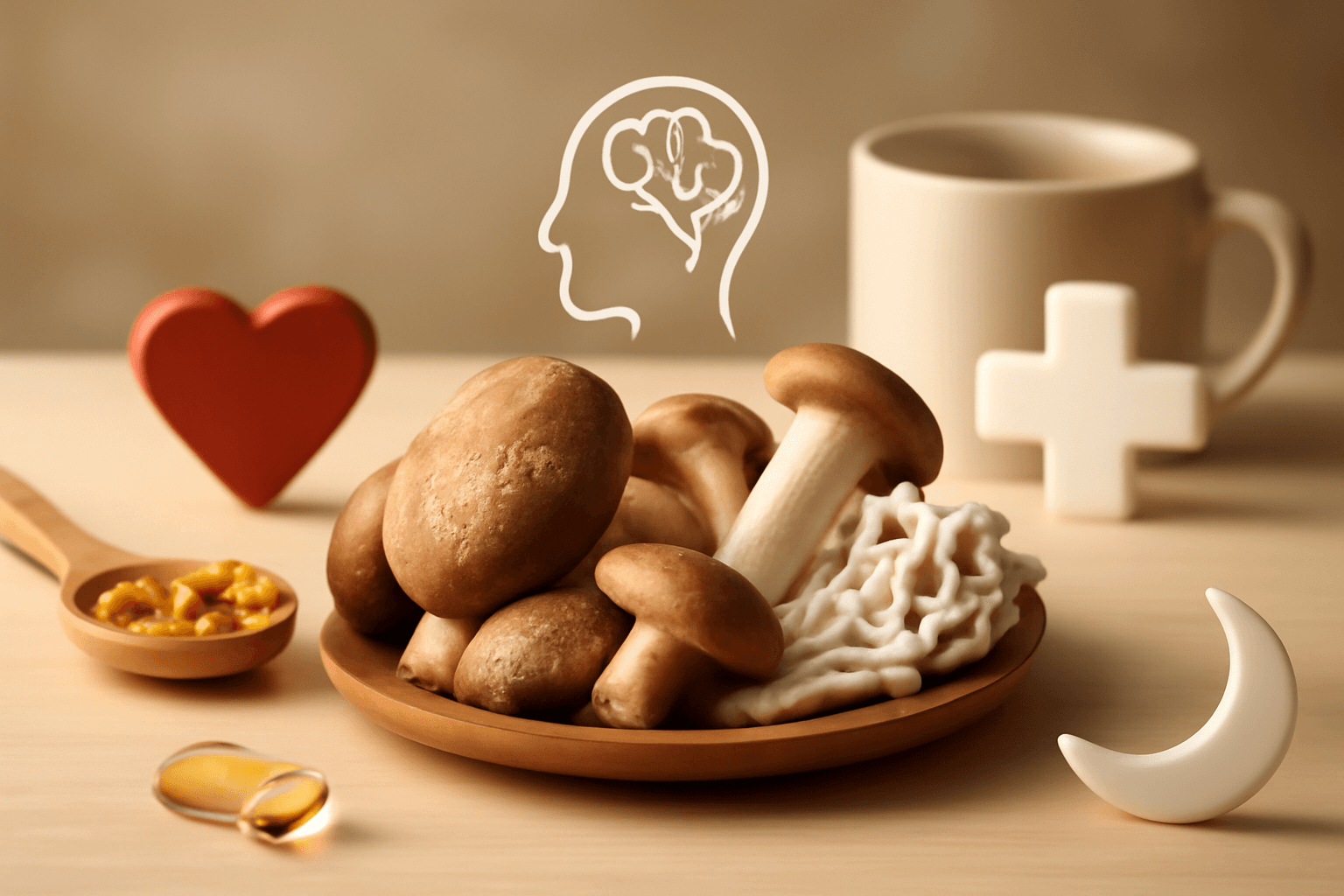
Mushrooms have long been used as medicinal ingredients in traditional Eastern medicine. Modern nutrition science is also reassessing the value of mushrooms, which are particularly effective in improving mood, enhancing concentration, and strengthening immunity due to their rich bioactive compounds. Ingredients like beta-glucans, polyphenols, and ergothioneine found abundantly in mushrooms have powerful antioxidant effects and promote stress relief and fatigue recovery. In this article, we'll introduce various ways to consume mushrooms, from healthy mushroom dishes you can serve at your table to mushroom supplements and trendy mushroom beverages.
Healthy Cooking Mushrooms for Wellness
The mushrooms we can purchase at regular grocery stores have value far beyond being simple ingredients. Common varieties like shiitake, enoki, and oyster mushrooms offer considerable nutritional benefits. In particular, mushrooms contain protein with nearly all essential amino acids, making them an important protein source for vegetarians.
Shiitake mushrooms contain approximately 2.2g of protein per 100g and are especially rich in a polysaccharide called lentinan. Lentinan is known to activate immune cells and enhance the function of natural killer (NK) cells. Enoki mushrooms have very high beta-glucan content that promotes immunoglobulin production and provide more than the daily recommended amount of vitamin B1. Oyster mushrooms are very low in calories (about 44 calories per 100g) while being rich in dietary fiber that supports gut health. They also contain statin-like compounds that help with cholesterol management. These mushrooms can be easily consumed through various cooking methods like blanching, stir-frying, and making soup, and when heated, the bioavailability of immune-activating compounds increases.
- Shiitake mushrooms: Rich in lentinan, NK cell activation, immune enhancement
- Enoki mushrooms: High in beta-glucans, rich in vitamin B1, increases immunoglobulins
- Oyster mushrooms: Low calorie, rich in dietary fiber, cholesterol management
The Efficacy of Mushroom Supplements
Mushroom supplements provide the benefits of fresh mushrooms in a concentrated form. Through water extraction, alcohol extraction, or dual extraction combining both methods, the bioactive compounds of mushrooms are maximized, allowing you to consume effective ingredients at higher concentrations than fresh mushrooms.
Scientific research supports the efficacy of mushroom supplements. According to a study published in 2023, a group that consumed 1000mg of mushroom extract daily experienced a 27% reduction in fatigue after 8 weeks, with significantly improved energy levels. Sleep quality also improved, with deep sleep stage duration increasing by approximately 15%.
Mushroom supplements are particularly effective for stress management. The adaptogenic compounds found in mushrooms help normalize cortisol levels. In a clinical trial, participants taking Cordyceps extract experienced a 34% reduction in stress scores after 8 weeks. This demonstrates the mechanism by which mushrooms calm the nervous system and promote peace of mind.
The effectiveness of mushroom supplements in strengthening immunity has also been established. People taking high beta-glucan content supplements experienced a 25% reduction in cold incidence, and when they did catch a cold, the symptom duration was shortened by an average of 2 days. For these reasons, many healthcare professionals recommend preventive mushroom supplement intake during seasons when immunity is compromised.
Important note when choosing mushroom supplements: Select products from reputable manufacturers and check for third-party tested marks. Side effects may occur depending on your individual health status or medications you're taking, so it's best to consult with a doctor before taking them.
Five Types of Mushrooms and Their Benefits
1. Reishi
Reishi has been called the "herb of immortality" in East Asia for thousands of years. Its main active compounds, polysaccharides and triterpenes, have powerful antioxidant and anti-inflammatory effects. It particularly excels at stress management and sleep improvement, as a Reishi compound called lucidic acid acts on neurotransmitter receptors in the brain to induce deep, restful sleep. According to research, 72% of insomnia patients who took Reishi extract for 6 weeks experienced improved sleep.
2. Cordyceps
Cordyceps directly promotes ATP (adenosine triphosphate) synthesis, which is involved in energy production. This is why it's widely known among athletes as a performance enhancer. By improving mitochondrial function in cells, it increases oxygen utilization efficiency, making it particularly useful for people with chronic fatigue or those engaging in high-intensity exercise. Athletes who took Cordyceps supplements for 8 weeks experienced an average 3.5% improvement in maximum oxygen uptake (VO2 max).
3. Chaga
Chaga is a parasitic mushroom on birch trees and concentrates the antioxidant compounds of birch. With a much higher antioxidant index (ORAC) than common mushrooms, it's very effective at eliminating free radicals. There are particularly strong research results on its effectiveness in supporting heart health. In animal studies, Chaga extract improved vascular endothelial function and normalized blood pressure, and some clinical trials showed a 16% reduction in LDL cholesterol.
4. Lion's Mane
Lion's Mane was a breakthrough discovery for supporting brain health. The nerve growth factor (NGF)-inducing compounds in this mushroom promote brain cell growth and regeneration. It's particularly effective at improving learning and memory, and helps prevent age-related cognitive decline. In a clinical trial, adults over 55 who took Lion's Mane extract for 12 weeks experienced a 30% improvement in cognitive function scores, with significant improvements in concentration and attention.
5. Maitake
Maitake, which means "dancing mushroom," has long been used in Japan and China to enhance immunity. A specific form of beta-glucan called MD-fraction shows particularly powerful immune-activating effects. In several clinical trials with cancer patients, Maitake extract helped maintain immune cell counts during chemotherapy and had a positive impact on quality of life improvement.
Mushroom Coffee, Mushroom Tea, and Mushroom Cocoa
Mushroom beverages, which have recently emerged as a health food trend, are a convenient way to enjoy the benefits of mushrooms in daily life. They maintain the flavor of regular coffee or tea while adding the health benefits of mushrooms.
Benefits of Mushroom Coffee
Mushroom coffee reduces the caffeine content of regular coffee by about 50% while still providing an energy boost. Cordyceps-blended coffee alleviates the nervous side effects of caffeine while promoting ATP production, enabling more stable energy supply. Additionally, mushroom coffee contains calcium to partially compensate for calcium loss from caffeine and is rich in antioxidants to offset the oxidative stress from coffee. Consuming one cup of mushroom coffee (about 200ml) every morning can reduce caffeine-related anxiety while providing improved concentration.
Benefits of Mushroom Tea
Mushroom tea is particularly good to consume in the late afternoon or evening. Reishi tea provides calming effects without caffeine, naturally aiding sleep induction. Chaga tea releases antioxidants optimally when steeped in hot water and is suitable for daily consumption due to its unique flavor. Research shows that people who drank 2-3 cups of mushroom tea daily experienced a 29% reduction in stress levels after 4 weeks.
Combined Effects of Mushroom Cocoa
Mushroom cocoa creates a synergistic effect on mood improvement as cocoa's phenylethylamine works together with the adaptogenic compounds in mushrooms. Lion's Mane-blended cocoa is particularly good to drink before work requiring concentration, as its brain-supporting compounds work together to alleviate mental fatigue. Dark chocolate-based mushroom cocoa has high flavanol content to support heart health as well, making it an ideal beverage to overcome the 3 p.m. energy dip.
Tips for consuming mushroom beverages: To gain maximum benefits, choose products with at least 5% mushroom extract content. Also, products using natural sweeteners are healthier than those with high refined sugar. Adjust your intake according to your individual caffeine sensitivity, and if you're pregnant or taking specific medications, consult with a healthcare professional.
Expert Advice: Adding One Type at a Time
Nutrition experts recommend a gradual approach when starting mushroom consumption, adding one type at a time rather than multiple varieties simultaneously. This allows you to observe your personal response and accurately experience the benefits of specific mushrooms.
First Stage: Building Basic Immunity (1-2 weeks)
For those starting out, everyday cooking mushrooms like shiitake or enoki are recommended. While consuming about 100g three to four times a week, observe your digestive system's response. Most people can feel changes in gut microbiota without special side effects, which may appear as normalized bowel movements.
Second Stage: Adding Supplements (2-4 weeks)
If you're already consuming sufficient mushrooms through daily food, it's time to add supplements in extract form. It's recommended to start with the most common Reishi extract. Take 500-1000mg daily in the morning while observing energy levels, sleep quality, and stress reduction. After an observation period of at least 2 weeks, assess the effects.
Third Stage: Adding Purpose-Specific Mushrooms (After 4 weeks)
If sufficient adaptation has been achieved in the initial stages, you can add specific mushrooms matching your personal health goals:
- If you need improved concentration and memory: Add Lion's Mane (1000-2000mg/day)
- If you have chronic fatigue: Add Cordyceps (500-1000mg/day)
- If you want enhanced antioxidant effects: Add Chaga tea (3-4 times weekly)
- If immune enhancement is your main goal: Add Maitake extract (500mg/day)
Important Points Emphasized by Experts
Since mushroom supplements are not medications, it's difficult to expect immediate effects. Generally, noticeable changes appear after 4-8 weeks of consistent consumption. Additionally, individual differences are very significant, so you should prioritize observing your own body's response rather than the experiences of others you've seen on social media or in advertisements.
People taking blood-thinning medications (like warfarin), those using immunosuppressants, or pregnant women must consult with a healthcare professional before taking mushroom supplements. Mushrooms, especially medicinal mushrooms, have potential for drug interactions.
Even during regular use, it's good to take breaks (1-2 weeks) every 3-6 months. This allows your body to maintain sensitivity to supplements and reassess actual necessity.
Summary
Mushrooms are more than simple ingredients—they're natural foods that can address various health concerns of modern people. The applications of mushrooms are extremely diverse, ranging from fresh mushroom dishes to concentrated supplements and daily beverages you can enjoy.
Key Takeaways:
- Fresh mushrooms (shiitake, enoki, oyster) are everyday ingredients with sufficient nutritional value, providing protein and immune-strengthening compounds.
- Mushroom supplements deliver higher concentrations of active ingredients than fresh mushrooms, with clinical research demonstrating fatigue recovery (27% reduction), stress relief (34% reduction), and immune enhancement (25% reduction in cold incidence).
- Reishi (sleep), Cordyceps (energy), Chaga (antioxidant), Lion's Mane (cognitive function), and Maitake (immunity) each have specialized benefits.
- Mushroom coffee, mushroom tea, and mushroom cocoa are convenient ways to enjoy mushroom benefits in daily life.
- When starting new mushroom products, add one type at a time while observing your body's response, and if you're taking medications or have special health conditions, definitely consult with a healthcare professional.
To maximize mushroom benefits, consistent long-term consumption is important. Through 4-8 weeks of continued intake, you can experience improved mood, enhanced concentration, and strengthened immunity, which will lead to overall quality of life improvement.