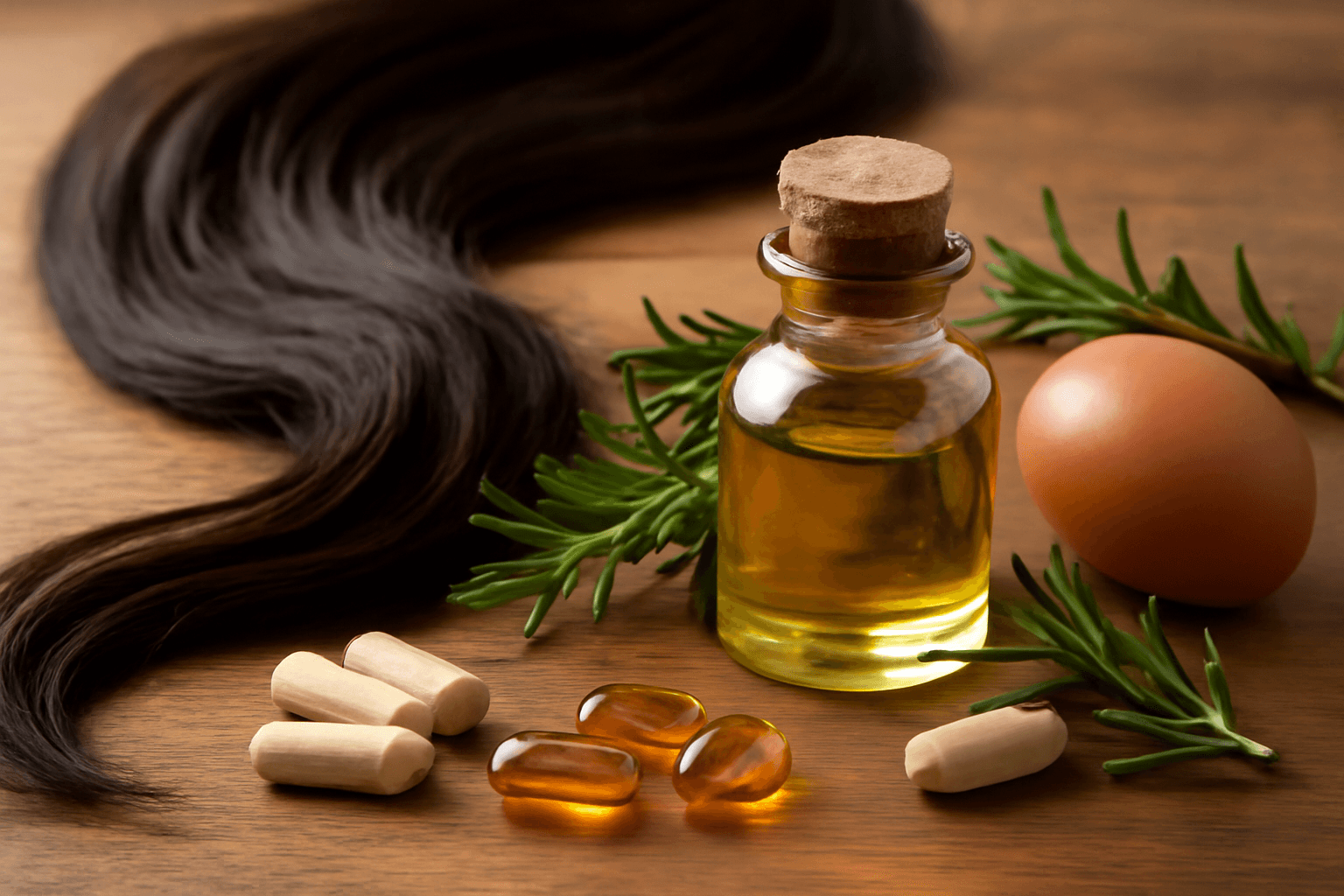
Rosemary is a natural plant that goes beyond its use as a culinary spice, offering remarkable benefits for hair health. The antioxidant components and blood circulation-promoting substances found in rosemary oil have scientific evidence supporting their effectiveness in improving scalp health and preventing hair loss. This article comprehensively explores the specific benefits of rosemary oil, proper application methods, and nutritional approaches to maintaining hair health.
Benefits and Application Methods
The key active compounds in rosemary oil, carnosol and carnosic acid, perform powerful antioxidant functions. These substances eliminate free radicals on the scalp to prevent hair follicle damage, and promote blood circulation to increase oxygen and nutrient supply to the hair follicles. According to research, a group that regularly used rosemary oil for 12 weeks showed hair regeneration effects comparable to those using minoxidil (a hair loss treatment).
Rosemary oil promotes increased nerve growth factor (NGF) in the scalp, extending the growth phase of hair follicles. It can also reduce scalp inflammation to alleviate hair loss caused by seborrheic dermatitis or dandruff. In particular, DHT (dihydrotestosterone) suppression effects, which address the cause of male pattern baldness, have been reported, though additional research is ongoing in this area.
The basic application method involves mixing 2-3 drops of rosemary oil with 1 tablespoon of carrier oil (coconut oil, jojoba oil, etc.) and massaging it into the scalp. Massage gently in circular motions with your fingertips to promote blood circulation, then rinse with shampoo after 20-30 minutes. Using it 2-3 times per week is effective, and you should maintain this routine for at least 8 weeks to expect noticeable results.
How to Use Rosemary Oil to Improve Hair Loss
Scalp massage method is the most direct and effective application technique. Begin by applying the oil to dry scalp before showering. Prepare a blend by mixing 3 drops of rosemary essential oil, 10ml of jojoba oil, and 1 drop of lavender oil, then distribute it evenly across the entire scalp. Progress from the forehead to the crown and then the back of the head, massaging each area in circular motions for 2-3 minutes. This process relieves scalp tension and increases blood circulation, improving microcirculation around the hair follicles.
Pack application method is effective for intensive treatment on weekends. Create a concentrated pack by mixing 5 drops of rosemary oil with 30ml of argan oil and 1 tablespoon of honey. Apply this to the entire scalp and hair, cover with a shower cap, and leave it on for 1 hour. The oil's beneficial components penetrate deeper into the scalp due to body heat, maximizing nutrient supply to the hair follicles. Doing this twice monthly will significantly improve hair elasticity and shine.
Shampoo addition method is also a practical approach. Mix 20 drops of rosemary oil into 500ml of your regular shampoo and store it. This way, you can enjoy rosemary's benefits every time you shower without any additional time investment. However, this method has the drawback of being unable to adjust the oil concentration with each use.
Scalp spray application can be used at work or while traveling. Mix 5 drops of rosemary oil with 100ml of distilled water and a few drops of an emulsifier, then pour into a spray bottle. Spraying it on the scalp 1-2 times daily followed by finger massage allows you to manage scalp health anytime, anywhere.
Safety
Rosemary oil is safe for most people, but there are some precautions to consider. Essential oils can cause burns or irritation if applied directly to the scalp undiluted, so they must always be diluted with carrier oil. The recommended dilution ratio is approximately 5ml of carrier oil per 1 drop of essential oil.
For those with sensitive scalp, a patch test is mandatory before use. Apply the diluted oil behind the ear or on the inner arm and observe for 24 hours to check for itching, redness, or swelling. If you are pregnant, nursing, or have epilepsy or high blood pressure, consulting with a healthcare professional before use is strongly recommended.
Ingesting rosemary oil should be avoided. The concentration of essential oils is very high and can cause toxicity when taken orally. Store it where children cannot reach it and be careful to avoid direct contact with the eyes. If it gets in your eyes, immediately rinse with clean water for at least 10 minutes and seek ophthalmological care.
If you have severe hair damage or specific scalp conditions (such as infectious diseases or severe inflammation), dermatologist diagnosis and approval before using rosemary oil is essential. Some individuals may have allergic reactions to rosemary, so if any unusual reactions occur during use, stop immediately and seek medical advice.
Foods Good for Hair Health
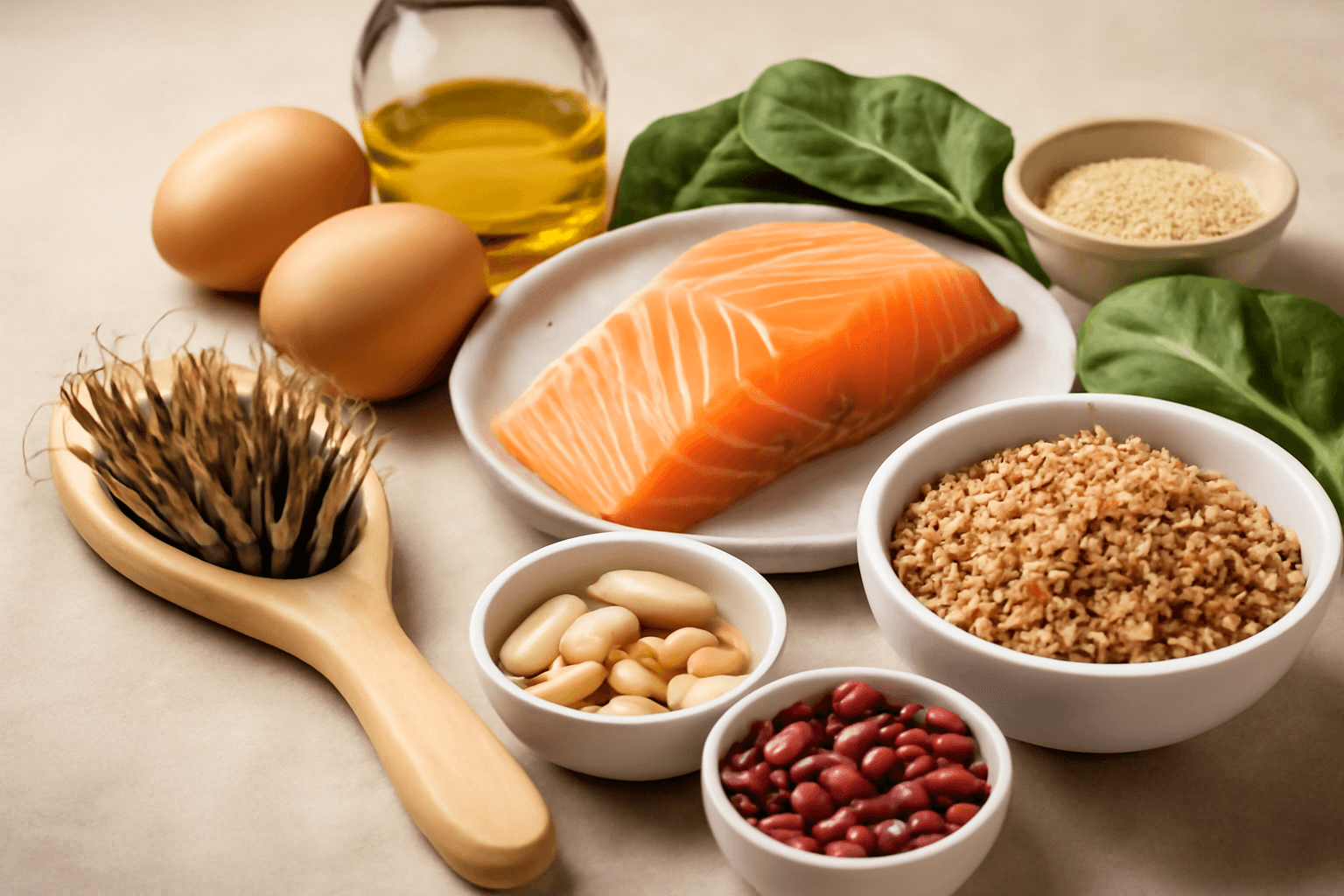
External use of rosemary oil alone cannot completely guarantee hair health. Internal nutritional supply must accompany it to maximize effectiveness. Protein is the raw material for keratin, the primary component of hair, so it should be sufficiently obtained from chicken breast, eggs, fish, and legumes. The daily recommended amount is 0.8-1.2g per kg of body weight, and for those with severe hair loss, increasing this to 1.2-1.5g is beneficial.
Zinc is an essential mineral for hair follicle growth and recovery. Zinc deficiency is known to be a major cause of telogen effluvium (resting phase hair loss). It is abundant in oysters, beef, pumpkin seeds, and cashews, with daily recommendations of 11mg for adult men and 8mg for women. To enhance absorption, consuming it alongside animal protein is effective.
Iron is responsible for oxygen transport in the blood, and iron deficiency anemia causes widespread hair loss. Iron deficiency is particularly a major cause of hair loss in women. It is found abundantly in red meat, oysters, spinach, and lentils. When consumed with vitamin C, absorption increases threefold. The daily recommended amount is 8mg for adult men and 18mg for women before menopause.
B-complex vitamins, especially biotin (vitamin B7), directly promote hair growth. It can be found in egg yolks, almonds, sweet potatoes, and mushrooms, with a daily recommendation of 30mcg. Folate (vitamin B9) and B12 also participate in red blood cell production, enhancing blood supply to the scalp. They are abundant in spinach, broccoli, and salmon.
Vitamin A is necessary for regulating sebum secretion on the scalp and maintaining hair follicle health. It can be obtained from carrots, sweet potatoes, kale, and salmon. However, excessive intake can actually trigger hair loss, so consumption should stay within the daily recommendation (900mcg for men, 700mcg for women).
Omega-3 fatty acids reduce scalp inflammation and improve blood circulation. They are abundant in salmon, mackerel, flaxseeds, and walnuts, with consumption recommended 2-3 times per week. Optimizing scalp health is achieved by balancing the ratio of omega-3 to omega-6 at approximately 1:4.
Sleep is not a direct nutrient but plays a crucial role in hair growth. During restful sleep, growth hormone and melatonin are secreted, allowing hair follicle cells to regenerate and recover. Without adequate sleep (7-9 hours daily), hair loss can worsen, making a consistent bedtime schedule and good sleep environment essential.
Immune system strengthening is also important for hair loss prevention. In cases of hair loss caused by immune disorders such as alopecia areata, the immune system can be normalized through vitamin D, selenium, and glutamine. Consuming marine fish, milk, nuts, and green vegetables evenly enhances immunity and reduces hair loss risk.
Conclusion and Summary
Rosemary oil is a scientifically validated natural hair loss improvement agent that, with consistent use, is effective in improving scalp health and hair regeneration. The key points are as follows:
- The antioxidant components of rosemary oil and its blood circulation-promoting effects fundamentally improve follicle health.
- It must always be diluted with carrier oil, and with regular use 2-3 times per week for at least 8 weeks, you can expect to see results.
- For sensitive scalp or specific conditions, consult a dermatologist before use.
- External application alone is insufficient; essential nutrients including protein, zinc, iron, B vitamins, vitamin A, and omega-3 must be consumed adequately.
- Adequate sleep and immune system strengthening are fundamental conditions for hair growth.
Comprehensive hair care including rosemary oil brings gradual improvement over 3-6 months rather than dramatic short-term changes. Effects may vary depending on individual constitution, hair loss type, and health status, so systematic management under individual guidance from healthcare professionals is most effective. Rosemary oil is a gift from nature, but it achieves maximum value when correctly understood and utilized as a complementary tool.