Acne is not a simple skin condition but rather a disease resulting from the complex interaction of hormones, bacteria, and inflammation. As many people experience side effects from chemical acne treatments, there is growing interest in natural solutions. Tea tree oil is a natural essential oil that Aboriginal Australians have used for thousands of years, and modern research has recognized its effectiveness in improving acne. Due to its antibacterial and anti-inflammatory properties, it is effective in suppressing acne-causing bacteria such as Propionibacterium acnes. In this article, we will explore the scientific evidence and practical usage methods of tea tree oil to see how this natural ingredient can help with acne management.
What is Tea Tree Oil?
Tea tree oil is an essential oil extracted from the leaves of the tea tree (Melaleuca alternifolia), which grows naturally in eastern Australia. Traditionally, Aboriginal Australians crushed tea tree leaves for wound treatment and infection prevention, and it began to be commercially produced in oil form starting in the 1920s.
The main component of tea tree oil is terpineol-4-ol, which accounts for 30-48% of total content. This component is key to its antibacterial and anti-inflammatory effects. Additionally, it contains over 100 trace compounds including cineol, pinene, and limonene, exhibiting various biological activities.
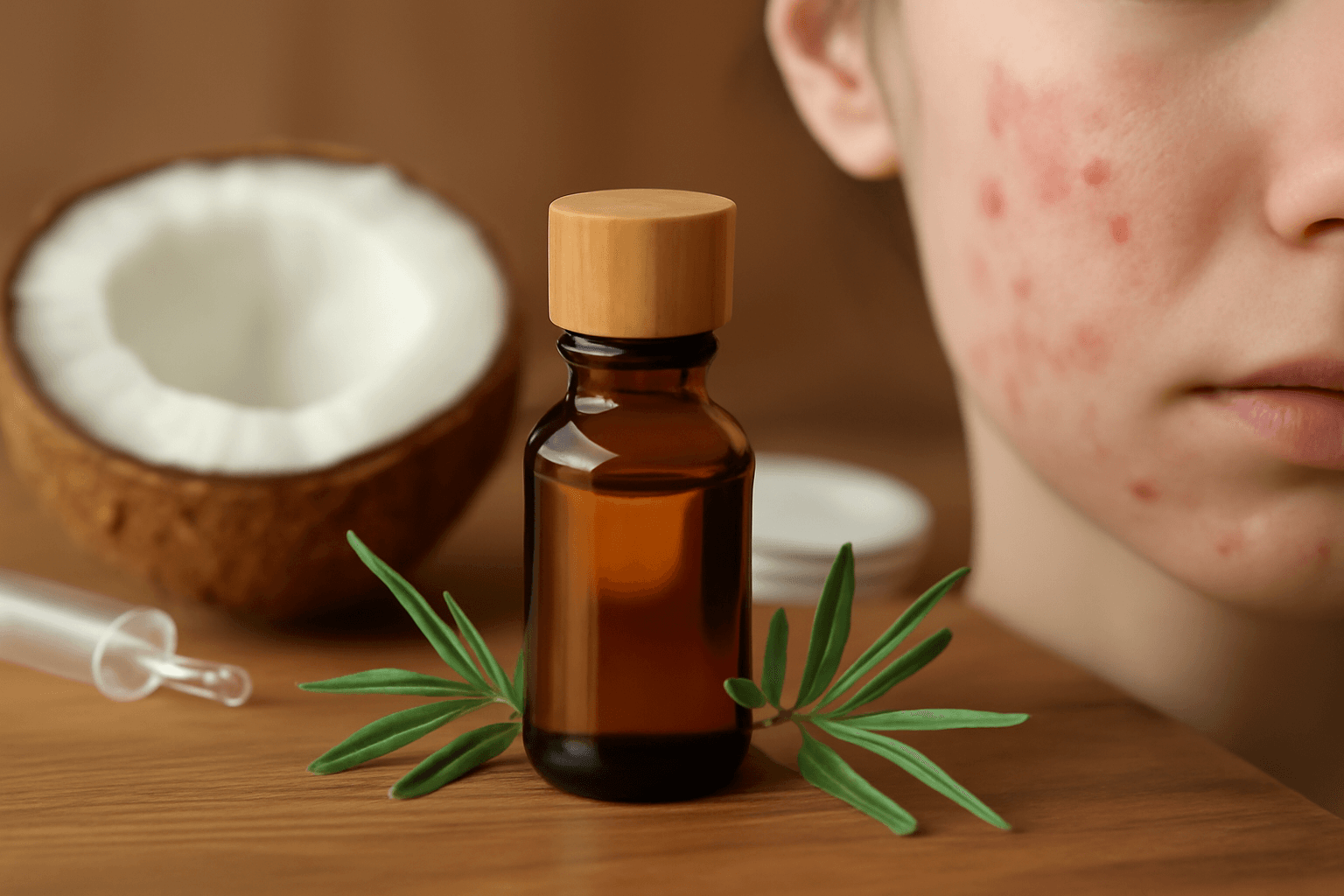
Pure tea tree oil is transparent or pale yellow in color and is characterized by a strong aromatic scent. When selecting a high-purity product, it is important to check for "100% pure tea tree oil" on the bottle and choose products that meet the ISO 4730 international standard. Since pure tea tree oil can cause severe irritation when applied directly to the skin, it must be diluted with a carrier oil (such as coconut oil or jojoba oil) before use.
Acne-Improving Benefits
Tea tree oil is effective for acne improvement because it acts simultaneously on the four main causes of acne. Acne develops from excessive sebum production, clogged pores, bacterial proliferation, and inflammatory responses, and tea tree oil intervenes at all these stages.
Antibacterial action is tea tree oil's most powerful benefit. It demonstrates high bactericidal efficacy against P. acnes and Staphylococcus aureus, the main bacteria causing acne. According to research, 5% tea tree oil shows antibacterial effects comparable to benzoyl peroxide, the standard acne treatment medication.
Anti-inflammatory effects alleviate the redness and swelling of existing acne. The active components of tea tree oil inhibit cytokine secretion, reducing inflammatory responses. This helps not only existing lesions but also reduces scar formation from acne.
Sebum regulation also plays an important role. Excessive sebum secretion is influenced by hormones, particularly androgen hormones that stimulate sebaceous glands. Some research suggests that tea tree oil may help improve hormone-related acne. It has the effect of naturally normalizing sebum production while maintaining the skin's pH balance.
Pore cleansing is another effect not to be overlooked. Tea tree oil penetrates well and is effective at removing sebum and dead skin cells deep within pores. Particularly when used with coconut oil, it can gently remove impurities from pores while minimizing skin irritation.
Research on Tea Tree Oil
Scientific evidence strongly supports tea tree oil's effectiveness. Dozens of clinical studies have been conducted since the 1990s, and most have produced positive results.
In a major Australian study, 60 patients with moderate acne were divided into two groups. One group used 5% tea tree oil gel, and the other used 5% benzoyl peroxide. After analyzing results at 12 weeks, the tea tree oil group showed an average 40% reduction in acne lesions, while the benzoyl peroxide group showed an average 35% reduction. Notably, the tea tree oil group experienced significantly fewer side effects such as skin dryness and irritation.
In a systematic review published in 2015, data from 19 clinical trials were comprehensively analyzed. The conclusion was that "at tea tree oil concentrations of 5% or higher, acne improvement effects are statistically significant, particularly effective for mild to moderate acne." However, it also noted that severe cystic acne may require medical intervention.
A 2018 study validated the effects of tea tree oil on acne caused by hormonal imbalance. In an 8-week experiment with 45 women experiencing worsening pre-menstrual acne, the group using tea tree oil showed an average 32% greater reduction in acne severity compared to the control group. This suggests that tea tree oil may be useful in managing acne caused by hormonal changes.
Molecular biology research on mechanisms of action confirmed that the terpineol-4-ol component in tea tree oil exerts antibacterial effects by destroying bacterial cell membranes. Additionally, it inhibits the secretion of TNF-α and IL-8, inflammatory cytokines, providing anti-inflammatory effects.
However, individual differences should be considered. Not all skin types show identical results, and reactions may differ for sensitive skin or those with allergies to specific components. Therefore, it is recommended to perform a patch test (testing on a small area first) before using new products.
Homemade Tea Tree Oil Acne Treatments
Proper dilution and correct application methods are important for using tea tree oil effectively and safely. While commercial products are good, homemade treatments customized for individual skin conditions can also be effective.
Basic Spot Treatment
The simplest method is to dilute tea tree oil with a carrier oil and apply it directly to acne areas.
- Ingredients: 5 drops of pure tea tree oil, 1 teaspoon (approximately 5ml) of coconut oil or jojoba oil, glass container
- Preparation: First add the carrier oil to a clean glass container, then add 5 drops of tea tree oil and mix well. This creates approximately 1% concentration solution.
- Usage: After cleansing, dry your face with a towel, then apply a small amount to acne areas with a cotton swab or clean fingertip. Use twice daily, morning and evening, for best results.
- Precaution: Never apply undiluted pure tea tree oil directly to the skin. It can cause severe irritation and burns.
Enhanced Acne Mask
An intensive treatment mask used 1-2 times per week.
- Ingredients: 1 teaspoon coconut oil, 1 teaspoon honey, 3 drops tea tree oil, small bowl
- Preparation: Mix coconut oil and honey in a bowl. Honey's antibacterial and moisturizing effects complement tea tree oil's action. Finally, add 3 drops of tea tree oil and mix uniformly.
- Usage: After cleansing, apply thickly to the entire face or problem areas. Leave on for 15-20 minutes, then rinse thoroughly with lukewarm water.
- Skin reaction: You may experience slight tingling after first use. This is a normal reaction, but if pain is severe, rinse immediately.
Essence for Hormone-Related Acne
Effective for acne caused by menstrual cycles and hormonal changes.
- Ingredients: 10ml jojoba oil, 8 drops tea tree oil, 4 drops lavender essential oil, glass bottle
- Preparation: Pour jojoba oil into a glass bottle, add tea tree oil and lavender oil in sequence, then shake to mix. Lavender helps skin soothing and hormonal balance.
- Usage: Use as an essence after toner. Apply 3-4 drops to your palm and pat gently across the entire face. Can be used morning and evening daily.
- Storage: Store away from direct sunlight in a dark place for up to 6 months of use.
Cleansing Toner
Can be used after morning cleansing to even out skin tone while simultaneously providing antibacterial action.
- Ingredients: 100ml rose water or witch hazel, 15 drops tea tree oil, 1 teaspoon glycerin
- Preparation: Pour rose water into a glass bottle, mix glycerin first, then slowly add tea tree oil while continuing to shake. Glycerin is necessary because tea tree oil does not mix well with water alone.
- Usage: After cleansing, dampen a cotton pad with toner and gently wipe the entire face. Use before applying additional moisturizing products.
- Caution: This product has relatively high concentration, so those with sensitive skin must perform a patch test before use.
Safe Usage Guidelines
Concentration adjustment is most important. Since tea tree oil is a potent essential oil, beginners should start with 0.5-1% concentration. Concentration can be gradually increased depending on skin condition.
- Mild acne: 0.5% concentration (1 drop tea tree oil in 10ml carrier oil)
- Moderate acne: 1-2% concentration (2-4 drops tea tree oil in 10ml carrier oil)
- Sensitive skin: 0.25% concentration (0.5 drops tea tree oil in 10ml carrier oil)
Allow a one-week test period. Before using a new product, apply a small amount to the inside of your arm or behind your ear and observe skin reactions for 24 hours. If there is no itching, rash, or burning, you may use it on your face.
Moisturizing is essential. While tea tree oil improves acne, it can somewhat dry the skin. Always apply a light moisturizer afterward. Coconut oil itself has moisturizing benefits, but additionally using a water-based moisturizer is even better.
Consider usage duration and breaks. While consistent use is beneficial, taking 1-2 day breaks after 5 days of use reduces skin irritation. If using daily, reduce the concentration.
Medical Considerations and Precautions
Recognize when professional medical consultation is needed. While tea tree oil is effective for mild to moderate acne, you must see a dermatologist in the following cases:
- Cystic acne (large, red, painful acne forming deep in the skin)
- Widespread acne
- No improvement after 2-3 months of self-treatment
- Scarring from acne has already formed
- Suspected hormonal imbalance symptoms (irregular menstruation, etc.)
Be cautious of allergies and sensitivity reactions. Those allergic to terpineol-4-ol and other components may experience asthma, contact dermatitis, or systemic reactions. If you have atopic dermatitis or very sensitive skin, consult a healthcare professional before use.
Check for interactions with other medications. If you are using topical retinoids (Retin-A) or benzoyl peroxide, using them together can cause excessive irritation. Use them with at least a 2-hour time gap or consult your doctor.
Oral ingestion is absolutely prohibited. Some internet sources recommend oral tea tree oil, but this is extremely dangerous. Oral ingestion can cause neurotoxicity (nerve damage), coma, and even death. Only topical application (applying to skin) is safe.
Exercise caution during pregnancy and breastfeeding. Women who are pregnant or breastfeeding should consult a doctor before using tea tree oil. While some research suggests it is safe, special care is needed during periods of body changes.
Summary: Key Points of Tea Tree Oil Acne Management
Tea tree oil is a scientifically validated natural acne treatment. A major advantage is that it shows effects similar to or better than benzoyl peroxide while having fewer side effects.
It is also effective in managing acne related to hormonal changes. For pre-menstrual acne or acne caused by hormonal imbalance, tea tree oil essence can be particularly helpful.
Proper dilution and usage are essential. It must be diluted with a carrier oil (coconut oil, jojoba oil, etc.), and it is safe to start with 0.5-2% concentration. Applying the pure product directly to the skin can cause burns.
Observe your individual skin condition and reactions. Confirm through a patch test that there are no allergic reactions before starting use, and discontinue immediately if you experience skin reactions (extreme irritation, rash, etc.) after use.
Moisturizing must be done simultaneously. Along with acne treatment, proper hydration is essential for healthy skin regeneration.
Seek help from a healthcare professional for severe acne or adverse reactions. If there is no improvement after 3 or more months of self-treatment, you have cystic acne, or skin reactions are severe, see a dermatologist.
Tea tree oil is a powerful acne management tool provided by nature. The best results can be achieved when scientific evidence, safe usage methods, and customized approaches suited to individual skin combine. We hope that many people struggling with acne can regain clear and healthy skin through this natural treatment.