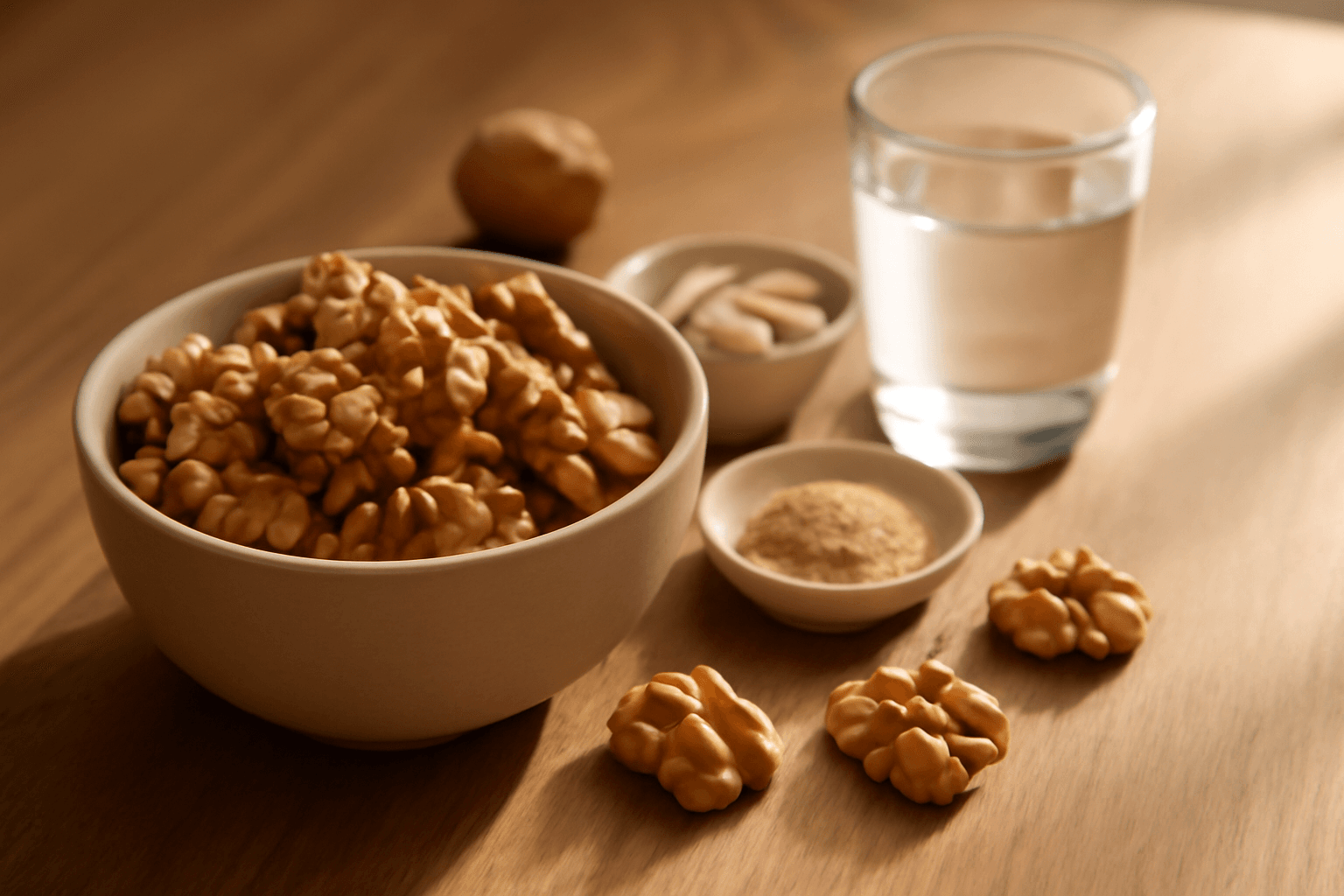
Walnuts are far more than a simple snack—they are a powerful food that protects our body's health. Rich in omega-3 fatty acids, magnesium, and antioxidants, walnuts are effective at improving gut health, reducing inflammation, and strengthening immunity. In particular, due to their ability to improve the intestinal microbiome ecosystem and support blood sugar management, walnuts are gaining recognition as an essential ingredient in the healthy eating habits of modern people. In this article, we'll explore the scientific benefits of walnuts and practical ways to incorporate them into your diet.
Gut Health
The impact of walnuts on gut health goes far beyond simple digestive improvement. According to research from Pennsylvania State University, people who consumed walnuts regularly had significantly higher numbers of beneficial gut bacteria compared to those who didn't. The polyphenols found in walnuts serve as food for intestinal microbes, promoting the formation of a healthy microbial ecosystem.
Gut health is connected to overall body health, extending well beyond digestive function alone. A healthy intestinal environment is critically important given that 70% of immune cells are located in the gut. The approximately 2.7g of dietary fiber in 28g of walnuts promotes intestinal motility and is effective at preventing constipation. Additionally, the fatty acids in walnuts support healthy cell regeneration in the intestinal lining and contribute to managing the glycemic index (GI).
Particularly noteworthy is how walnut consumption strengthens the connection between gut health and brain function. Through this pathway known as the Gut-Brain Axis, a healthy intestinal environment leads to stress hormone regulation and improved mental health.
Walnuts Can Suppress Inflammation
Given that many modern diseases stem from chronic inflammation, walnuts' anti-inflammatory ability is extremely important. The alpha-linolenic acid (ALA) abundant in walnuts is converted in the body into omega-3 fatty acids like EPA and DHA, which suppress inflammatory responses. According to research published in the Journal of Clinical Nutrition, participants who consumed 43g of walnuts daily showed significantly reduced levels of CRP (C-reactive protein), an inflammation marker.
The anti-inflammatory components in walnuts are not limited to polyphenols. Powerful antioxidants such as ellagic acid, catechin, and melatonin neutralize free radicals that cause cellular damage. This action helps slow the progression of chronic inflammatory diseases such as arthritis, cardiovascular disease, and diabetes.
The relationship with brain inflammation deserves particular attention. Polyphenols in walnuts can cross the blood-brain barrier and directly suppress brain inflammation. This further enhances the value of walnuts in preventing cognitive decline and neurodegenerative diseases. A daily intake of approximately 28–42g of walnuts is the recommended anti-inflammatory dose.
Walnuts Can Support the Intestinal Microbiome Ecosystem
The human gut is home to approximately 100 trillion microorganisms, and their health status determines our overall health. Walnuts directly promote diversity in this microbial ecosystem. According to research in food science and nutrition, walnut consumption increases populations of beneficial bacteria such as Bacteroidetes and Roseburia.
The key to this action is the prebiotic compounds. The dietary fiber and polyphenols in walnuts serve as food preferred by our gut bacteria, promoting the proliferation of beneficial bacteria by feeding them. Particularly with increased production of short-chain fatty acids (SCFA), the pH level of the large intestine becomes optimized, creating an environment where harmful bacteria struggle to proliferate.
An increase in intestinal microbe diversity directly translates to strengthened immunity. When diverse microorganisms coexist together, the body maintains a more robust intestinal lining and responds more effectively to pathogenic microorganism invasion. People who consistently consume walnuts tend to show lower rates of infectious disease compared to those who don't. Consuming walnuts 4-5 or more times per week shows optimal effects on improving microbial diversity.
Walnuts Are Rich in Fiber
A single 28g handful of walnuts contains approximately 2.7g of dietary fiber, which accounts for about 10% of the recommended daily intake. This figure represents the highest level when compared to other nuts. The fiber in walnuts is optimally balanced between insoluble and soluble dietary fiber for gut health.
Insoluble fiber stimulates intestinal motility, improving constipation and normalizing bowel movements. Soluble fiber ferments in the large intestine to produce short-chain fatty acids, which serve as a primary energy source for the intestinal lining. As these two types of fiber work in harmony, walnuts show excellent effects not only on gut health but also on blood sugar management.
From a blood sugar management perspective, the fiber content in walnuts is very important. Walnuts' high fiber content slows the digestion of carbohydrates, preventing blood sugar spikes. In research published in the Diabetes Prevention Journal, people who regularly consumed walnuts showed significant improvements in fasting blood glucose and hemoglobin A1c (HbA1c) levels. Particularly when walnuts are consumed together with other carbohydrate foods, you can see a decrease of 30% or more in the glycemic index.
The fiber in walnuts also maintains satiety for longer, preventing overeating and helping to boost metabolism. When you feel an energy dip at 3 p.m. after lunch, consuming a handful of walnuts provides blood sugar stabilization along with sustained energy.
Delicious Ways to Enjoy Walnuts
1. Oatmeal Topping for Breakfast
When beta-glucan from oatmeal and fiber from walnuts work together, they're optimal for blood sugar stabilization in the morning. Sprinkle crushed walnuts on top of your oatmeal and add berries and raw honey to maximize antioxidant compounds. The satiety from breakfast lasts through lunch, reducing unnecessary snacking.
2. Yogurt Parfait
When the protein from Greek yogurt combines with the fatty acids from walnuts, the digestion rate is optimized and blood sugar rises slowly. Lightly roast the walnuts to enhance flavor before mixing into yogurt, and you'll get higher magnesium content for added stress relief benefits. Using full-fat Greek yogurt instead of low-fat increases the absorption rate of fat-soluble nutrients in walnuts by over 50%.
3. Salad Dressing
By mixing walnut oil with olive oil in a 1:1 ratio to make salad dressing, you can concentrate diverse polyphenols and antioxidants into a single meal. Combining with dark leafy greens like spinach and kale promotes iron absorption and maximizes anti-inflammatory effects. Prepare the dressing in advance and store it in the refrigerator to keep it fresh for a week.
4. Walnut Butter
Nut butter can be made by grinding pure walnuts alone, with no added sugar for minimal blood sugar impact. Spread it on whole grain toast and top with banana to get a perfect combination of potassium, magnesium, and potassium. Two tablespoons of walnut butter (32g) provides about 190 calories with sufficient satiety as a nutrient-dense snack.
5. Roasted Walnut Snack
Walnuts roasted at 160°C for 15 minutes have increased tryptophan content that supports serotonin production in neurotransmitters, and the volatile compounds' flavor is maximized. Sprinkling a little Himalayan pink salt adds natural minerals to support electrolyte balance. Keep a small glass jar by your desk and grab a handful whenever you feel stressed to directly experience the calming effects of magnesium.
6. Soup with Walnuts
Top a warm creamy soup of carrots, squash, and ginger with crushed walnuts to get beta-carotene, vitamin C, and magnesium all in one bowl. The fat in walnuts promotes absorption of these fat-soluble nutrients, and the anti-inflammatory compounds in ginger create synergy with walnut polyphenols. Consuming 30 minutes before dinner naturally regulates evening meal portions through increased satiety.
Storage and Freshness Tips
Due to their high fat content, walnuts oxidize easily and should be stored in an airtight container in the refrigerator. Storing in the freezer can maintain freshness for up to 12 months, and you can thaw naturally at room temperature for 30 minutes when needed. Oxidized walnuts have an off flavor and significantly reduced nutritional value, so it's recommended to consume them within 2 weeks of opening.
Conclusion
As walnuts have been called the "brain food" since ancient times, their nutritional value continues to be proven by modern science. Through four key benefits—improved gut health, inflammation suppression, enhanced microbial diversity, and abundant fiber—walnuts elevate our body's overall health level.
Summary of Walnuts' Key Health Benefits:
- Gut Health: Promotes beneficial bacteria proliferation, improves digestive function
- Anti-inflammatory Action: Prevents disease by suppressing chronic inflammation
- Microbiome Ecosystem: Increases intestinal bacterial diversity
- High Fiber Content: Blood sugar management, maintains satiety
- Additional Benefits: Magnesium content relieves stress, tryptophan improves mood
A daily intake of 28–42g of walnuts (approximately 14 walnut halves) provides all these benefits without additional calorie burden. The most important point is that you must consume walnuts consistently over the long term to feel health changes. It takes at least 4 weeks of daily walnut consumption before changes in gut microbiome composition appear, and after 3 or more months of consistent use, you can experience meaningful improvements in blood sugar management and inflammation levels.
Walnuts are not merely a snack but a health food following the principle of food and medicine having the same origin. However, if you have a walnut allergy or are taking medication for a specific condition, it's safe to consult with a healthcare professional before consumption. Particularly if you're taking blood thinners, you should confirm potential drug interactions due to the high vitamin K content in walnuts. Keeping these precautions in mind and consuming walnuts appropriately will make them the most practical and delicious choice for long-term health maintenance.