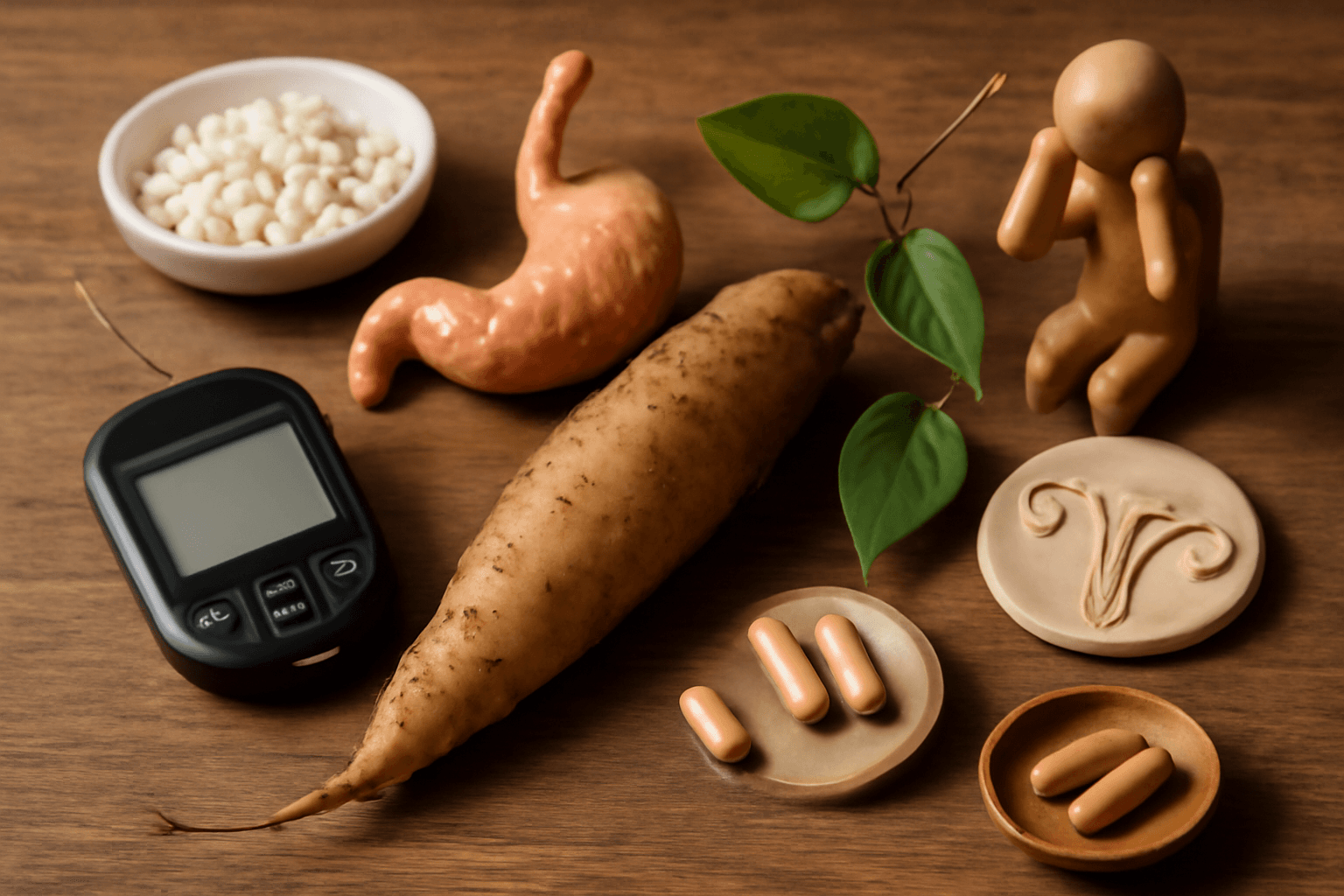
Wild yam has been used for thousands of years in traditional medicine and as a food throughout East Asia. With higher nutritional value than common yam and rich in bioactive compounds, it is now receiving attention as a health supplement in modern times. In this article, we will comprehensively examine the precise composition of wild yam, scientifically proven benefits, safe usage methods, and side effects to be aware of.
What is Wild Yam?
Wild yam (Dioscorea opposita var. japonica) is a climbing plant belonging to the Dioscoreaceae family and is a wild species distinct from common yam. It naturally grows mainly in mountainous regions of Korea, China, and Japan, and because it grows in natural conditions, it has the characteristic of having 2-3 times higher nutrient concentration than cultivated yam.
The main components of wild yam are as follows:
- Mucilage: A digestive tract mucous membrane protective substance and a type of soluble dietary fiber
- Diosgenin: A plant-based estrogen that works to regulate hormonal balance
- Mucopolysaccharides: Polysaccharides that contribute to immune enhancement
- Arginine: An amino acid that improves blood circulation
- Potassium and Manganese: Essential minerals for metabolic regulation
Wild yam is consumed in steamed form or processed and sold as powder, extract, or pill form. It is characterized by a unique texture and subtle sweetness, and because it is easy to digest, it can be safely consumed by patients in recovery periods and the elderly.
Benefits and Uses of Wild Yam
Improved Digestive Function
The mucilage contained in wild yam protects the gastric lining and alleviates inflammation. This substance serves as food for beneficial intestinal bacteria as a soluble dietary fiber and stimulates intestinal peristalsis to improve constipation. In one clinical study, when 120 adults with digestive discomfort consumed wild yam extract for 8 weeks, 71% reported improvement in abdominal bloating and digestive discomfort. It is particularly preferred by people with chronic diarrhea or irritable bowel syndrome symptoms.
Blood Sugar Management
Wild yam is a food with a low glycemic index (GI: approximately 55), which helps with diabetes management. The mucilage it contains slows digestion speed to prevent blood sugar spikes. In a 2019 Taiwan medical study involving 60 patients with type 2 diabetes, when wild yam was included in their diet for 6 months, fasting blood glucose decreased by an average of 23mg/dL and HbA1c levels improved by 0.8%. However, patients already taking blood sugar medications must consult with a doctor as there is a risk of hypoglycemia.
Female Hormone Balance and Menstruation-Related Symptoms
The diosgenin component in wild yam is a plant-based estrogen that acts on the body's hormone receptors. This component is particularly known to be effective in alleviating menopausal symptoms. In a Japanese study where 98 menopausal women consumed wild yam extract for 12 weeks, the frequency of hot flashes decreased by 62% and night sweats improved by 54%. Additionally, many women with irregular menstruation or premenstrual syndrome (PMS) symptoms experience improved regularity. Patients undergoing hormone replacement therapy (HRT) must consult with their healthcare provider before consumption.
Stress Relief and Sleep Improvement
The arginine and mucopolysaccharides contained in wild yam help stabilize the nervous system. Arginine promotes the production of nitric oxide, which relaxes blood vessels and increases blood supply to the brain. It also contributes to regulating cortisol, a stress hormone. In a study involving 85 adults with sleep problems, the group that consumed wild yam powder (10g) 2 hours before bedtime showed 36% improvement in sleep quality compared to the placebo group, and average sleep duration increased by 1 hour. It is particularly useful for people with nervousness or anxiety symptoms.
Joint Health and Inflammation Relief
The anti-inflammatory components in wild yam contribute to alleviating arthritis symptoms. The polysaccharides and minerals it contains (particularly manganese) support cartilage regeneration and joint fluid production. In a clinical trial involving 72 rheumatoid arthritis patients, the group that consumed wild yam extract for 8 weeks showed a 7.2-point decrease in joint pain scores, and morning stiffness time was shortened by an average of 28 minutes. Middle-aged individuals with osteoarthritis also reported pain relief effects when climbing stairs.
Hair Health and Scalp Improvement
The abundant mineral and amino acid content in wild yam supplies nutrients necessary for hair growth. In particular, manganese is essential for collagen and keratin synthesis, and arginine improves scalp blood circulation to enhance nutrient supply to hair follicles. When 45 men in the early stages of male-pattern baldness consumed wild yam supplements for 12 weeks, hair thickness increased by an average of 18%, and daily hair loss decreased by approximately 40 strands. Improvement effects can also be expected for scalp itching or dandruff.
Anti-Aging and Antioxidant Effects
Wild yam is rich in antioxidant substances such as polyphenols and mucopolysaccharides. These eliminate free radicals that cause cell damage and delay skin aging. According to ORAC (antioxidant capacity) measurement, wild yam showed 1.5 times higher antioxidant index than the same weight of blueberries. In a clinical study involving 60 postmenopausal women, the group that consumed wild yam extract for 12 weeks showed a 23% increase in skin moisture, 19% improvement in skin elasticity, and an average wrinkle depth reduction of 0.8mm. Collagen production promotion and skin barrier reinforcement effects were also observed.
Side Effects
Gastrointestinal Side Effects
Excessive consumption may cause abdominal bloating, gas, and abdominal discomfort. The dietary fiber contained in wild yam can increase gas production in the intestines. Special attention is needed, particularly for those with sensitive digestion or irritable bowel syndrome. When consuming for the first time, it is recommended to start with 5-10g per day and gradually increase the dosage after monitoring your body's response.
Hormone-Related Side Effects
The estrogenic action of diosgenin may cause breast tenderness, irregular menstruation, or hormonal level changes in sensitive individuals. People with a history of breast cancer, ovarian cancer, uterine cancer, or those with hormone-sensitive conditions must consult with a doctor before consumption. People undergoing hormone replacement therapy (HRT) must also receive guidance from a specialist due to possible interactions.
Drug Interactions
Wild yam may interact with blood sugar-lowering medications, anticoagulants (such as warfarin), and immunosuppressants. In particular, if taking diabetes medications, there is a risk of blood sugar dropping excessively. If taking blood thinners, the antithrombotic components in wild yam may enhance the drug's effects, requiring caution. If you regularly take any medications, you must inform your doctor or pharmacist at least 2 weeks in advance.
Allergic Reactions
Although rare, allergic reactions to wild yam have been reported. Symptoms may include itching of the lips and mouth, skin rash, and difficulty breathing. Special attention is needed if you have previously had allergies to yam or Dioscorea species plants. If any abnormal symptoms appear after first consumption, discontinue use immediately and consult with a healthcare professional.
Precautions for Specific Groups
During Pregnancy and Breastfeeding: It is best to avoid as safety has not been sufficiently established.
Children: From age 5 onwards, consumption at half the adult dosage is possible, but guidance from a doctor is required.
Patients with Liver Disease: If liver function is impaired, metabolism of components may be delayed, so consult with your doctor.
How to Use Wild Yam Products
Appropriate Dosage
For general health maintenance, 5-10g of wild yam powder daily is recommended. For symptom improvement purposes, 10-15g per day divided into 2-3 doses is effective. Extract forms vary in concentration by product, so it is important to follow the manufacturer's instructions. Pill or capsule forms typically use 2-3 doses per day, 3-4 pills per dose as a standard. Dosage can be adjusted according to individual constitution and symptoms, and first-time users should start with a low dose for safety.
Consumption Methods
Powder Form: Mix with warm water or milk. It can also be mixed into yogurt, porridge, or smoothies. Consumption on an empty stomach in the morning or before bedtime in the evening results in higher absorption rates.
Fresh Yam: Peel and steam or boil in water before consumption. A daily amount of 50-100g is appropriate. Fresh yam better preserves digestive enzymes, so raw or lightly cooked forms are also possible.
Extract: Dilute in warm water according to the dosage indicated on the product and consume. Usually 20-30ml per dose once or twice daily is recommended.
Pills/Capsules: Taking with water after meals can reduce side effects.
Duration of Use and Precautions
At least 4-6 weeks of consistent consumption is necessary to see results. Hormonal balance regulation or menstrual improvement may take 6-8 weeks, and antioxidant and skin improvement effects may require 8-12 weeks. If planning to take for more than 3 months long-term, taking a 2-week break in between is also beneficial. Products should be stored in the refrigerator to maintain quality, and consumption within 3 months of opening is recommended.
Considerations When Choosing Products
When selecting wild yam products, check the following:
- HACCP Certification: Verify the manufacturing process was safe
- Origin: Products using wild-harvested yam have higher efficacy than cultivated yam
- Additional Ingredients: Confirm products have minimal unnecessary additives
- Extraction Method: Low-temperature extraction products have less nutrient loss
- Manufacturing Date: Products manufactured within 1 year are recommended
- GMP Certification: Quality control at pharmaceutical standards
Summary
Wild yam's benefits are being proven through thousands of years of traditional use and recent clinical research. In particular, it provides various health benefits including improved digestive function, blood sugar management, female hormone balance, stress relief, joint health, hair improvement, and anti-aging effects.
Key Points:
- Choose wild yam with 2-3 times higher nutrient concentration than cultivated yam
- Start with a daily dosage of 5-15g and gradually increase
- Consistent consumption for at least 4-6 weeks is necessary to expect results
- Pay attention to digestive side effects, hormonal changes, and drug interactions
- Consultation with a doctor is essential if taking blood sugar medications, anticoagulants, or undergoing hormone replacement therapy
- Pregnant women, nursing mothers, and children should consume under professional guidance
- Ensure safety by choosing GMP and HACCP certified products
Consultation with Healthcare Professionals: If you have existing conditions or regularly take medications, you must consult with your doctor or pharmacist before starting wild yam products. This is especially important if you have diabetes, hormone-related conditions, blood clotting disorders, or liver disease. If allergic reactions or unexpected side effects occur, discontinue use immediately and visit a medical facility. As wild yam is a health supplement rather than a disease treatment, professional medical consultation is essential for conditions requiring medical treatment.