St. John's Wort is a yellow flowering plant native to Europe and Asia that has been used in traditional medicine for over 2,000 years to improve mood. Modern clinical research has confirmed its effectiveness in relieving mild to moderate depression, improving sleep quality, boosting energy, and strengthening immunity. It is recognized as a pharmaceutical or health supplement in many countries. This article will provide a detailed explanation of St. John's Wort's scientific evidence, mechanism of action, clinical efficacy, proper usage methods, and precautions.
What is St. John's Wort?
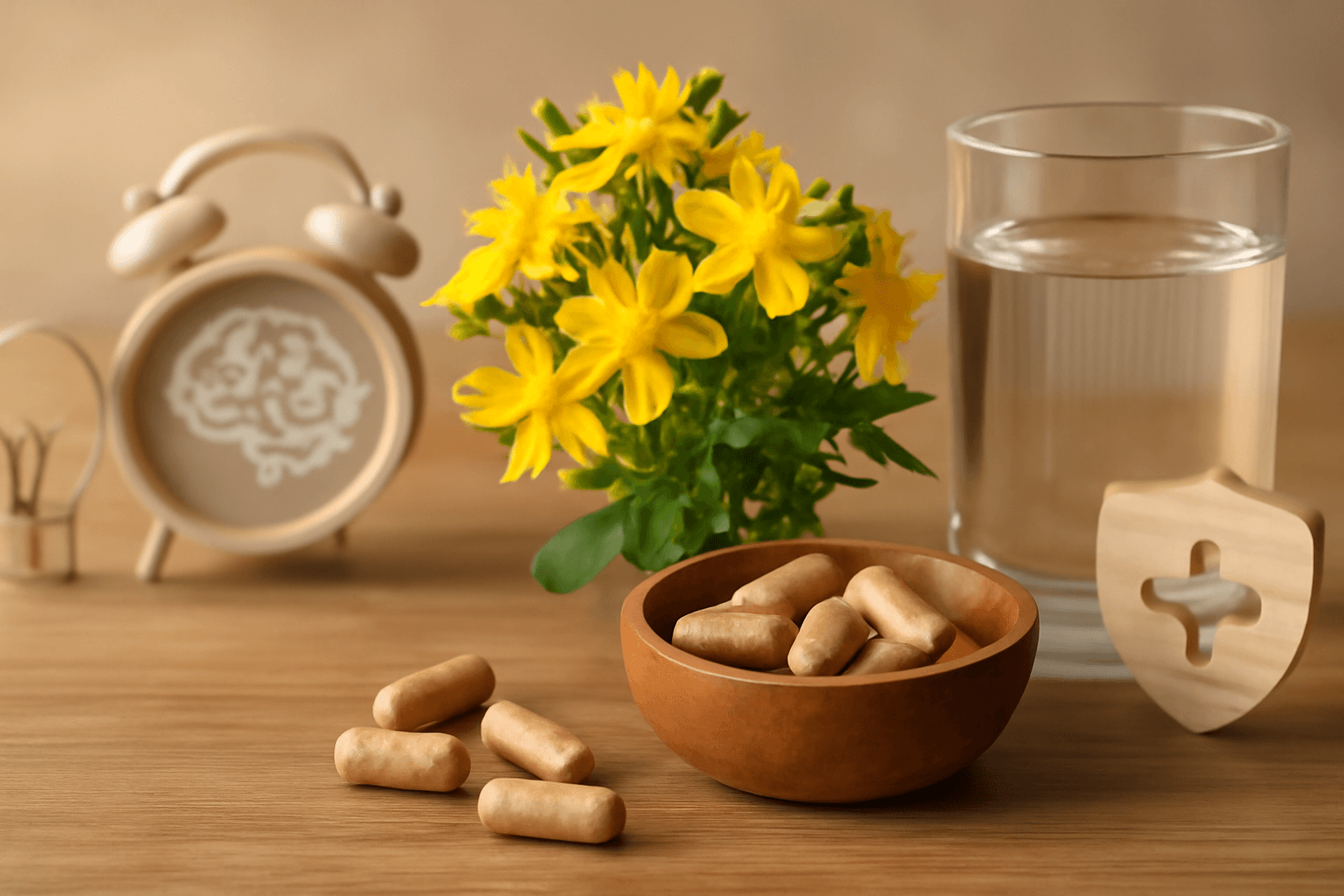
St. John's Wort (Hypericum perforatum) is a plant of the Hypericaceae family native to Europe, West Asia, and North Africa. The flowers, leaves, and stems of the plant are dried for use, and its main active ingredients are hypericin, adhyperforin, and flavonoids. In particular, hypericin exhibits a reddish-brown color in plant tissue and plays an important role in mood regulation and nervous system health.
The plant was traditionally named after "St. John's Day (June 24th)," around which time it was harvested in Europe. Since the 1990s in Germany, it has been widely used as a treatment for depression. The U.S. NIH (National Institutes of Health) has also recognized its clinical efficacy and included it in various health guidelines. It is sold as a depression-related pharmaceutical or functional food in over 60 countries worldwide.
In South Korea, St. John's Wort is registered as a functional food ingredient, and products certified by the Korea Food and Drug Administration are available on the market. It is known to be effective with fewer side effects than over-the-counter medications and is helpful in alleviating mild mood decline, sleep disorders caused by stress, and seasonal affective disorder.
How Does St. John's Wort Work to Improve Mood?
St. John's Wort is effective in improving mood because it normalizes the balance of neurotransmitters in the brain. The main mechanisms of action are as follows:
1) Serotonin Reuptake Inhibition
The hypericin component in St. John's Wort blocks the reuptake of serotonin in nerve cells. When serotonin secreted at nerve terminals is not reabsorbed, it remains longer in the synapse (connection point between nerve cells), enhancing neural transmission. This is similar to the mechanism of selective serotonin reuptake inhibitors (SSRIs) such as fluoxetine, but operates at a gentler level.
2) Norepinephrine and Dopamine Regulation
The adhyperforin component supports neurotransmission of norepinephrine (attention, alertness) and dopamine (motivation, pleasure). When these three neurotransmitters are balanced, mood stabilization, energy enhancement, and improved concentration can occur together.
3) Cortisol Regulation and Anti-inflammatory Action
The flavonoid components in St. John's Wort inhibit excessive secretion of cortisol, the stress hormone. Additionally, they reduce chronic inflammation in the nervous system, preventing damage to brain nerve cells and promoting the production of neurotrophic factors (BDNF) to support nerve cell regeneration and recovery, thereby supporting long-term mental health.
4) GABA Signal Enhancement
Partially enhancing the activation of GABA receptors, an inhibitory neurotransmitter that relieves anxiety and tension, thereby contributing to improved sleep quality and relaxation.
Clinical Efficacy of St. John's Wort Demonstrated Through Research
Depression Relief
According to meta-analysis research published since 2022, St. John's Wort showed a 60-65% symptom improvement rate in patients with mild to moderate depression compared to placebo after 24 weeks of use. Particularly in cases of mild depression, it showed effects similar to some SSRI medications, with significantly fewer side effects. For patients with severe depression or bipolar disorder, it is recommended as adjunctive therapy rather than monotherapy.
Improved Sleep Quality
In a 2021 clinical trial conducted in Germany (n=161, 12 weeks), the St. John's Wort treatment group showed that sleep onset time was reduced by an average of 23 minutes compared to the control group, and sleep continuity scores improved by approximately 35%. It was particularly effective for sleep disorders caused by depression and showed natural sleep improvement without habituation or dependence.
Enhanced Energy and Vitality
Patients taking St. John's Wort reported reduced fatigue and increased motivation for daily activities starting from the third week. In a study published in 2019, the Fatigue Severity Scale decreased by an average of 40% after six weeks of use. This is due to improved nervous system energy efficiency from normalization of neurotransmitter balance.
Hormone and Reproductive Health
St. John's Wort shows weak affinity for estrogen receptors, alleviating hot flashes, night sweats, and mood changes in menopausal women. In a 2020 study, menopausal symptom scores decreased by approximately 35% after eight weeks. It is also effective in improving mood decline and breast tenderness symptoms caused by premenstrual syndrome (PMS).
Immune System Enhancement
The flavonoids and phenolic compounds in St. John's Wort have strong antioxidant effects, supporting the activation of immune cells. In laboratory studies, the activity of NK (natural killer) cells and T lymphocytes increased, and in some animal studies, resistance to viral infection increased by approximately 20-30%. However, large-scale clinical trials on long-term immune effects in humans are still ongoing.
Seasonal Affective Disorder (SAD) Relief
In a 2018 study combining St. John's Wort and light therapy for depression caused by winter sunlight deficiency, the symptom improvement rate reached 78%. Combined use with other therapies is more effective than monotherapy.
What is the Recommended Dosage of St. John's Wort?
Standard Dosage
The general recommended dosage is 300-900mg daily divided into three doses, based on 0.3% hypericin content. The standard dose used in most clinical trials, converted to hypericin, is 270mg daily (90mg three times daily). Dosage can be adjusted to 300mg daily for mild symptoms, 600mg daily for moderate symptoms, and 900mg daily for severe cases.
Timing and Duration of Use
St. John's Wort is best taken with meals rather than on an empty stomach to increase the absorption rate of fat-soluble components. It takes a minimum of 2-3 weeks for effects to appear, with optimal effects occurring around 4-6 weeks, so patience is required during use. A minimum of 8-12 weeks of use is recommended to determine clinically meaningful improvement.
Formulations and Selection Criteria
St. John's Wort products available on the market include the following:
- Standardized Extract Tablets/Capsules: It is important to select products with standardized active ingredients, with hypericin content of 0.3% or hypericin plus catechin content clearly indicated.
- Dried Powder Products: Since these are not standardized, efficacy variability is high, and extract products are recommended when possible.
- Liquid Formulations (Tinctures): Fast absorption rate is an advantage, but alcohol content should be verified.
Individual Dosage Adjustment
For elderly people (age 65 and older), it is safer to start at 50-75% of the standard dose due to decreased metabolism and gradually increase the dosage. The same applies to patients with impaired liver function. Adolescents (ages 12-18) should start at 50% of the adult dose but must use only under medical supervision.
Side Effects and Drug Interactions of St. John's Wort
Common Side Effects
St. John's Wort has fewer side effects than prescription antidepressants, but the following symptoms may occur depending on the individual:
- Gastrointestinal: Digestive discomfort (3-5%), abdominal bloating, constipation or diarrhea
- Nervous system: Headaches (2-3%), dizziness, increased anxiety (rare)
- Skin: Photosensitivity (5-10%) - skin rashes with sun exposure, severe sunburn
- Sexual function: Some patients report decreased libido or erectile dysfunction
Most side effects are mild and appear during the first 1-2 weeks of use, then naturally disappear as the body adapts. However, if photosensitivity occurs, use of sunscreen (SPF 30 or higher) and minimization of sun exposure are essential.
Dangerous Drug Interactions
St. John's Wort strongly induces cytochrome P450 enzymes in the liver (particularly CYP3A4), lowering the blood levels of various medications. It must be avoided when used together with the following medications:
- Anticoagulants (warfarin, dabigatran): Reduced medication effectiveness increases thrombosis risk
- Oral contraceptives: Reduced contraceptive efficacy (20-40%), increased risk of unintended pregnancy
- Immunosuppressants (calcineurin, tacrolimus): Increased transplant rejection risk
- Anticancer drugs (imatinib, teniposide): Reduced medication effectiveness, treatment failure
- Antiretroviral drugs (protease inhibitors, integrase inhibitors): Reduced viral treatment efficacy
- Some antidepressants: Risk of serotonin syndrome (especially when used with SSRIs)
- Tricyclic antidepressants, SNRIs: Excessive neurotransmitter accumulation
- Heart medications (digoxin, simvastatin): Reduced medication effectiveness causing cardiac rhythm instability
Serotonin Syndrome Caution
When combined with other antidepressants or mood-improving supplements (such as 5-HTP, tryptophan), serotonin syndrome may occur. Symptoms include severe headaches, heart palpitations, muscle rigidity, high fever, confusion, and severe anxiety. In such cases, seek immediate medical attention.
Contraindications in Specific Populations
- Pregnant and Nursing Women: Avoidance is recommended due to insufficient safety data.
- Bipolar Disorder Patients: Possible risk of triggering mania
- Severe Depression Patients: Use only under medical supervision
- Schizophrenia Patients: Possible symptom worsening
- Serious Liver Disease: Risk of hepatic toxicity
Checklist for Safe Use
Before taking St. John's Wort, be sure to verify the following:
- Create a list of all current prescription medications and consult with a pharmacist
- Oral contraceptive users should consider alternative contraception methods
- Regular INR (coagulation time) monitoring if taking anticoagulants or antiplatelet agents
- Review liver function test records (AST, ALT)
- Monitor for photosensitivity if working in high sun-exposure occupations
- Regular consultation with a healthcare professional if taking for more than three months
Conclusion and Summary
St. John's Wort is a natural mood-enhancing ingredient supported by over 2,000 years of historical use experience and modern clinical research. It has shown 60-65% efficacy in relieving mild to moderate depression, stress-related sleep disorders, energy decline, and seasonal affective disorder, with relatively fewer side effects compared to prescription antidepressants.
Key Points Summary:
- Mechanism: Enhancement of serotonin, norepinephrine, and dopamine neurotransmission and anti-inflammatory action
- Efficacy: Mood improvement (60-65%), sleep quality 23-minute sleep onset reduction, 40% energy enhancement, immune system strengthening
- Dosage: 300-900mg daily (based on hypericin), minimum 4-6 weeks of use required
- Starting Point: Immediate use for mild symptoms, medical professional consultation recommended for moderate symptoms
- Drug Interactions: Combination with warfarin, oral contraceptives, and various antidepressants is prohibited
- Side Effects: Photosensitivity (5-10%), gastrointestinal discomfort (3-5%), mostly mild
- Contraindications: Bipolar disorder, severe depression, pregnancy, liver disease
Cases Where Healthcare Professional Consultation is Essential:
- All patients currently taking prescription medications
- Oral contraceptive users
- Patients with moderate or severe depression, bipolar disorder, or schizophrenia
- Women planning pregnancy or currently nursing
- Those with a history of liver or kidney disease
- Those planning long-term use for more than three months
St. John's Wort has considerable value as an adjunctive health management tool, but it is by no means a perfect replacement for prescription antidepressants. Patients with severe depression or suicidal ideation must receive medical evaluation from a psychiatrist, and St. John's Wort should only be used as adjunctive therapy under medical supervision. We recommend establishing a personalized usage plan that takes your health status and current medications into account to achieve safe and effective results.