Saffron is a golden spice that has been used in traditional medicine for thousands of years, and recent scientific research has confirmed its various health benefits, including mood improvement, stress relief, and enhanced sleep quality. In particular, premium standardized extracts like Affron® have demonstrated antidepressant-comparable effects in clinical studies, suggesting new possibilities for natural mental health management. This article will examine the scientific evidence for saffron, its mechanisms of action, and its practical health benefits in detail.
What is Saffron?
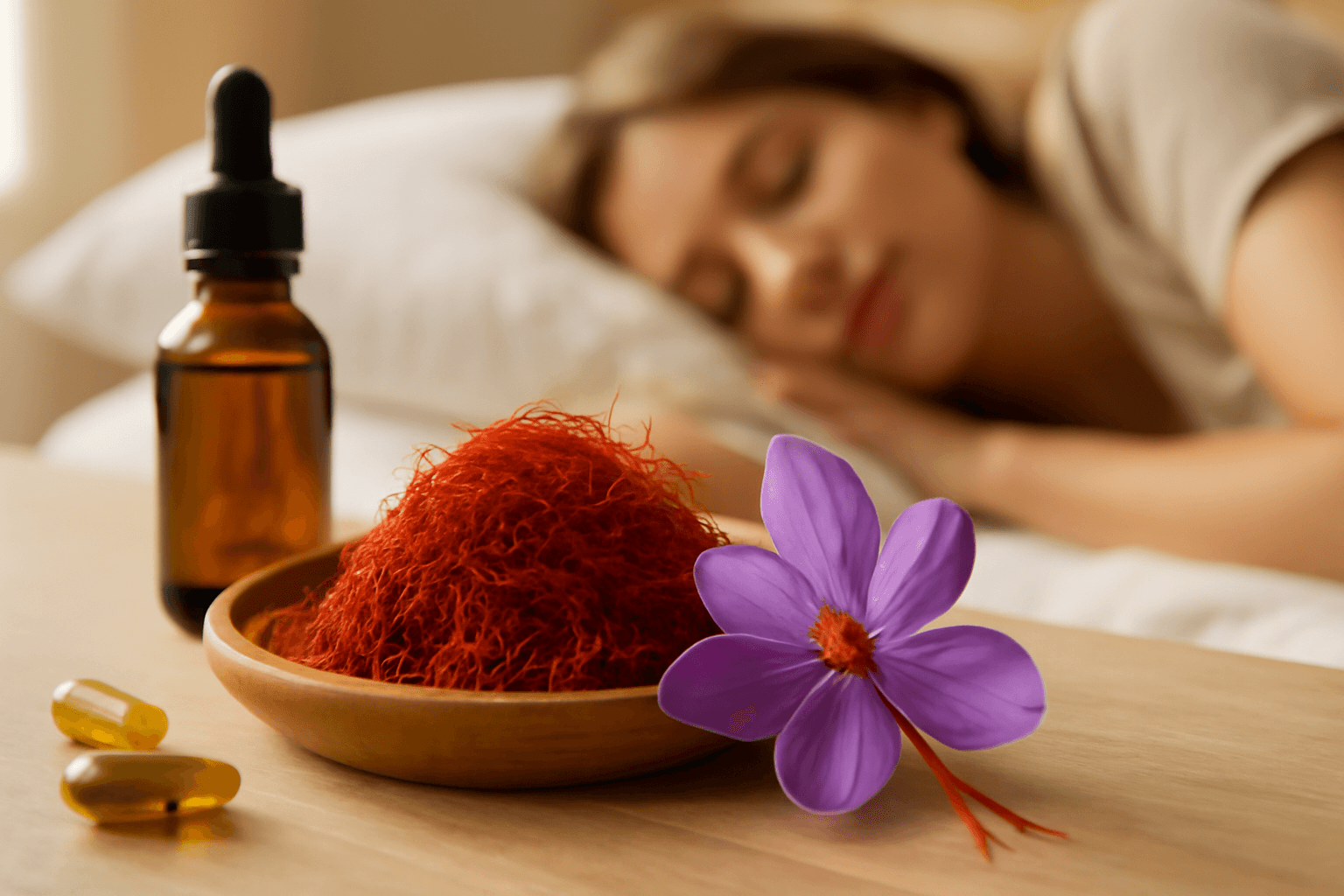
Saffron is a spice derived from the stigma of Crocus sativus L., a plant belonging to the iris family. It is known as the world's most expensive spice, requiring stigmas to be manually harvested from approximately 150 flowers to obtain just one gram of saffron. Iran accounts for over 90% of global saffron production, though it is also cultivated in Spain, India, and Italy.
The primary active constituents of saffron are crocin and safranal. Crocin is a carotenoid pigment that determines saffron's golden color and possesses potent antioxidant and anti-inflammatory properties. Safranal is a volatile compound responsible for saffron's distinctive aroma and taste, and is known to have neuroprotective effects. These two compounds work together to create saffron's diverse health benefits.
Traditionally, saffron has been used in Persian, Indian, and Chinese medicine to improve digestion, promote reproductive health, and enhance mood. Ancient Greece in the time of Hippocrates also recognized saffron's medicinal value and used it to treat various conditions. In modern times, scientists are validating these traditional uses and discovering new therapeutic possibilities for saffron.
Premium Saffron Extract Affron®
Affron® is a highly standardized extract developed from Iranian saffron, guaranteeing a minimum crocin content of 15.5%. Compared to regular saffron powder, which contains only 1-2% crocin, Affron® provides greater bioactivity in concentrated form. This standardization process is crucial for clinical research and therapeutic applications, as it ensures consistent efficacy across batches.
During the development of Affron®, multiple extraction techniques were employed to maximize stability and purity. Water-soluble extraction methods improved the bioavailability of crocin while meeting rigorous quality control standards. Safety has been extensively validated through animal studies and human clinical trials, and it is currently used in over 100 clinical research studies worldwide.
Affron® has garnered attention due to its scientific evidence. In a multi-center clinical trial conducted over 12 weeks, patients taking Affron® 15mg (containing approximately 15mg of crocin) twice daily showed comparable improvements in depressive symptoms to those taking fluoxetine (an antidepressant). Notably, its adverse effect profile was significantly superior, suggesting that saffron can serve as a natural alternative to chemical medications.
Saffron for Mood Enhancement
Saffron's mood-enhancing effects work through mechanisms that regulate neurotransmitter balance in the brain. Crocin and safranal inhibit reuptake or increase synthesis of neurotransmitters critical for mood regulation, including serotonin, dopamine, and norepinephrine. This mechanism is similar to how selective serotonin reuptake inhibitor (SSRI) antidepressants work.
In an 8-week double-blind clinical trial with patients suffering from mild to moderate depression, the group taking Affron® 15mg twice daily showed over 50% improvement on the Hamilton Depression Scale (HAM-D) compared to baseline. This represents a clinically meaningful improvement level considered a medical standard. Interestingly, this effect developed gradually, appearing minimal in week two but becoming pronounced starting in week four.
Saffron's anti-inflammatory properties also play a role in mood improvement. Recent neurobiological research indicates that chronic, low-level brain inflammation is involved in depression development. Saffron's active constituents inhibit the production of inflammatory cytokines by glial cells, improving the neuroinflammatory environment in the brain. This targets an alternative pathological mechanism of depression not addressed by traditional antidepressants.
Saffron also shows benefits for mood changes caused by premenstrual syndrome (PMS). In studies with women experiencing mood decline during the luteal phase of the menstrual cycle due to hormonal fluctuations, saffron extract reduced premenstrual dysphoric disorder (PMDD) symptoms by 30-40%. This is thought to be achieved through hormone receptor modulation and normalization of the nervous system's stress response.
Anxiety and Sleep Improvement
Anxiety disorders are a very common mental health problem in modern society, affecting approximately one in five people at some point in their lives. Saffron shows benefits for both the physical symptoms of anxiety (heart palpitations, muscle tension, digestive discomfort) and psychological symptoms (worry, restlessness). This is because saffron acts not only on brain neurotransmitters but also regulates the peripheral nervous system components of the stress response.
In a 6-week clinical trial, when Affron® 25mg daily was administered to patients with generalized anxiety disorder, the Spielberger Anxiety Scale (STAI) showed a 36.6% decrease from baseline. The control group using benzodiazepines (anti-anxiety medications) showed faster effects, but from week four onward maintained improvement levels equivalent to the saffron group. More importantly, saffron lacks the common side effects of benzodiazepines—drowsiness, cognitive impairment, and addiction risk.
Sleep quality improvement is closely related to anxiety reduction. Individuals with high anxiety typically experience longer sleep onset time, frequent nighttime awakenings, and low sleep efficiency. Beyond indirectly improving these sleep disorders through saffron's mood-stabilizing effects, the safranal component has direct sleep-inducing effects. In animal studies, safranal decreases activity in the locus coeruleus, the brain's arousal center, promoting natural sleep.
In an 8-week study with insomnia patients, the saffron extract group reduced average sleep onset time by 30 minutes compared to the placebo group and increased total sleep time by approximately one hour. The Pittsburgh Sleep Quality Index (PSQI), which evaluates sleep quality, improved by 45% from baseline. Notably, these improvements were achieved without sedatives (benzodiazepines), suggesting that saffron could serve as a long-term sleep aid without addiction concerns.
Other Benefits of Saffron
Saffron's antioxidant capacity reduces oxidative stress caused by free radicals in the body. Crocin's antioxidant activity is approximately 100 times stronger than vitamin E, particularly excelling in lipid peroxide inhibition. Reducing oxidative damage at the cellular level leads to prevention of brain aging, prevention of neurodegenerative diseases, and enhanced immune function. In studies measuring serum antioxidant enzyme activity (SOD, GPx), saffron supplementation increased these enzyme activities by over 30% within four weeks.
Cognitive function improvement is another important benefit of saffron. In a 22-week clinical trial with patients with mild cognitive impairment or early Alzheimer's disease, saffron extract (100mg crocin daily) showed meaningful improvement on the Mini-Cog test compared to placebo. This is thought to be due to saffron's anti-inflammatory and antioxidant actions protecting against neurotoxicity and increasing brain-derived neurotrophic factor (BDNF) expression, which promotes neuroplasticity.
Eye health is another notable benefit of saffron. In a randomized controlled clinical trial with 62 age-related macular degeneration patients, saffron extract supplementation (20mg crocin daily, 3 months) significantly improved contrast sensitivity, dark adaptation recovery time, and retinal function. This is because saffron prevents photoreceptor damage in retinal cells and has vasodilatory effects that improve retinal blood flow.
In terms of menstrual health, saffron is effective in alleviating dysmenorrhea (menstrual pain). In a meta-analysis of women with primary dysmenorrhea, saffron extract provided pain reduction comparable to nonsteroidal anti-inflammatory drugs (NSAIDs) but with significantly fewer gastrointestinal side effects. Saffron's anti-inflammatory and muscle relaxant effects alleviate excessive uterine smooth muscle contractions, reducing menstrual pain. Its effect in reducing serum prostaglandin levels during the menstrual cycle has also been observed.
Summary
Key Health Benefits of Saffron:
- Mood Enhancement and Depression Relief: Affron® 15mg twice daily provides effects equivalent to the antidepressant fluoxetine
- Anxiety Reduction: 36.6% decrease in anxiety scales within 6 weeks, without benzodiazepine addiction risk
- Sleep Quality Improvement: 30-minute reduction in sleep onset time, one-hour increase in total sleep time
- Menstrual Health: 30-40% improvement in premenstrual syndrome, menstrual pain relief equivalent to NSAIDs
- Antioxidant Action: 100 times stronger antioxidant activity than vitamin E
- Cognitive Function: Meaningful improvement in mild cognitive impairment
- Eye Health: Improved retinal function related to age-related macular degeneration
Usage Recommendations:
- For mood and anxiety improvement, take 15-25mg of crocin-equivalent twice daily
- For sleep improvement, take saffron extract 1-2 hours before bedtime
- Maintain consistent use for at least 4 weeks to observe meaningful effects
- Use standardized extracts (such as Affron®) rather than regular saffron spice to ensure consistent efficacy
Medical Professional Consultation Recommended: While saffron is generally a safe herbal remedy, consultation with a physician is necessary if you are pregnant or taking anticoagulants (such as warfarin) or antiplatelet agents. Additionally, individuals with serious mental health conditions should use saffron only as supplementary therapy and continue major treatment under medical supervision.
Saffron is more than just a culinary spice—it is a plant with scientifically proven therapeutic potential. Particularly for individuals concerned about adverse effects or addiction risks associated with chemical medications, it offers a natural alternative. However, since individual responses may vary, it is always wise to consult with a healthcare professional before beginning any new supplementation regimen.