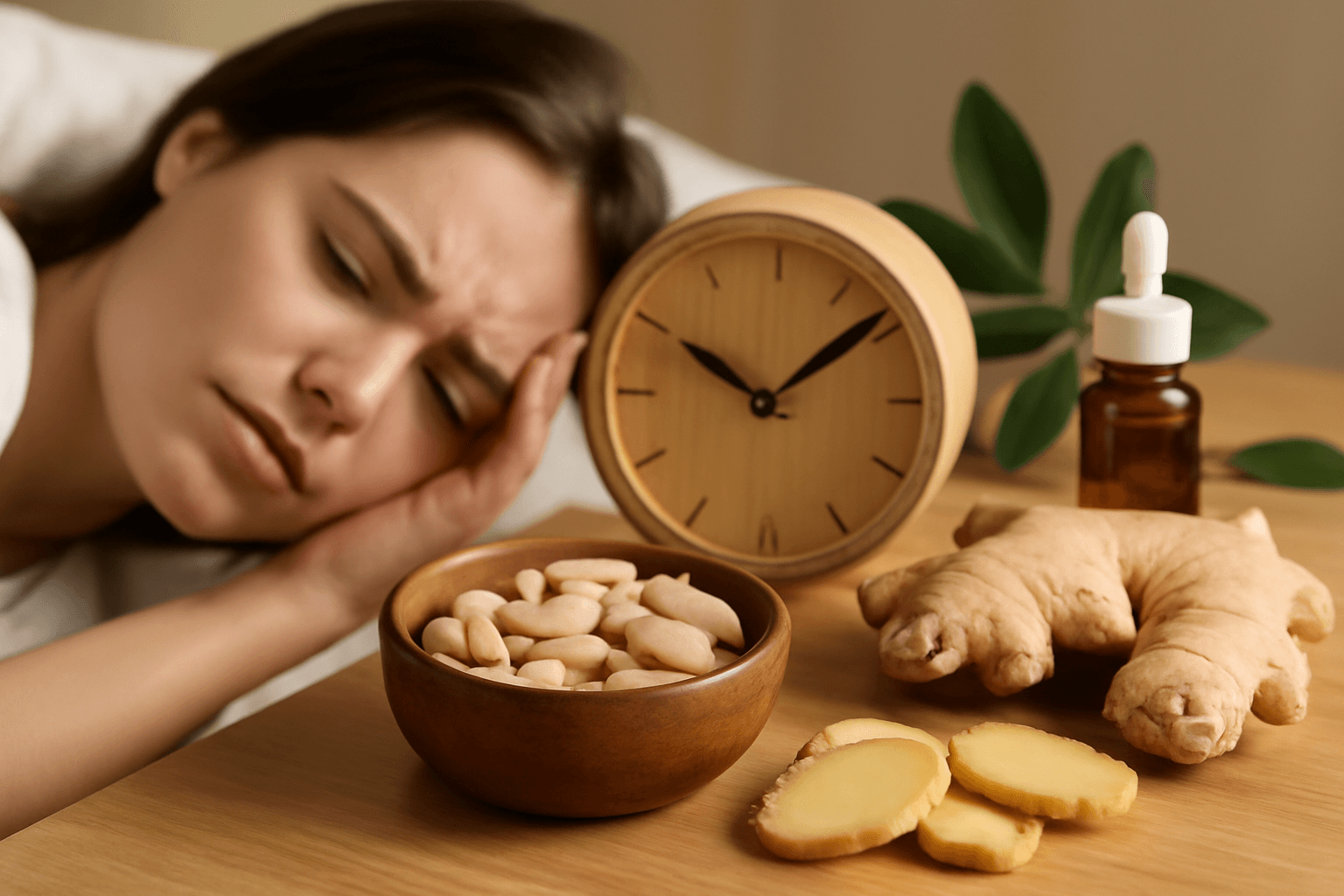
Migraines are a neurological disorder that significantly reduces the quality of life for modern individuals. One in ten Koreans suffers from migraines, with particularly high prevalence rates among women in their 20s to 50s. While medication is effective, long-term use carries the risk of side effects, prompting many people to combine natural remedies with pharmaceutical treatment. This article will introduce scientifically-supported natural remedies in detail, including sleep optimization, stress management, hormone regulation, magnesium intake, and ginger therapy.
What Are Migraines?
Migraines are one-sided headaches that occur when blood vessels and nerves in the brain respond abnormally. Unlike common tension headaches, migraines last anywhere from 4 to 72 hours and are characterized by a throbbing pain sensation. Approximately 30% of patients experience "aura"—visual disturbances, speech difficulties, or motor impairment—accompanying the headache.
The mechanism of migraine development works as follows. When a neurotransmitter imbalance occurs in the brain, blood vessels constrict and then dilate, releasing inflammatory substances in the process. This stimulates the trigeminal nerve, triggering severe headaches. According to modern neuroscience research, serotonin deficiency, dopamine dysfunction, and increased calcitonin gene-related peptide (CGRP) are closely linked to migraine onset.
The main triggers for migraines include:
- Hormonal changes: Menstrual cycles, oral contraceptives, perimenopause
- Stress: Work overload, emotional shock, relaxation phase after stress relief
- Sleep changes: Excessive or insufficient sleep, changes in sleep schedule
- Dietary habits: Excessive caffeine consumption, chocolate, foods containing nitrates
- Environmental factors: Bright light, loud noise, strong scents
Migraines are not merely headaches but rather neurological disorders that impair daily functioning. In the International Classification of Headache Disorders (ICHD-3), migraines are classified as serious conditions alongside stroke and dementia on disability assessment scales.
Natural Remedies for Migraine Relief
1. Migraine Management Through Sleep Optimization
Sleep is the foundation of migraine management. Insufficient sleep increases the risk of migraine attacks more than twofold, and paradoxically, excessive sleep can also trigger migraines. According to research by the American Headache Society, consistent 7-hour sleep is optimal for migraine management.
The relationship between sleep and migraines: Sleep deprivation decreases the pain threshold in the brain. In other words, you experience more severe pain from the same stimulus. Additionally, melatonin secreted during sleep provides neuroprotection and regulates serotonin levels. When this process is disrupted, neural sensitivity increases and migraine attacks occur more frequently.
Effective sleep habits:
- Go to bed and wake up at the same time every day (including weekends)
- Stop using electronic devices 1-2 hours before bedtime
- Maintain bedroom temperature at 16-19°C (61-66°F)
- Avoid caffeine intake before bed (after 3 PM)
- Exercise regularly (completed at least 3 hours before sleep)
- Take a warm bath before bedtime (to promote body temperature drop)
If jaw muscle tension is severe during sleep, using a night guard is worth considering. Research shows that adequate and regular sleep alone can reduce migraine attack frequency by 30-40%.
2. Stress Management and Relaxation Techniques
Stress is one of the most common migraine triggers. Interestingly, "stress-relief migraine"—headaches occurring 2-12 hours after stress subsides rather than during stress itself—is very common. This occurs because the nervous system undergoes dramatic changes when transitioning from tension to relaxation, triggering migraines.
Stress management strategies:
- Meditation: 10-20 minutes of daily meditation shifts the nervous system toward parasympathetic dominance. Migraine patients who practiced mindfulness meditation for 8 weeks showed a 1.4-fold reduction in attack frequency.
- Breathing exercises: Diaphragmatic breathing has an immediate calming effect. Repeatedly inhaling for 4 seconds, holding for 7 seconds, and exhaling for 8 seconds activates the parasympathetic nervous system.
- Progressive muscle relaxation: This method involves sequentially tensing and relaxing muscle groups throughout the body. It is effective at relieving chronic muscle tension.
- Biofeedback: Training to control the body's automatic responses by monitoring temperature, heart rate, and brain waves. Clinical trials showed results similar to medication therapy.
- Yoga: Gentle yoga, particularly poses that relieve neck and shoulder tension, is effective for migraine prevention.
When cortisol, a stress hormone, increases, blood vessel constriction intensifies, and migraines occur as vessels relax afterward. Therefore, continuous stress management is essential.
3. Hormone Regulation
Migraine prevalence varies by gender. Women of reproductive age have three times the migraine rate of men, strongly suggesting hormonal influence. Estrogen fluctuation in particular is a major migraine trigger.
Menstrual-related migraines: 60-70% of women experience worsened migraines before and after their period. This is due to dramatic estrogen level fluctuations during the menstrual cycle. The period from 2 days before menstruation to 3 days after is defined as the menstrual-related vulnerability window.
Hormone regulation methods:
- Cycle tracking: Record your menstrual cycle and migraine attacks to identify patterns. Over 80% of women show consistent menstrual-related migraine patterns.
- Contraceptive selection: Choose pills with consistent estrogen levels and short hormone-free intervals. Continuous-use contraceptives (with no hormone-free period) may be more effective for migraine prevention.
- Perimenopause management: During the 5-10 years before menopause, estrogen fluctuations are most irregular and migraines may worsen. When hormone replacement therapy is needed, low-dose transdermal estrogen patches are more stable than oral formulations.
Hormone regulation should be undertaken under medical professional guidance, with personalized approaches considering individual medical history and migraine characteristics.
4. Magnesium Intake
Magnesium is the most evidence-based natural substance for migraine management. Research shows that 40-50% of migraine patients have magnesium deficiency. Magnesium plays important roles in neural signal transmission, muscle relaxation, and blood vessel constriction regulation.
Magnesium's mechanism of action: Magnesium acts as a calcium channel blocker, reducing neural sensitivity. It also regulates serotonin receptor function and inhibits neuroinflammation. It has the additional effect of suppressing calcitonin gene-related peptide (CGRP) secretion in the brain.
Evidence for magnesium supplementation: Multiple clinical trials have shown that magnesium supplementation reduces migraine attack frequency by 25-40%. Effects are particularly pronounced in menstrual-related migraines and migraines with aura.
Magnesium intake methods:
- Dietary intake: Pumpkin seeds (262mg per 100g), almonds (270mg per 100g), spinach (79mg per 100g), dark chocolate (67mg per 100g), black beans (60mg per 100g)
- Supplements: Magnesium glycinate or malate forms have the highest bioavailability. Magnesium oxide has poor absorption rates and can cause diarrhea.
- Dosage: 360mg daily for menstrual migraine prevention, and 400-500mg daily for general migraine prevention. Continue for at least 8-12 weeks until symptoms improve.
- Timing: Taking magnesium after dinner also improves sleep quality.
Precautions: Excessive magnesium intake can cause diarrhea, nausea, and abdominal cramping. Those with kidney disease must consult a healthcare professional.
5. Ginger's Migraine Relief Effects
Ginger has been used in Asian traditional medicine for over 6,000 years. Modern research has scientifically proven ginger's migraine relief effectiveness. The main active compounds in ginger are gingerol and shogaol.
Ginger's mechanism of action: Ginger has potent anti-inflammatory properties. It inhibits inflammatory substance secretion in the brain and dilates blood vessels. It also regulates serotonin and norepinephrine signaling to block pain signal transmission. Ginger's antioxidant action prevents nerve damage and enhances neuroplasticity.
Clinical evidence: A 2014 published study found that patients taking ginger powder (500mg, twice daily) for 8 weeks showed similar degrees of pain intensity reduction as standard migraine medication (sumatriptan). Another study showed that combining ginger and caffeine at the onset of a migraine attack shortened recovery time by 30%.
Ginger intake methods:
- Ginger tea: Add 5-10g of fresh ginger to 200ml of boiling water and steep for 5 minutes. Take 2-3 times daily.
- Ginger supplements: Standardized ginger extract powder (5% gingerol content) taken 250-500mg twice daily. Taking after meals reduces stomach irritation.
- Food addition: Frequently add fresh ginger to curry, soup, and stir-fry dishes. Heating during cooking alters some active compounds but anti-inflammatory effects remain.
- Pickled ginger: Pickled ginger (served with sushi) has similar effects to fresh ginger.
Optimal timing for effects: Regular consumption is necessary for migraine prevention. Evaluate effectiveness after at least 2-4 weeks of continuous use. Ginger is also excellent for controlling nausea during migraine attacks, so drinking ginger tea immediately when you feel the first migraine symptoms is also effective.
Safety and interactions: Ginger is generally safe, but it can interfere with blood clotting, so patients taking anticoagulants should be cautious. Excessive consumption can cause stomach irritation, heartburn, and diarrhea.
6. Integrated Approach: Lifestyle Optimization
Implementing the aforementioned natural remedies comprehensively produces even stronger effects. A multifaceted approach is more effective for migraine management than single treatments.
Daily migraine prevention checklist:
- Wake up early (consistent sleep schedule)
- Morning sunlight exposure (regulate circadian rhythm)
- Morning exercise (30 minutes of aerobic activity)
- Consume magnesium-rich foods
- Adequate hydration (at least 2 liters; dehydration is a major migraine trigger)
- Afternoon or daytime relaxation activity (meditation, yoga, walking)
- Evening ginger tea or ginger supplement intake
- No caffeine after 9 PM
- Relaxation activity 1 hour before sleep
- Sleep at consistent times
Especially during periods of high migraine frequency (before and after menstruation, during stressful periods), practicing these natural remedies more rigorously can significantly reduce attack frequency.
Summary
Since migraines result from complex nervous system interactions, a multifaceted approach is more effective than single treatments. The core points of the natural remedies introduced in this article are:
- Sleep: Consistent 7-hour sleep at the same time daily is fundamental to migraine management. Irregular sleep increases migraine attack risk more than twofold.
- Stress management: Stabilizing the nervous system through meditation, breathing exercises, and muscle relaxation can reduce migraine attack frequency by 30-40%.
- Hormone regulation: Especially for women, tracking menstrual cycles and optimizing hormone therapy are key to migraine prevention.
- Magnesium: Regular daily intake of 360-500mg has been proven to reduce migraine attack frequency by 25-40%.
- Ginger: The anti-inflammatory action of gingerol prevents migraines and produces effects similar to medication even during acute attacks.
Important precautions: Natural remedies cannot completely replace migraine medication. Migraine diagnosis and treatment planning must be determined through consultation with a neurologist. Seek immediate medical attention if migraine characteristics change, new symptoms appear, or existing medications become ineffective. The natural remedies in this article are most effective when combined with medical treatment.
Migraine management is a long-term process. Practice the natural remedies above continuously for at least 8-12 weeks before evaluating their effectiveness. Many patients have significantly reduced their migraine medication frequency through lifestyle improvements and natural supplements. We hope this information helps in your migraine management journey.