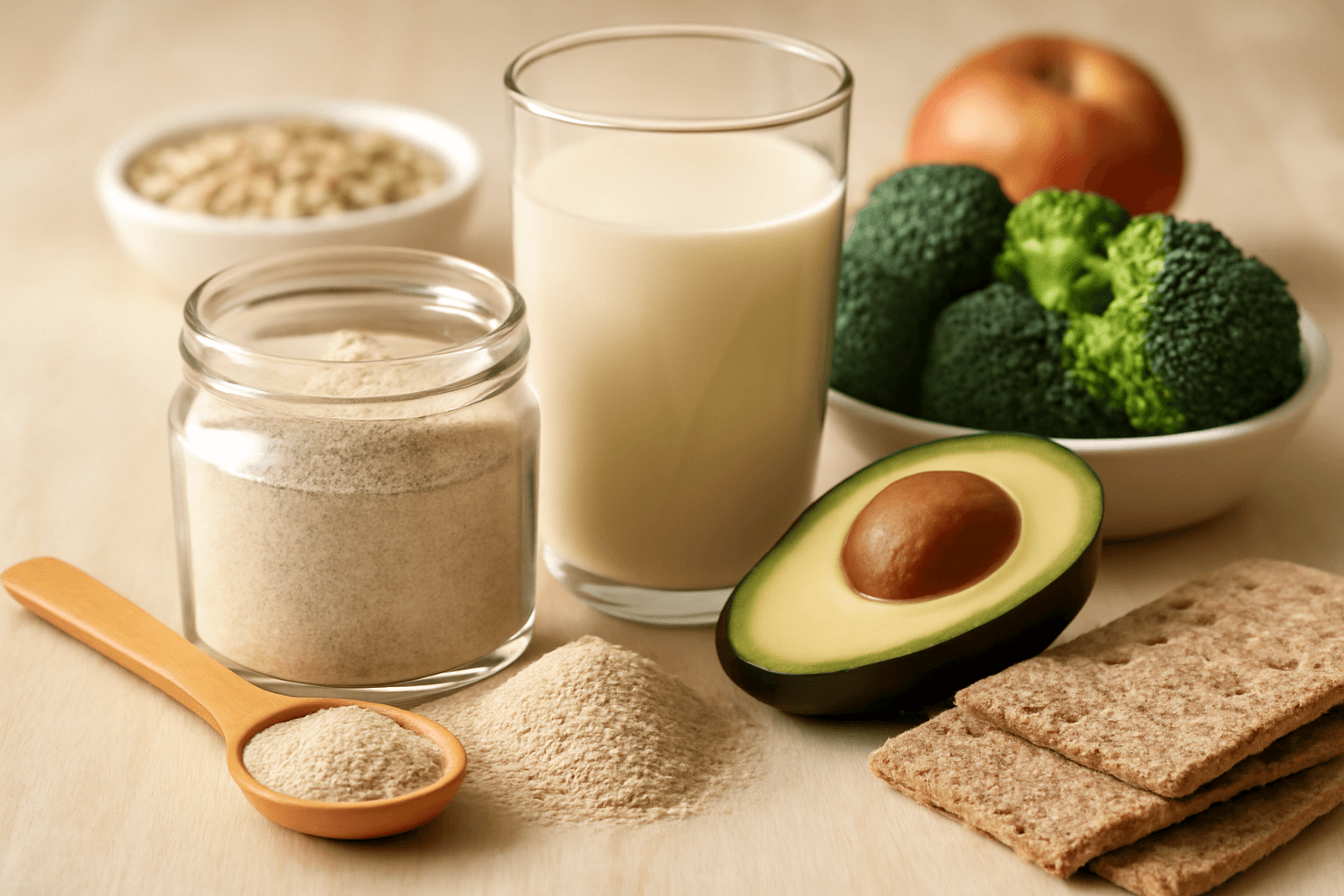
Fiber is an essential nutrient for digestive health, blood sugar management, and cholesterol reduction, but it's often lacking in modern diets. The average fiber intake among Koreans is only about 60% of the daily recommended amount (25-35g for adults), which is why many people are turning to fiber supplements. This article presents a registered dietitian's perspective on how to choose the optimal fiber supplement that matches your health status and needs.
Who Should Take Fiber Supplements?
While fiber supplements aren't necessary for everyone, they can be very beneficial for people in certain health situations. People with fragile digestive health, such as those experiencing constipation or irritable bowel syndrome (IBS) symptoms, can benefit from fiber supplements to improve bowel regularity. If your daily bowel movements fall outside the normal range (more than three times a week or fewer than three times a week), it's necessary to gradually increase your fiber intake.
People with diabetes or in the prediabetic stage who need blood sugar management are also primary candidates for fiber supplements. Soluble fiber slows down the movement of food in the stomach, preventing rapid spikes in blood sugar. The American Diabetes Association (ADA) recommends that people with diabetes consume 25-35g of fiber daily, and suggests using supplements if food alone is insufficient.
People with elevated cholesterol levels are also candidates for fiber supplements. In particular, soluble fiber (beta-glucan, pectin) has been proven to reduce LDL cholesterol (bad cholesterol). According to meta-analyses, an additional daily intake of 2-10g of soluble fiber can decrease LDL cholesterol by 3.2-5.3mg/dL.
Office workers and students who struggle to consume enough fresh vegetables and fruits due to busy lifestyles are also worthy of consideration. However, medical professionals recommend consuming fiber through food whenever possible, with supplements serving only as an auxiliary tool.
Key Things to Know About Fiber Supplements
Understanding Two Types of Fiber
Before choosing a fiber supplement, you should understand the difference between soluble fiber and insoluble fiber. Soluble fiber dissolves in water and becomes gel-like, making it effective for blood sugar management and cholesterol reduction. Major soluble fibers include beta-glucan (oats), pectin (apples, carrots), inulin (chicory root), and guar gum (guar beans). Insoluble fiber doesn't dissolve in water and promotes intestinal movement while increasing stool volume, helping resolve constipation. Cellulose, hemicellulose, and lignin are examples of insoluble fiber.
The ideal fiber supplementation involves mixing soluble and insoluble fiber in a 3:1 or 1:1 ratio. Many mixed products are currently available on the supplement market, and you can check the content of each fiber type through the nutrition information on the product label.
Common Side Effects and Solutions When Taking Fiber
Suddenly increasing fiber intake can cause bloating, gas, cramping, and diarrhea. This is a natural response as your colon's microbes adapt to the new fiber. To minimize these side effects:
- Start at about 50% of the daily recommended amount initially
- Gradually increase the amount over two weeks
- Drink more than 2 liters of water daily (fiber works with water)
- Take fiber supplements with meals (avoid taking on an empty stomach)
Be especially careful, as insufficient water intake can actually worsen constipation.
Fiber and Drug Interactions
Fiber supplements can interfere with the absorption of certain medications. If you're taking diabetes medications (metformin), antibiotics, anticoagulants (warfarin), or thyroid medications (levothyroxine), you should maintain at least a 2-hour gap between taking your fiber supplement and medications. If you're currently taking prescription medications, consult with your doctor or pharmacist before deciding to use a fiber supplement.
Synergy with Fermented Foods
Fiber is even more effective when consumed with fermented foods. Fiber acts as a prebiotic, promoting the growth of beneficial microorganisms (probiotics) in the gut. Consuming it with fermented foods like yogurt, miso, kimchi, and kefir (fermented dairy) maximizes the benefits for gut health improvement.
How to Choose the Best Fiber Supplement for You
Step 1: Determine Your Current Fiber Intake
The first step is to accurately determine how much fiber you're currently consuming. Based on general dietary guidelines:
- One bowl of brown rice (about 150g): 1.5g
- One serving of napa cabbage kimchi (about 100g): 2g
- One cup of broccoli (about 156g): 2.4g
- One apple (about 182g): 4.4g
- Half cup of whole barley (about 40g): 3.5g
Keep a daily food diary for an average day and calculate your current intake, then establish a strategy to fill the gap between your intake and the recommended amount (25-35g) with supplements.
Step 2: Choose the Fiber Type Based on Your Symptoms
If constipation is your main symptom: Choose insoluble fiber (oat bran, wheat bran) or a mixture of soluble and insoluble fiber. Psyllium (extracted from plantain seed husks) is a representative mixed soluble-insoluble fiber that effectively normalizes bowel movements.
If blood sugar management is your goal: Choose soluble fiber (beta-glucan, inulin, guar gum). Daily consumption of 6-8g of beta-glucan (found in oats) reduces the glycemic index by an average of 13%.
If cholesterol reduction is your goal: Choose a product rich in pectin. Consuming 10g/day of pectin reduces LDL cholesterol by approximately 5%.
If you want overall digestive health improvement: Choose a product with an appropriate mix of soluble and insoluble fiber. These products are usually labeled as "complex fiber" or "balanced fiber" on the product label.
Step 3: Review Product Ingredients and Additives
Fiber supplements on the market come in various forms including powder, tablets, and liquid. You should carefully check the ingredient label:
- Check main ingredients: Verify that the first three ingredients are actual fiber sources (e.g., psyllium, oat beta-glucan, inulin)
- Check added sugars: Confirm that sugar content per serving is 5g or less (0g recommended for diabetics)
- Artificial sweeteners: Choose products using natural sweeteners like erythritol or stevia
- Dyes and preservatives: Choose products without synthetic dyes, BHA, BHT, or other unnecessary additives
- Allergen labeling: Check for allergy-triggering substances like milk, gluten, and nuts
Trustworthy products carry certifications such as GMP (Good Manufacturing Practice), USDA organic certification, or third-party verification (NSF, USP).
Step 4: Calculate Fiber Content and Daily Intake
When selecting a supplement, be sure to check the fiber content per serving (or per scoop). Most daily supplements contain 3-5g of fiber per serving. If your current daily intake is 15g and your goal is 30g, you need an additional 15g of fiber daily, so you could plan to take a product containing 5g per serving three times a day.
You should adjust the dosage based on your individual digestive sensitivity. If your gut health is very poor, it's safer to start at about 25% of the recommended amount initially.
Step 5: Choose a Form
Powder form: Mixed with water like a beverage, it has fast absorption and convenient dosage adjustment. However, taste is a consideration.
Tablet/capsule form: Good portability and tasteless for easy consumption. However, there may be limits to the amount you can take at once.
Liquid form: Features fast absorption, but you must check sugar content.
Considering your lifestyle and convenience of use will make it easier to maintain the supplement-taking habit.
Step 6: Compare Cost-Effectiveness
Calculate and compare the daily cost of fiber supplements. Even if a product is inexpensive, if the fiber content is low, you'll end up taking more overall, making it inefficient. It's good to compare by calculating the price per gram (product price ÷ daily fiber content × 30 days).
However, the cheapest product isn't always the best. Comprehensive consideration of product purity, additives, ease of use, and digestive stability will be more effective in the long term.
Prioritize High-Fiber Foods, but Fill the Gap with Supplements
Fiber supplements cannot completely replace food. High-fiber foods provide not only fiber but also various other nutrients such as vitamins, minerals, and antioxidants. Therefore, the priority order should be:
- First: Whole grains like brown rice, barley, and oats
- Second: Fresh vegetables (broccoli, carrots, spinach)
- Third: Fruits (apples, pears, berries)
- Fourth: Legumes (lentils, black beans, chickpeas)
- Fifth: Nuts and seeds
- Sixth: Fiber supplements
Use supplements as an auxiliary means only when you cannot consume sufficient fiber through food.
Summary
Key points for choosing a fiber supplement:
- Determine your current fiber intake and calculate the deficit
- Choose the fiber type that matches your symptoms (constipation, high blood sugar, high cholesterol)
- Balance between soluble and insoluble fiber is important
- Choose products without added sugars, artificial sweeteners, or unnecessary additives
- Start with a low dose and gradually increase
- Adequate water intake (2L or more daily) is essential
- Consuming with fermented foods enhances gut health benefits
- If you're taking medications, consult with your doctor
- Consume high-fiber foods first whenever possible, and use supplements only as an auxiliary tool
Medical precautions: This article is for general informational purposes and cannot serve as professional medical advice tailored to your individual situation. Especially if you have underlying conditions, are taking medications, or experience persistent digestive discomfort after taking fiber supplements, you must consult with a doctor or registered dietitian. If you have a history of bowel obstruction, inflammatory bowel disease, or abdominal surgery, you should begin fiber supplementation only after explicit permission from a healthcare professional.