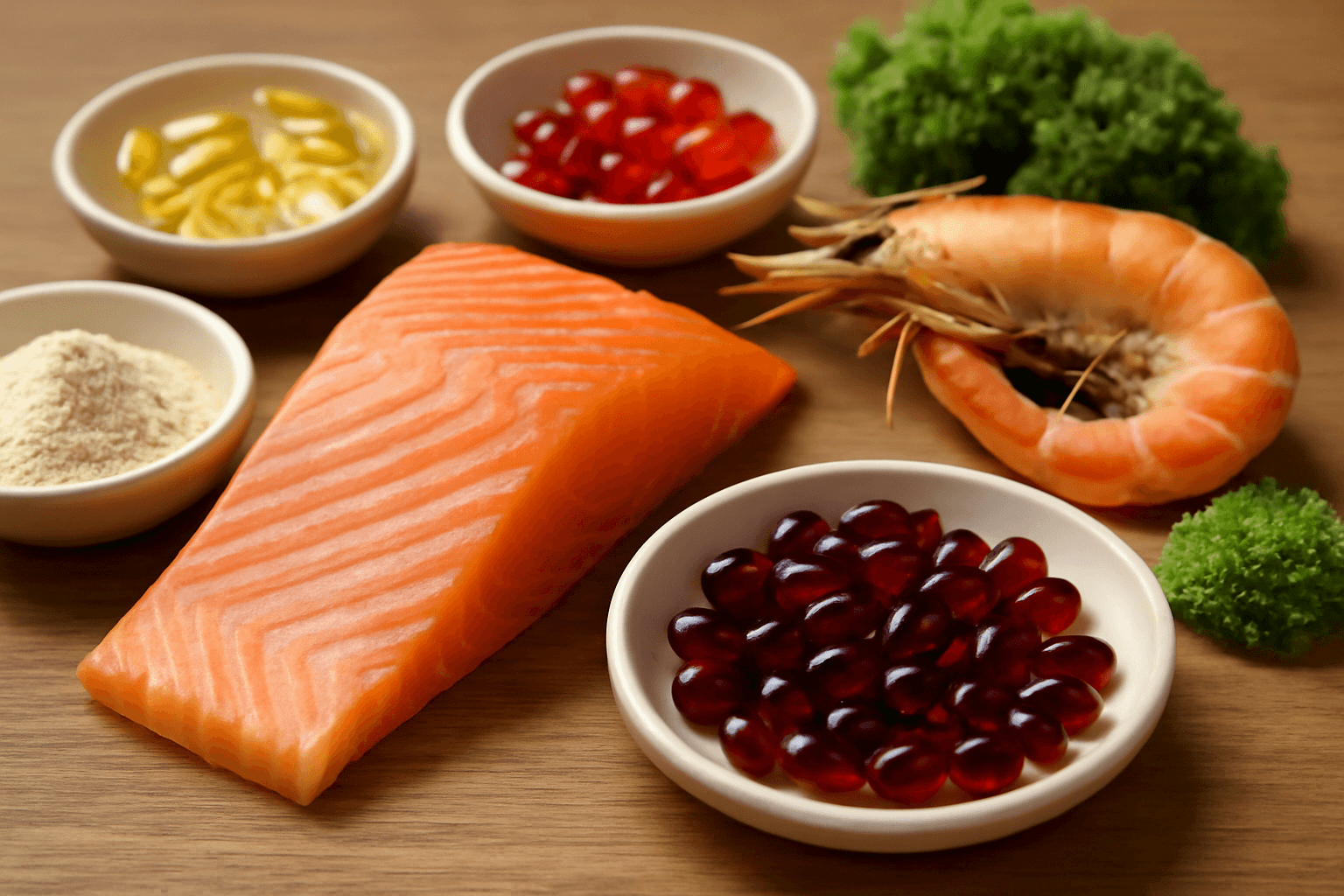
Astaxanthin is a powerful carotenoid pigment found in nature, abundant in salmon, shrimp, and green algae. Unlike other antioxidants such as vitamin A, vitamin C, and lycopene, astaxanthin has a unique molecular structure that penetrates through the entire cell membrane, delivering more powerful antioxidant effects. Its diverse health benefits—including blood sugar regulation, immune system enhancement, stress relief, and protein synthesis promotion—are increasingly supported by scientific research. This article comprehensively explores astaxanthin's sources, benefits, and potential side effects.
Sources
The primary natural sources of astaxanthin are marine organisms and microalgae. Salmon, trout, shrimp, and crayfish contain high concentrations of astaxanthin, with wild salmon containing 3 to 5 times more astaxanthin than farmed salmon. This is because the astaxanthin accumulates from the small crustaceans and algae they consume in their natural environment.
Microalgae, particularly Haematococcus pluvialis, is the most abundant natural source of astaxanthin. This algae accumulates astaxanthin as a protective mechanism in stressful environments and can produce approximately 40mg of astaxanthin per gram. Additionally, chlorella and spirulina and other green algae contain smaller amounts of astaxanthin and can be consumed in supplement form.
- Wild salmon: approximately 4.5mg per 100g
- Shrimp/crab: approximately 3-5mg per 100g
- Haematococcus algae: approximately 40mg per 1g
- Other seafood such as trout and mussels: contain small amounts
Production Methods
Commercial astaxanthin is produced through two main methods: chemical synthesis and natural extraction. Chemical synthesis is primarily based on petroleum-derived materials, offering low production costs and the ability for mass production. However, it produces a racemic mixture containing various stereoisomers rather than the natural form (3R,3'R-astaxanthin), resulting in lower absorption and utilization efficiency in the body.
Microalgae extraction
Recently, fermentation technology has also been developed as a production method. This approach uses specific bacteria or fungi to generate astaxanthin directly from simple sugars like glucose, and is gaining attention as a method that achieves both cost efficiency and natural sourcing.
Unique Characteristics
The most distinctive characteristic of astaxanthin is its molecular structure and scope of antioxidant action. While common carotenoids like beta-carotene or lycopene are located only in the lipid layer of the cell membrane, astaxanthin has polar ionic groups at both ends, allowing it to penetrate completely through the cell membrane. This enables it to perform antioxidant functions simultaneously outside the cell, within the cell membrane, and inside the cell.
In terms of antioxidant capacity, astaxanthin is measured to be approximately 550 times more powerful than vitamin C and about 110 times more powerful than vitamin E. Compared to lycopene, it is approximately 10 times more powerful as an antioxidant. This means it is particularly effective at protecting skin, eyes, brain, and blood vessels from free radicals.
Another characteristic is its fat solubility. Because astaxanthin dissolves in fat, its absorption rate is greatly improved when consumed with foods containing fat. Absorption rates can increase up to 10 times when consumed with olive oil, avocado, or nuts. This underscores the importance of proper diet composition.
Astaxanthin's unique strength: Its structure that penetrates the entire cell membrane enables it to perform antioxidant functions in all areas both inside and outside the cell.
Research on Efficacy
Antioxidant Effects and Immune Enhancement
Astaxanthin's antioxidant effects work as a mechanism to strengthen the immune system. In research published in 2014, participants who consumed 8mg of astaxanthin daily for 8 weeks showed a 40% increase in NK (natural killer) cell activity, with significantly improved cytokine production that regulates immune responses. It works by reducing damage to immune cells caused by free radicals, thereby enhancing the body's ability to combat pathogens.
Blood Sugar Regulation
Astaxanthin is effective at improving insulin sensitivity and stabilizing blood sugar levels. In a 2016 clinical study of 49 prediabetic patients who received 12mg of astaxanthin daily for 12 weeks, fasting blood glucose decreased by an average of 7.5%. Additionally, HOMA-IR, an insulin resistance marker, showed significant improvement. Astaxanthin was confirmed to work through mechanisms that protect pancreatic beta cell function and reduce inflammation.
Stress and Fatigue Relief
Astaxanthin shows significant improvement effects in both physical and mental stress situations. In research published in 2010, 20 office workers experiencing mental stress who consumed 12mg of astaxanthin daily for 4 weeks showed a 24% decrease in cortisol, a stress hormone. Additionally, fatigue scores improved by 32%, and sleep quality significantly improved. This is because astaxanthin optimizes mitochondrial energy production and suppresses inflammatory cytokines.
Protein Synthesis and Muscle Function
Astaxanthin promotes muscle recovery and protein synthesis following exercise. In a 2013 study of 30 men performing resistance training who received 4mg of astaxanthin daily for 8 weeks, strength gains were 12% higher compared to the placebo group. Additionally, creatine kinase, a marker of muscle damage, normalized more quickly, resulting in faster recovery. It works through mechanisms that reduce oxidative stress, thereby suppressing muscle breakdown and activating protein synthesis signals.
Eye Health and Anti-inflammatory Effects
Astaxanthin is effective at preventing eye diseases through its powerful anti-inflammatory effects. In a 2012 double-blind study, 30 participants experiencing eye strain from computer work who consumed 6mg of astaxanthin daily for 4 weeks showed a 54% reduction in eye fatigue, with significant improvement in dry eye symptoms. The effect of directly suppressing inflammation and oxidative stress that cause macular degeneration in the retina was confirmed.
- Recommended intake: 4-6mg for general health maintenance, 8-12mg for disease improvement
- Time for effects to appear: Effects typically observed after 4-8 weeks of consistent intake
- Absorption optimization: Absorption rate is maximized when consumed with fat
Side Effects and Drug Interactions
Common Side Effects
Astaxanthin is generally a safe ingredient, and no serious side effects have been reported in large-scale clinical studies. However, some individuals may experience minor side effects as follows.
- Digestive symptoms: Abdominal discomfort, diarrhea, constipation (with excessive intake)
- Skin changes: Skin may turn orange (carotenoid deposition)
- Allergic reactions: For products extracted from crustaceans, may be problematic for those with shellfish allergies
- Reduced libido: Extremely rare, reported with very high-dose intake
Drug Interactions
Astaxanthin may interact with certain medications and caution is necessary. For those taking blood thinners (warfarin, clopidogrel), astaxanthin's anticoagulant properties may increase bleeding risk. For those using diabetes medications (metformin, insulin), astaxanthin may further lower blood sugar, creating a risk of hypoglycemia.
Organ transplant patients taking immunosuppressants (cyclosporine, tacrolimus) face a risk that astaxanthin may strengthen the immune system, increasing the risk of transplant organ rejection. For those with a history of hormone-sensitive cancers (breast cancer, uterine cancer), astaxanthin's hormone-regulating effects may have an impact.
For those who are pregnant or breastfeeding, it is recommended to consult with a healthcare professional before consumption, as sufficient safety data is not currently available. If surgery is planned, it is safe to discontinue astaxanthin intake two weeks before the procedure.
Medical professional consultation is essential: If you are currently taking medications or have underlying health conditions, be sure to consult with your doctor before beginning astaxanthin supplementation.
Conclusion
Key Takeaways
Astaxanthin is a powerful carotenoid with efficacy far surpassing other antioxidants such as vitamin C, vitamin A, and lycopene. Due to its unique molecular structure, it performs antioxidant functions in all areas both inside and outside cells, providing diverse health benefits including blood sugar regulation, immune enhancement, stress relief, and promotion of protein synthesis.
Practical tips for optimal results: Consistently consume 4-12mg daily through seafood or green algae-based supplements, and always take it with foods containing fat to maximize absorption rates. It is appropriate to evaluate results after 4-8 weeks of consistent intake.
However, if you are taking blood thinners, diabetes medications, or immunosuppressants, or have certain health conditions, you must consult with a healthcare professional before consumption. Remember that astaxanthin is a supplement to existing medical treatment, not a replacement for it.
Additional Considerations
When selecting products, natural extraction (Haematococcus-based) products are recommended over chemically synthesized versions. Products labeled "natural astaxanthin" or "Haematococcus pluvialis extract" on the package provide higher bioavailability. Also check the product's content and expiration date, and choose products manufactured by reputable companies.
To maximize the diverse benefits of astaxanthin, it is important to take it long-term alongside a balanced diet, regular exercise, and adequate sleep. Select an appropriate dosage and form based on your individual health status, potential drug interactions, and desired health improvement goals.