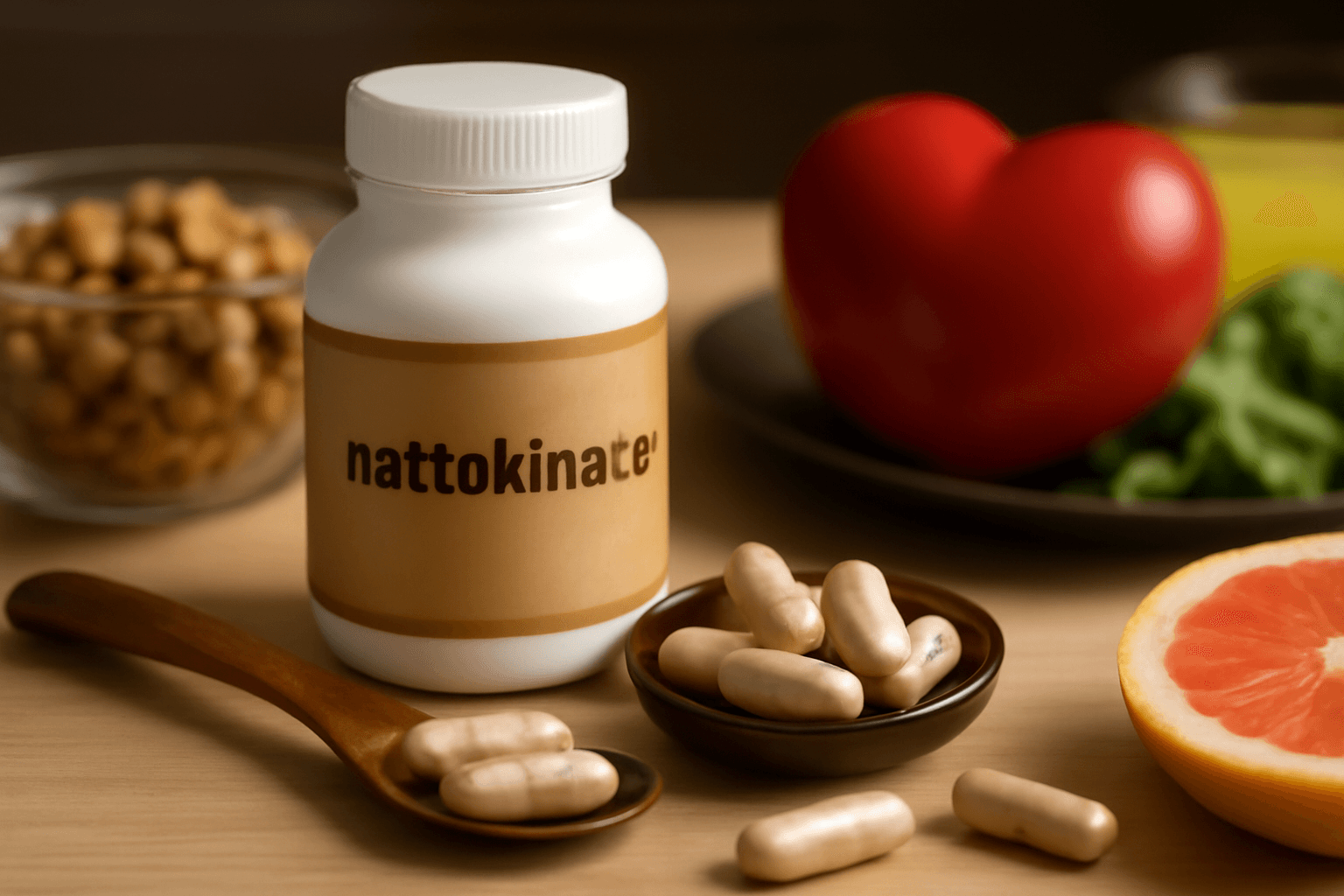
Nattokinase is a powerful protein-degrading enzyme found in natto (納豆), a traditional fermented food from Japan. It has recently garnered attention in the health supplement market for its potential to support cardiovascular health and improve blood circulation. This article will examine the definition of nattokinase, its scientific benefits, safety profile, and important considerations for actual use in detail.
What is Nattokinase?
Nattokinase is a serine protease enzyme produced by the bacterium Bacillus subtilis. This enzyme is naturally generated during the fermentation process of making natto as the bacteria break down soybeans. It was first discovered in 1987 by a professor at Miyazaki University in Japan, and decades of research have since been conducted to clarify its relationship to cardiovascular health.
Nattokinase is known to be the only dietary enzyme that directly breaks down fibrin, a protein that plays an important role in blood clot formation. This characteristic of the enzyme is deeply related to blood coagulation mechanisms. With a molecular weight of approximately 27 kDa (kilodaltons) and stability in acidic environments, it can pass through the digestive tract—a major advantage as a supplement.
One hundred grams of natto contains approximately 2,000–8,000 FU (Fibrin Units) of nattokinase. Typical supplements concentrate this and provide doses of 2,000–2,500 FU. As a fermented food, natto also contributes to digestive health, and natto itself contains additional beneficial components such as vitamin K2 and isoflavones.
Benefits of Nattokinase Supplements
Cardiovascular Health and Improved Blood Circulation
The most notable benefit of nattokinase is its support for cardiovascular health. A meta-analysis published in 2015 found that participants who took nattokinase supplements for eight weeks or longer showed significant improvements in blood viscosity measurements. In particular, blood fibrinogen levels decreased by an average of 5.9%, which is a positive indicator for reducing the risk of blood clot formation.
In multiple clinical trials conducted in Japan, hypertensive patients who consumed 2,000 FU of nattokinase twice daily showed a reduction in systolic blood pressure by an average of 5.5 mmHg and diastolic blood pressure by 2.8 mmHg after eight weeks. While modest, these figures are statistically significant and are interpreted as improvements in endothelial function and vasodilation.
Improved Blood Cholesterol Levels
Nattokinase indirectly positively affects cholesterol metabolism through its protein-degrading effects. In a study published in the Journal of Nutrition and Metabolism in 2009, the group taking nattokinase supplements showed an average 11% decrease in LDL cholesterol and a 7.3% decrease in triglycerides after eight weeks. While HDL cholesterol showed no significant change, an overall improvement in the lipid profile was observed.
These results support the hypothesis that nattokinase may help remove protein deposits that accumulate on blood vessel walls. In particular, epidemiological data shows that populations in Japan's traditional diet who regularly consume natto have lower incidence rates of cardiovascular disease.
Antioxidant and Anti-inflammatory Effects
As a fermented food, natto naturally contains antioxidant substances. Natto, from which nattokinase supplements are derived, is rich in isoflavones and phenolic compounds, which can mitigate cellular damage caused by oxidative stress. According to research, people taking nattokinase tend to show decreased levels of 8-isoprostane, a blood oxidative stress marker.
The anti-inflammatory effects should not be overlooked. The improvement in blood quality resulting from fibrin removal is associated with reduced chronic low-grade inflammation. Since chronic inflammation is a risk factor for atherosclerosis, heart disease, and stroke, these anti-inflammatory effects have important implications for long-term health maintenance.
Enhanced Aerobic Exercise Performance
Improved blood circulation can increase oxygen delivery efficiency and enhance aerobic exercise performance. In small-scale studies with athletes, those taking nattokinase supplements showed less blood lactate accumulation after exercise and shorter recovery times. This is associated with improved blood circulation and oxygen transport capacity.
However, these exercise performance improvements are based on limited research in healthy adults and should not be considered a substitute for intensive training programs. It is appropriate to understand this as a supplementary health management measure.
Is Nattokinase Supplement Safe?
General Safety Profile
Nattokinase is generally considered a safe ingredient. It has been consumed as an everyday food in Japan for over 50 years, and in supplement form has been used worldwide since the 1990s. The FDA has not classified nattokinase as GRAS (Generally Recognized As Safe), but permits its use as a food ingredient.
In most clinical trials, adverse effects were very rare. Common side effects, if any, are gastrointestinal-related symptoms such as abdominal discomfort, diarrhea, or mild digestive upset. These symptoms are usually resolved by reducing the dose or taking it with food. Serious adverse reactions are reported to be extremely rare in the international literature.
Drug Interactions and Precautions
Medical consultation is essential if you are taking anticoagulants or antiplatelet medications. If you are taking warfarin, clopidogrel, aspirin, or similar medications, the blood circulation-improving effects of nattokinase may enhance the medication's action. In theory, there is a possibility of excessive anticoagulation, so you must consult with your healthcare provider before deciding whether to use nattokinase.
People taking blood pressure medications should also be cautious. Nattokinase may have blood pressure-lowering effects, so combining it with blood pressure medications could increase the risk of hypotension. Those with already low blood pressure or those who have recently had their blood pressure medication dosage adjusted should take it only under the guidance of a healthcare professional.
If you have an upcoming surgery, it is recommended to discontinue nattokinase one to two weeks before the procedure. The anticoagulant effects could increase the risk of bleeding during surgery.
Considerations for Specific Populations
For pregnant or nursing women, safety data is limited, so it is best to avoid taking nattokinase. The same applies to children, as there is insufficient research data. People with blood clotting disorders (such as hemophilia) should not take it without prior medical approval.
Long-term safety data for high-dose supplementation (4,000 FU or more per day) is limited. Adhering to the standard recommended dose of 2,000–2,500 FU per day is safest.
Product Quality and Selection Criteria
Nattokinase supplements on the market may vary in quality depending on the manufacturer. Consider the following when selecting a product:
- FU (Fibrin Units) Specification: The product should clearly display the enzyme's activity level.
- Third-party Verification: Products certified by independent verification bodies such as NSF, USP, or ConsumerLab have higher credibility.
- Country of Origin and Manufacturer: While Japan is the standard origin, verify that the manufacturer is trustworthy in its region.
- Storage Conditions: Since this is an enzyme, some products require refrigeration. Follow the product instructions.
- Additives: Choose products with minimal unnecessary additives.
Usage and Dosage
The typical recommended dose is 2,000 FU per day, taken once or divided into two doses. Taking it on an empty stomach may cause gastrointestinal discomfort, so it is best to take it with food or within 30 minutes after eating. However, interactions with foods high in vitamin K (such as spinach and broccoli) are known to be minimal.
It generally takes four to twelve weeks to notice effects. It is important not to arbitrarily increase or discontinue the dose prematurely. It is recommended to evaluate effects after taking it regularly for at least eight weeks.
Conclusion and Summary
Nattokinase supplements are a science-based ingredient that can support cardiovascular health and improve blood circulation. Through decades of epidemiological research and clinical trials, much of its safety and efficacy has been substantiated. Key benefits confirmed include reduced blood viscosity, improved blood pressure, improved cholesterol levels, and antioxidant and anti-inflammatory effects.
Key Points Summary:
- Nattokinase is a fibrin-degrading enzyme derived from the fermented food natto, a substance specialized in improving blood circulation.
- While generally safe, medical consultation is essential for those taking anticoagulants or those with blood clotting disorders.
- Serious side effects are rare at standard doses (2,000–2,500 FU per day).
- At least 8–12 weeks of regular use is needed to evaluate effectiveness.
- It may be particularly beneficial for adults over 40 with high blood pressure, elevated cholesterol, or high thrombotic risk.
- Most effective when combined with healthy eating habits, regular aerobic exercise, and stress management rather than as a standalone treatment.
- When selecting a product, verify FU content specification, third-party verification, and manufacturer credibility.
Nattokinase is a modern health supplement derived from a traditional fermented food with promising potential for cardiovascular disease prevention and health maintenance. However, individual differences vary greatly depending on existing health status and medication use, so please consult with a healthcare professional before starting to make an informed decision suited to your personal health situation.