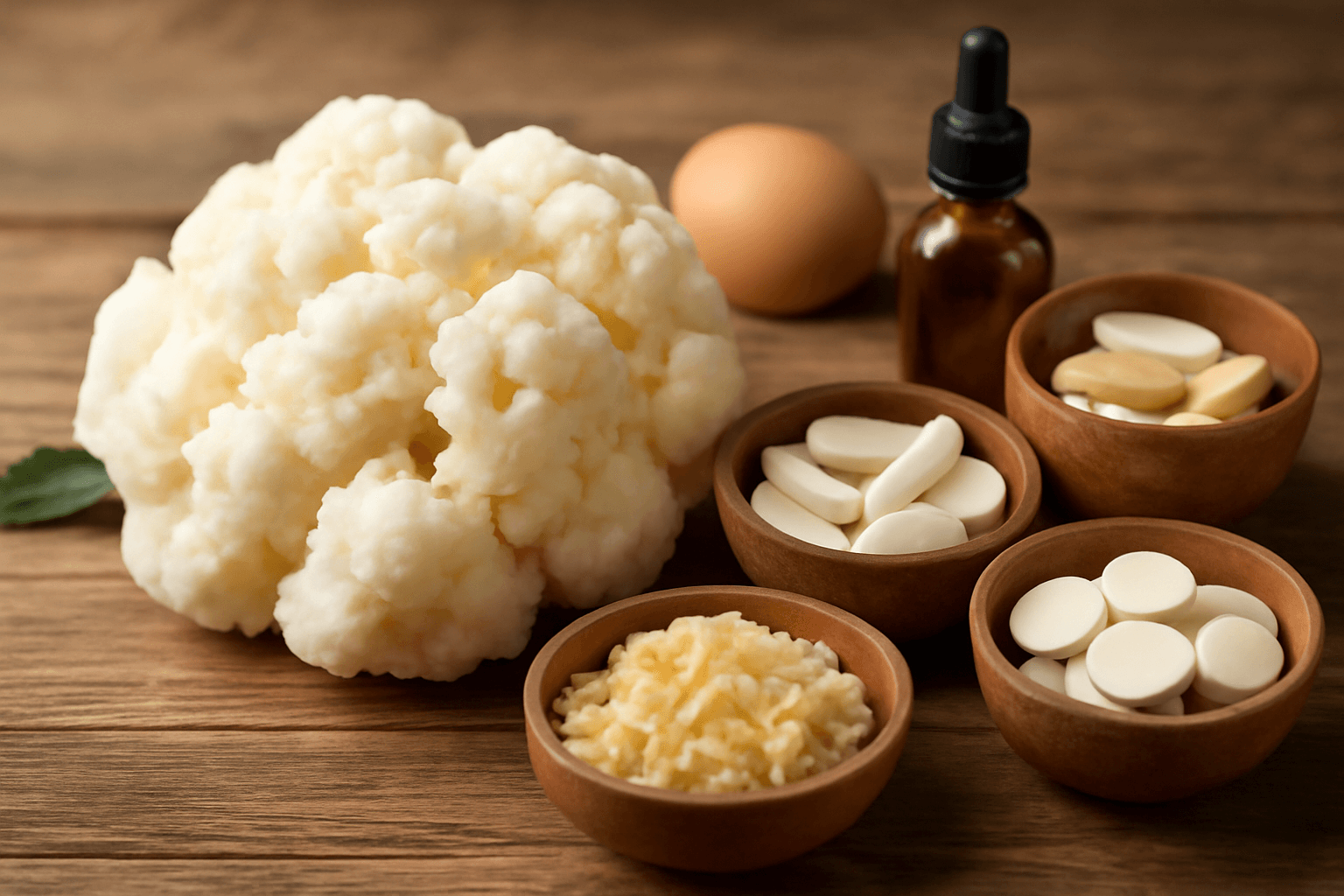
Turkey Tail is a basidiomycete fungus that has been used as a traditional food ingredient in Asia for thousands of years. Named for its distinctive white, cloud-like appearance, this mushroom has recently been proven through scientific research to enhance immunity, improve digestive health, and serve as a protein source. In particular, its potential use as a fermented food containing both probiotics and prebiotics has garnered attention, and with advances in mycelium cultivation technology, it is being developed as a raw material for various functional foods and pharmaceuticals. In this article, we will examine the biological characteristics of Turkey Tail, its major benefits, and how it can be applied to our health.
What is Turkey Tail?
Turkey Tail (Trametes versicolor) is a white-rot fungus that decomposes wood and grows naturally on dead oak and birch trees in temperate regions worldwide. In traditional Chinese medicine, it is called "Yunzhi (雲芝)" or "Lingzhi," and has been used as a major ingredient in traditional medicine in China and Japan. The mushroom cap features various colored bands in red, black, white, and brown, giving it an appearance as if painted with multiple colors.
The most notable characteristic of Turkey Tail is its polysaccharide content. In particular, it contains beta-glucan, an immune-active polysaccharide, at levels of 15-30%, making it effective for strengthening the immune system. Research shows that Turkey Tail's beta-glucan increases the activity of natural killer cells (NK cells) and macrophages, strengthening the body's defenses. Additionally, it is rich in essential minerals such as calcium, iron, zinc, and selenium, and contains all eight essential amino acids among 18 types of amino acids, making it highly valuable as a premium protein source.
Turkey Tail also has potential as a fermented food. Rich in natural microorganisms and enzymatic components inherent to the mushroom, the fermentation process promotes the proliferation of probiotics (beneficial microorganisms) while simultaneously serving as prebiotics (substances that promote microbial growth). This plays an important role in maintaining the balance of the intestinal microbiota ecosystem and improving digestive health.
Key Components and Benefits of Turkey Tail
The core active components contained in Turkey Tail are as follows:
- Beta-glucan (β-glucan): Binds to immune cell receptors to trigger immune responses, with 1,3-1,6 beta-glucan particularly showing reported anticancer activity.
- Various polysaccharides: Including heteropolysaccharides and mannans, which exhibit anti-inflammatory and antioxidant effects.
- Polyphenols: Provide powerful antioxidant action that protects cells from damage.
- Triterpenoids: Help improve liver health and regulate cholesterol.
- Nucleic acid derivatives: Promote protein synthesis and assist in cell regeneration.
Studies from the U.S. National Cancer Institute and numerous clinical trials in Japan have shown that Turkey Tail extract helps improve quality of life in cancer patients and particularly contributes to alleviating side effects of chemotherapy. In one study, the group receiving Turkey Tail polysaccharide extract showed a rate of 70% or higher in maintaining normal white blood cell counts.
Health Benefits of Turkey Tail for the General Public
Beyond cancer treatment, Turkey Tail is also effective for maintaining health in healthy individuals. Key areas of interest include restoring immunity compromised by chronic stress, preventing seasonal infections, and improving digestive health.
Relationship with Gut Health: The dietary fiber and oligosaccharide components contained in Turkey Tail exhibit prebiotic effects that promote the growth of beneficial gut bacteria. Simultaneously, probiotics such as lactic acid bacteria and yeast generated during fermentation help maintain a healthy microbial balance in the digestive system.
Additionally, Turkey Tail's protein content reaches approximately 25-30% on a dry weight basis, which is comparable to the protein content of meat (approximately 20%). Therefore, it can serve as an excellent food ingredient for vegetarians or those requiring protein supplementation.
Turkey Tail Mycelium
Mycelium is the invisible root structure of mushrooms—thread-like cellular structures that grow while decomposing substrates such as wood. With Turkey Tail, advances in mycelium cultivation technology have made more efficient extraction of active components possible compared to naturally cultivated mushrooms.
Advantages of Mycelium Cultivation Technology
Traditionally, Turkey Tail grew naturally on wood or was cultivated on wood chips for harvest. This method had issues including a cultivation period exceeding six months and unstable yields. However, modern laboratory cultivation technology has overcome these limitations.
- Short-term cultivation possible: Using liquid cultivation methods, sufficient mycelial biomass can be obtained within 4-8 weeks.
- Consistent quality assurance: By standardizing temperature, humidity, and nutrients, the same level of active component content is maintained batch to batch.
- High beta-glucan content: Mycelium cultivated under optimal conditions exhibits beta-glucan content 2-3 times higher than natural mushrooms (40-50%).
- Efficient extractability: Mycelium has thin cell walls, making extraction of active components easy and bioavailability high.
- Sustainability: Using agricultural byproducts (rice bran, barley bran, etc.) instead of wood substrate is environmentally friendly.
Manufacture and Application of Mycelium Extracts
Turkey Tail mycelium extracts are primarily manufactured in the following way: cultivated mycelium is first dried and ground, then active polysaccharides are extracted through high-temperature, high-pressure extraction (hot water extraction, ethanol extraction) or enzymatic decomposition. The resulting extract is processed into concentrated liquid, powder, and tablet forms for use as functional food, pharmaceutical, and cosmetic ingredients.
Pharmaceuticals such as Krestin (PSK) and Lentinan from Japan were developed with Turkey Tail mycelium extract as the main component and have been used clinically as cancer adjuvant therapy for over 50 years. In Korea, mycelium cultivation technology has been commercialized since the 2010s, with numerous functional food products launched.
Probiotic and Prebiotic Characteristics of Mycelium
Interestingly, Turkey Tail mycelium fermentation products simultaneously exhibit characteristics of probiotics and prebiotics. During the cultivation process, lactic acid bacteria and yeast naturally establish themselves, and their metabolic products become organic acids including lactic acid. Simultaneously, the oligosaccharides and polysaccharides contained in mycelium promote the growth of additional beneficial microorganisms.
Synergistic Fermentation Effects: When Turkey Tail mycelium is fermented, bioavailability of beta-glucan improves by 30-50% due to changes in its form, while simultaneously enabling a dual effect of increased intestinal microbial diversity.
Recently, a research team at a Korean university reported that when Turkey Tail mycelium fermentation product was administered to constipated experimental mice, the number of beneficial intestinal bacteria (Bacteroides, Faecalibacterium, etc.) increased by 40%. This suggests the potential for Turkey Tail mycelium to be utilized not merely as a functional food, but as a functional fermented food.
Precautions When Selecting Mycelium Products
The quality of Turkey Tail mycelium products sold on the market varies greatly. When selecting a product, check the following:
- Beta-glucan content labeling: Verify that the product contains at least 20% beta-glucan. Some low-cost products do not label their content.
- Source of raw materials: Verify that it is explicitly stated to be mycelium rather than Turkey Tail fruiting body.
- Manufacturing method: Products made through high-temperature, high-pressure extraction or enzymatic decomposition have higher bioavailability.
- Third-party verification: Products that have undergone component verification by independent laboratories are more trustworthy.
- GMP certification: Choose products that follow pharmaceutical-level manufacturing standards.
Practical Applications of Turkey Tail
Use as a Food
Turkey Tail can be consumed in various ways. The most traditional method is decoction. Add 10-15g of dried Turkey Tail to one liter of water and boil for 45 minutes or longer, consuming 2-3 times daily. This allows water-soluble polysaccharides to dissolve into the water for efficient absorption.
Adding Turkey Tail to Korean traditional broth dishes is also a good method. Adding 5-10g of dried Turkey Tail to samgyetang, yukgaejang, and various broth dishes adds flavor while simultaneously delivering health components. In Chinese cuisine, "Yunzhi Tang (雲芝湯)" is famous, using Turkey Tail to remove moisture.
Consumption as a Functional Food
Powders, tablets, and liquid products offer more convenient consumption methods. Typical consumption methods and dosages are as follows:
- Powder products: Mix 3-5g per serving with warm water and consume 1-2 times daily
- Tablets/capsules: Varies by product, but typically 3-5 tablets per serving, 1-2 times daily
- Liquid extract: Mix 10-20ml per serving with water and consume 1-2 times daily
- Fermented products: For yogurt-type products, one pack (100ml) daily is recommended
To see results, it is important to consume consistently for a minimum of three months. Changes to the immune system are not immediate, and this duration is necessary for the body to adapt and show changes.
Lifestyle Habits to Practice Alongside
To maximize the effects of Turkey Tail, the following lifestyle habits should be practiced together:
- Regular exercise: 3-4 times per week, 30 minutes or more of aerobic exercise each time to build immune foundations.
- Adequate sleep: Since the immune system is primarily strengthened during deep sleep, 7-9 hours of sleep is important.
- Diverse dietary fiber intake: Consuming sufficient vegetables, fruits, and whole grains alongside Turkey Tail increases intestinal microbial diversity.
- Stress management: Reducing stress through meditation and yoga improves immune function.
- Hydration: Consuming 2 liters or more of water daily promotes metabolism.
Precautions and Side Effects When Consuming Turkey Tail
Turkey Tail is generally safe, but caution is needed in certain situations.
Side Effects
While Turkey Tail is safe for most people, the following side effects have been reported:
- Digestive discomfort: Upon initial consumption, abdominal bloating and mild diarrhea may occur. This is a normal response as the intestinal microbiota adapts, and can be alleviated by reducing the dose and gradually increasing it.
- Allergic reactions: People sensitive to fungi may experience hives, difficulty breathing, and other reactions.
- Drug interactions: If taking immunosuppressants or anticoagulants, consult a doctor before consuming.
Contraindications
In the following cases, consumption should be done under medical professional guidance:
- Patients undergoing chemotherapy or radiation therapy: possibility of unexpected reactions from immune stimulation
- Patients with autoimmune diseases (lupus, rheumatoid arthritis, etc.): risk of excessive immune stimulation
- Organ transplant recipients taking immunosuppressants: potential increased risk of graft rejection
- Those with severe fungal infections: mycelium products may worsen infection
- Pregnant and nursing women: insufficient safety data
Cases Requiring Medical Consultation
If you are considering consuming Turkey Tail or mycelium products, please consult your physician or herbalist in the following cases:
- Currently taking prescription medications
- Having a diagnosed illness
- Planning long-term consumption for three months or longer
- Previous allergic reactions to mushrooms
Scientific Evidence and Clinical Research
Major Research Findings
Scientific evidence for Turkey Tail's efficacy is substantial. In a 2016 meta-analysis published by Yao et al. from China, cancer patients receiving Turkey Tail polysaccharide extract (PSP) showed a 1.5-2 fold extension in survival period. However, this result was from use as a supplement alongside standard treatment.
In a Japanese clinical trial (2012), the intestinal microbiota of 100 healthy adults who received Turkey Tail mycelium fermentation product for 24 weeks was analyzed. As a result, beneficial bacteria numbers increased by an average of 36% compared to the control group, and immunoglobulin A (IgA) production also improved by 25%.
Latest Korean Research (2022): In a study from a medical college in Seoul, researchers elucidated the mechanism by which beta-glucan in Turkey Tail mycelium extract strengthens the barrier function of large intestinal epithelial cells. This proves that improvements in gut health are based on biological mechanisms rather than mere anecdotal evidence.
Verified Mechanisms
The mechanisms of Turkey Tail's action revealed through modern immunological research are as follows:
- TLR (Toll-like receptor) activation: Beta-glucan binds to TLR2 and TLR6 on immune cell surfaces to activate the body's defense response.
- Complement system activation: Stimulates the complement cascade, another major pathway of immune response, to increase pathogen elimination efficiency.
- Cytokine generation promotion: Increases production of inflammatory signaling molecules such as IL-6 and TNF-α to organize immune response.
- Intestinal mucosa strengthening: Strengthens tight junctions between intestinal epithelial cells to prevent leaky gut syndrome.
Summary
Turkey Tail is a food ingredient with both thousands of years of historical use and modern scientific validation. Key points to summarize are as follows:
- Nutritional value: A high-nutrition food containing 25-30% protein and abundant minerals, with beta-glucan, an immune-active substance, present at 15-30% levels.
- Importance of mycelium technology: Modern cultivation technology produces products with 2-3 times higher active component content than natural mushrooms, with short-term cultivation possible in 4-8 weeks.
- Dual benefits: Contains both probiotics and prebiotics simultaneously, contributing to improved intestinal microbial balance as a fermented food.
- Time to realize effects: Consistent consumption for a minimum of three months is necessary, and should be accompanied by lifestyle improvements such as regular exercise and adequate sleep.
- Safety: Safe for most people, but should be consumed only after consulting a doctor if undergoing cancer treatment or have autoimmune disease.
- Product selection criteria: Choose trustworthy products by verifying beta-glucan content labeling, source of raw materials, and GMP certification status.
Turkey Tail is a supplementary health management tool, not a pharmaceutical. For disease treatment or diagnosis, professional medical consultation and prescription are essential. Its value lies in long-term use as a supplement for health maintenance purposes alongside improved lifestyle habits. Particularly as a nature-friendly approach to address immunity decline caused by modern stress and irregular living patterns, and for those seeking to improve gut health, it is certainly worth consideration as a food ingredient.


