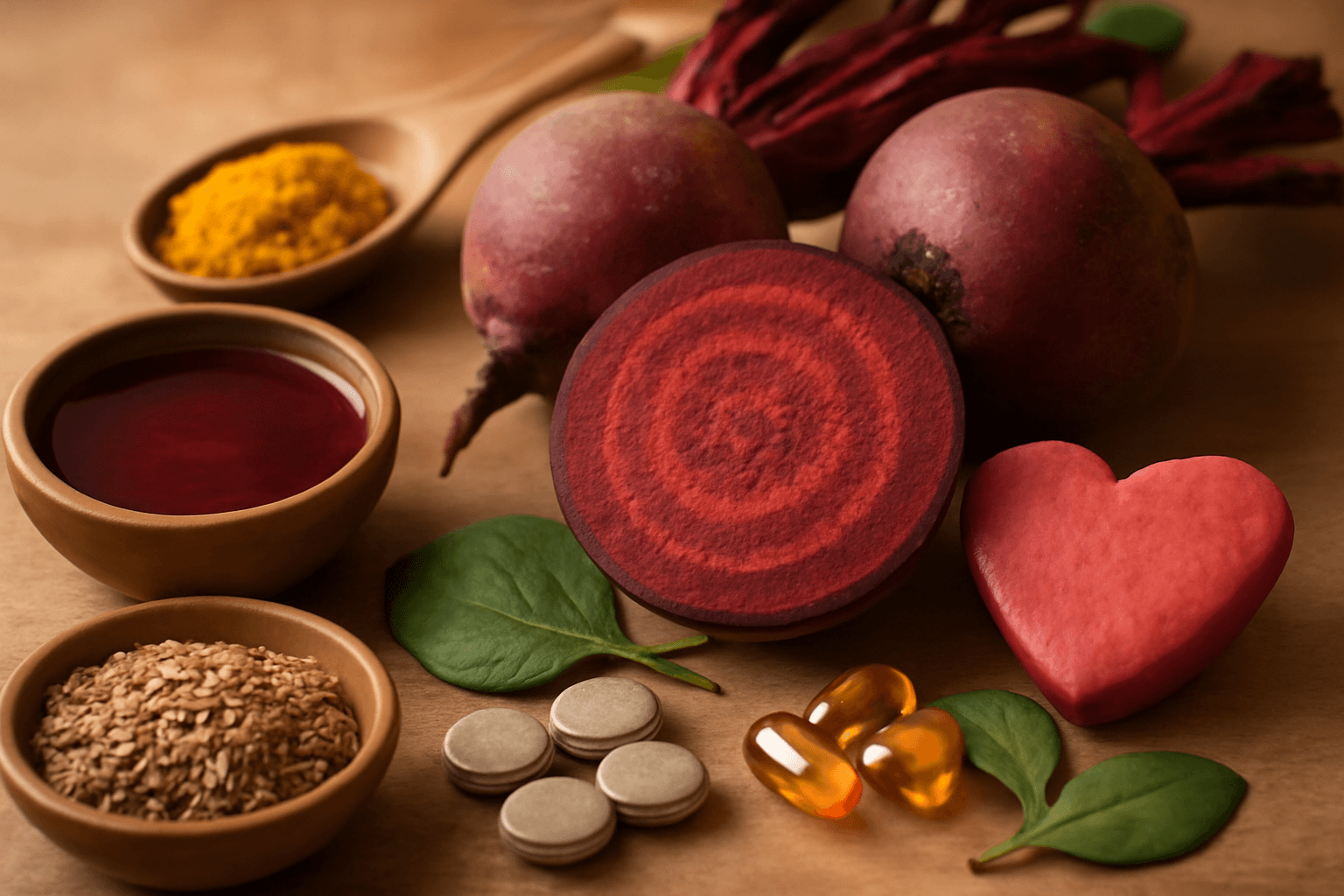
Beets are root vegetables renowned for their deep purple color, and they serve as far more than just a delicious ingredient—they're a powerful guardian of heart health. Rich in unique bioactive compounds like nitrates, betaine, and polyphenols, beets offer a variety of health benefits ranging from improved vascular function and blood pressure management to reduced inflammation and even enhanced athletic performance. In this article, let's explore the specific mechanisms by which beets promote heart health, backed by scientific evidence.
Beets Packed with Abundant Nutrients
Per 100g of beets, you get 43 kcal, 9.6g of carbohydrates, and 1.7g of protein. What's particularly noteworthy is the composition of minerals and vitamins. Magnesium is essential for muscle relaxation and nerve transmission, while iron directly participates in red blood cell formation. Vitamin C (approximately 6.2mg per 100g) and B vitamins (including folate) work together to strengthen the antioxidant system.
Beets' most special component is betaine, which is effective at lowering homocysteine levels. Homocysteine is a toxic amino acid that causes blood vessel damage, and elevated levels increase the risk of cardiovascular disease. Additionally, the polyphenol-based antioxidants found in beets:
- Neutralize free radicals that cause cellular damage
- Maintain the health of blood vessel endothelial cells
- Suppress inflammatory responses
- Improve the balance of gut microbes during digestion
The dietary fiber in beets (approximately 2.8g per 100g) not only promotes digestive health but also lowers the glycemic index, preventing sudden spikes in blood sugar. This is particularly important for managing cardiovascular health in diabetic patients.
The Key to Promoting Heart Health: Vascular Function
The cornerstone of beets' heart health benefits lies in their nitrate content. The inorganic nitrates found in beets are converted into nitric oxide (NO) in the body, a signaling molecule that promotes blood vessel dilation. According to research published in the American Heart Association journal in 2015, participants who consumed beet juice showed an average 20% improvement in vascular reactivity.
The improvement in vascular function operates through the following mechanisms:
- Blood vessel endothelial cell activation: Nitric oxide relaxes smooth muscle, widening blood vessels
- Improved blood flow: Reduced resistance lessens the heart's workload
- Increased oxygen supply: Efficient oxygen delivery to tissues throughout the body
- Inhibited platelet aggregation: Reduced risk of blood clot formation
Particularly noteworthy is the fact that these benefits from beets appear within 2-3 hours of consumption. This is why athletes drink beet juice before competition—to take advantage of these immediate vasodilatory effects. Patients with chronic conditions can also expect cumulative benefits through regular consumption.
Cholesterol Improvement and Lipid Metabolism
Betaine and polyphenols in beets normalize the liver's lipid metabolism. Research shows that people who regularly consume beets experienced an average 6-10% reduction in LDL cholesterol (bad cholesterol) levels. In particular, betaine donates a methyl group, converting homocysteine to methionine, a process that regulates the liver's cholesterol synthesis.
The dietary fiber in beets, especially soluble fiber, binds bile acids so they're excreted in the intestines. As a result, the liver must use more cholesterol to produce new bile acids, naturally lowering blood cholesterol concentration.
Practical tip: Consuming beets raw or lightly cooked minimizes the loss of dietary fiber. Since beet juice has the fiber removed, it's ideal to combine beet juice with whole beet consumption.
What's notable is that beets' antioxidants prevent the oxidation of LDL cholesterol. Since oxidized LDL is a major cause of plaque formation on blood vessel walls, inhibiting this process directly contributes to preventing atherosclerosis.
The Science of Blood Pressure Improvement
High blood pressure is the most significant risk factor for cardiovascular disease. Beets' nitrates address this problem physiologically. In a 2013 meta-analysis from the Hypertension journal, the nitrate-rich food consumption group showed an average systolic blood pressure reduction of 4-5 mmHg. While there are individual variations, consistent consumption over several weeks can yield greater effects.
The mechanism of blood pressure improvement is multifaceted:
- Blood vessel relaxation: Smooth muscle relaxation induced by nitric oxide
- Sympathetic nerve suppression: Betaine regulates neurotransmitter balance
- Potassium content: The potassium in beets (approximately 305mg per 100g) promotes sodium excretion
- Inflammation reduction: Anti-inflammatory action of polyphenols
Beets are particularly recommended for people in the prehypertension stage as a lifestyle modification strategy before pharmaceutical intervention. Daily consumption of 200-250ml of beet juice can also be effective as an adjunct to medication therapy. However, if someone is already taking blood pressure medication, excessive beet consumption could cause hypotension, so medical consultation is essential.
Inflammation Relief and Prevention of Chronic Disease
One of the root causes of cardiovascular disease is chronic low-grade inflammation. The betaine and polyphenols in beets reduce TNF-α and IL-6, which are inflammatory markers. According to a comprehensive analysis of studies published in a 2018 Nutrition Review, the beet consumption group showed an average 15-20% reduction in inflammatory markers.
The anti-inflammatory effects of beets also extend to joint health. Betaine promotes the production of hyaluronic acid, which protects cartilage and serves as a lubricant in joints. In a small study of rheumatoid arthritis patients, beet extract consumption reduced joint swelling by 24%.
The type of antioxidant is also important. Betalain, found in beets, is a unique pigment compound rarely found in other vegetables, with powerful antioxidant and anti-inflammatory properties:
- Elimination of reactive oxygen species (ROS)
- Protection of mitochondrial function
- Improvement of cellular signaling pathways
- Suppression of age-related inflammation (inflammaging)
Digestive health also plays an important role in inflammation management. The dietary fiber in beets serves as food for beneficial bacteria in the gut, increasing microbial diversity, which leads to strengthened intestinal lining and suppression of unnecessary inflammatory responses.
Enhanced Athletic Performance and Heart Function
When oxygen demand in the heart and muscles increases during exercise, beets' nitrates maximize oxygen delivery efficiency. According to a meta-analysis in the Journal of Sports Nutrition, athletes who consumed beet juice before exercise showed an average 3-5% improvement in athletic performance. This is a meaningful improvement rate particularly for endurance sports like marathons and cycling.
The physiological mechanism behind this effect is as follows:
- Increased muscle oxygen utilization efficiency: Improved mitochondrial oxidative phosphorylation
- Delayed lactate accumulation: Extended time to fatigue onset
- Increased blood flow: Greater oxygen and nutrient delivery
- Optimized cardiac output: Reduced heart rate at the same intensity
This benefit is also useful for the general population. When people engaging in regular physical activity consume beets, they can burn more calories in the same amount of exercise time, which translates to improved heart health and better weight management. In particular, when people middle-aged and older drink beet juice before walking or light jogging, the cardiovascular benefits of exercise can be enhanced.
Beyond athletic performance improvement, beets also facilitate post-exercise recovery. Their antioxidants alleviate oxidative stress from intense exercise and quickly reduce inflammation, preparing the body for the next workout session.
Summary: Managing Heart Health with Beets
Beets aren't a single-component medication but rather a complex of multiple bioactive substances that simultaneously act on various aspects of heart health. Here's a summary of the key points:
- Nutrient content: Good source of magnesium, iron, vitamin C, B vitamins, and dietary fiber
- Vascular function: Blood vessel dilation through nitric oxide generation from nitrates
- Lipid metabolism: LDL cholesterol reduction through betaine
- Blood pressure regulation: Expected systolic blood pressure reduction of 4-5 mmHg
- Anti-inflammatory action: Broad anti-inflammatory effects of betalains and polyphenols
- Athletic performance: 3-5% improvement in endurance exercise performance
Practical consumption method: It's ideal to consume one medium-sized beet or 200ml of beet juice 3-4 times per week. You can consume beets in various forms—raw beet salad, roasted beets, beet soup, or beet juice. Raw beets minimize nutrient loss, while slight heat treatment (steaming or roasting) can increase certain antioxidants.
Medical precautions: Those with a history of kidney stones, oxalate sensitivity, low blood pressure, or those currently taking blood pressure medication should consult their healthcare provider before consuming large amounts. Pregnant women should also avoid excessive beet consumption. Beets are a supplementary food and are not a replacement for medical treatment.
When a healthy diet including beets, regular exercise, stress management, and adequate sleep come together, optimal cardiovascular health can be achieved. Start incorporating beets into your heart health management strategy right now.