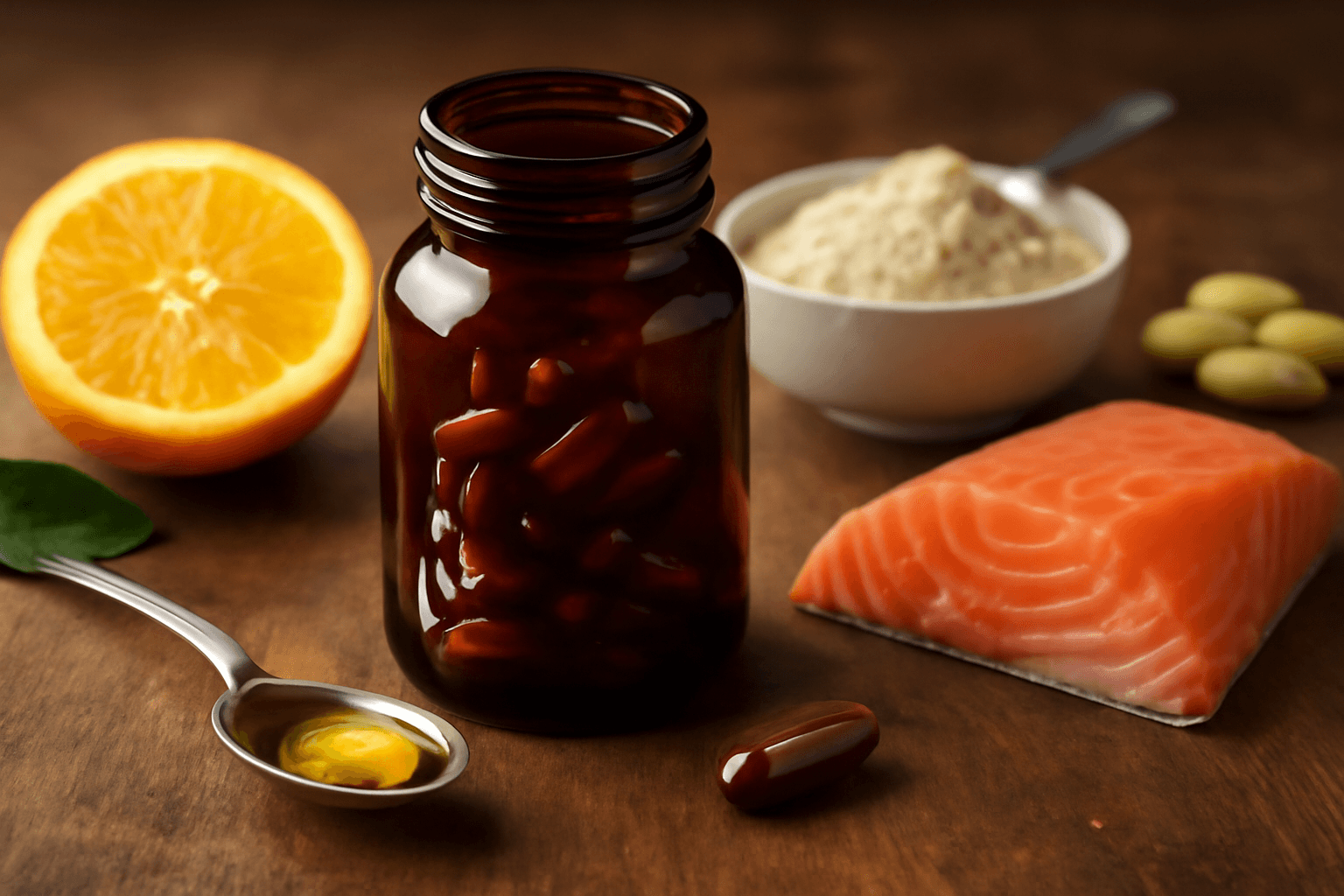
CoQ10 (Coenzyme Q10) is a critical substance in cellular energy production, playing a role in diverse physiological functions throughout the body, from heart health to antioxidant protection and energy metabolism. Particularly after the age of 40, the body's CoQ10 production decreases sharply, which can lead to fatigue, weakened immunity, and difficulty regulating blood sugar. This article provides practical information on CoQ10's precise mechanisms of action, nine major benefits, its relationship to heart health, and safe consumption methods.
What is CoQ10?
CoQ10 is a fat-soluble substance found in the inner membrane of mitochondria, playing an essential role in the process by which cells convert food into ATP (energy). While found in all cells of the human body, it is distributed in particularly high concentrations in energy-intensive organs such as the heart, brain, liver, and kidneys.
CoQ10 exists in two forms. The oxidized form (ubiquinone) accepts oxygen, while the reduced form (ubiquinol) donates electrons. The reduced form has higher bioavailability and is more commonly used in supplements. CoQ10 levels in the body begin to decline gradually from the age of 20, dropping to approximately 30% of levels in your 20s by the time you reach your 40s. In particular, people taking statins (cholesterol-lowering drugs), those with diabetes, and patients with chronic fatigue syndrome tend to have significantly lower blood CoQ10 levels than healthy individuals.
When is CoQ10 Supplementation Particularly Helpful?
CoQ10 supplementation is especially recommended when decreased body production and high demand occur simultaneously. It is useful for cardiovascular disease prevention, chronic disease management, recovery after high-intensity exercise, seasonal fatigue, and periods of reduced immunity.
People taking statin medications should consider CoQ10 supplementation as essential. This is because statin drugs block the cholesterol synthesis pathway while simultaneously inhibiting CoQ10 production. According to research, 30–50% of muscle pain, fatigue, and cognitive decline symptoms in statin users are related to CoQ10 deficiency.
Additionally, patients with type 2 diabetes, those with high blood pressure, patients diagnosed with heart failure, elderly individuals experiencing age-related energy decline, athletes seeking to improve performance, and patients undergoing cancer treatment may all benefit from CoQ10 level testing and supplementation.
Nine Benefits of CoQ10
1. Cardiac Energy Production and Improved Heart Function
The heart is the organ that consumes the most energy in the body, pumping blood equivalent to approximately its own weight daily. In this process, the heart's mitochondria require extremely high concentrations of CoQ10. Studies of heart failure patients showed improved ejection fraction and increased exercise tolerance following CoQ10 supplementation.
2. Blood Pressure Regulation
In a 12-week clinical trial, the group taking 100mg of CoQ10 daily showed an average reduction in systolic blood pressure of 7.6mmHg and diastolic pressure of 5.2mmHg. This is possible because CoQ10 improves endothelial function and promotes nitric oxide production, facilitating blood vessel dilation.
3. Prevention of Cholesterol Oxidation and Vascular Health
The oxidation of LDL cholesterol is an early stage of atherosclerosis. CoQ10's powerful antioxidant action prevents LDL oxidation and reduces blood vessel damage. When people taking statin drugs also consume CoQ10, the medication's effectiveness is maintained while muscle pain side effects are reduced.
4. Blood Sugar Regulation and Improved Insulin Sensitivity
A meta-analysis of type 2 diabetes patients showed that following CoQ10 supplementation, fasting blood glucose decreased an average of 10.3mg/dL and HbA1c (three-month average blood glucose) decreased by 0.97%. This occurs because CoQ10 improves mitochondrial function, promoting energy production in insulin-secreting cells.
5. Increased ATP Production and Energy Recovery
CoQ10 is a key element of the mitochondrial respiratory chain and directly participates in ATP production. In states of CoQ10 deficiency, cellular energy production efficiency decreases by 30–40%. Following supplementation, 70% of chronic fatigue syndrome patients reported meaningful improvement in fatigue.
6. Antioxidant Protection and Reduced Inflammation
CoQ10 is a powerful antioxidant working alongside vitamins E and C. It prevents cellular damage from oxidative stress and suppresses the production of inflammatory cytokines. It is particularly effective for reducing oxidative stress from exercise and inflammation in arthritis patients.
7. Enhanced Exercise Performance and Faster Muscle Recovery
In studies of athletes, the group taking 300mg of CoQ10 daily improved maximum oxygen uptake (VO2max) by 3.3% more than the placebo group and showed faster post-exercise muscle soreness recovery. Increased energy production efficiency and reduced oxidative stress during exercise work together synergistically.
8. Enhanced Immune Function
CoQ10 supports energy production in T cells and macrophages, strengthening immune response. Research on immune function improvement in pneumonia and cancer patients showed that CoQ10 supplementation was associated with reduced infection rates and shortened recovery periods.
9. Improved Brain Function and Anti-Stress Effects
The brain consumes approximately 20% of the body's energy. As CoQ10 improves brain mitochondrial function, cognitive function, concentration, and memory are enhanced. Additionally, by reducing neuroinflammation, it protects against stress-related nerve damage and lowers cortisol levels.
Why is CoQ10 So Important for Heart Health?
Heart disease is the leading cause of death in developed countries, and maintaining heart health is directly linked to quality of life. CoQ10 is particularly important for heart health for three reasons.
First, meeting the heart's extremely high energy demands. The heart contracts approximately 60–100 times per minute, requiring enormous amounts of ATP in the process. The mitochondrial density in heart muscle cells is 20 times greater than in other tissues. When CoQ10 is deficient, the heart's pumping efficiency decreases, leading to circulatory insufficiency.
Second, CoQ10 deficiency is pronounced in heart failure patients. Blood CoQ10 levels in heart failure patients are at 50% of normal levels. Long-term heart failure treatment side effects, chronic inflammation, and oxidative stress all accelerate CoQ10 depletion. Research on CoQ10 supplementation in heart failure patients has reported significant results including an average 3.7% improvement in ejection fraction, a 27% reduction in hospitalization rates, and a 45% reduction in mortality rates.
Third, drug-induced CoQ10 deficiency. Statin drugs are the standard treatment for high cholesterol but suppress CoQ10 production simultaneously, as both cholesterol and CoQ10 are synthesized through the same pathway. If muscle pain, fatigue, or increased heart strain symptoms appear in statin users, CoQ10 deficiency should be suspected.
CoQ10 also helps with blood pressure management. It improves energy production in blood vessel smooth muscle cells, restoring vessel elasticity, and improves endothelial dysfunction, naturally lowering blood pressure.
CoQ10 Product Forms and Recommended Dosage
CoQ10 product bioavailability varies greatly depending on its form. Correct product selection and dosage are important factors determining effectiveness.
Bioavailability Comparison by Product Form
- Standard powder CoQ10: 1–3% bioavailability (fat-soluble, doesn't dissolve in water)
- Oil-soluble form: 5–10% bioavailability (dissolved in plant or animal oil)
- Ubiquinol form (reduced form): 10–15% bioavailability (superior absorption compared to oxidized form)
- Micelle-forming technology (water-soluble): 40–70% bioavailability (latest technology, highest absorption rate)
- Nanoparticle/liposomal CoQ10: 50–80% bioavailability (fine particles improve cellular absorption)
Recommended Daily Dosage
For general health maintenance: 100–200mg (oil-soluble form or ubiquinol)
For fatigue improvement and antioxidant purposes: 200–300mg
For heart failure and cardiovascular disease management: 300–400mg (sustained for 3–4 months or longer)
For those taking statin medications: 100–200mg (to minimize drug interactions)
For type 2 diabetes blood sugar regulation: 200–300mg (with concurrent blood sugar monitoring)
Higher doses are not necessarily more effective. Absorption begins to plateau at doses exceeding 300mg, so consuming an appropriate amount of a product with superior absorption technology is more efficient. Absorption increases more than twofold when taken with food (particularly fat-containing meals), so it must be taken after meals.
Side Effects and Drug Interactions
CoQ10 is generally a very safe substance, with serious side effects being rare. However, caution is needed in specific situations and when combined with certain medications.
Side Effects (Rare but Possible)
- Gastrointestinal: Nausea, abdominal discomfort, diarrhea (with high-dose use)
- Sleep: Sleep disruption when taking high doses late in the evening (stimulating effect)
- Allergies: Personal allergic reactions to product additives
- Reduced blood pressure: Slight blood pressure reduction in some individuals with high-dose use
If side effects occur, reduce the dose by half or try a completely different product form. Most symptoms disappear within 3–7 days.
Drug Interactions
Anticoagulants (warfarin, apixaban, etc.): CoQ10 may slightly promote blood clotting and could reduce anticoagulant effectiveness. If you are taking these medications, dose adjustments may be necessary after consulting with your doctor.
Diabetes medications (metformin, insulin, etc.): CoQ10 can lower blood sugar, so when taken with medications, the risk of hypoglycemia may increase. Frequent blood sugar monitoring is necessary.
Blood pressure medications: Since CoQ10 also lowers blood pressure, blood pressure may become excessively low when taken together. Regular blood pressure monitoring is essential.
Statin medications and their relationship (not an interaction, supplementation is needed): Because statins interfere with CoQ10 production, CoQ10 supplementation is recommended to reduce side effects. There is no concern about reduced medication effectiveness.
Beta-blockers: Used as blood pressure medications; taking them together with CoQ10 is not problematic.
If you are currently taking any medications, you must consult with your doctor or pharmacist before starting CoQ10. This is especially essential for those taking anticoagulants, antidiabetic drugs, or blood pressure medications.
Summary
The core value of CoQ10: CoQ10 is an essential substance for cellular energy production that decreases sharply from the age of 40. It is important for maintaining the function of high-energy-consuming organs such as the heart, brain, liver, and kidneys.
Summary of nine major benefits: Improved heart function, blood pressure regulation, vascular health, blood sugar management, energy recovery, antioxidant protection, exercise performance, immune enhancement, and improved brain function.
Particularly important groups: Those taking statin medications (to alleviate drug side effects), those with heart failure or cardiovascular disease (to improve heart function), those with type 2 diabetes (for blood sugar regulation), those with chronic fatigue syndrome (for energy recovery), and those engaging in high-intensity exercise (for enhanced recovery).
Effective consumption methods: Choose product forms with high bioavailability (micelles, nanoparticles, liposomes), take 100–300mg daily, always take after meals, and continue for 3–4 months or longer.
Medical consultation is essential: If you are taking anticoagulants, antidiabetic drugs, or blood pressure medications, or if you have cardiovascular disease, you must consult with your doctor before starting CoQ10. CoQ10 serves a supplementary role and cannot replace medication.
Healthy cells begin with sufficient energy. CoQ10 is the insurance that protects the source of that energy.