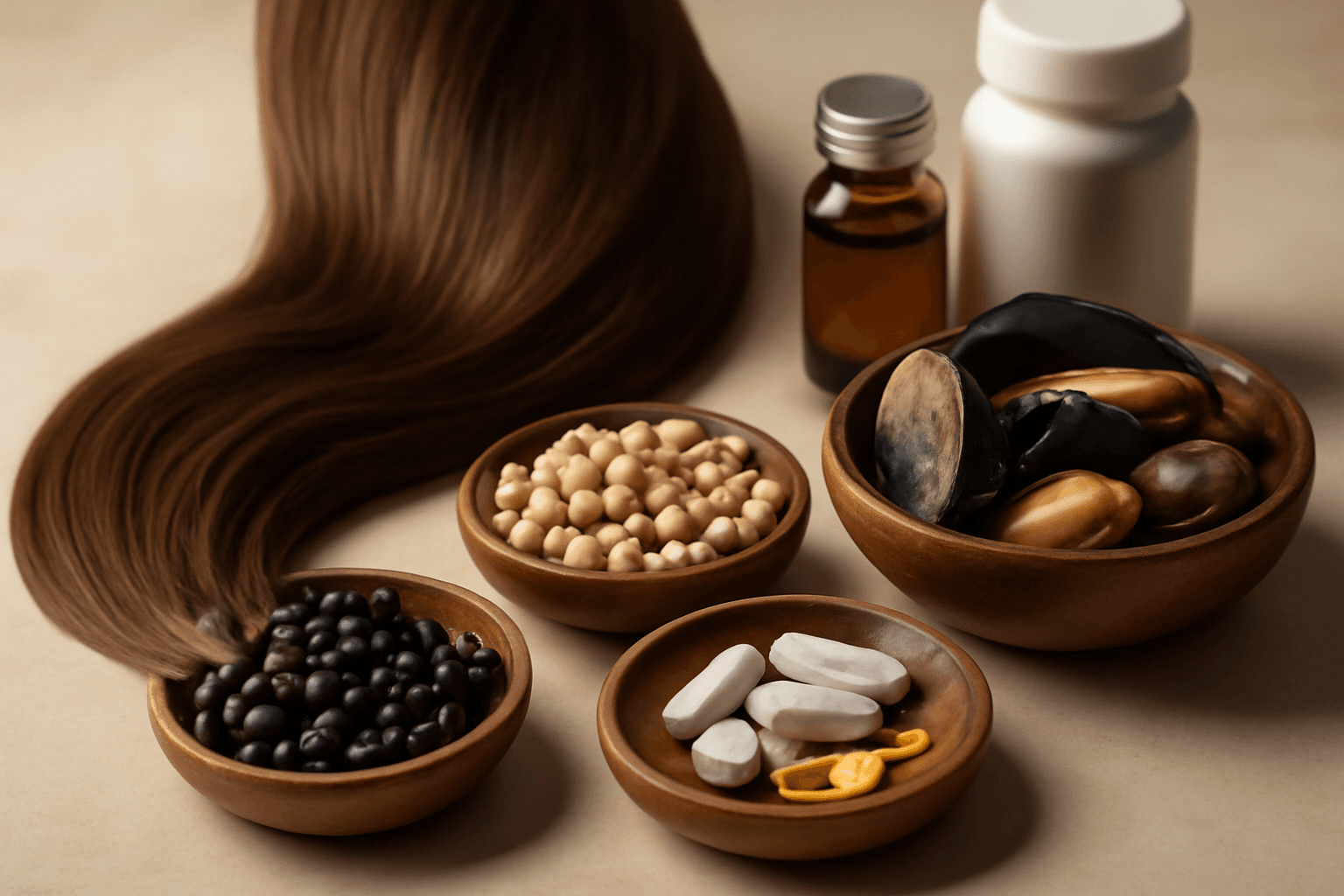
Hair health requires more than just external care. To maintain a healthy scalp and hair, you need to consider your body's internal environment, including nutritional status, hormone balance, stress management, and digestive health. This article will help you read the signals your hair is sending and provide nutritional solutions for each problem.
Brittle, Breaking Hair
If your hair breaks frequently, you should suspect protein and zinc deficiency. Since keratin, the main component of hair, is a protein composed of 18 amino acids, insufficient protein intake weakens hair structure. Zinc, which is abundant in animal proteins, is directly involved in protein synthesis and hair follicle cell regeneration.
The recommended daily protein intake is 1.2~1.6g per kilogram of body weight, and adults need 8~11mg of zinc daily. If your digestive health is poor, the absorption rate of these nutrients decreases, so caution is necessary.
- Legumes: Black beans and white beans are rich in both protein and zinc, and also contain dietary fiber that improves digestive health
- Oysters and mussels: Containing 5~7mg of zinc per 100g, they are the most efficient zinc source
- Foods with digestive enzymes: Natural enzymes in pineapple and kiwi promote protein absorption
- Fermented foods: Yogurt and kimchi improve gut microbiota balance through lactic acid bacteria, increasing zinc absorption
If you experience persistent hair damage, you should check your digestive function. If you have leaky gut syndrome or digestive enzyme deficiency, even the best foods won't be absorbed. If there's no improvement after 3 months or more, it's recommended to consult with a healthcare professional to test your nutrient absorption capacity.
Dry, Brittle Hair
Hair dryness signals collagen and essential fatty acid deficiency. Collagen strengthens the connective tissue around hair follicles and provides hair with elasticity and moisture. After the age of 40, collagen production decreases by 1% annually, making external supplementation essential.
Vitamin C intake is essential to promote collagen production. Vitamin C acts as a cofactor for hydroxylase in the collagen synthesis process and prevents hair damage through antioxidant action. Research shows that daily intake of 75~100mg of vitamin C significantly increases collagen content in skin and hair.
- Omega-3 fatty acids: Found in salmon, mackerel, and nuts, they suppress hair follicle inflammation and improve scalp blood circulation
- Vitamin C sources: Bell peppers (128mg per 100g), kiwi, and oranges are more effective when consumed raw
- Copper-containing foods: Oysters, trout, and cashews provide copper needed for melanin production and collagen formation
- Silica foods: Whole grains like brown rice, oats, and barley strengthen the structural integrity of hair and scalp
Stress is a major factor that worsens hair dryness. In chronic stress states, cortisol levels rise, impairing sebaceous gland function, which leads to moisture loss in the scalp and hair. It's recommended to manage stress through meditation, yoga, and regular exercise while maintaining proper nutrition. If there's no improvement after 3 months or more, consider hormone testing (estrogen and thyroid hormone).
Flaky Scalp
Scalp flaking is not simply a dryness issue but an expression of weakened immunity and B vitamin deficiency. The scalp's epithelial cell regeneration cycle is 14~21 days, during which B vitamins play a crucial role. In particular, vitamin B2 (riboflavin), B3 (niacin), and B7 (biotin) are directly involved in maintaining scalp skin health.
Biotin deficiency causes scalp inflammation and flaking. According to research published by the National Institutes of Health, daily intake of 2.5mg of biotin increased hair thickness by 25% and reduced hair loss. Additionally, niacin (vitamin B3) increases blood flow around hair follicles, improving nutrient supply to the scalp.
- Eggs: Highest biotin content (20mcg per 100g), and choline also improves brain function
- Almonds and sunflower seeds: Contain niacin, vitamin E, and selenium for enhanced antioxidant action
- Mushrooms: Vitamin D abundant in shiitake and enoki mushrooms alleviates scalp inflammation through immune regulation
- Whole grains: B-complex vitamins in brown rice and oats promote scalp cell regeneration
- Spinach and broccoli: Folate (vitamin B9) promotes cell division
If flaking is accompanied by itching or doesn't improve after 3 months or more, you should suspect seborrheic dermatitis or fungal infection. In these cases, dietary adjustment alone is insufficient, and it's strongly recommended to consult a dermatologist for proper diagnosis and treatment. Additionally, if zinc levels in your body are low, immune function declines and scalp flaking problems worsen, so pay attention to zinc intake as well.
Thinning Hair
Thinning hair signals hormone imbalance, chronic stress, and iron deficiency. In particular, women commonly experience hair thinning due to decreased estrogen, which becomes more pronounced before and after menopause. Hair thickness is directly related to follicle size, and hair follicles shrink in states of high androgen sensitivity or estrogen deficiency.
Iron is essential for blood supply to hair follicles. Iron deficiency anemia from lack of iron can reduce hair thickness by 20~30%. The daily iron requirement for adult women is 18mg, 8mg after menopause, and 8mg for men. Iron absorption rates are 15~35% from animal foods (heme iron) and 2~20% from plant foods (non-heme iron), so choice of source is important.
- Red meat: Heme iron in beef and lamb has high absorption rates, and L-carnitine enhances energy supply to hair follicles
- Oysters and shellfish: Contain both iron and zinc, and also provide copper needed for hormone metabolism
- Black beans and lentils: Containing non-heme iron, absorption increases 3-fold when consumed with vitamin C
- Black sesame and pumpkin seeds: Triple sources of zinc, magnesium, and iron supporting hormone balance
- Kale and spinach: Vitamin K improves blood clotting and promotes iron absorption
Elevated cortisol, the stress hormone, causes insulin resistance, which increases androgen sensitivity in hair follicles. As a result, hair thins and hair loss increases. Manage cortisol through adequate sleep (7~9 hours), regular exercise (3~4 times per week, 30 minutes or more), and meditation or breathing exercises.
Women are recommended to have their iron levels checked regularly. If ferritin (stored iron) levels are 30ng/mL or below, it affects hair health. Also verify that thyroid hormone, female hormone, and androgen levels are within normal ranges, and seek guidance from a healthcare professional if needed. Particularly, if thinning hair symptoms appeared suddenly within the last 3 months, this indicates rapid hormone changes or nutritional deficiency progression, making professional consultation essential.
Summary
Key strategies for healthy hair
- Protein and zinc: Basic components of hair preventing breakage and thinning. Daily protein 1.2~1.6g/kg and zinc 8~11mg needed
- B vitamins: Essential for resolving scalp flaking. Adequate biotin 2.5mg and niacin intake improves scalp blood circulation
- Collagen and vitamin C: Daily intake of 75~100mg vitamin C promotes collagen synthesis for dry hair improvement
- Iron and hormones: Thinning hair signals iron deficiency and hormone imbalance. Women should regularly check ferritin levels
- Digestion and absorption: Even the best food won't be absorbed if digestive function is poor. Manage gut health with fermented and enzyme-rich foods
- Stress management: Elevated cortisol directly worsens hair health. Manage through meditation, exercise, and adequate sleep
Hair changes are a mirror of your body's internal state. While external treatment is important, fundamental health improvement requires a holistic approach to nutrition, hormones, digestion, and stress management. If there's no improvement after 4~6 weeks of dietary changes and lifestyle modifications, it's recommended to consult with healthcare professionals (dermatologist or endocrinologist) for blood tests and hormone testing.