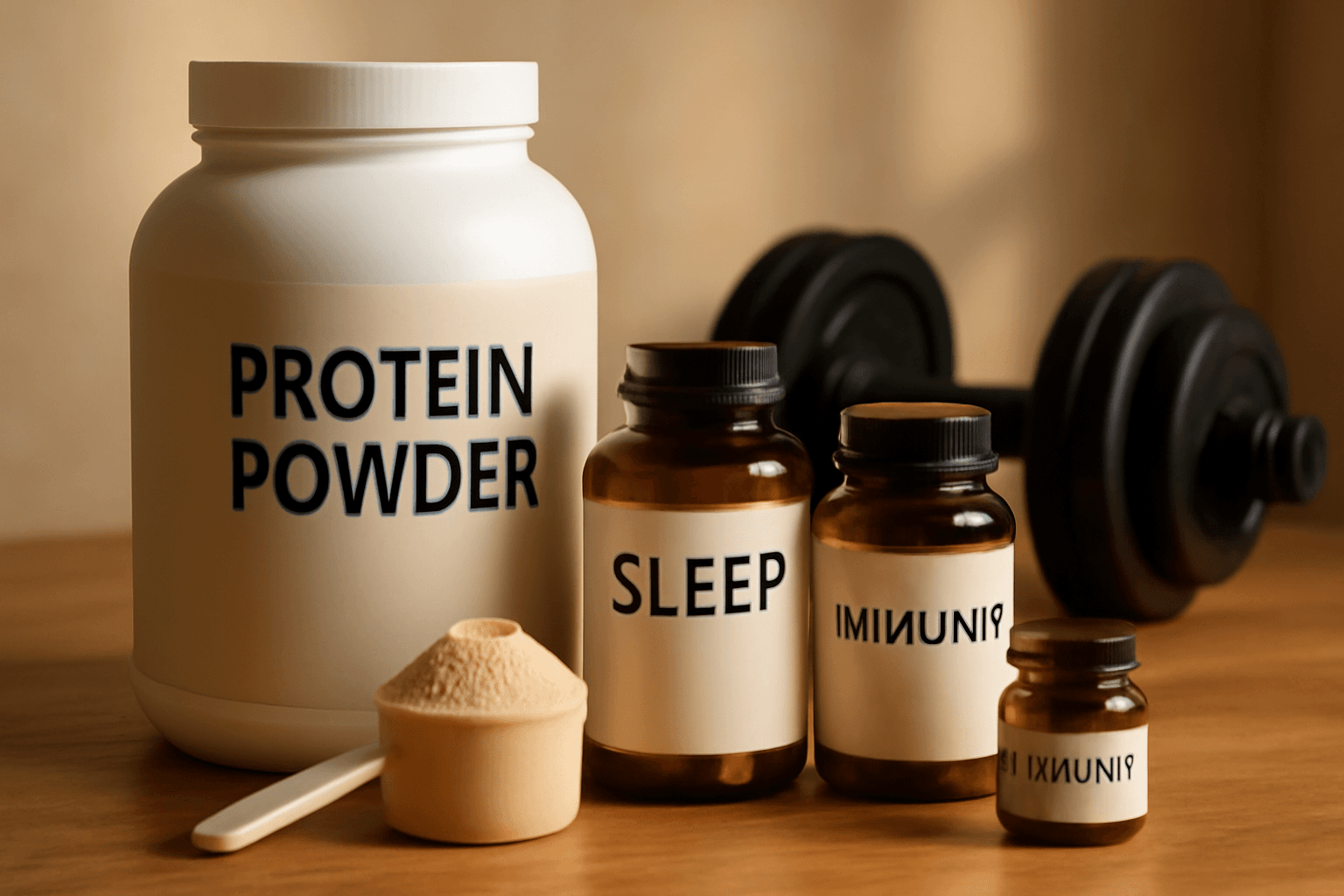
Weight management is difficult to achieve through calorie restriction alone. Effective weight loss and maintenance require multiple factors working simultaneously, including muscle preservation, metabolic enhancement, hormone balance, adequate sleep, and stress management. This article provides detailed explanations of various supplements that support weight management—including protein, energy supplements, sleep-improving aids, immune-boosting ingredients, and stress-management nutrients—along with their mechanisms of action and effective usage methods.
Supplements That Support Weight Management
Protein Supplements and the Importance of Muscle Maintenance
Protein is the most important nutrient during weight loss. According to research, people who consumed a high-protein diet retained 25-30% more muscle mass compared to those on a low-protein diet. This effect is further maximized when combined with aerobic exercise. A daily protein intake of 1.6-2.2g per kilogram of body weight is recommended, and protein powder is effective when this cannot be met through diet alone.
The main benefits of protein supplements include:
- Increased Satiety: Protein maintains fullness for over 3 hours compared to carbohydrates or fats
- Thermic Effect of Food: Protein digestion burns 20-30% of consumed calories as energy
- Muscle Recovery: Consumption within 30 minutes post-workout accelerates muscle damage repair
- Increased Metabolic Rate: Muscle mass maintenance raises basal metabolic rate by 100-150kcal daily
Various forms of protein supplements are available, including whey, casein, and plant-based proteins. Whey protein is more suitable for rapid absorption immediately after exercise, while casein is better for sustained supply during nighttime. If you cannot consume sufficient daily protein through food, taking supplements 1-2 times daily can help you reach your target intake.
Energy and Metabolism-Boosting Supplements
During weight loss, fatigue from energy deficiency and decreased metabolism are common problems. Caffeine and green tea extract have been proven to boost metabolism and provide energy. At 100mg intake, caffeine increases metabolic rate by 3-11%, equivalent to an additional 15-30 minutes of exercise daily.
Green tea extract (EGCG) enhances fat oxidation by 16% when working together with caffeine. A daily intake of 300-400mg EGCG is safe and effective. L-carnitine transports long-chain fatty acids to mitochondria to assist in energy production. In particular, 2-3g of daily L-carnitine is beneficial for those following a low-carbohydrate diet.
Anhydrous caffeine is absorbed more quickly than caffeine dissolved in water, delivering maximum effects when consumed 30-60 minutes before exercise. However, consumption in the evening can interfere with sleep, so it's best to avoid caffeine intake after 3 PM.
Sleep Improvement and Hormone Regulation
Sleep deprivation is the biggest obstacle to weight loss. Research shows that people sleeping 4-5 hours daily had a 73% higher obesity risk compared to those sleeping 7-9 hours. Insufficient sleep causes an imbalance in leptin and ghrelin, the appetite-regulating hormones. Leptin levels decrease by 35% while ghrelin increases by 28%, greatly intensifying the desire for late-night eating.
Magnesium is an essential mineral for nervous system relaxation and inducing deep sleep. Daily intake of 300-400mg of magnesium glycinate improves sleep quality and reduces nighttime awakenings by 30%. The glycinate form has higher bioavailability than regular magnesium oxide and causes fewer digestive side effects.
Melatonin is a hormone that regulates the sleep-wake cycle. Taking 0.5-5mg of low-dose melatonin 30 minutes before bed reduces average sleep onset time by 36 minutes and increases sleep quality. However, short-term use of melatonin is recommended over long-term use, as continuous consumption for more than 2 weeks may cause bodily adaptation.
Herbal extracts such as valerian root and passionflower have been traditionally used to improve sleep. These provide natural sleep-inducing effects with minimal side effects. Sufficient, high-quality sleep enhances next-day exercise performance by 30-40%, accelerating weight loss goal achievement.
Muscle Growth and Exercise Performance Enhancement
Protein alone is insufficient to minimize muscle loss during weight loss. Creatine monohydrate enhances energy supply to muscle cells, improving high-intensity exercise performance. Daily creatine intake of 3-5g increases strength by 5-15%, enabling higher-intensity resistance training that helps preserve muscle.
Beta-alanine acts as a buffer to delay muscle fatigue. Daily beta-alanine intake of 3-5g extends the duration of muscle strength during high-intensity exercise by 2-3 minutes. This means more repetitions are possible in the same timeframe, ultimately increasing muscle stimulation.
Vitamin D promotes testosterone production, enhancing muscle protein synthesis by 40%. For those with blood vitamin D levels below 30ng/mL, daily vitamin D3 intake of 2,000-4,000 IU is recommended. Vitamin D deficiency increases the risk of muscle loss during weight loss by 3-fold, making individual requirement assessment through blood tests important.
Immune-Boosting Ingredients
Calorie restriction from weight loss weakens immune function. When combined with excessive exercise, the risk of upper respiratory infection increases 2-3 fold. Vitamin C strengthens immune cell function and shortens infection duration by 30%. Daily vitamin C intake of 1,000-2,000mg is recommended for people engaging in vigorous exercise.
Zinc is essential for T-cell and B-cell production. Low blood zinc levels double the time needed to recover from infection. Daily zinc intake of 15-25mg is effective for maintaining immunity. Combined intake of zinc and vitamin C increases absorption rate, making concurrent consumption recommended.
Probiotics maintain intestinal microbial balance, handling 70% of immune function. Daily consumption of probiotics with CFU (Colony Forming Unit) of one billion or higher reduces infectious disease incidence by 30%. The effect is doubled when consumed with dietary fiber (prebiotics).
Stress and Hormone Management
Chronic stress promotes cortisol secretion, increasing abdominal fat accumulation. People with high cortisol levels accumulate 47% more abdominal fat despite the same calorie intake. Stress management supplements play a key role in maintaining hormone balance.
Magnesium is also important for nervous system relaxation. Magnesium consumption increases by 25% during high-stress situations, so increased daily doses up to 500mg may be needed during stressful periods. L-theanine, an amino acid found in tea, increases alpha wave activity in the brain, maintaining concentration even in a relaxed state. L-theanine of 100-200mg lowers heart rate and reduces anxiety by 30%.
Adaptogens such as Rhodiola Rosea and Ashwagandha regulate cortisol levels and increase stress resilience. Daily rhodiola extract intake of 500-600mg reduces fatigue by 35% and decreases stress-induced overeating urge by 40%. These increase adaptive capacity, allowing the body to better cope with stress over time.
Aerobic Exercise Performance and Endurance Enhancement
Aerobic exercise for weight loss carries the risk of protein loss. Beta-hydroxy-beta-methylbutyrate (HMB) suppresses protein breakdown during exercise. Daily HMB intake of 3g reduces muscle loss by 48% during aerobic exercise while maintaining exercise performance.
Caffeine is the most proven ingredient for enhancing aerobic exercise performance. Caffeine intake of 3-6mg/kg (210-420mg for a 70kg person) extends exercise duration by 13% and reduces fatigue perception. This means higher-intensity exercise is possible in the same timeframe.
Betaine improves muscle energy production. Daily betaine intake of 2.5g increases oxygen utilization efficiency during exercise by 5%, allowing the same-intensity exercise to feel easier. This means exercise can be sustained longer, leading to better weight loss results.
Supplement Selection and Combined Usage Guide
Not all supplements are effective for everyone. The supplements needed vary depending on individual diet, lifestyle habits, exercise program, and health status.
Basic weight management supplement combination:
- Immediately Post-Exercise: Protein powder (20-30g) + Creatine monohydrate (3-5g)
- Morning: Vitamin D3 (2,000-4,000 IU) + Magnesium (300-400mg)
- Lunch: Multivitamin mineral + Green tea extract (300-400mg EGCG)
- 3 Hours Before Evening: Caffeine-containing energy supplement (100-200mg caffeine)
- 30 Minutes Before Sleep: Magnesium glycinate (300-400mg) + Optionally melatonin (0.5-3mg)
Timing is important for maximizing supplement effectiveness. Fat-soluble vitamins (A, D, E, K) have absorption rates 3 times higher when consumed with fat. Protein supplements maximize muscle protein synthesis when consumed within 30 minutes post-workout. Caffeine is most effective when consumed 30-60 minutes before exercise.
Precautions When Taking Supplements
Since supplements are not medications, individual differences are significant. Drug interactions are possible if you are taking medications. For example, taking high-dose vitamin E or omega-3 supplements with blood thinners can increase bleeding risk. Caffeine or chromium-containing supplements may affect blood sugar levels if you take diabetes medications.
Pregnant and nursing women should avoid most supplements. In particular, caffeine, unmethylated magnesium, and high-dose vitamin A can be harmful to fetuses or infants. Those with chronic diseases (hypertension, heart disease, kidney disease, liver disease) must consult a doctor before taking supplements.
Supplement quality is also important. Choose products with third-party tested marks to ensure ingredient and purity guarantees. Products approved by certification bodies such as NSF, USP, and ConsumerLab are more trustworthy.
Summary
Key Supplements for Effective Weight Management:
- Protein supplements: Muscle preservation and increased satiety (1-2 times daily, consumed within 30 minutes post-exercise)
- Energy enhancers: Caffeine + Green tea extract (3-16% increase in metabolism)
- Sleep improvers: Magnesium glycinate 300-400mg (improved sleep quality)
- Muscle protectors: Creatine, HMB, Beta-alanine (45-50% reduction in muscle loss)
- Immune boosters: Vitamin C 1,000-2,000mg + Zinc 15-25mg
- Stress management: Rhodiola, Ashwagandha, L-theanine (cortisol regulation)
Supplements are complementary tools to exercise and proper diet. No matter how excellent a supplement is, it's difficult to expect results without the fundamentals of regular exercise, adequate protein consumption, sufficient sleep, and stress management. It's important to select supplements in a customized manner based on your individual health status, diet, and exercise intensity.
Medical Disclaimer: This information is for educational purposes and cannot replace medical diagnosis or treatment. Those with chronic diseases, taking medications, and pregnant women must consult a doctor or certified nutritionist before taking supplements. If side effects occur, immediately stop consumption and seek medical examination from a specialist.


