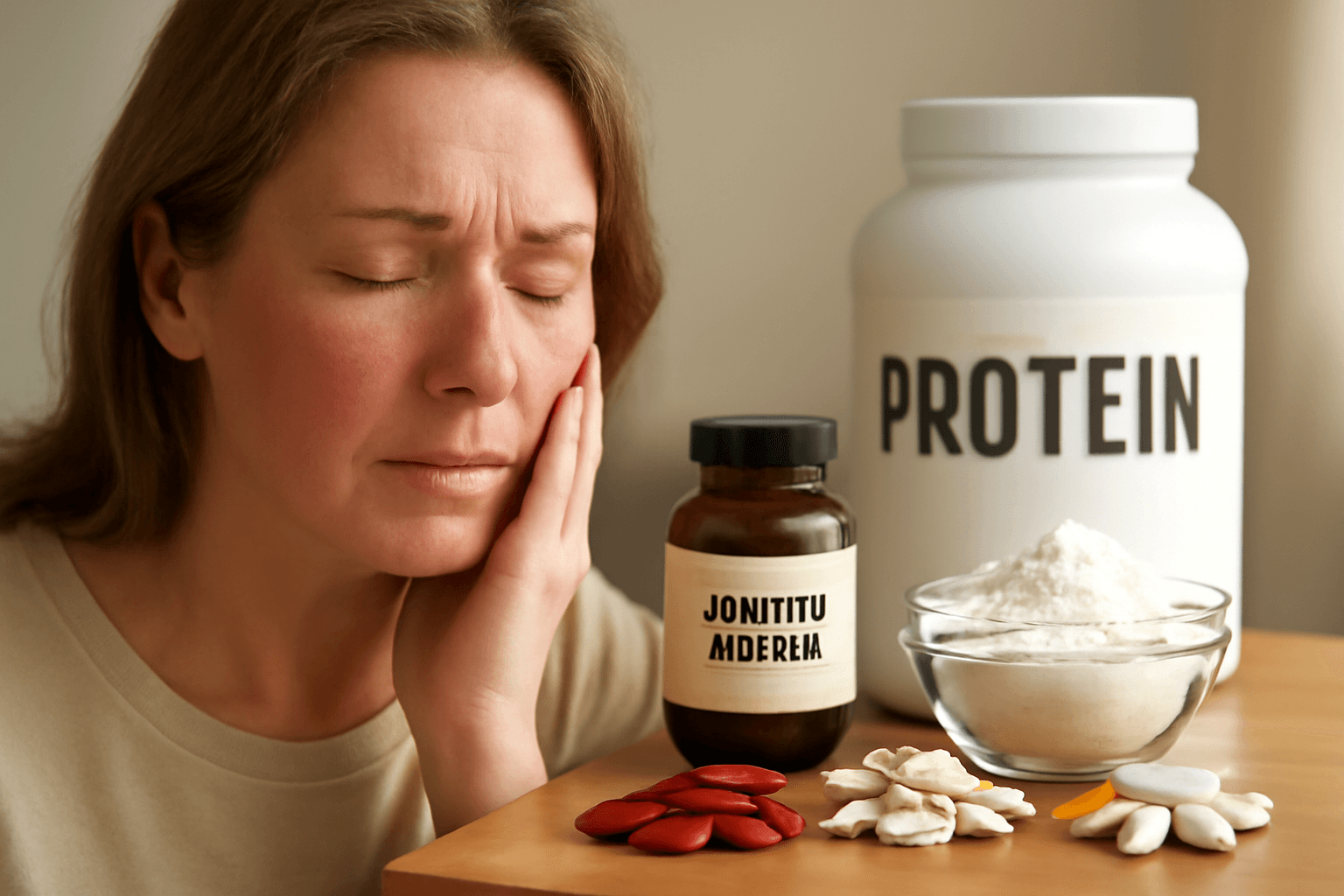
Facial flushing is a sudden redness that appears on the face, causing discomfort along with a sensation of heat. It occurs due to various causes including hormonal changes, environmental irritation, and increased vascular reactivity, and is particularly frequently observed in middle-aged women. This article identifies the causes of facial flushing and introduces 10 supplements that can help alleviate symptoms. Through proper nutrition and supplement use, you can reduce the frequency and intensity of facial flushing.
What is Facial Flushing?
Facial flushing is a redness that suddenly appears on the face, neck, and chest areas, caused by the dilation of blood vessels. As skin temperature rises by 2-3 degrees, it is accompanied by warmth or heat sensation, and can last from a few seconds to tens of minutes depending on the individual. Facial flushing goes beyond a simple cosmetic issue and significantly impacts quality of life, including sleep disturbance, anxiety, and reduced self-esteem.
The causes of facial flushing are diverse, with the most common being hormonal changes. Approximately 80% of menopausal women experience this symptom, as the sharp drop in estrogen levels affects the temperature regulation center in the brain. In addition, instability of the autonomic nervous system, increased vascular reactivity, and neurotransmitter imbalances work together to trigger facial flushing.
What Factors Increase the Risk of Facial Flushing?
Risk factors for facial flushing are classified into lifestyle habits, dietary habits, environmental factors, and individual physiological characteristics. Caffeine-containing beverages (coffee, black tea) stimulate the central nervous system and trigger blood vessel dilation, while alcohol worsens facial flushing through vasodilatory effects. Capsaicin found in spicy foods stimulates TRPV1 receptors and directly conveys heat sensation.
Environmental factors include sudden temperature changes, high humidity, and direct sunlight exposure. Emotional stress and anxiety are also important factors, as increased cortisol, a stress hormone, increases vascular instability. Additionally, nutritional imbalances such as vitamin B12 deficiency, iron deficiency, and magnesium deficiency act as factors that worsen symptoms. Smoking and lack of exercise also impair vascular health and increase the occurrence of facial flushing.
Risks Associated with Facial Flushing
Facial flushing extends beyond a simple symptom and has considerable effects on physical and mental health. Repeated blood vessel dilation can reduce the elasticity of facial blood vessels, potentially progressing to skin conditions like rosacea in the long term. Additionally, nocturnal facial flushing reduces sleep quality, and persistent sleep deprivation leads to decreased immunity, reduced cognitive function, and metabolic disorders.
From a mental health perspective, facial flushing can result in social anxiety disorder, depression, and avoidance of interpersonal relationships. Particularly for women, experiencing facial flushing during the menopausal stage intensifies psychological stress, which in turn worsens symptoms in a vicious cycle. Additionally, excessive sweating caused by facial flushing increases the risk of skin irritation, infection, and eczema worsening. In severe cases, it can lead to functional decline in work and social life, making early intervention and management important.
10 Supplements Good for Facial Flushing
The selection of supplements for alleviating facial flushing symptoms should take into account the individual's nutritional status and the underlying causes of symptoms. The following 10 supplements have been proven effective in clinical research and traditional medicine, and can be expected to have synergistic effects when used alone or in combination.
- 1. Black Cohosh - Hormone regulation and vascular stabilization
- 2. Vitex - Progesterone level normalization
- 3. B Complex Vitamins - Nervous system stabilization and energy production
- 4. Vitamin C - Enhanced vascular elasticity
- 5. Vitamin D - Immune regulation and hormone balance
- 6. Magnesium - Vascular relaxation and nerve calming
- 7. Zinc - Immune enhancement and skin health
- 8. Iron - Improved oxygen transport capacity
- 9. Protein Supplements - Foundation for neurotransmitter production
- 10. Omega-3 Fatty Acids - Reduced vascular inflammation
1. Black Cohosh
Black Cohosh is a medicinal plant traditionally used by Native Americans and is the most researched supplement for alleviating facial flushing and night sweats. Multiple clinical trials have reported that consumption for 8-12 weeks reduced the frequency of facial flushing by 40-65%. The triterpenes and isoflavones contained in Black Cohosh directly act on the hypothalamus, the temperature regulation center of the brain, stabilizing vascular reactivity.
The typical dosage is 40mg of standardized extract taken twice daily. While effects vary by individual, most people experience symptom improvement within 2-4 weeks. However, those with reduced liver function or a history of estrogen-responsive cancer should consult a healthcare professional before use. Some users may experience gastrointestinal discomfort or headaches, so gradual dose increases are recommended.
2. Vitex (also known as Chaste Berry or Chasteberry)
Vitex agnus-castus, also known as Chaste Berry, acts on the hypothalamic-pituitary-ovarian axis (HPO axis) to regulate hormone balance. It is particularly known for promoting progesterone secretion and normalizing prolactin levels, and this hormone normalization reduces the frequency of facial flushing. In clinical research, 81% of menopausal women who took 400mg of Vitex extract for 12 weeks reported improvement in facial flushing symptoms.
Vitex is recommended at a dosage of 400-500mg of standardized extract daily, taken in one or two divided doses. Effects appear gradually, and continuous consumption for 2-3 months is needed to experience maximum benefits. Those who are pregnant or breastfeeding, or those taking antipsychotic medications should avoid use, and should consult a healthcare professional before starting.
3. B Complex Vitamins
B vitamins are essential for nervous system stabilization, stress hormone regulation, and neurotransmitter production. In particular, B6 (pyridoxine) is involved in serotonin and GABA production, reducing anxiety, while B12 (cobalamin) is responsible for nerve myelin formation and energy production. Deficiency increases neurological irritability, creating a vicious cycle that worsens facial flushing. Research indicates that menopausal women with low B vitamin levels have more than twice the frequency of facial flushing compared to those with normal levels.
B complex supplements with a composition of B1 10mg, B2 10mg, B3 20mg, B5 10mg, B6 25mg, B12 500mcg, and folate 400mcg taken once daily is standard. Generally safe, but high doses of B6 can cause neuropathy, so daily intake should not exceed 200mg. Adequate amounts can be obtained from whole grains, eggs, meat, and dairy products.
4. Vitamin C
Vitamin C is a powerful antioxidant that protects vascular endothelial cells from free radical damage and promotes collagen synthesis to maintain the structural integrity of blood vessels. Better vascular elasticity reduces excessive expansion responses and alleviates facial flushing symptoms. Additionally, vitamin C strengthens skin barrier function to prevent penetration of irritating substances and reduces vascular inflammation.
A daily vitamin C supplement of 500mg-1000mg is safe, and its effectiveness is enhanced when used together with food sources (oranges, kiwis, bell peppers). Choosing an enteric-coated form (buffered) can minimize stomach irritation. Those with kidney disease or a history of hemochromatosis should avoid high-dose supplements and make decisions after consulting with a healthcare professional.
5. Vitamin D
Vitamin D functions as a hormone rather than a simple nutrient and is important for regulating hypothalamus function, the temperature regulation center of the brain. Vitamin D deficiency leads to abnormal immune activation, increased inflammation, and impaired neurological signal transmission, worsening facial flushing. Research shows that menopausal women with serum vitamin D levels below 20ng/mL have three times higher rates of severe facial flushing compared to those with normal levels.
The daily recommended intake is 600-800IU, but supplementation of 2000-4000IU may be necessary to improve deficiency. It is essential to confirm current levels through blood tests and determine appropriate dosages, as excessive supplementation without expert guidance can cause hypercalcemia. Sun exposure (3 times per week, 15-20 minutes at a time) also helps natural vitamin D production.
6. Magnesium
Magnesium is involved in over 600 enzyme reactions in the body and is particularly essential for regulating nerve excitability and promoting muscle relaxation. It promotes vascular smooth muscle relaxation, reducing vascular stiffness and suppressing stress hormone secretion. Magnesium deficiency increases nervous system hypersensitivity, causing excessive vascular response to stimuli, leading to increased facial flushing frequency. Clinical data reports that facial flushing-related symptoms decreased by an average of 30% after magnesium supplementation.
A daily magnesium supplement of 300-400mg is recommended, with magnesium glycinate form having high absorption and minimal intestinal irritation. Citrate form has a laxative effect and should be avoided if there is intestinal sensitivity. Those with reduced kidney function should take only under medical guidance, and should maintain at least a 2-hour interval from certain antibiotics or bisphosphonate medications.
7. Zinc
Zinc is a central mineral for immune system function, essential for T cell generation and activation and cytokine regulation. Since immune abnormalities are closely related to facial flushing development, maintaining appropriate zinc levels helps alleviate symptoms. Additionally, zinc strengthens skin barrier function to prevent penetration of irritants and regulates inflammatory responses. Research shows that menopausal women in a zinc-deficient state tend to show simultaneous improvement in facial flushing and accompanying symptoms such as dry skin after zinc supplementation.
A daily zinc supplement of 8-11mg is recommended, with picolinate or glycinate forms having high absorption rates. Excessive supplementation (more than 40mg daily long-term) can cause copper absorption inhibition, reduced immune function, and neuropathy, requiring caution. It is better not to take iron supplements simultaneously, maintaining at least a 2-hour interval.
8. Iron
Iron is a key mineral for hemoglobin synthesis, the oxygen-carrying protein, and deficiency increases compensatory vascular dilation due to reduced tissue oxygenation. Many menopausal women experience iron deficiency due to blood loss from irregular menstruation during menopause, which worsens facial flushing symptoms. Research reports that 54% of women with serum ferritin levels below 12ng/mL experience severe facial flushing.
Iron supplementation should first be confirmed through blood tests to determine deficiency, then pursued under medical guidance. Generally, a daily iron intake of 18mg is recommended, with heme iron (from meat) having higher absorption than non-heme iron (plant-based). Excessive supplementation can cause free radical damage, organ damage, and increased infection risk, so long-term use should never occur without medical supervision.
9. Protein Supplements
Protein is a source of amino acids that form the foundation for neurotransmitter production, particularly essential for serotonin, dopamine, and GABA production. Adequate protein intake helps nervous system stabilization and stress hormone regulation, reducing facial flushing triggers. Additionally, protein supports direct vascular health by being necessary for blood vessel component and antioxidant enzyme production. Research shows that menopausal women with adequate protein intake (1.2-1.5g per kg of body weight) report less severe facial flushing-related psychological symptoms compared to those with low protein intake.
A daily protein supplement intake of 25-30g is recommended, and alternating plant-based (pea, rice) and animal-based (whey, casein) proteins provides a more complete amino acid profile. Those with kidney disease may require protein restriction, making healthcare professional consultation essential. In addition to supplements, prioritizing natural protein food sources such as eggs, fish, tofu, and nuts is beneficial.
10. Omega-3 Fatty Acids
Omega-3 fatty acids, particularly EPA and DHA, reduce inflammation of vascular endothelium through powerful anti-inflammatory action and improve vascular function. Since increased levels of inflammatory cytokines (IL-6, TNF-α) are closely related to facial flushing development, omega-3 intake with anti-inflammatory effects helps. Clinical trial results show that menopausal women who took 2000mg of omega-3 for 8 weeks experienced a 25% reduction in facial flushing frequency, with simultaneous improvement in night sweats.
A daily EPA/DHA combined intake of 1000-2000mg is recommended, with options for fish oil or algae-based omega-3. Vegetarians can obtain omega-3 from alpha-linolenic acid (ALA)-rich flaxseeds, chia seeds, and walnuts. Those taking blood thinners should consult a healthcare professional before deciding on high-dose consumption, and those with fish allergies should choose algae-based products.
Conclusion: Comprehensive Approach to Managing Facial Flushing
Facial flushing is a multifactorial symptom, and complete resolution with a single supplement is difficult. The 10 supplements introduced should be selected based on the individual's symptom causes, nutritional status, and health conditions. Black Cohosh and Vitex are particularly effective for hormone-based facial flushing, magnesium and B vitamins for nerve-based facial flushing, and antioxidant vitamins (C, D) and omega-3 for inflammation-based facial flushing.
Important principles for supplement use are as follows. First, you must consult a healthcare professional before starting, especially if taking existing medications, to check for drug-supplement interactions. Second, rather than starting multiple supplements at once, gradually add them at 1-2 week intervals to identify individual effects and side effects. Third, effects should be evaluated through at least 4-8 weeks of continuous consumption, and hasty expectations should be avoided.
Lifestyle improvements are essential alongside supplements. Restricting caffeine and alcohol, regular exercise (3-4 times weekly, 30 minutes per session), stress management (meditation, yoga), adequate sleep (7-8 hours daily), and maintaining a balanced diet amplify supplement effects. It is particularly important to avoid extremely hot foods and beverages that stimulate blood vessels and exposure to sudden temperature changes.
Finally, if facial flushing persists or worsens, accompanying symptoms appear (chest pain, difficulty breathing, severe anxiety), or side effects occur after supplement use, seek medical care immediately. Facial flushing is a manageable symptom, and with proper approach and consistent effort, quality of life can be greatly improved.
Healthcare Professional Consultation Recommendation: The information presented in this article is for educational purposes only and should not be interpreted as medical advice. Before beginning supplement use, particularly if you have existing conditions or are taking medications, be sure to consult with a doctor or pharmacist.