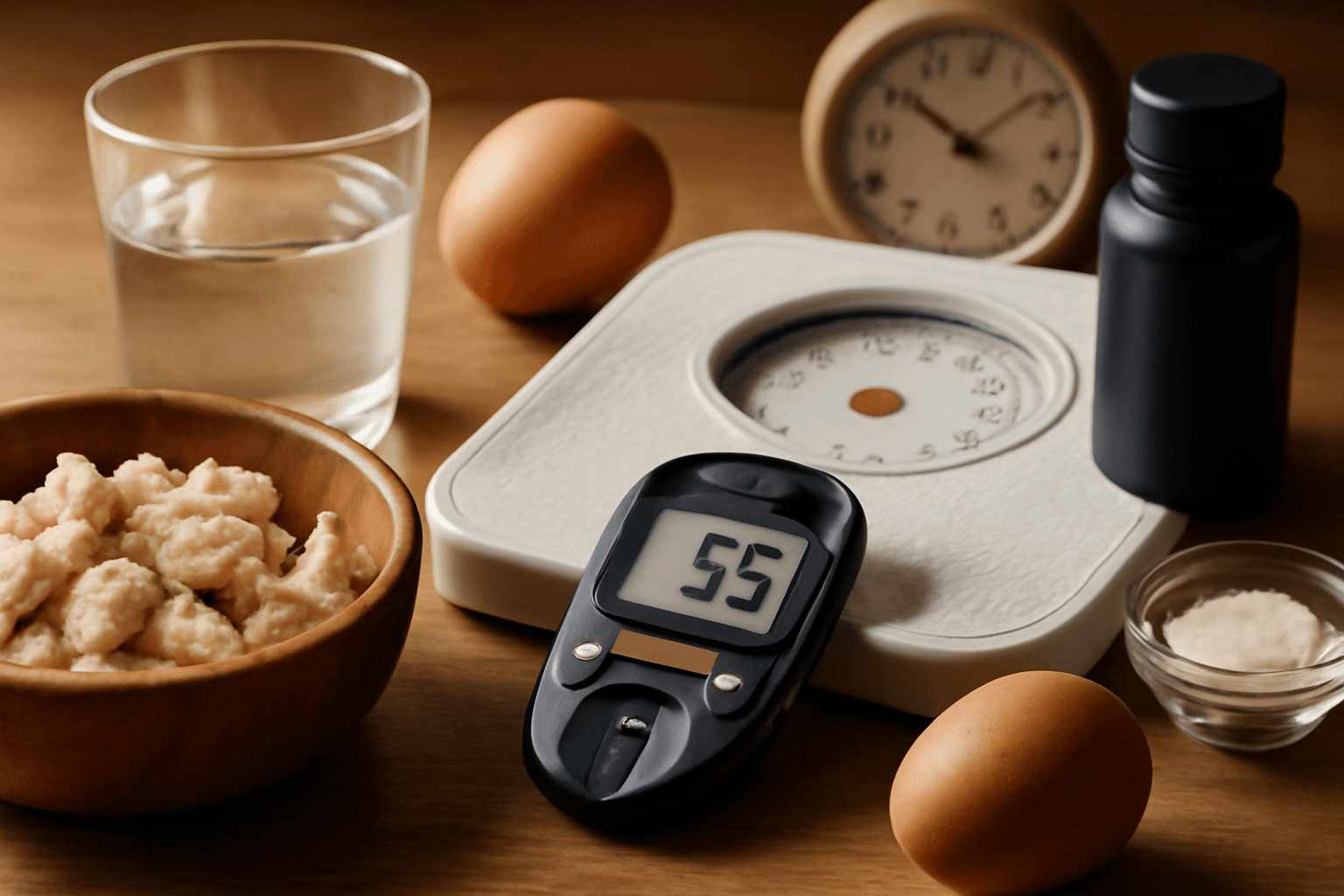
Reverse Diet is a dietary approach that gradually increases food intake to restore metabolism that has been compromised by calorie restriction. It's a strategy that improves energy deficiency, muscle loss, and hormonal imbalances caused by prolonged low-calorie dieting while preventing rapid weight gain. In this article, we'll examine the principles of reverse dieting, its actual effectiveness, and the correct way to implement it from a strength coaching perspective.
What is Reverse Diet?
Reverse Diet is not simply about eating again. It's a systematic process of recovering energy intake while considering your body's adaptive responses as you transition away from a prolonged calorie-restricted diet. It was developed to prevent rapid weight gain (yo-yo effect) that occurs when people who have lost weight through strict dieting return to a normal diet.
In situations of extreme calorie restriction (1,200-1,500 kcal daily), our body enters survival mode. Metabolic rate slows down, muscle tissue breaks down, and hormone levels change. In particular, leptin (satiety hormone) secretion decreases while ghrelin (hunger hormone) secretion increases, causing the body to continually demand food. Reverse dieting aims to gradually normalize these hormonal imbalances.
The process begins by setting your current maintenance calories as a baseline. For example, if someone on a long-term diet is consuming 1,800 kcal per day, you would increase this by approximately 100-200 kcal per week. This increase comes primarily in the form of carbohydrates or fats, while protein intake is maintained at 1.6-2.0g per kilogram of body weight.
Benefits of Reverse Diet
Metabolic Recovery is the most important benefit of reverse dieting. Research shows that the metabolic decrease caused by extreme dieting can persist for six months to two years even after diet recovery. By gradually increasing energy intake through reverse dieting, your body doesn't perceive this as a threat while slowly restoring your basal metabolic rate. As a result, you return to a state where you can burn more energy consuming the same amount of food.
Muscle Preservation and Growth become possible. During extreme dieting, 25-50% of weight loss appears as muscle loss. When adequate protein intake (1.6-2.2g per kilogram of body weight) is combined with strength training during reverse dieting, a significant portion of the increased calories is utilized for muscle tissue reconstruction. In fact, people who exercise concurrently can increase lean muscle mass while minimizing body fat during the reverse dieting period.
Hormone Normalization improves bodily functions. Prolonged low-calorie diets negatively affect the secretion of major hormones such as leptin, insulin, and cortisol. This results in excessive stress sensation, unstable blood sugar, and chronic fatigue. When you implement reverse dieting, hormone levels return to normal ranges, improving emotional stability, energy levels, and exercise performance. For women, menstrual cycle recovery is also possible.
Psychological Stability is also an important benefit. During extreme dieting, food cravings and anxiety are maximized. Reverse dieting resolves this while proving that you can maintain your weight healthily. The experience of consuming larger amounts without guilt about food provides significant psychological stability and leads to long-term dietary habit improvement.
Implementing Reverse Diet
Step 1: Assess Your Current State
Before starting reverse dieting, you must establish an accurate baseline. Record your current weight, daily calorie intake, and the proportion of protein, carbohydrates, and fats it contains. Keep a food diary for at least two weeks to understand your average intake. It's beneficial to measure your body composition at this point. Weight alone is insufficient; knowing your body fat percentage, taking circumference measurements, or undergoing a DEXA scan to determine current muscle mass allows you to accurately assess your progress later.
Step 2: Determine the Rate of Increase
Generally, an increase of 100-200 kcal per week is recommended. If you're transitioning from an extremely restricted diet or have severely compromised metabolism, you can proceed more slowly (50-100 kcal per week). Conversely, if you've maintained a relatively moderate diet (2,000+ kcal daily), you can proceed faster (200-300 kcal per week).
The composition of this increase is important. For the first 4-6 weeks, prioritize adding carbohydrates. Increasing carbohydrate intake restores glycogen storage, improves exercise performance, and rapidly elevates leptin levels. Over the next 2-4 weeks, increase fat intake. Fat is essential for hormone synthesis and provides lasting satiety. Maintain protein at a consistent level (1.6-2.0g per kilogram of body weight) with only minor weekly increases.
Step 3: Regular Monitoring
Weigh yourself at the same time on the same day each week (typically after morning bowel movement). Weekly fluctuations are affected by multiple variables such as fluid retention, hormonal cycles, and meal timing, so tracking a 4-week moving average is more accurate. If weight increases by 500g or more for two to three consecutive weeks, slow the rate of calorie increase. Conversely, if weight change is minimal, you can slightly increase the rate of increase.
Take body measurements (circumference, body fat percentage) every two weeks. The goal is for most weight gain to appear as muscle. If abdominal or thigh circumference increases excessively, reduce the rate of increase or intensify your exercise.
Step 4: Combine with Exercise
Strength training is essential during reverse dieting. Perform 3-5 sessions of resistance exercise (weight training) per week while tracking major strength metrics (bench press, squat, deadlift, etc.). To ensure increased calories are utilized for muscle building, you must continue stimulating your muscles. Additionally, limit aerobic exercise to approximately 150 minutes per week of moderate intensity, or minimize it in the early stages of reverse dieting. Excessive cardio can consume additional calories while hindering muscle recovery.
A Better Approach to Reverse Diet
Personalized Setup
Since everyone has different dieting history, metabolic state, and exercise experience, general guidelines alone are insufficient. It's beneficial to receive help from a fitness professional or strength coach to more accurately measure your basal metabolic rate (BMR) and daily activity energy expenditure (NEAT). If indirect calorimetry testing is available, you can objectively assess your current metabolic state.
You should also consider individual food sensitivities. Some people react sensitively to carbohydrate increases, while others are sensitive to fats. By adjusting the ratio of protein, carbohydrates, and fats differently every two weeks, you can find the composition most effective for you.
Gradual Goal Setting
The ultimate goal of reverse dieting isn't simply to maintain weight, but to find a sustainable calorie level with a healthy metabolism and body composition. Generally, 6 months to 1 year is needed. The initial goal is to increase 100-150 kcal per week compared to your current baseline while minimizing fat gain, the intermediate goal is to improve major strength metrics by 5-10%, and the final goal is to increase body weight by 5-10% while maintaining body fat percentage, with most of that increase appearing as muscle loss recovery.
Stress Management and Sleep
During reverse dieting, recovery is as important as eating. Since elevated cortisol from low-calorie dieting still has an effect, adequate sleep (7-9 hours daily), stress-reducing activities (meditation, walking, yoga), and one to two complete rest days per week are necessary. When excessive training stress occurs alongside calorie increases, your body perceives this as a threat and more easily accumulates body fat. Conversely, when combined with adequate rest, increased calories are preferentially used for muscle recovery.
Blood Tests and Hormone Tracking
If the effects of extreme dieting remain, it's beneficial to conduct hormone testing before and after starting reverse dieting. Measuring thyroid hormones (TSH, T3, T4), sex hormones (testosterone, estrogen), and insulin sensitivity-related markers (fasting insulin, HOMA-IR) allows you to objectively assess the degree of metabolic recovery. For women, menstrual cycle recovery is a good indicator of hormone normalization.
Consider Long-term Sustainability
Reverse dieting is not a temporary program. The ultimate goal is to establish eating habits that are sustainable both physically and mentally. Evaluate your food preferences monthly, and if necessary, adjust the form of protein or fat intake (animal/plant-based, saturated/unsaturated). Additionally, you should learn to flexibly adjust your exercise program and diet according to changes in social situations and schedules.
Summary
Reverse diet follows these core principles:
- Gradual Increase: Progressively increase intake by 100-200 kcal per week
- Priority: Increase carbohydrates first, then fats, while maintaining consistent protein
- Strength Training Essential: 3-5 sessions per week of resistance exercise to recover muscle loss and improve body composition
- Personalization: Customized progression considering individual metabolic state, hormone levels, and exercise experience
- Comprehensive Management: Holistic approach through sleep, stress management, and hormone tracking
- Long-term Sustainability: Achieve a healthy and sustainable maintenance calorie level over 6 months to 1 year
Important Note: How reverse dieting is implemented varies greatly depending on an individual's health status, medical history, and current hormone levels. Especially if you have irregular menstruation, thyroid disease, or a history of eating disorders, you must consult with a doctor or registered dietitian before proceeding safely. Unexpected health issues can arise from proceeding arbitrarily, so professional individual guidance is recommended.