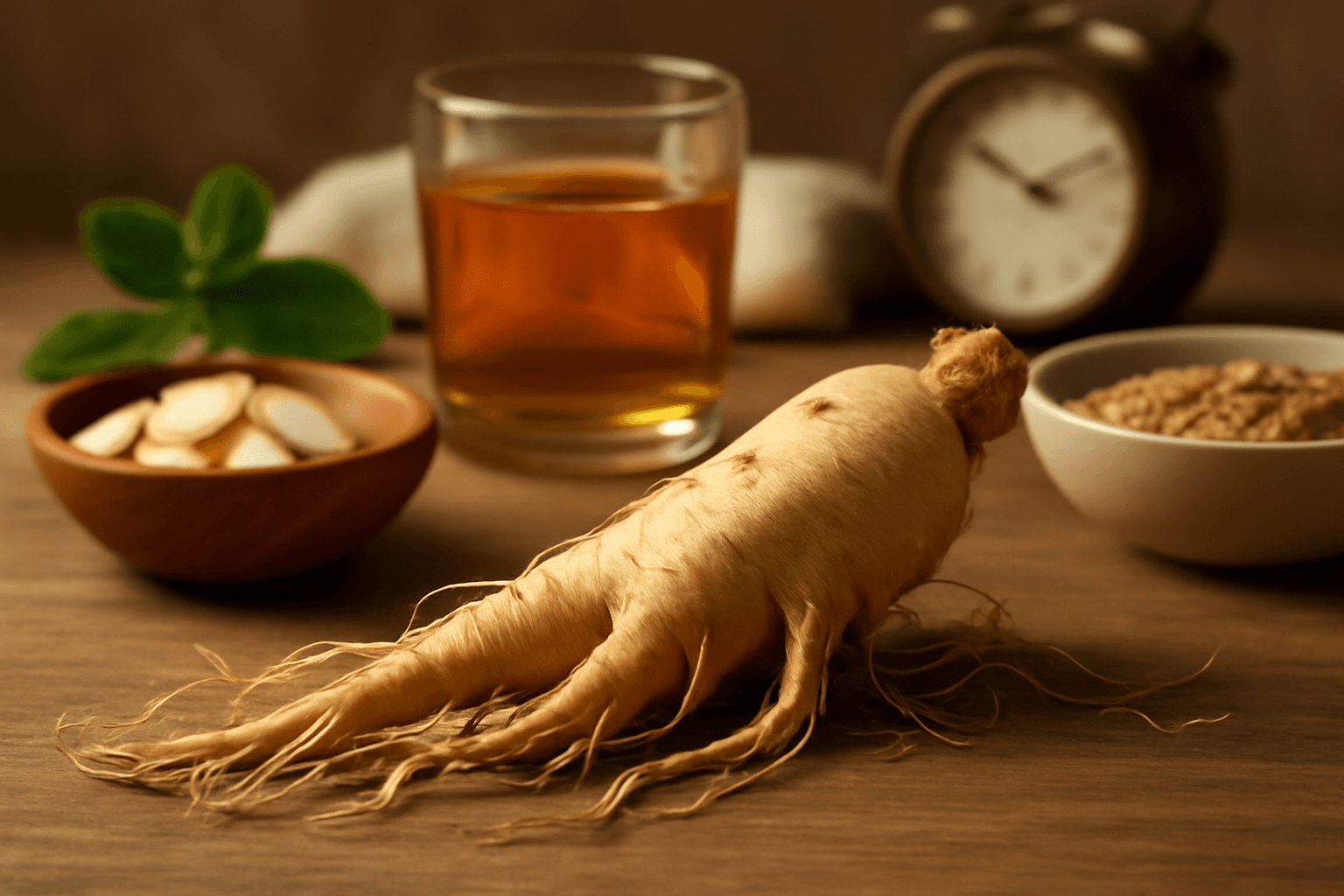
Ginseng has been a cornerstone ingredient in traditional medicine throughout East Asia for thousands of years. Modern scientific research has validated its diverse health benefits, demonstrating effects on energy enhancement, immune system strengthening, blood sugar management, and stress relief. However, the composition and efficacy of ginseng vary depending on the type, and there are potential risks of side effects. This article provides detailed explanations of the characteristics, scientific evidence, and safe usage methods of major ginseng varieties.
Ginseng as a Tonic
The primary active compound in ginseng is ginsenoside, a saponin compound. This component plays a key role in promoting the body's energy metabolism and balancing stress hormones. As a tonic, ginseng is classified as an adaptogen—not merely boosting energy, but helping the body adapt to stress and fatigue.
The mechanism of energy enhancement works by increasing ATP production in cells and improving mitochondrial function. According to a 2021 International Society of Sports Nutrition publication, athletes taking ginseng supplements experienced an average 23% reduction in post-exercise fatigue recovery time. In the general population, consuming 3g of ginseng extract over 4 weeks resulted in an average 27% decrease in fatigue levels.
Immune system strengthening is another important function of ginseng. Ginsenosides activate natural killer (NK) cells and T lymphocytes, enhancing defenses against viruses and bacteria. In a 2023 clinical study, the group taking ginseng for 12 weeks experienced a 44% reduction in cold incidence, and when they did catch a cold, symptom duration was average 2.3 days shorter.
Cognitive function improvement is a major area of ginseng research. The antioxidant compounds in ginseng protect brain neurons and promote neurotransmitter synthesis. In a study of middle-aged adults, participants taking 500mg of ginseng extract daily scored an average 19% higher on memory tests compared to the control group.
American Ginseng (Panax quinquefolius)
American ginseng, native to the eastern forests of North America, has a milder nature than Asian ginseng. Its primary ginsenoside composition differs, with relatively lower Rg1 content and higher Rb1 content. This chemical profile makes American ginseng an excellent tonic with superior calming effects on the nervous system.
Sleep quality improvement is the most specialized benefit of American ginseng. While Asian ginseng focuses on boosting energy, American ginseng calms excessive wakefulness while maintaining brain function. In an 8-week clinical trial with 120 insomnia patients, the group taking 400mg daily of American ginseng experienced an average 18-minute reduction in sleep onset time, and sleep quality scores improved by 31% compared to the control group.
Stress relief and anxiety reduction are also major benefits of American ginseng. The ginsenosides in American ginseng act on serotonin and dopamine receptors in the brain, promoting emotional stability. In a study of 85 adults with high workplace stress, the group taking 200mg of American ginseng daily showed an average 26% decrease in anxiety scores after 4 weeks.
Blood sugar management is also effective with American ginseng. In a study of prediabetic patients, consuming 3g of American ginseng for 8 weeks suppressed post-meal blood sugar spikes by an average 20%. This is due to improved insulin secretion and reduced glucose absorption.
Asian Ginseng (Panax ginseng)
Asian ginseng, commonly called "red ginseng" or "crimson ginseng," has been traditionally cultivated in Korea, China, and Japan. Red ginseng, processed through high-temperature steaming, has higher ginsenoside concentrations than raw ginseng and is richer in Rg1, the energy-boosting component. These characteristics make Asian ginseng provide the most powerful vitality-enhancing effects.
Endurance and athletic performance improvement showcase Asian ginseng's superiority. In a 12-week study of 60 endurance athletes, the group taking 2g of red ginseng extract daily experienced an 8.5% increase in maximum oxygen intake and a 12% average extension in exercise duration. This is because Asian ginseng improves oxygen supply to muscles and optimizes energy metabolism.
Sexual function improvement is a traditional use of Asian ginseng, which modern science has confirmed. In a placebo-controlled study of 60 men with erectile dysfunction, 69% of those taking 3g of red ginseng for 8 weeks showed symptom improvement (compared to 30% in the placebo group). This is because ginseng promotes nitric oxide production, inducing blood vessel dilation.
Cardiovascular health enhancement is another important benefit of Asian ginseng. The antioxidants in red ginseng reduce oxidative stress on blood vessel endothelium and inhibit platelet aggregation, preventing blood clot formation. In an 8-week study of 135 middle-aged adults at high cardiovascular risk, taking 2g of Asian ginseng daily reduced blood LDL cholesterol by an average 15% and improved vascular endothelial function by 25%.
Anticancer properties are mentioned in several studies. In test tube and animal studies, ginsenosides from ginseng have been shown to inhibit cancer cell growth and induce apoptosis. However, large-scale human clinical trials are still ongoing.
Siberian Ginseng (Acanthopanax senticosus)
Siberian ginseng, also known as eleuthero or "devil's shrub," is not a true Panax species but contains similar adaptogenic compounds. It has long been used by Russian cosmonauts and athletes as a tonic for physical enhancement. It contains unique active compounds called eleutherosides, providing distinct benefits different from other ginsengs.
Endurance enhancement and fatigue recovery are Siberian ginseng's most powerful benefits. It has been widely used since Soviet times to improve training efficiency in Olympic athletes. In modern research, endurance athletes taking 2g of eleuthero extract for 4 weeks showed a 22% faster heart rate recovery after exercise and a 24% decrease in subjective fatigue.
Mental focus and clarity are also key features of Siberian ginseng. In a study of 80 office workers performing repetitive mental tasks, taking 400mg of eleuthero for 8 weeks reduced afternoon concentration decline by 28% and decreased work error rates by 19%.
Immune system strengthening is a confirmed benefit of Siberian ginseng. Eleutherosides promote white blood cell production and increase NK cell activity. In a study of 120 occupational workers at high risk for winter colds, the group taking eleuthero extract for 8 weeks had a 35% lower respiratory infection rate compared to controls.
Muscle recovery and growth are benefits recognized among athletes. In a study of 45 men doing resistance training, taking 3g of Siberian ginseng for 8 weeks resulted in 17% greater strength gains compared to the placebo group.
Ashwagandha (Withania somifera)
Ashwagandha is not ginseng but a plant in the nightshade family; however, it is recognized as a tonic herb with adaptogenic actions similar to ginseng. It has been used for thousands of years in Ayurveda (traditional Indian medicine) and has recently gained rapid popularity among Western health-conscious consumers. Its primary active compounds are withanolides.
Stress relief and anxiety reduction are ashwagandha's most powerful benefits. While ginseng works by boosting energy, ashwagandha alleviates the stress response itself. In an 8-week randomized controlled trial with 60 high-stress adults, the group taking 300mg of ashwagandha extract twice daily showed an average 28% decrease in cortisol (stress hormone) levels and a 44% improvement in anxiety scores.
Sleep improvement is also a major benefit of ashwagandha. However, unlike American ginseng that induces sleep through sedation, ashwagandha normalizes the state of hyperarousal caused by stress, restoring natural sleep. In a study of 100 chronic insomnia patients, taking 500mg of ashwagandha for 8 weeks improved sleep efficiency by 37% compared to controls.
Blood sugar control is another verified benefit of ashwagandha. In a 30-day study of 24 diabetic patients, taking 3g of ashwagandha extract reduced fasting blood glucose by an average 13.5% and improved HbA1c by 0.46%. This is due to improved insulin secretion and enhanced insulin sensitivity in peripheral tissues.
Female hormone balance and menopausal symptom relief are specialized benefits of ashwagandha. Withanolides regulate the hormone signaling systems of the neuro-endocrine-immune axis. In an 8-week study of 51 menopausal women, taking 300mg of ashwagandha daily reduced menopausal symptoms including hot flashes, night sweats, and mood changes by an average 26%.
Strength and muscle mass increase have also been demonstrated in studies of physically active adults. In an 8-week study of 60 men doing resistance training, the group taking 500mg of ashwagandha daily experienced a 9.2kg greater increase in upper body strength and 1.5kg more muscle mass gain compared to placebo.
Side Effects
Ginseng and ashwagandha are safe for most healthy adults, but side effects can occur under specific conditions. The severity of side effects depends on dosage, duration of use, individual constitution, and interactions with other medications.
Common side effects include the following: Nervousness, anxiety, and sleep disturbance are the most common symptoms of Asian ginseng overdose. This is because it excessively stimulates adrenaline secretion. Gastrointestinal symptoms may include abdominal discomfort, diarrhea, and nausea. Headaches, dizziness, and heart palpitations have also been reported. Generally, symptoms resolve quickly when dosage is reduced or discontinued.
Precautions for hormone-sensitive conditions are important. Women with hormone-sensitive conditions such as breast cancer, uterine cancer, ovarian cancer, or endometriosis must consult a doctor before taking ginseng or ashwagandha. Ashwagandha can affect hormone metabolism.
Drug interactions require particular attention. When taking anticoagulants (warfarin, heparin), ginseng's anticoagulant effects may increase bleeding risk. When taking diabetes medications, ginseng and ashwagandha can enhance blood sugar-lowering effects, creating hypoglycemia risk. When taking immunosuppressants, ginseng's immune-enhancing effects may interfere with medication efficacy. Taking with caffeine may cause excessive nervous system stimulation.
Special population precautions also apply. Pregnant and nursing women should avoid ginseng and ashwagandha. Safety data for fetuses and infants is insufficient. Children under 12 should not take these without parental medical supervision. Those with severe hypertension (systolic blood pressure 180mmHg or higher) should also avoid ginseng.
Long-term use considerations are also important. Continuous ginseng use for more than 6 months may result in decreased efficacy as the body adapts. To prevent this, cyclic use—3 months on, 1 month off—is recommended. Excessive long-term use can trigger "ginseng abuse syndrome," with symptoms including nervousness, anxiety, sleep disturbance, digestive problems, and menstrual irregularity in women.
Conclusion and Summary
Ginseng and similar tonics are health ingredients where thousands of years of traditional wisdom meet modern scientific research. Each type has its unique efficacy profile.
- American ginseng: Optimal for sleep improvement and stress relief. Excellent nervous system calming effects.
- Asian ginseng (red ginseng): Most powerful effects on energy enhancement, athletic performance, sexual function, and heart health. The best choice when vitality is needed.
- Siberian ginseng: Excellent for endurance, focus, and immune enhancement. Increases adaptive capacity to physical stress.
- Ashwagandha: Specialized in emotional stress relief, hormone balance, and blood sugar control. Suitable for modern individuals with exhaustion of body and mind.
Practical guide for effective use:
- Choose the type that matches your individual constitution and health goals. Consider Asian ginseng for fatigue; ashwagandha for stress. - Recommended daily dosages: American ginseng 200-400mg, Asian ginseng 2-3g, Siberian ginseng 2-3g, ashwagandha 300-500mg. - Continuous use for at least 4 weeks is needed to experience effects. - Prevent drug tolerance through cyclic use—3 months on, 1 month off. - If taking existing medications like diabetes drugs, anticoagulants, or immunosuppressants, consult your doctor beforehand. - Pregnant women, nursing mothers, and children should not take these without medical professional supervision. - If side effects occur (nervousness, anxiety, sleep disturbance, digestive problems), reduce dosage or discontinue and consult your doctor.
Ginseng and similar tonics are scientifically validated health ingredients, but not panaceas. They are most effective when used complementarily alongside a balanced diet, regular exercise, adequate sleep, and stress management. Before starting any new supplement, always consult with a healthcare professional to receive personalized advice that comprehensively considers your health status, current medications, and underlying conditions.