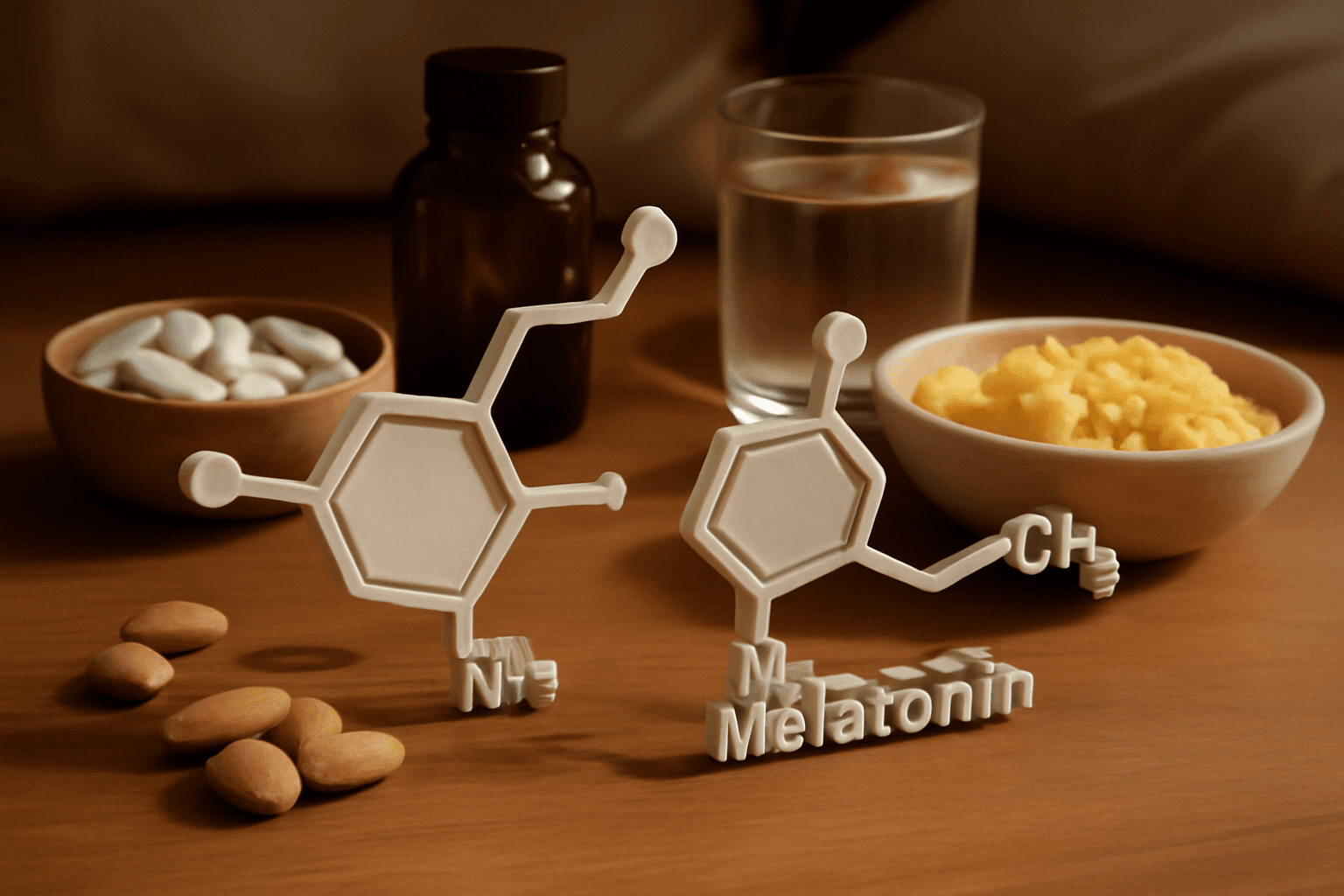
Our nervous system operates through complex chemical signals, and among them, serotonin and melatonin are key hormones that determine our daily rhythm and mental health. Interestingly, melatonin is synthesized directly from serotonin. Understanding the cyclical relationship between these two neurotransmitters can greatly help improve sleep quality, manage energy, and promote fatigue recovery. This article provides a detailed explanation of their production mechanisms and practical optimization methods.
Melatonin Created from Serotonin
Melatonin is a chemical byproduct of serotonin transformation. When sufficient serotonin is produced in the pineal gland of the brain during daylight hours, an enzyme called AANAT (aralkylamine N-acetyltransferase) is activated as the sun sets and light intensity decreases, converting serotonin into melatonin. This process is a core mechanism of the circadian rhythm.
If serotonin levels are insufficient, melatonin production is also limited. In fact, patients with depression or seasonal affective disorder (SAD) often experience insomnia alongside low serotonin levels. Research shows that in a state of serotonin deficiency, evening melatonin concentration can be 30-40% lower than in people with normal levels.
To maximize this interaction, the following is important:
- Bright light exposure during daytime: Natural light, especially in the morning, promotes serotonin production. A minimum of 20-30 minutes of outdoor activity is recommended.
- Protein intake: Tryptophan, the raw material for serotonin, is an essential amino acid, so high-protein foods such as meat, fish, eggs, and dairy products are essential.
- Dark environment in the evening: Since bright light interferes with AANAT activation, blue light exposure should be minimized for 2 hours before bed.
What is Serotonin?
Serotonin is classified as a neurotransmitter, but in reality, over 90% of the body's serotonin is produced in the digestive tract, with only about 2% produced in the brain. Serotonin circulating through the cerebrospinal fluid directly impacts mood regulation, anxiety reduction, and the promotion of satisfaction and happiness.
The key to serotonin production is an amino acid called tryptophan. Tryptophan can only be obtained through food and is converted into serotonin in the body through 5-HTP. This process requires B complex vitamins such as vitamin B6, vitamin B12, and folate as essential cofactors.
Key functions of serotonin:
- Mood regulation: Low serotonin is associated with depression, anxiety disorders, and obsessive-compulsive disorder.
- Sleep-wake cycle adjustment: Daytime serotonin increases activity, while evening conversion to melatonin induces sleep.
- Gut health: Intestinal serotonin regulates peristalsis and digestive function.
- Immune function: Serotonin has anti-inflammatory effects and participates in immune system regulation.
- Antioxidant function: Serotonin itself acts as an antioxidant, preventing nerve cell damage.
To maintain healthy serotonin levels in adults, at least 150 minutes of moderate exercise per week is recommended. Exercise increases brain-derived neurotrophic factor (BDNF), which improves new nerve cell generation and serotonin receptor sensitivity.
Sleep Hygiene for Increasing Melatonin Production
Sleep hygiene is a set of behavioral strategies that optimize melatonin production. Effective sleep hygiene goes beyond simple time management and aligns your circadian rhythm and hormone secretion with your body's natural rhythm.
Importance of a consistent sleep schedule: Going to sleep and waking up at the same time every day is the most important factor. It's best not to change your sleep time even on weekends. Through this, your body learns to anticipate and prepare melatonin secretion at regular times, enabling natural sleep induction.
Light exposure management:
- Morning exposure: Within 30 minutes of waking, you should be exposed to bright outdoor light for 15-20 minutes. This resets your circadian clock and activates serotonin synthesis. On cloudy days, illuminance of about 2,500 lux is needed, while outdoor sunlight on clear days exceeds 50,000 lux.
- Evening restriction: For 2-3 hours before bed, avoid using smartphones, tablets, and computer screens. Blue light (460nm wavelength) emitted by these devices suppresses melatonin production by 30-55%. If unavoidable, use a blue light filter or wear blue light-blocking glasses.
Sleep environment optimization:
- Temperature: An indoor temperature of 16-19℃ (approximately 60-66℉) is ideal. Lower body temperature signals melatonin secretion.
- Darkness: Bedroom illuminance should be maintained at 10 lux or below. Avoid nighttime lighting, and if necessary, use warm-colored lighting (2,700K or lower).
- Noise reduction: Low background sound doesn't disrupt sleep, but sudden noise can stop melatonin secretion.
Dietary adjustments:
- Evening meal timing: Meals should be completed 2-3 hours before bed. Late eating disrupts melatonin production due to body temperature rise during digestion.
- Tryptophan-containing foods: Consuming chicken, turkey, nuts, seeds, and cheese in the evening is favorable for melatonin conversion. In particular, brain absorption of tryptophan increases when consumed with carbohydrates, so it's good to eat them with whole grain bread or brown rice.
- Caffeine limitation: Since caffeine has a half-life of about 5 hours, caffeine beverage consumption after 3 p.m. should be avoided.
- Alcohol avoidance: Although alcohol initially induces sleep, it suppresses melatonin production and significantly worsens sleep quality in the latter half of the night.
Physical activity and relaxation techniques:
- Regular exercise increases serotonin production, indirectly promoting melatonin production. However, exercise should be completed at least 3 hours before bed.
- Meditation, deep breathing, yoga, or progressive muscle relaxation for 30 minutes before bed reduces cortisol (stress hormone) and facilitates melatonin secretion.
- A warm bath causes your body temperature to rise and then fall, signaling sleep. A bath 90 minutes before bed is most effective.
Supplement consideration: In cases where natural melatonin production is difficult due to shift work or lifestyle changes, melatonin supplements (0.5-3mg) can be considered after consulting with a healthcare professional. However, self-diagnosis and overdose should be avoided, and individuals with hormone-sensitive diseases (breast cancer, prostate cancer, etc.) should consult a specialist.
Fatigue Recovery and Antioxidant Function
The smooth circulation of serotonin and melatonin optimizes the body's energy recovery process. Melatonin is not merely a sleep-inducing hormone but acts as a powerful antioxidant, preventing cell damage.
The antioxidant function of melatonin is known to be more than twice as potent as vitamin C or vitamin E. Melatonin directly eliminates free radicals and enhances the activity of antioxidant enzyme systems (SOD, CAT, GPx). This is particularly important for preventing aging of the brain and nervous system.
High concentrations of melatonin during adequate sleep:
- Muscle recovery: Promotes growth hormone (HGH) secretion, activating muscle reconstruction and protein synthesis.
- Immune enhancement: Increased cytokine production during sleep improves infection defense capabilities.
- Metabolic optimization: Improved insulin sensitivity and normalized mitochondrial function increase energy production efficiency.
- Neuroplasticity: Brain nerve cell connection reorganization and memory consolidation occur during sleep and depend on normal serotonin and melatonin circulation.
Summary
Key points:
- Since melatonin is a direct chemical product of serotonin, daytime serotonin production determines nighttime melatonin production.
- Tryptophan, vitamin B6, vitamin B12, and folate are essential for serotonin synthesis, so balanced nutrition is fundamental.
- Consistent sleep-wake schedule, morning light exposure, dark evening environment, and appropriate temperature are key factors controlling melatonin secretion.
- Proper melatonin circulation prevents cell damage through antioxidant action and promotes fatigue recovery.
- For chronic insomnia, depression, or hormonal changes, consult with a healthcare professional to establish a personalized treatment plan.
Medical disclaimer: This information is provided for educational purposes and cannot replace medical diagnosis or treatment. If you have chronic sleep disorders, mental health issues, hormone-related diseases, or are taking medications, be sure to consult with a healthcare professional (physician, neurologist, or sleep medicine specialist). Melatonin supplements should not be taken arbitrarily without the guidance of a healthcare professional.