Skin is the body's largest organ and the first mirror to reflect stress, emotions, and changes in lifestyle habits. The field of 'Psychodermatology,' which has recently gained attention in the medical community, is scientifically proving the deep connection between psychological stress and skin conditions. Once you learn that skin problems like acne, hair loss, eczema, and psoriasis are closely related not only to external factors but also to psychological state, hormonal imbalance, and nutritional deficiency, your approach to skincare will fundamentally change. In this article, we'll examine the link between skin and mental health with scientific evidence and present practical improvement methods.
What is Psychodermatology?
Psychodermatology is a medical field that studies how psychological stress and emotional states affect the onset, aggravation, and healing process of skin conditions. According to research in this field, 30-40% of all skin conditions are related to psychological factors, and conditions such as acne, alopecia, urticaria, and psoriasis respond very sensitively to stress.
When our body experiences stress, the hypothalamic-pituitary-adrenal axis (HPA axis) is activated, leading to the secretion of large amounts of stress hormones like cortisol and adrenaline. These hormones increase sebum secretion in the skin, weaken the skin barrier function, and trigger inflammatory responses. Simultaneously, stress suppresses the immune system, reducing resistance to skin infections.
The connection with the menstrual cycle is also noteworthy. Hormonal changes affect mental state, which in turn directly impacts the skin. Many women experience increased stress levels during premenstrual syndrome (PMS) and simultaneously experience worsened acne. This is because the decrease in estrogen levels and fluctuations in progesterone affect serotonin secretion while increasing inflammatory responses in the skin.
Researchers in the psychodermatology field emphasize that merely treating skin problems alone is insufficient, and that managing psychological health is key to improving skin.
Understanding the 'Mind-Skin Connection'
The brain and skin are connected through a dense network via the nervous system, endocrine system, and immune system. What's particularly important are neurotransmitters. Imbalances in neurotransmitters like serotonin, dopamine, and norepinephrine directly result not only in lowered mood but also in skin inflammation, itching, and increased skin sensitivity.
Cortisol, a stress hormone, inhibits the production of ceramides, the skin's natural moisturizing component. This weakens the skin barrier and makes it more vulnerable to external irritants. Additionally, elevated cortisol levels excessively stimulate the sebaceous glands, worsening acne. According to one study, acne lesions in students during exam periods increased by 23%, demonstrating a direct connection between exam stress and skin deterioration.
Reduced immune function is also an important mechanism. In chronic stress states, the function of T cells and B cells decreases, reducing resistance to skin infections. This allows the proliferation of pathogens like Propionibacterium acnes that cause acne and increases the risk of folliculitis.
Key pathways of the mind-skin connection:
- Hormonal pathway: Stress → Increased cortisol secretion → Excessive sebum production → Worsened acne
- Neural pathway: Stress → Neurotransmitter imbalance → Increased skin inflammatory response
- Immune pathway: Stress → Suppressed immune function → Increased skin infections
- Vascular pathway: Stress → Blood vessel constriction → Decreased skin nutrient supply → Deteriorated skin quality
Understanding these mechanisms shows that solving skin problems requires more than external skincare alone, and that managing psychological stress and improving nutrition are critically important.
NAC, B Vitamins, and Stress Relief
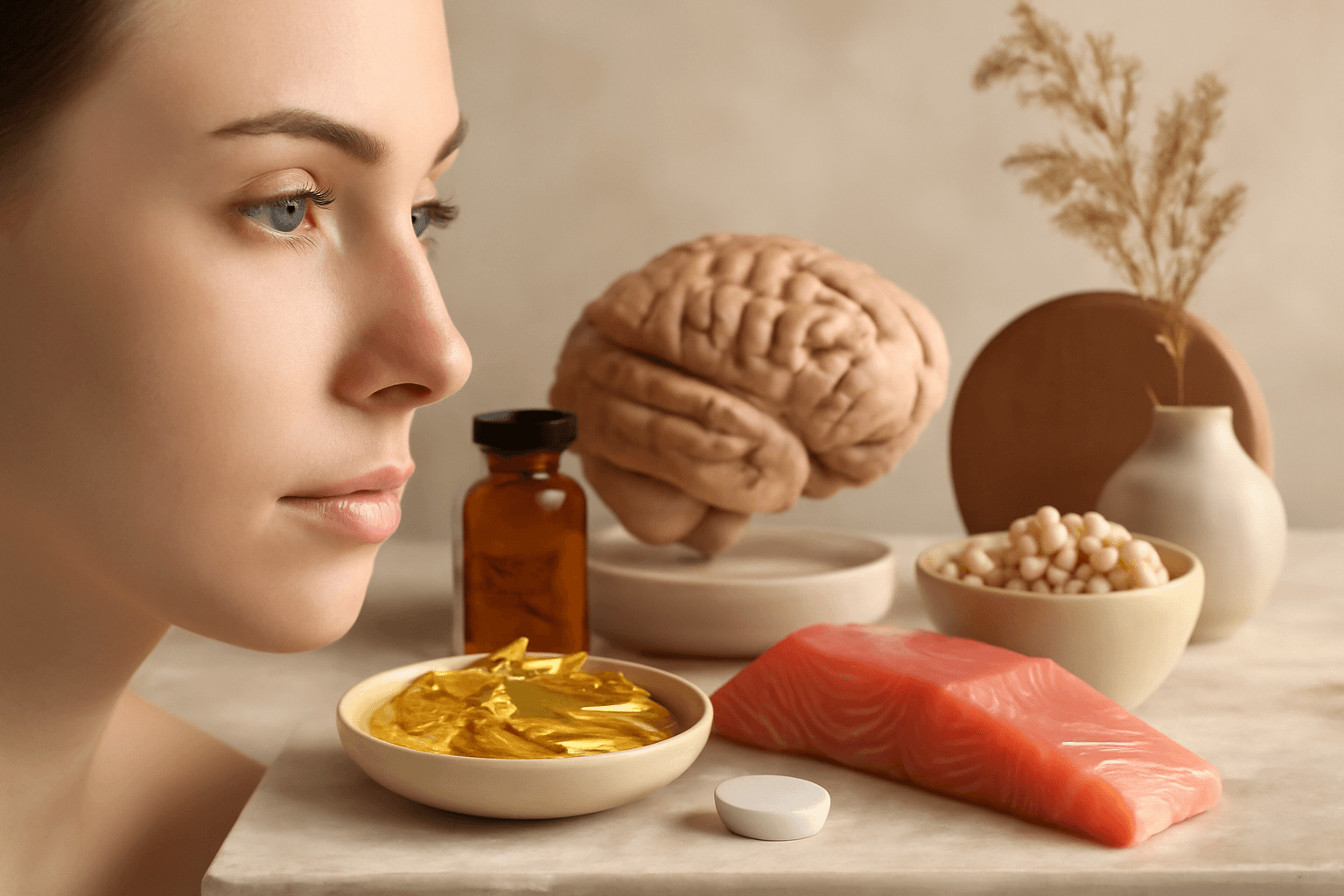
To simultaneously improve skin and mental health, a nutritional approach is essential. In particular, NAC (N-acetylcysteine), B vitamins, and adequate protein intake directly support the body's antioxidant defense and neurotransmitter production.
NAC and antioxidant defense: NAC is a precursor to glutathione, a powerful antioxidant. Glutathione is the body's primary antioxidant defense line and is rapidly depleted under stress. NAC supplementation restores glutathione levels and reduces oxidative stress in the skin. Additionally, NAC has the property of inhibiting the growth of bacteria that cause acne lesions, with acne improvement effects reported at doses of 600-1200mg daily. NAC also directly reduces skin inflammation and promotes repair of damaged skin barriers.
B vitamins' role in neurotransmitter production: Vitamins B6, B12, and folate are essential for neurotransmitter synthesis. These vitamins play key roles in the production of serotonin, dopamine, and norepinephrine. B vitamin deficiency leads to depression, anxiety, and fatigue, and this emotional instability worsens skin conditions. In particular, Vitamin B5 (pantothenic acid) supports adrenal function necessary for stress hormone production and also serves as a component of the skin's lipid layer. Research shows that an additional intake of 2.2mg daily of Vitamin B5 reduced acne lesions by 64%.
Protein and hair and skin structure: The primary components of skin and hair are keratin, a protein-based amino acid. Under stress, the body consumes more protein, resulting in a shortage of amino acids needed for muscle and skin regeneration. Specific amino acids like lysine, glycine, and proline are essential for collagen synthesis. Adult women require 0.8-1.0g of protein per kg of body weight, but 1.2-1.6g is recommended during stress or intensive exercise. Insufficient protein intake appears as reduced skin elasticity, delayed wound healing, and increased hair loss.
Practical nutrition strategies:
- NAC intake: Found in foods like eggs, garlic, onions, and cruciferous vegetables (broccoli, cabbage). Supplements require professional medical consultation
- B vitamin foods: Eggs, salmon, beef, chicken breast, spinach, avocado, peas, etc.
- High-quality protein: Distribute 20-30g of protein at each of three daily meals (2 eggs = 12g, 100g fish = 20g, Greek yogurt = 15g)
- Calcium and magnesium: Help regulate stress hormones (milk, cheese, nuts, spinach)
Skin health benefits of stress relief: Stress management results in direct improvement of skin health, not just mental well-being. Meditation, yoga, and regular exercise reduce cortisol levels and increase endorphin secretion. Moderate-intensity exercise for 20-30 minutes daily improves skin blood flow, supplying more oxygen and nutrients to the skin. Exercise also promotes neurotransmitter production, improving mood and sleep quality. Insufficient sleep creates a vicious cycle that raises cortisol and worsens acne.
Medical note: Consult with a doctor or nutritionist before taking NAC, vitamin supplements, or other health supplements. Proper dosage determination based on potential drug interactions, pregnancy safety, and individual health conditions is necessary.
Summary
Skin and mental health are not separate domains but an integrated system. Stress directly causes acne, hair loss, and skin inflammation through hormonal, nervous, and immune pathways, while hormonal changes like the menstrual cycle simultaneously affect both psychological and skin conditions.
Key points summary:
- Understanding psychodermatology: 30-40% of all skin conditions are related to psychological factors, and stress hormones result in increased sebum secretion, weakened skin barriers, and triggered inflammation.
- Hormonal-skin axis: A direct pathway exists from elevated cortisol → excessive sebum production → worsened acne, and the interaction with the menstrual cycle has a significant impact on women's skin health.
- Importance of nutrition: NAC enhances antioxidant defense and directly improves acne, B vitamins support neurotransmitter production, and protein handles structural regeneration of skin and hair.
- Implementation strategy: Regular exercise, meditation, adequate sleep, nutrient-rich food intake, and stress management form the foundation of skin health improvement, and supplement use should be considered through professional medical consultation when necessary.
If you're concerned about skin problems, rather than relying solely on external skincare products, laying the 'internal foundation' of mental stability, adequate nutrition, and regular lifestyle habits is the most effective solution. This is an investment that leads not only to short-term skin improvement but also to long-term health and wellness.