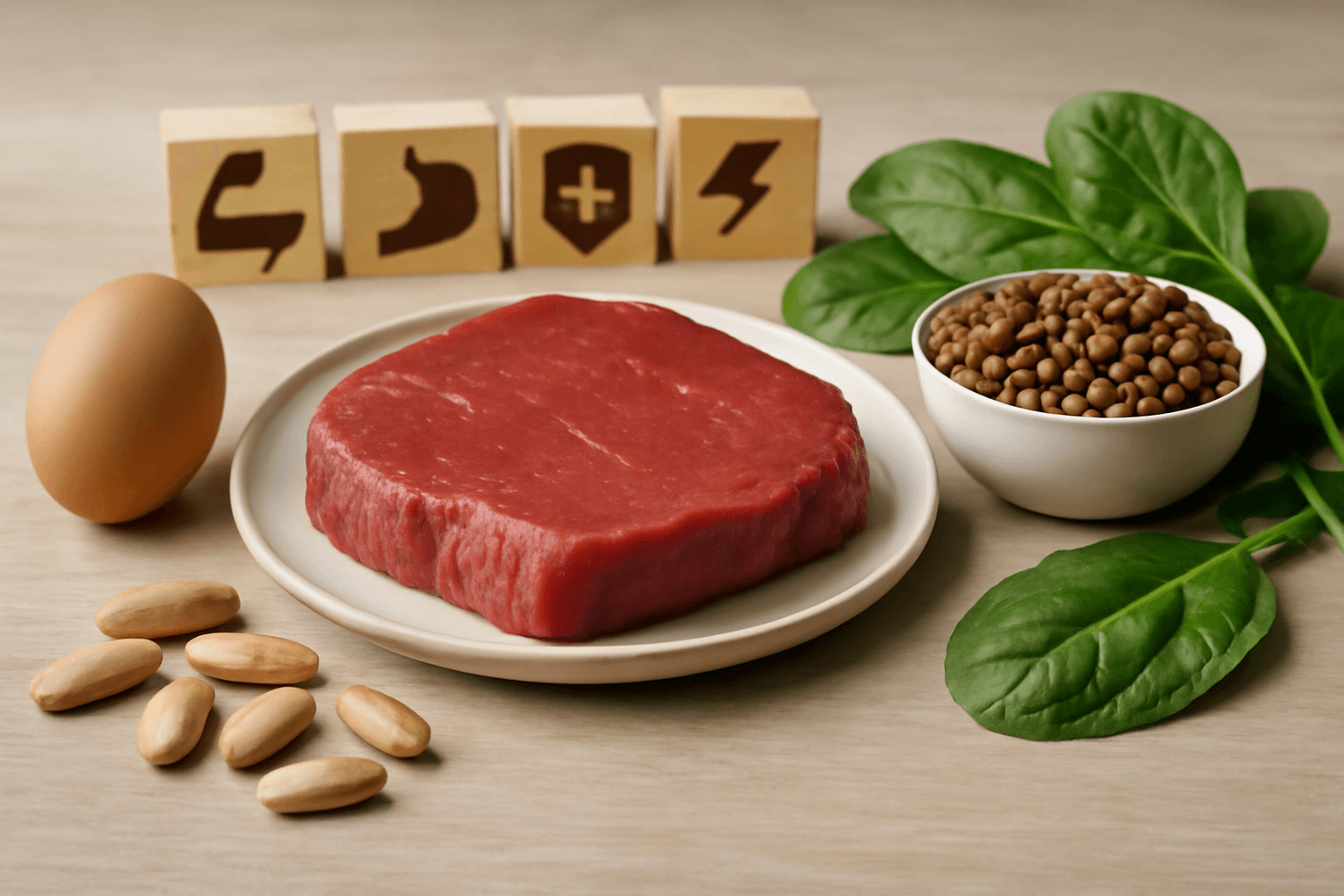
The most common nutritional deficiency faced by people following a vegan diet is iron deficiency. Without consuming animal products, you cannot obtain heme iron, which has high bioavailability, potentially leading to symptoms such as fatigue, reduced concentration, and weakened immunity. This risk is especially elevated for menstruating women, pregnant women, and athlete vegans. This post explains in detail why vegans need iron supplements, how to absorb iron effectively, and how to safely choose supplements.
Types of Iron: Heme vs. Non-Heme
Iron is broadly classified into two forms. Heme iron is found in animal products, particularly meat, fish, and shellfish, with a high bioavailability of 15-35% during digestion. In contrast, non-heme iron is found in plant-based foods such as grains, legumes, and leafy green vegetables, but has a bioavailability of only 2-20%.
The low bioavailability of non-heme iron is due to iron absorption inhibitors such as phytic acid, tannins, and polyphenols found in plant foods. These compounds bind with iron and are excreted without being absorbed during digestion. Therefore, even if vegans consume the same amount of iron, their actual absorption is significantly lower. Research shows that vegans and vegetarians have 1.3-2 times higher risk of iron deficiency than the general population, with special caution needed for women.
The Importance of Iron Intake
Iron plays essential roles in the human body: oxygen transport, energy generation, and maintaining immune function. It is a key component of hemoglobin in red blood cells and myoglobin in muscle, delivering oxygen received by the lungs to all cells in the body. Iron deficiency impairs oxygen-carrying capacity, causing chronic fatigue, shortness of breath, and dizziness.
Additionally, iron directly participates in thyroid hormone synthesis. The enzyme thyroid peroxidase requires sufficient iron to function normally. Iron deficiency can trigger or worsen hypothyroidism, leading to reduced basal metabolic rate, weight gain, and increased sensitivity to cold.
Iron is also crucial for brain function. The brain consumes 20% of the body's oxygen, so iron deficiency directly causes reduced concentration, memory loss, and decreased learning ability. In particular, iron deficiency in children and adolescents can have long-term effects on cognitive development.
Iron-Rich Foods
For vegans to consume sufficient iron, they must intentionally choose iron-rich foods. Grains and legumes are major sources of plant-based iron. Specific iron content by food (per 100g) is as follows:
- Cashews: 6.2mg
- Lentils: 3.3mg
- Black beans: 2.4mg
- Almonds: 3.7mg
- White rice (fortified): 2.4mg
- Sesame seeds: 8.6mg
- Pumpkin seeds: 8.8mg
Leafy greens also contain iron, but the content is lower than expected. Spinach contains 3.2mg, kale contains 1.3mg, and broccoli contains 0.7mg of iron. More importantly, the bioavailability of iron in these vegetables is very low. Spinach, for example, has an actual bioavailability of only 2% due to its high oxalic acid content.
Fortified foods are also good options. Many cereals, plant-based milks, and tofu are fortified with iron, and the iron in these products is added for higher bioavailability. It's essential to check product labels for iron content per serving.
How to Increase Iron Absorption on a Vegan Diet
The most effective way to promote iron absorption is to consume vitamin C at the same time. Vitamin C converts iron into a more easily absorbed form. Consuming vitamin C-rich foods such as oranges, kiwis, bell peppers, tomatoes, and broccoli together with iron-rich foods can increase bioavailability up to threefold. For example, squeeze fresh lemon juice on lentil dishes, or consume iron-fortified cereal with orange juice.
Food preparation methods also make a difference. Soaking legumes can reduce phytic acid content by over 50%. It's best to soak them in water for at least 8 hours, preferably overnight, then discard the water and cook in fresh water. Additionally, fermented foods like tempeh, miso, and fermented vegetables also increase iron bioavailability, as phytic acid is broken down during fermentation.
Meal timing is also important. Iron supplements or iron-rich foods should be consumed with a 2-hour interval from other iron sources. Simultaneous consumption with calcium-rich foods (dairy products, calcium-fortified foods) interferes with iron absorption, so try to consume them at different times if possible.
Foods to Avoid When Taking Iron Supplements
Calcium is the most powerful inhibitor of iron absorption. When calcium and iron are consumed simultaneously, they compete for absorption in the intestines, reducing the bioavailability of both nutrients. Therefore, when taking iron supplements, avoid consuming calcium-fortified plant milks, calcium-rich tofu, or almonds. Maintain at least a 2-hour time gap.
Beverages high in tannins should also be avoided. Tannins found in green tea, black tea, coffee, and red wine bind strongly with iron, reducing absorption by up to 60%. It's best to avoid these beverages for at least 1-2 hours before and after taking iron supplements.
Oxalic acid can also be problematic. Oxalic acid found in spinach, chard, chocolate, and nut butters binds with iron and interferes with absorption. However, cooking can reduce oxalic acid content by 60-90%, so consuming cooked spinach is better than raw spinach.
Additionally, some medications also inhibit iron absorption. Antacids, acid-reducing medications, and some antibiotics interfere with iron absorption, so if you're taking these medications, consult with a doctor or pharmacist to adjust your iron supplement intake timing.
How to Choose the Best Vegan Iron Supplement
Iron supplements on the market are sold in various forms and dosages. The main forms of iron supplements are as follows:
- Ferrous fumarate: Highest bioavailability (approximately 33%), possible gastrointestinal side effects
- Ferrous sulfate: Cost-effective, bioavailability approximately 20%
- Ferrous glycinate chelate: Minimal digestive side effects, bioavailability approximately 18%
- Ferric picolinate: Gentle form, bioavailability approximately 20%
Vegans should choose supplements with no animal-derived ingredients. Check product labels for "vegan" or "plant-based" designation. Many iron supplements come in gelatin capsules, so look for products with plant-based cellulose capsules.
Choosing an appropriate daily intake amount is also important. The recommended iron intake for adult vegan women varies depending on menstrual status:
- Pre-menopausal women: 27mg per month (vegans who consume only plant-based iron actually need approximately 50mg)
- Post-menopausal women: 8mg
- Men: 8mg
Considering bioavailability when choosing is also essential. Even with the same content, choosing a form with higher bioavailability is more effective. Glycinate chelate is a good choice for vegans as it provides adequate bioavailability with minimal gastrointestinal side effects.
Check the manufacturer and quality certifications. Products verified by independent certification bodies like USP (United States Pharmacopeia), NSF, or ConsumerLab are safer. These organizations test whether the content shown on the product matches reality and verify the absence of contaminants.
When starting a supplement for the first time, start with a low dose and gradually increase. Many people experience constipation, nausea, and abdominal discomfort from high-dose iron supplements initially. Start with 25mg per day and increase to 50mg after 2 weeks if needed.
Practical Tips for Taking Iron Supplements
Taking on an empty stomach provides the highest bioavailability. It's recommended to take iron supplements 1 hour before or 2 hours after meals. However, if you experience gastrointestinal side effects, it's fine to take it with food. Keep in mind that absorption will decrease by approximately 50%, so you may need to adjust your dosage accordingly.
The time of day you take it is also important. It's best to take iron supplements in the morning. If taken in the evening, absorption decreases as stomach acid reduces overnight. Additionally, taking it together with a vitamin C-containing beverage (such as orange juice) can increase bioavailability by 30-50%.
Regular blood tests are essential. Have serum ferritin, hemoglobin, and hematocrit tests done 8 weeks after starting iron supplements. This allows you to evaluate the supplement's effectiveness and adjust dosage accordingly. Overdosing can also be problematic (iron overload), so it's safer to take supplements under the guidance of a healthcare professional.
Avoid interactions with other supplements. Iron supplements should not be taken simultaneously with calcium, magnesium, or zinc supplements. Maintain at least a 2-hour interval between them.
Summary
Key takeaways:
- Vegans have a higher risk of iron deficiency due to the low bioavailability of plant-based iron (non-heme iron).
- Iron is essential for oxygen transport, energy generation, thyroid function, and brain cognitive function.
- Grains, legumes, nuts, and seeds are major sources of plant-based iron.
- Consuming iron with vitamin C can increase bioavailability up to threefold.
- Calcium, tannins, and oxalic acid interfere with iron absorption, so intake timing should be separated.
- Ferrous glycinate chelate supplements are effective with minimal digestive side effects.
- Take on an empty stomach, consume with orange juice, and monitor effectiveness with regular blood tests.
- Consult with a healthcare professional before starting iron supplements to determine your individual needs and choose the appropriate product.
Adequate iron intake is possible on a vegan diet, and iron supplements are an effective tool for preventing deficiency and maintaining energy levels, cognitive function, and immunity. However, since individual iron status and needs vary, it's wisest to work with a professional to develop a strategy tailored to you.